

Voyages
The joy of a journey guided by water
Writer and wild swimmer Freya Bromley explores Japan through its seas, hot springs and the communities that gather around them

7 juil. 2026∙9 min
Voyages
Writer and wild swimmer Freya Bromley explores Japan through its seas, hot springs and the communities that gather around them
7 juil. 2026∙9 min
It’s 1am and I’m jet lagged in Tokyo. The city is loud outside but the onsen is quiet, except for the sound of water rearranging itself around my body as I wade in. Submerging my shoulders, I watch my skin turn spyglass amber. The water – fed from a hot spring 1,500m below ground – is salty and mineral rich. Bathing is such an important ritual in Japan that the Hoshinoya Tokyo onsen stays open throughout the night, allowing guests to drift from their rooms to the baths and back again, cooling down afterwards with a bottle of cold milk.
I’m alone, but I know that somewhere, perhaps just behind the wall my back leans against, my partner is also soaking away the tension of a long flight. I look up and see the night sky through a shaft of slate and cedar, open only at the top of this rooftop onsen. It’s not quite black but an inky blue threaded with thin ribbons of cloud. I’ve learned not to fight jet lag. The body wants what it wants – and mine wants water. So wherever I travel, I find it. This isn’t because I’m chasing wellness – a slippery, commercial word I try to avoid at all costs, even if people like to connect it to swimming – but because water creates the conditions for a different kind of travel. It slows time down. It removes the performance of sightseeing. It takes me places I wouldn’t otherwise go. And it keeps putting me in a room – or in this case an onsen – with strangers who are briefly still enough to chat.

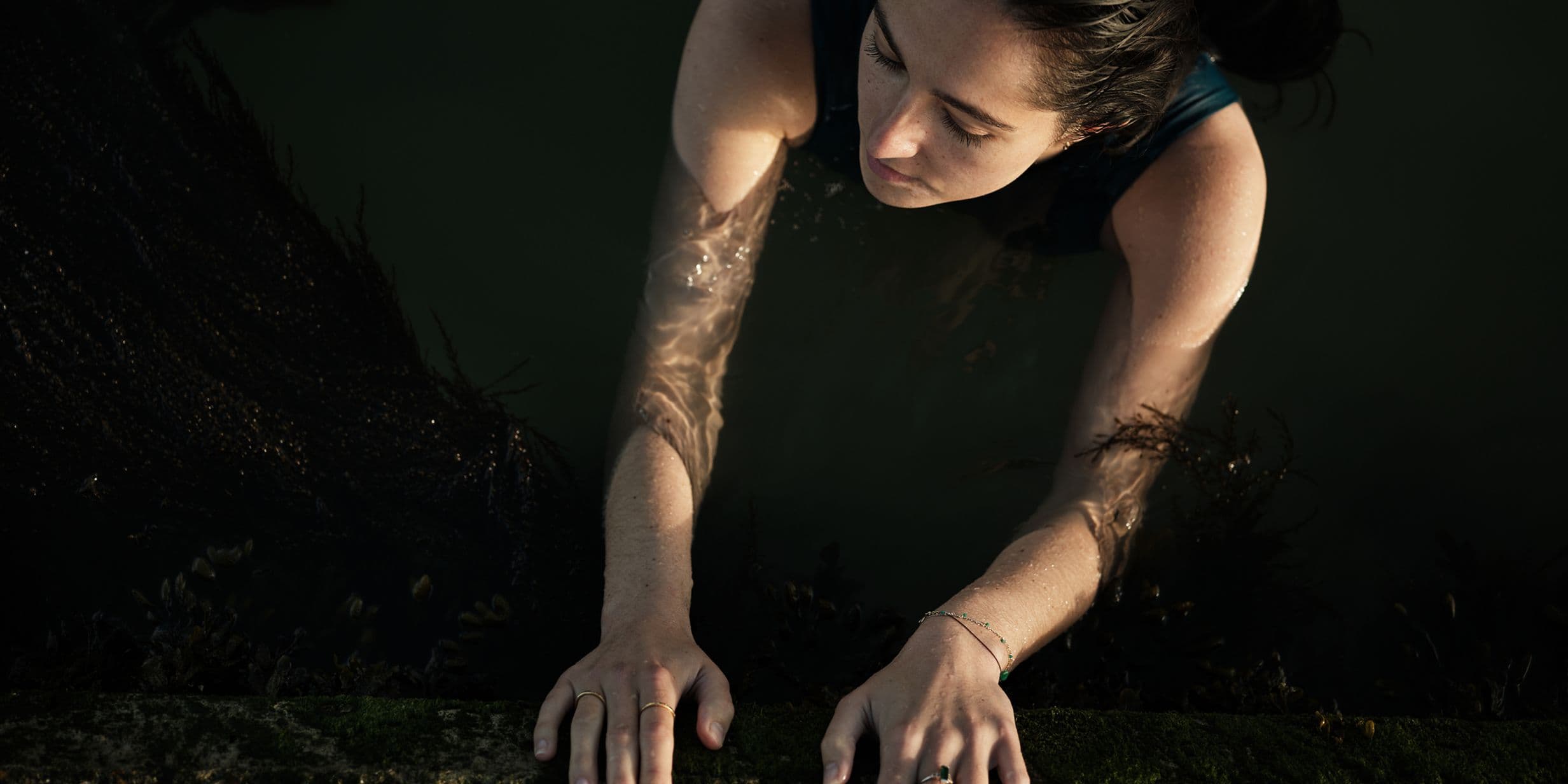
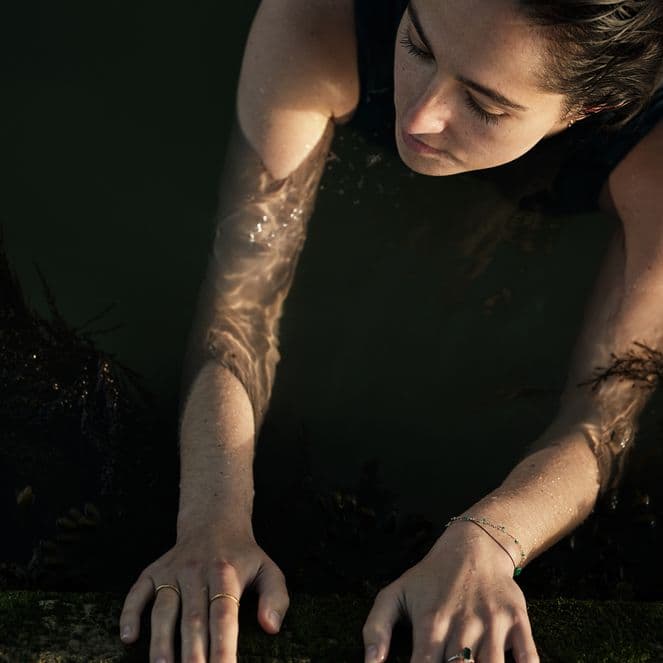
Freya at Walpole Bay Tidal Pool in Margate, England
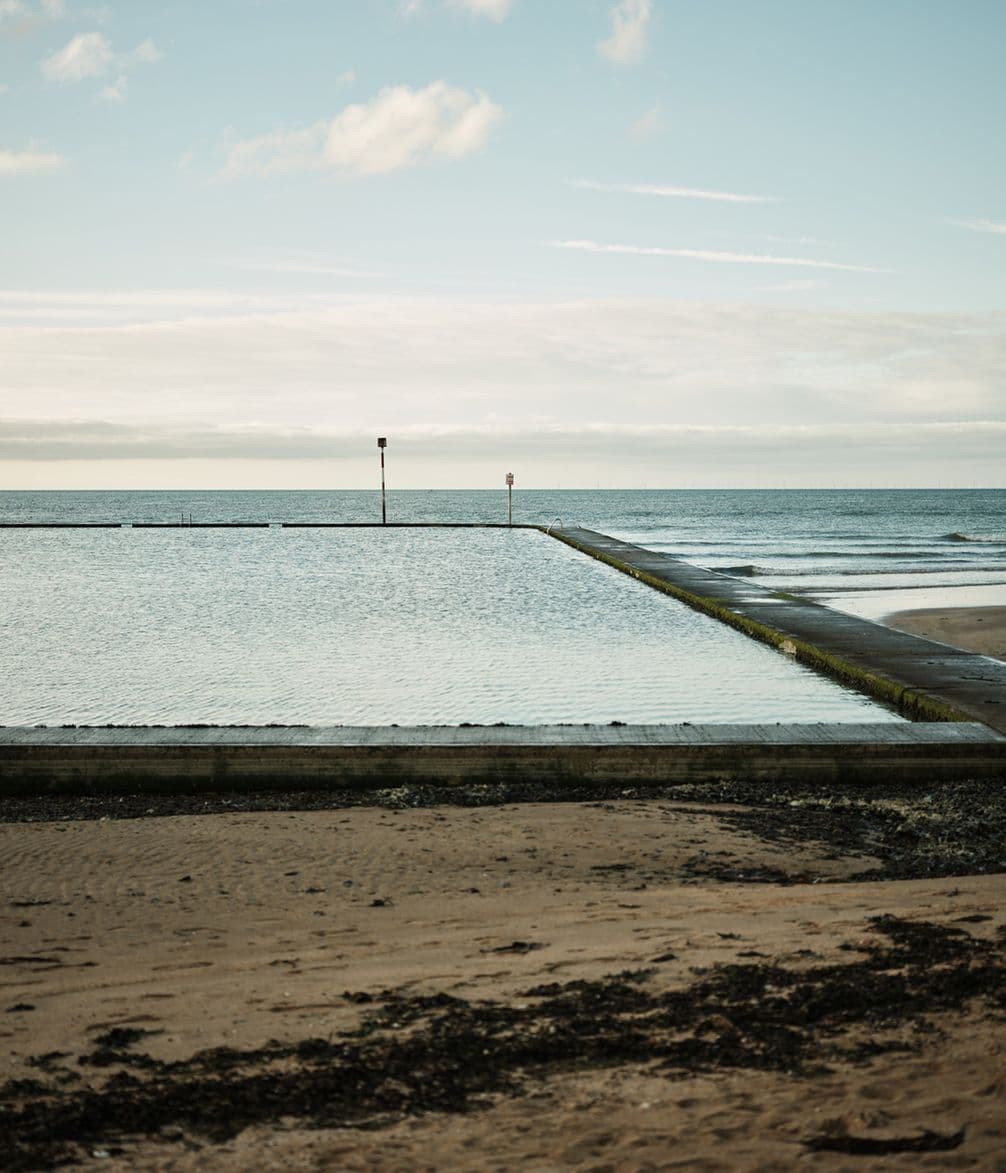
Walpole Bay Tidal Pool
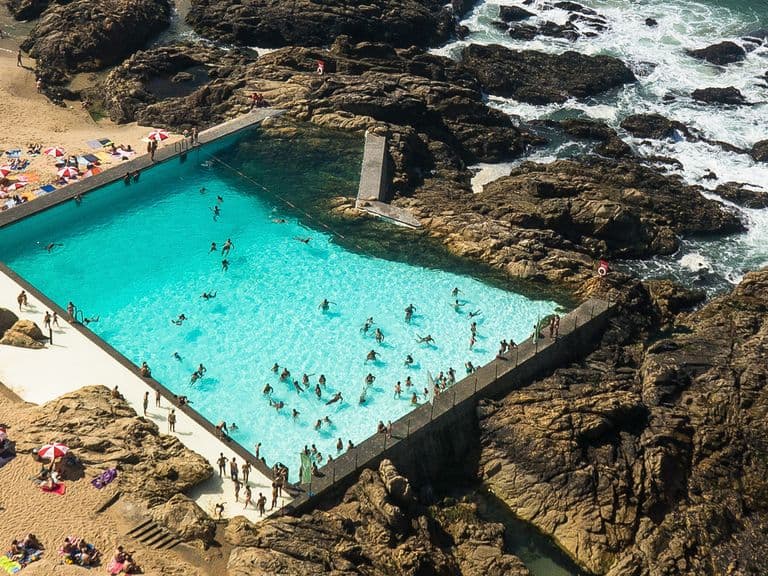
My journey began in 2022, when I swam every tidal pool in Britain. A tidal pool is a natural seawater pool with a man-made element, and these pools drew me in as a metaphor of sorts – a safe place to swim in turbulent waters. When my younger brother, Tom, died of bone cancer in 2016, my grief felt overwhelming. I needed to dip my toes into emotions such as anger, regret, guilt and confusion without being swept away. So I travelled to every tidal pool in Britain and wrote about the adventure in The Tidal Year. My hope was that cold water could be a natural antidote to loss and I’d arrive at a feeling of being “fixed”. Of course, that didn’t happen. But I did find connection on the journey. I met people who shared my passion, many of whom were also searching for something through cold water swimming.
Water creates the conditions for a different kind of travel. It slows time down. It removes the performance of sightseeing. It takes me places I wouldn’t otherwise go
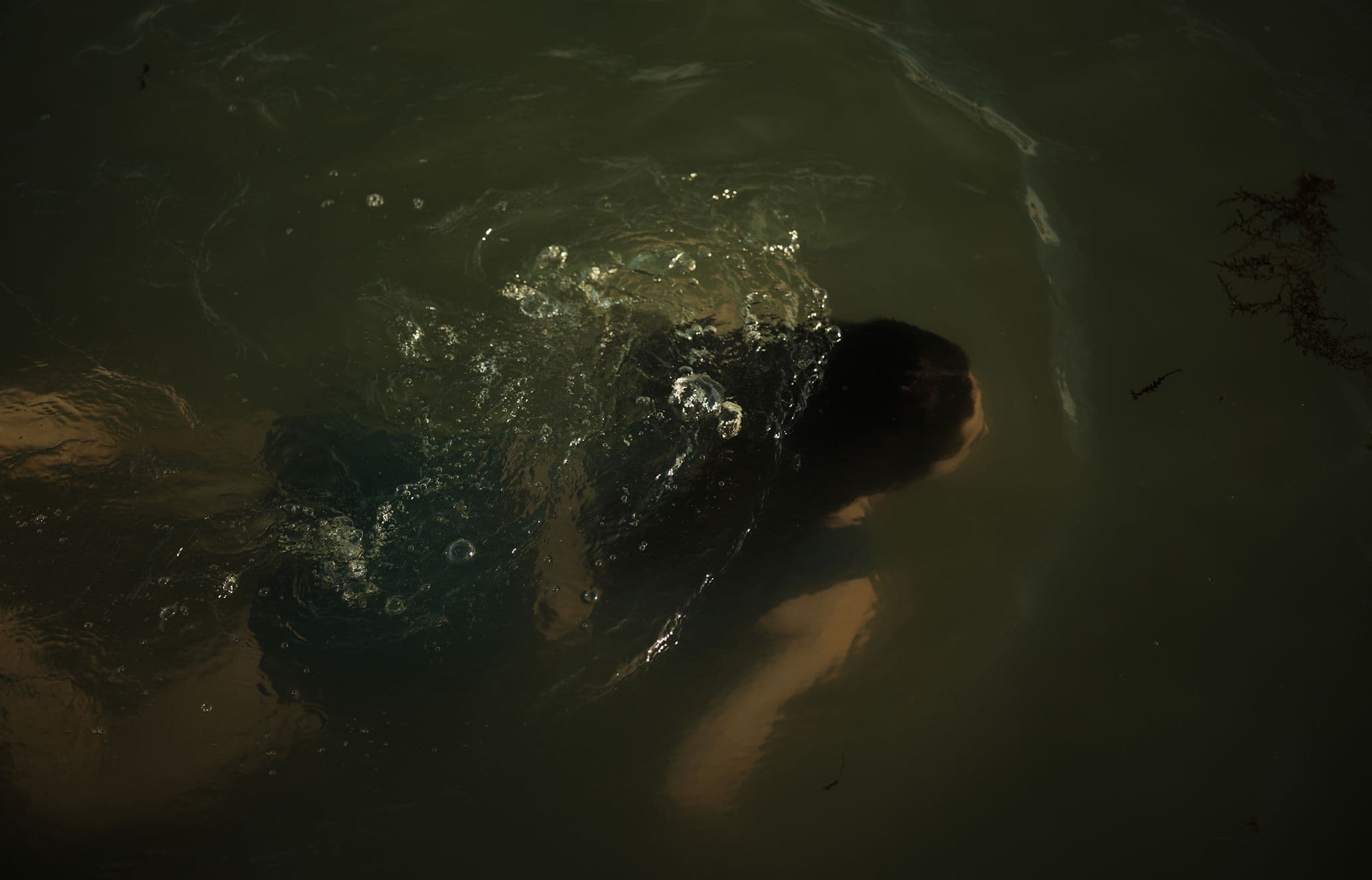
Ise-Shima National Park, Japan
When I began planning a trip to Japan with my partner, Jem, I think we both felt the pressure of this being a dream trip. Much of what we saw online emphasised cramming in as much as possible, from discovering the must-sees and booking unmissable restaurants months in advance. Eventually, we decided to approach the holiday differently, asking ourselves what extraordinary experiences we could have while in Japan. It became clear that we should visit the coast of Mie prefecture and meet the ama divers of Ise-Shima. We decided to spend time in Kinosaki, Japan’s famous onsen town, and seek out some great baths in Tokyo.
&w=3840&q=75)
Freya and Jem with ama divers in Ise-Shima
&w=3840&q=75)
&w=3840&q=75)
&w=3840&q=75)
We travelled to Ise-Shima, a peninsula of small islands on the southern coast of Mie prefecture, where we swam with an ama diver called Mia. For more than 3,000 years, the women, known as ama, have dived these waters without breathing apparatus, surfacing with baskets of shellfish, abalone, sea urchins and seaweed. They practice isobue, a controlled breathing technique that enables extended immersion.
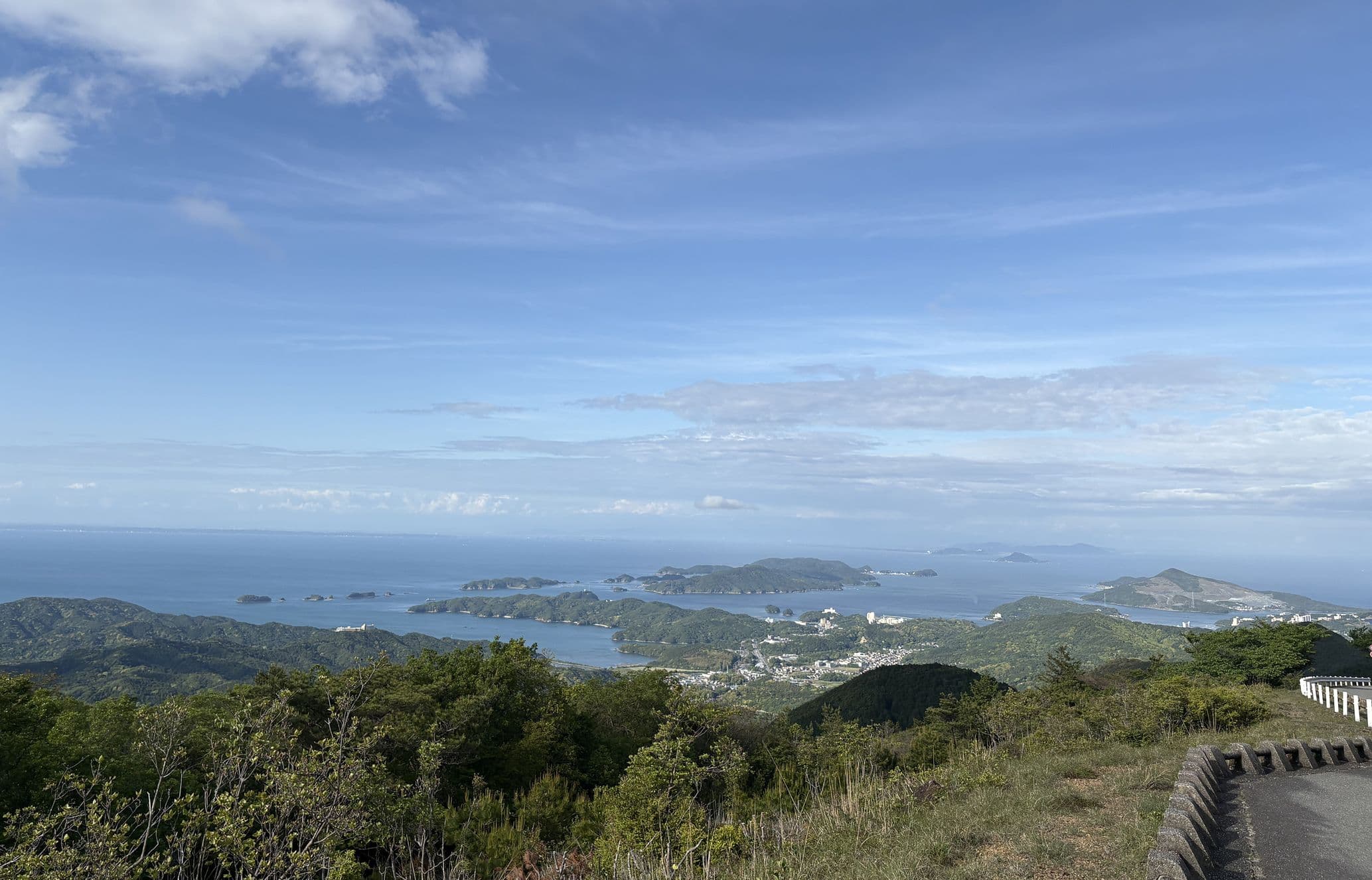
Ise-Shima National Park
During our stay at the onsen resort Amanemu we joined Mia on a boat trip around Ago Bay. We wore a tenugui – a white cloth headscarf adorned with two talismans intended to bring the divers good luck: a star drawn in a continuous line represents a safe ascent to the surface, while a cross-hatch pattern is designed to ward off evil. Signalling to one another beneath the water, we held our breath and searched for shellfish. Although we’re both confident swimmers, we were, of course, nowhere near as skilled as Mia at freediving. She would often dive for sea urchins and then discreetly move them to a higher rock, pretending we had found them ourselves.
For more than 3,000 years, the women, known as ama, have dived these waters without breathing apparatus, surfacing with baskets of shellfish, abalone, sea urchins and seaweed
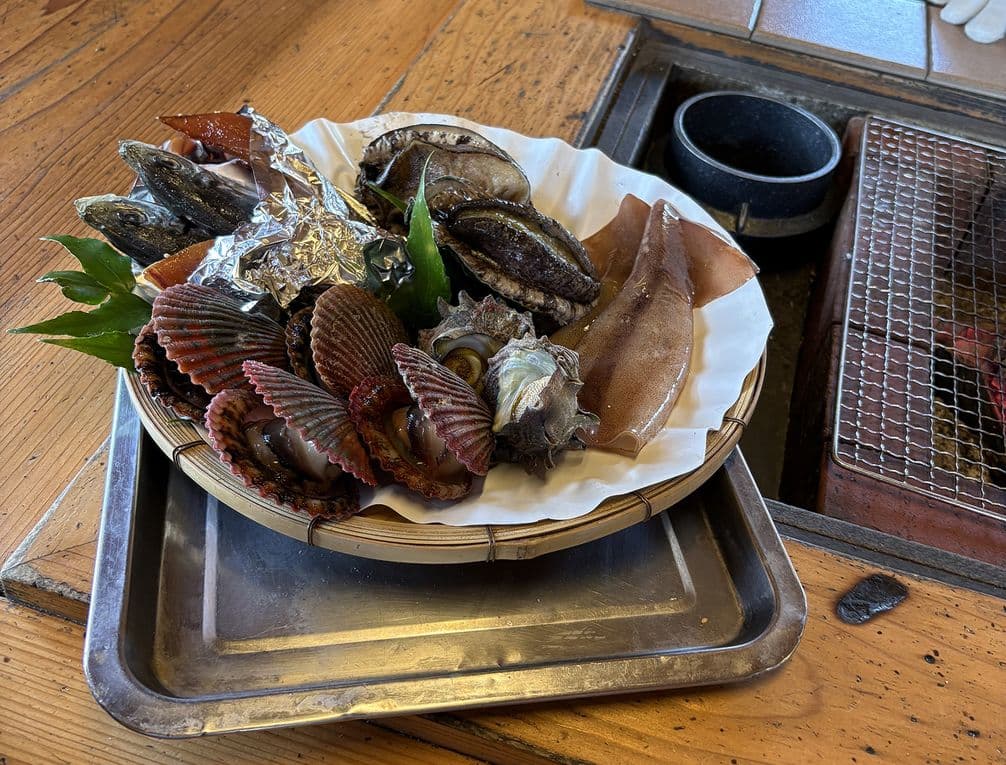
Seafood lunch in an ama hut
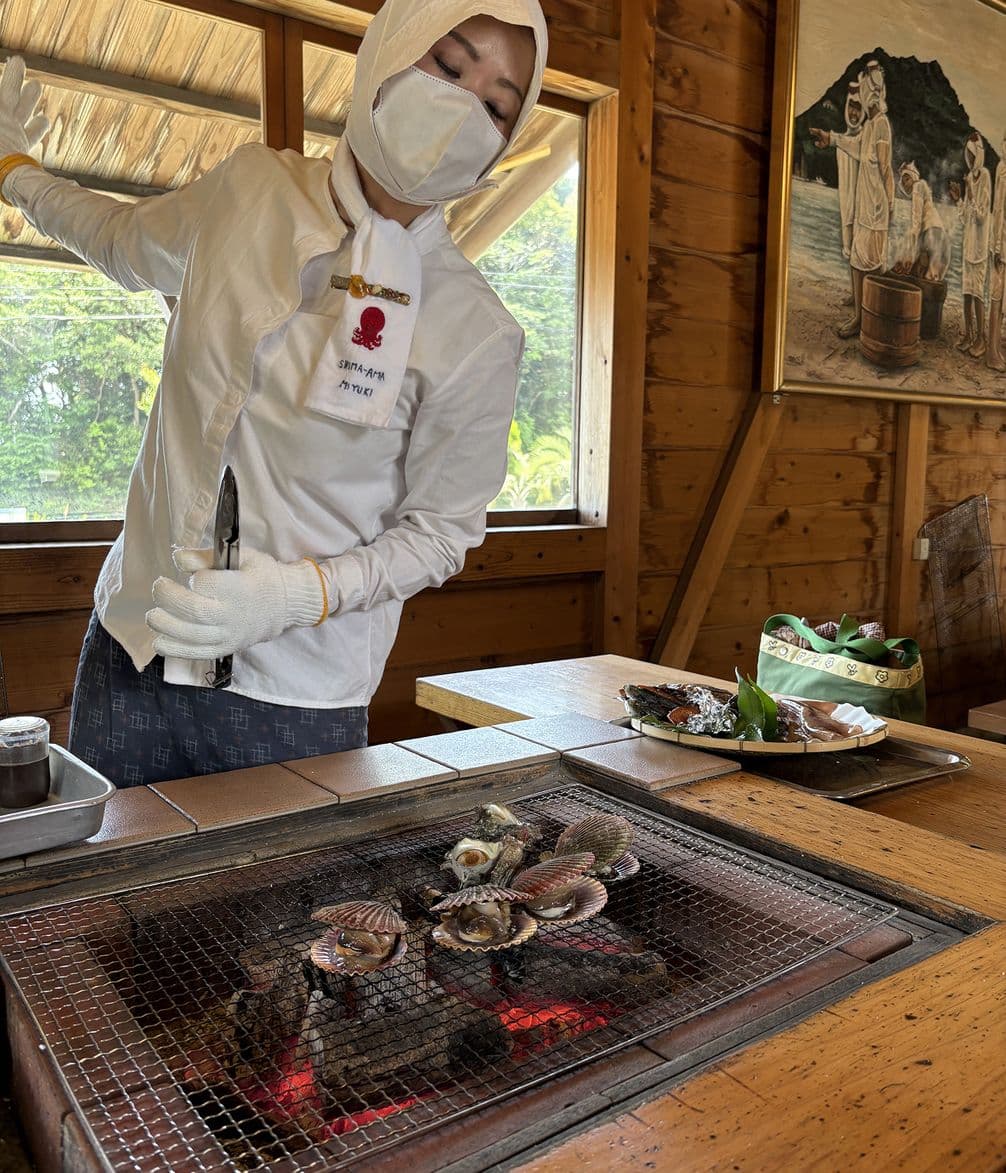
We took our haul back to a hut where Mia turned cuttlefish and mackerel over hot coals, the skin blistering and the sharp tang of charcoal mingled with the sea air. A translator joined us and asked Mia what she enjoyed most about this way of life. “The sea is always changing,” she replied. “Every day, the colour and the water are different.”
As we discussed her connection to the sea, it struck me that there was much to learn from this sustainable way of fishing. Ama don’t take more than they need, both out of a respect for the ocean and because of the physical limits of how long they can spend in the cold each day. When they find an abalone – a flattened seasnail with a sweet, buttery taste – they measure the shell and leave it until it’s bigger. We could all learn to be more patient when it comes to our rewards. Mia emphasised the importance of consistency. She told me she dives where the water is shallow enough to work steadily, because diving too deep means needing more than a minute’s recovery between descents. It’s better, she said, to know your limits and keep going for longer.
At their peak, there were around 6,000 ama in Ise-Shima, but their numbers have dwindled as more young women have moved to the cities for work. The profession is now designated by the Japanese government as an Important Intangible Folk Cultural Property. Divers gather in the ama huts before and after entering the water, cooking their catch over an open fire. Mia told me that the women mentor one another, and that it’s a way of life built on friendship, communication and a gossip over lunch. Ama must learn to be loud and speak up in order to communicate with the boat from the water. “You can’t speak quietly like you have a secret,” she told me.
&w=3840&q=75)
Kinosaki Onsen, Hyogo
&w=3840&q=75)
Nishimuraya Honkan, Kinosaki
&w=3840&q=75)
Private Onsen at Nishimuraya Honkan, Kinosaki
&w=3840&q=75)
Nishimuraya Honkan, Kinosaki
From Ise-Shima we drove to Nagoya, left our hire car in the station (everything, including car rental is exceptionally efficient in Japan) and caught the train to Kinosaki Onsen, a hot spring town in Hyogo prefecture where seven public bathhouses sit along a willow-lined canal. The tradition is to move between them, onsen-hopping in your yukata (summer kimono). In the evening, the streets fill with people shuffling in wooden sandals from one bath to the next. We stayed at Nishimuraya Honkan, a traditional ryokan (inn) set around a moss garden of maples and stone lanterns, with its own private outdoor onsen open late into the night.
I loved being around women of all ages at the onsens. It reminded me that we don’t really have enough of these intergenerational spaces where I come from
I’d been told Kinosaki was relatively touristy and was expecting crowds, but for whatever reason, as we explored on a Thursday evening, everyone in the baths seemed to be local. For our first stop we visited Mandara-Yu, historically known as Kinosaki’s very first onsen and often considered the town’s starting point as a well-renowned healing hot spring. It was quiet and I got the sense that everyone was simply enjoying a bath at the end of a long working day. Men and women bathe separately, and Jem and I discovered we had the strange talent of emerging from our respective onsens at exactly the same moment.
Next, we went to Ichino-yu, known as Water of Luck, which has baths carved into boulders and caves. A woman arrived with two small children and strangers took turns cooing over the baby, squidging his chubby little arms and holding the younger child while their mother bathed. I loved being around women of all ages. It reminded me that we don’t really have enough of these intergenerational spaces where I come from. I joined in the conversation, first offering a few enthusiastic “kawaiis” (cute), before talking to the women about their children and their lives. They told me they love London, and they love Oasis. Someone even sang the chorus of “Wonderwall”.
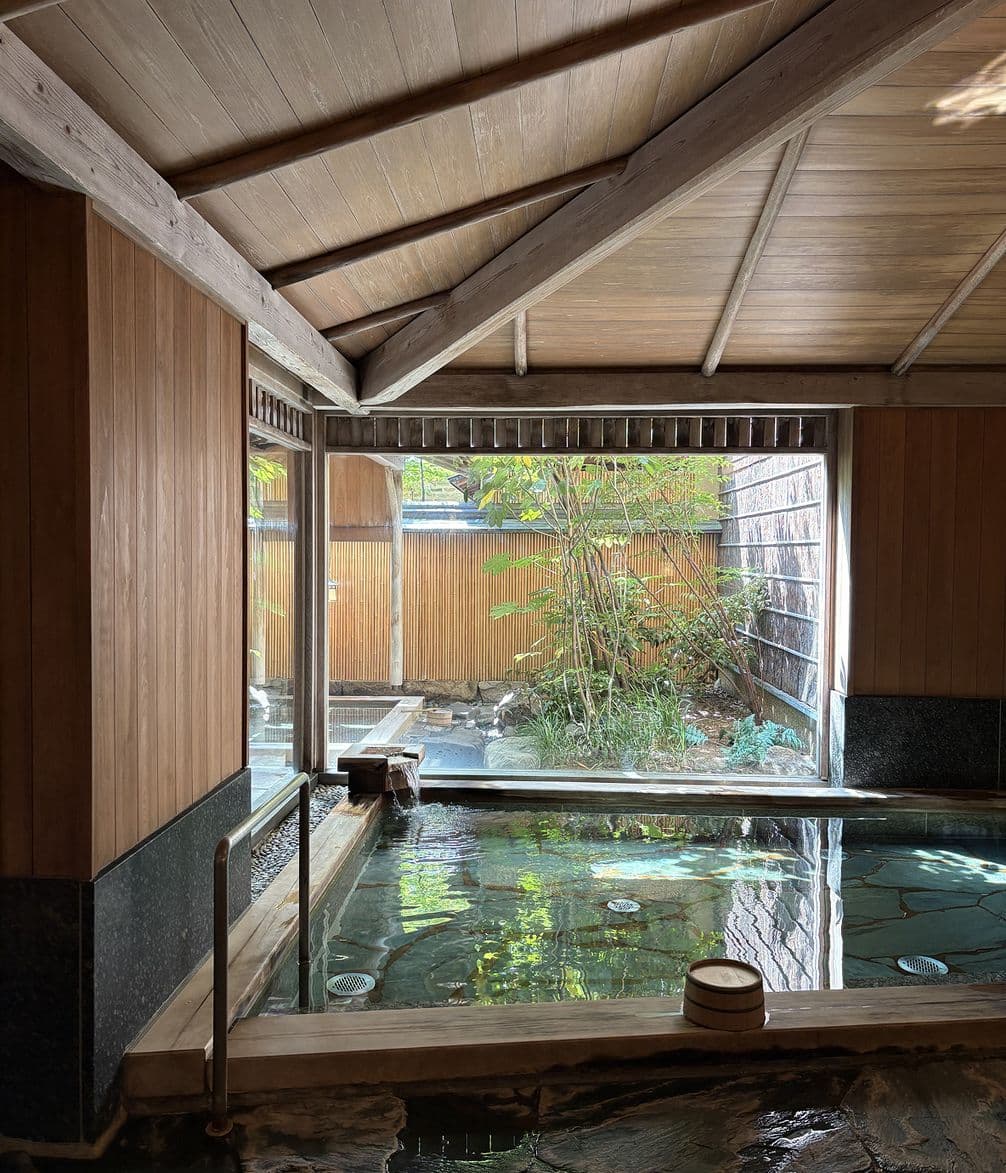
Onsen in Kinosaki
When you picture this onsen, you must remember that everyone is naked, which, really, was my favourite part. How glorious to be surrounded by so many lovely bodies and tummies and bottoms, with everyone smiling and utterly unconcerned by how they looked. At first I felt awkward – particularly about whether I’d correctly mastered the white towel balanced on my head to stop my hair touching the water, which I’d read was important etiquette – but I quickly shed my discomfort and remembered that my body’s purpose has nothing to do with a thigh gap and everything to do with its ability to move.
How glorious to be surrounded by so many lovely bodies and tummies and bottoms, with everyone smiling and utterly unconcerned by how they looked
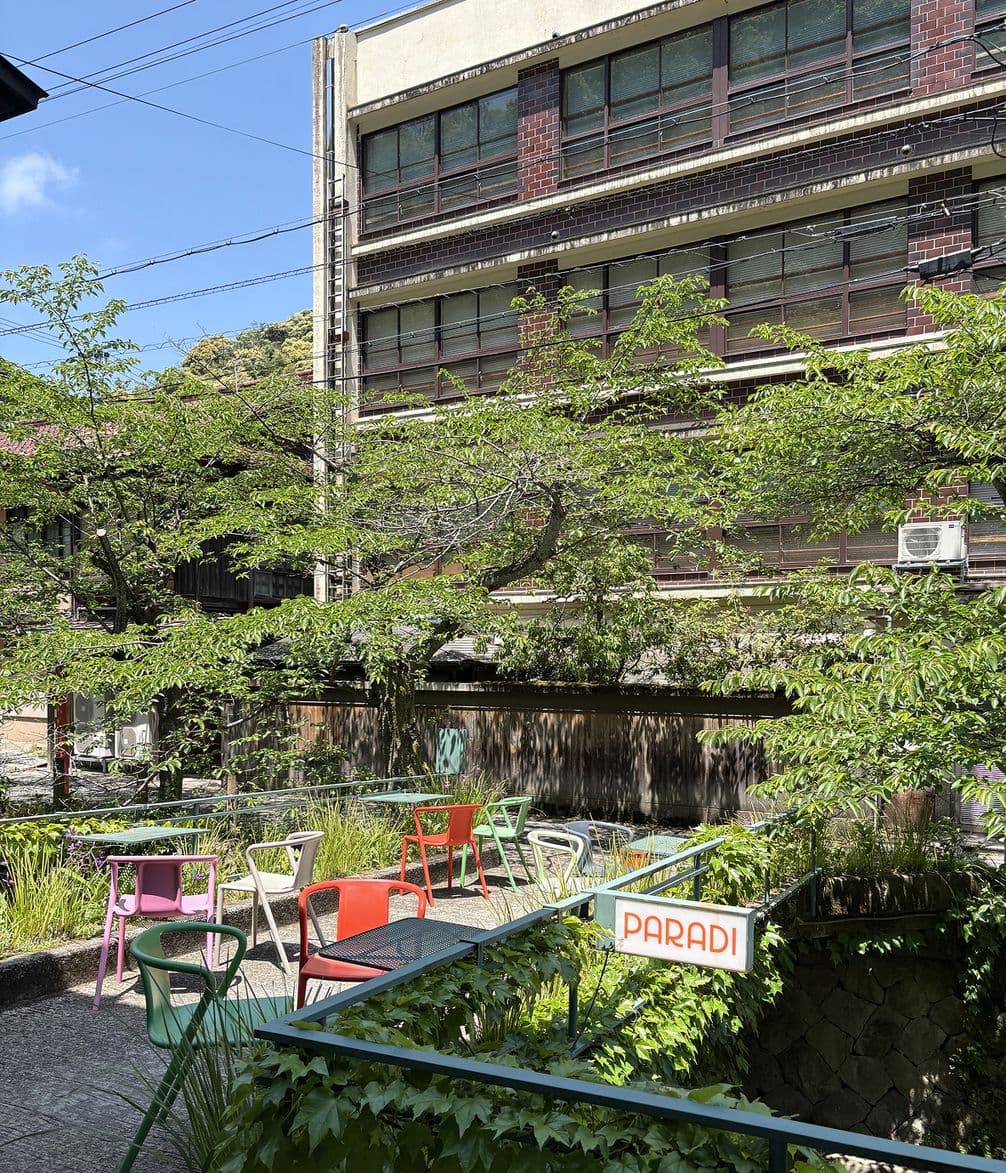
Coffee at Paradi in Kinosaki
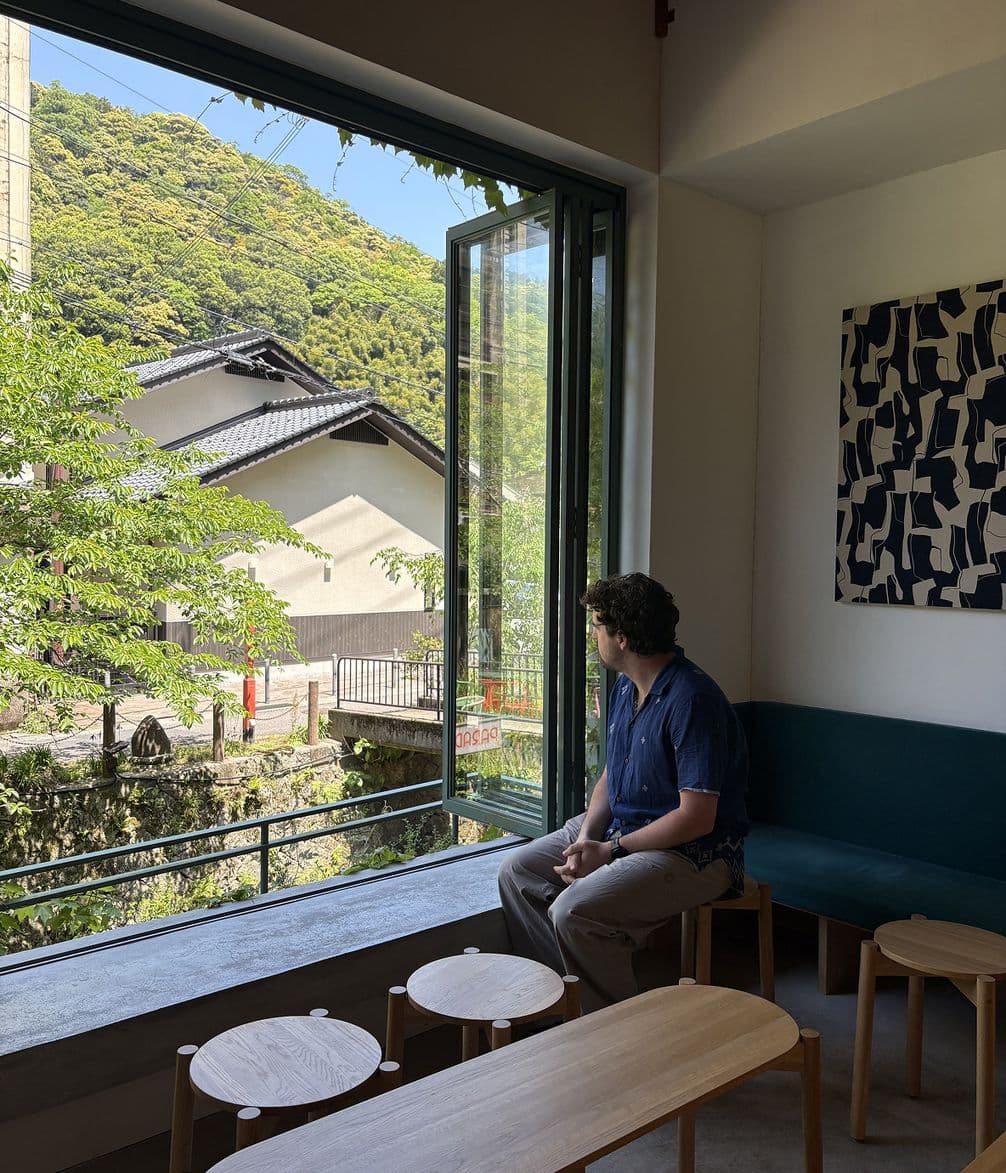
When friends ask about the highlight of my time in Japan, I tell them about the bridge over the Maruyama River in Kinosaki where a small cafe sells eggs. We placed ours in a net bag and lowered them into a natural hot spring for ten minutes before eating them with our feet dangling in the warm water. This is what I find water gives back, every time, in every country. Not a memory of a sight but a memory of a feeling. The jet lagged 1am soak in Tokyo. The ama who reminded me not to take more than I need from life. The sound of wooden sandals on stone at dusk. Most trips are built around what we will see, but I’ve learned to build mine around where I’ll be still. To shift my focus from what I can observe to what I can experience instead. The water is always there, wherever I go, and I never stop feeling surprised by how much it gives back the moment my body enters it.
Freya Bromley’s debut novel A Real Piece of Work is published by Penguin Books and is available now. You can explore Freya’s tidal pool project in her memoir The Tidal Year.
Replongez dans vos souvenirs en toute simplicité grâce à des fonctionnalités exclusives comme la reconnaissance faciale et les albums intelligents.


&w=96&q=75)
&w=96&q=75)


 États-Unis