
Verhalen
Heritage Heroes: the art of traditional bookbinding with Lorna McCurdy
Bookbinder and restorer Lorna McCurdy opens her studio to talk centuries-old techniques, patient craft and the quiet art of giving books a second life

11 nov. 2026∙8 min
Aanmelden
Log in

Nederlands (België)
USD $
Download vandaag nog de Popsa-app


Verhalen
Bookbinder and restorer Lorna McCurdy opens her studio to talk centuries-old techniques, patient craft and the quiet art of giving books a second life
11 nov. 2026∙8 min
Heritage Heroes celebrates the artisans preserving centuries-old crafts and traditions. In this series, we seek out the workshops and boutiques worth the detour, the experiences that capture the spirit of a destination and the keepsakes you’ll treasure long after the journey ends.
The bookbinder and restorer Lorna McCurdy is keeping the centuries-old art of bookbinding alive, one volume at a time. From fine leather bindings finished with gold tooling to the restoration of precious antiquarian books, her work marries traditional techniques with a distinctly creative approach. Each piece is made with patience, precision and a deep-rooted appreciation for the stories books hold.
Working from her peaceful studio in a rural village in Berkshire, Lorna draws on generations of craftsmanship, including tools passed down from her great-grandmother. With practice spanning bespoke commissions, intricate restorations and custom-made boxes, she brings new life to old books while finding fresh possibilities in an enduring craft. This spring, she showcased her work at Future Icon Selects during London Craft Week.
We caught up with Lorna to discuss the beauty of working by hand, and why, in an increasingly digital world, the pleasure of a beautifully bound book remains timeless.
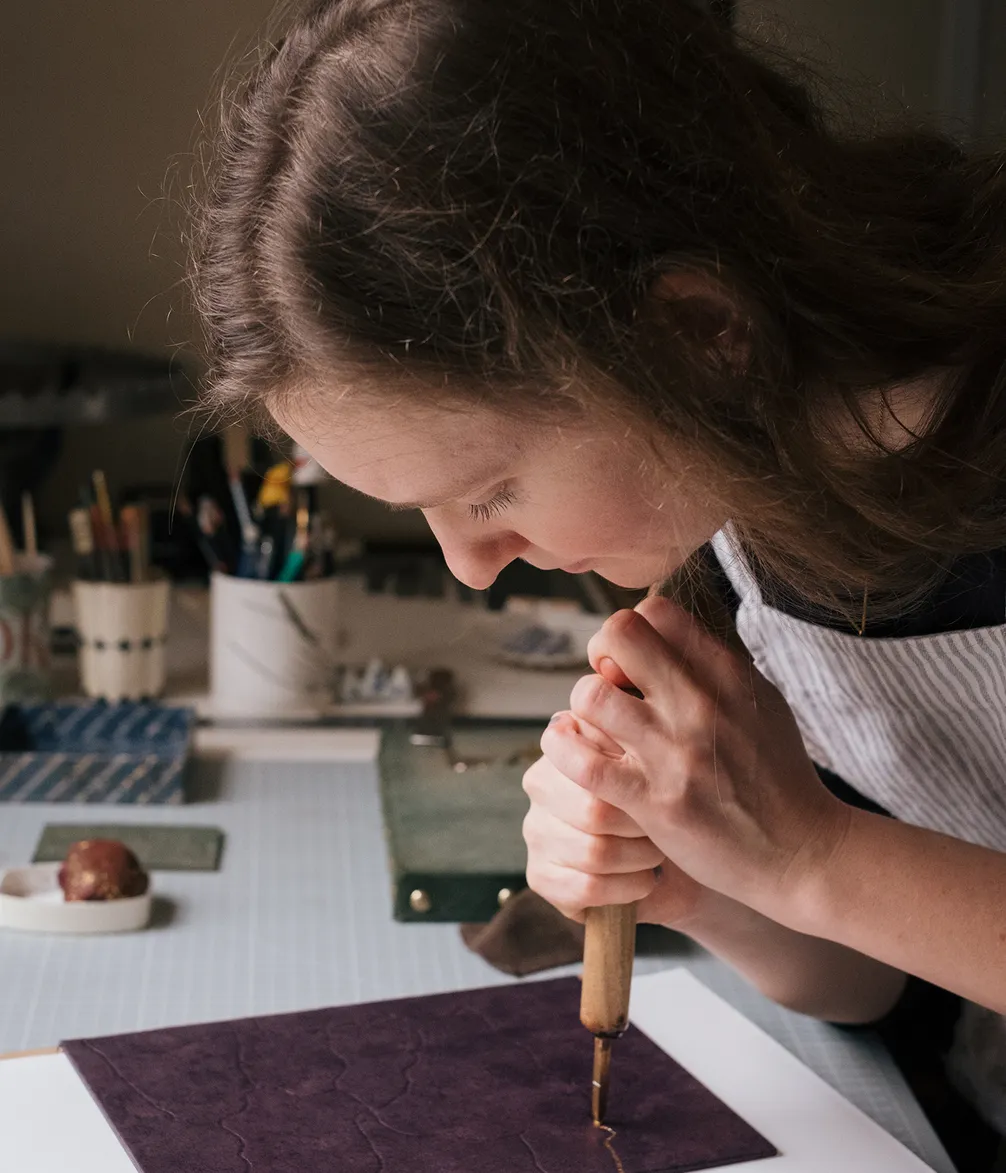
Lorna McCurdy gold tooling the cover of Sonnets of Greece and Italy. Photos: Mark Lord
As a child, I was captivated by the gold-shimmering spines of the leather-bound books in my grandparents’ drawing room. Handbound by my great-grandmother, a bookbinder in the early 20th century, they were precious objects I rarely dared to touch. That fascination stayed with me. I sought out leather-bound classics in secondhand bookshops as a teenager, then studied medieval manuscripts at university, drawn as much to the books themselves as to their history. When the chance to study bookbinding arose, I jumped at it.
Early in my training, I was fortunate enough to learn from two inspiring female bookbinders: Tracey Rowledge, who taught me gold tooling, and Kathy Abbott, who taught me most of what I know. They introduced me not only to exceptional craftsmanship but to a modern, creative approach that broadened my understanding of what bookbinding could be.
My approach has been shaped by the meticulous techniques I learnt from Kathy and Tracey and by my creative upbringing. My parents work in the arts, and I was always making as a child, sticking bits of paper together or painting. My work brings together a commitment to craftsmanship and a strong sense of creativity.
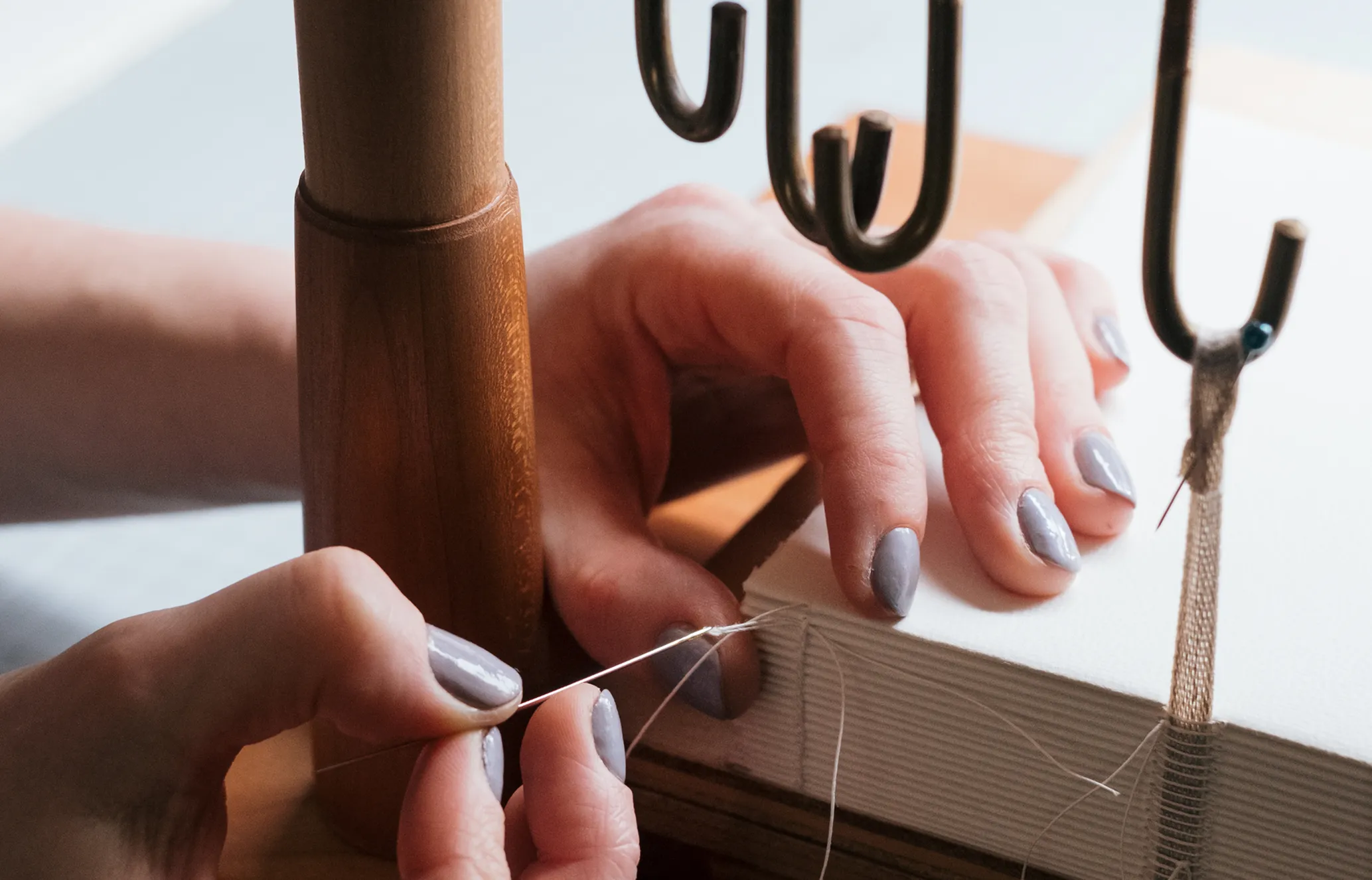
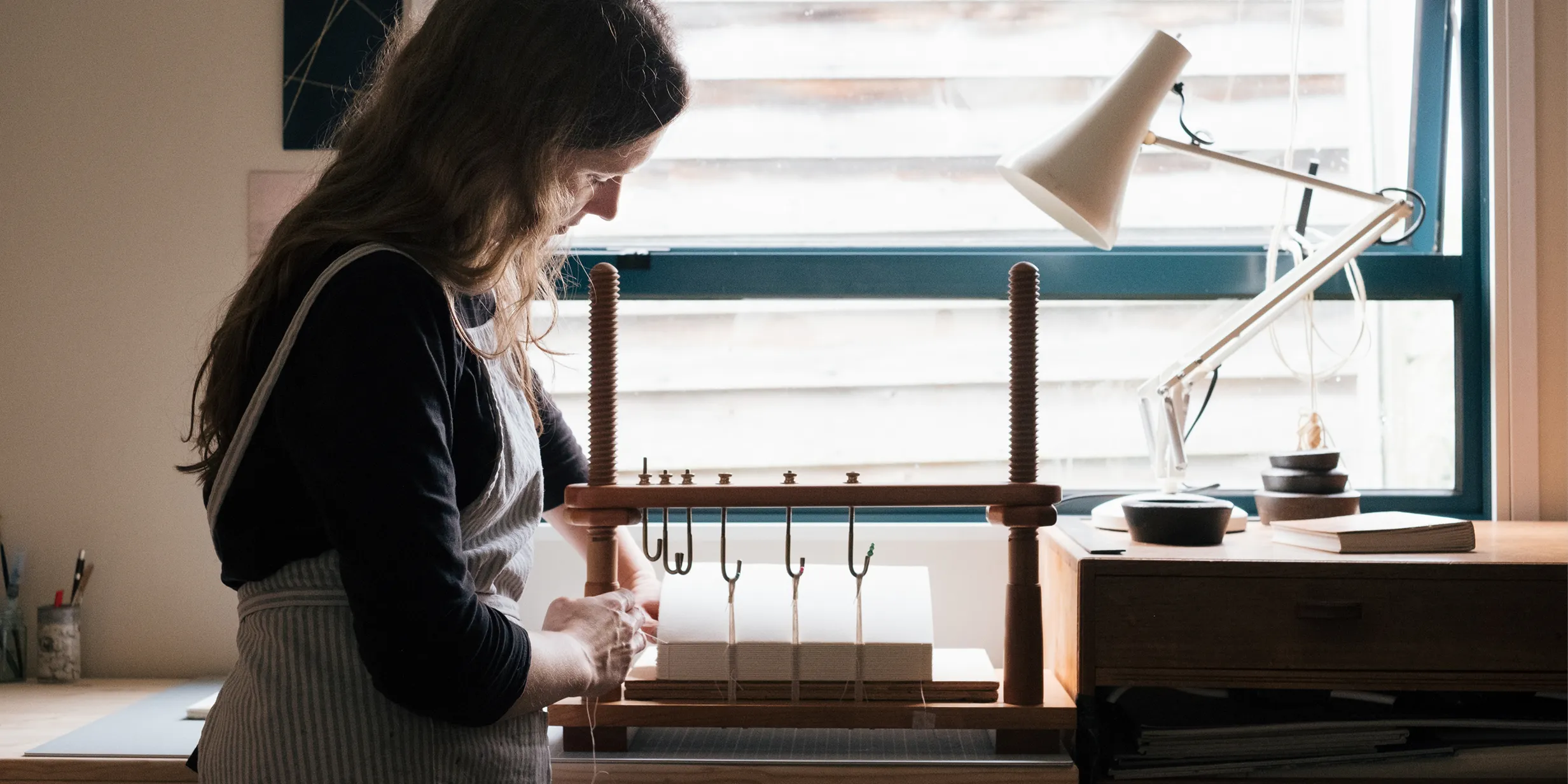
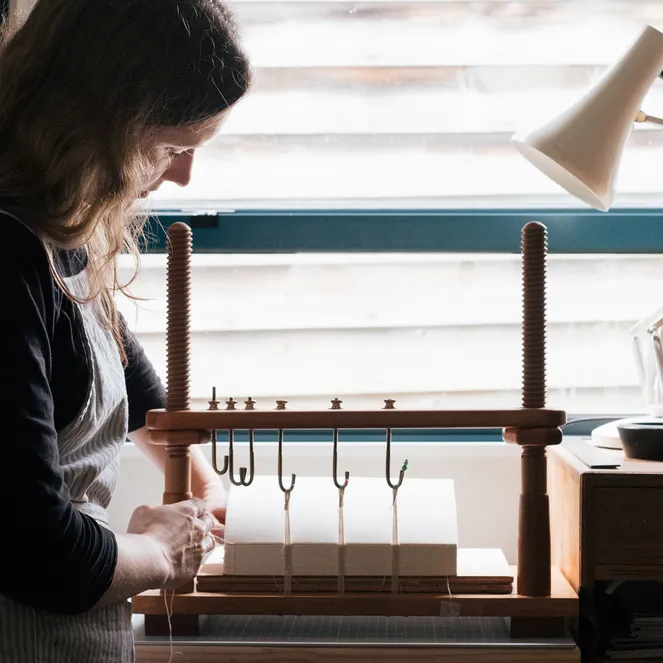
Lorna hand-sewing pages. Photo: Mark Lord
Bookbinding is a varied craft. One day I might be designing a unique fine leather binding; the next, restoring a damaged antiquarian book or making a bespoke box, in the finest modern materials, to house a particular book or object.
I enjoy this variety, which brings together meticulous craftsmanship and creativity, whether I’m designing something new or solving a problem. “Not every book is made the same” is something I like to tell people.
Many things inspire my designs, but the starting point is always the book. Often the text sparks ideas, or the illustrations do. Sometimes I feel like an illustrator, bringing the book’s themes into its physical construction. My designs are rarely literal; I tend towards abstraction.
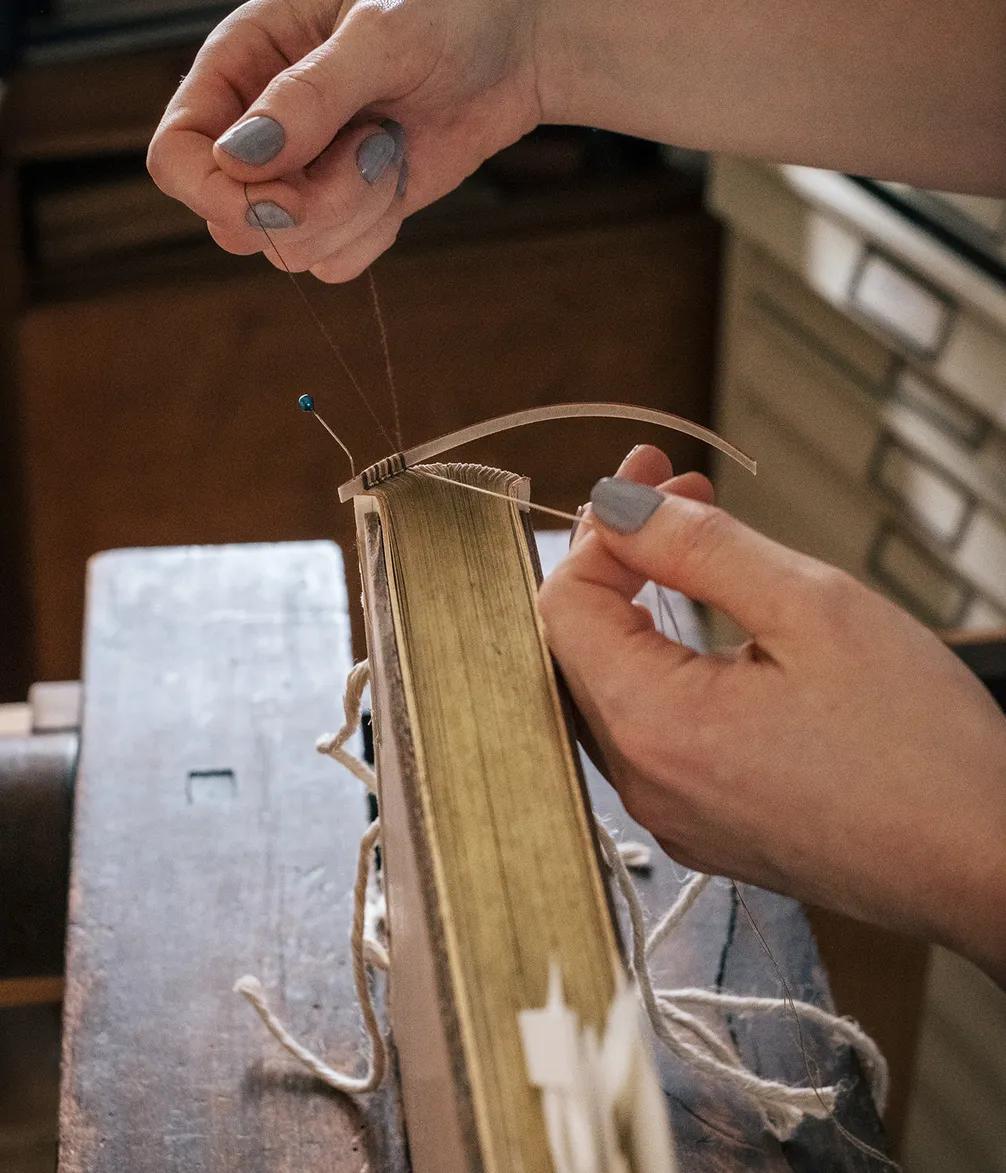
Some books take a few hours; others take a hundred. Most begin with paper to be folded: freshly printed pages for a small limited edition or one-off, or pages to be taken apart, repaired and rebound. Paper dictates much of what follows. Its grain determines how it folds; its thickness and printing influence my techniques. Once folded, the pages are sewn with strong linen thread suited in thickness to the paper and project. In bookbinding, everything is connected.
Next comes the cover, which can be attached directly to the pages or made separately and added at the end. I most often use leather, though cloth and paper are also options. The cover can then be gold-tooled with real gold leaf. A fine leather binding can require more than 50 steps, each demanding its own skills. It takes focus and patience, and often has my brain jumping between techniques.

Lorna at the blocking press. Photo: Mark Lord
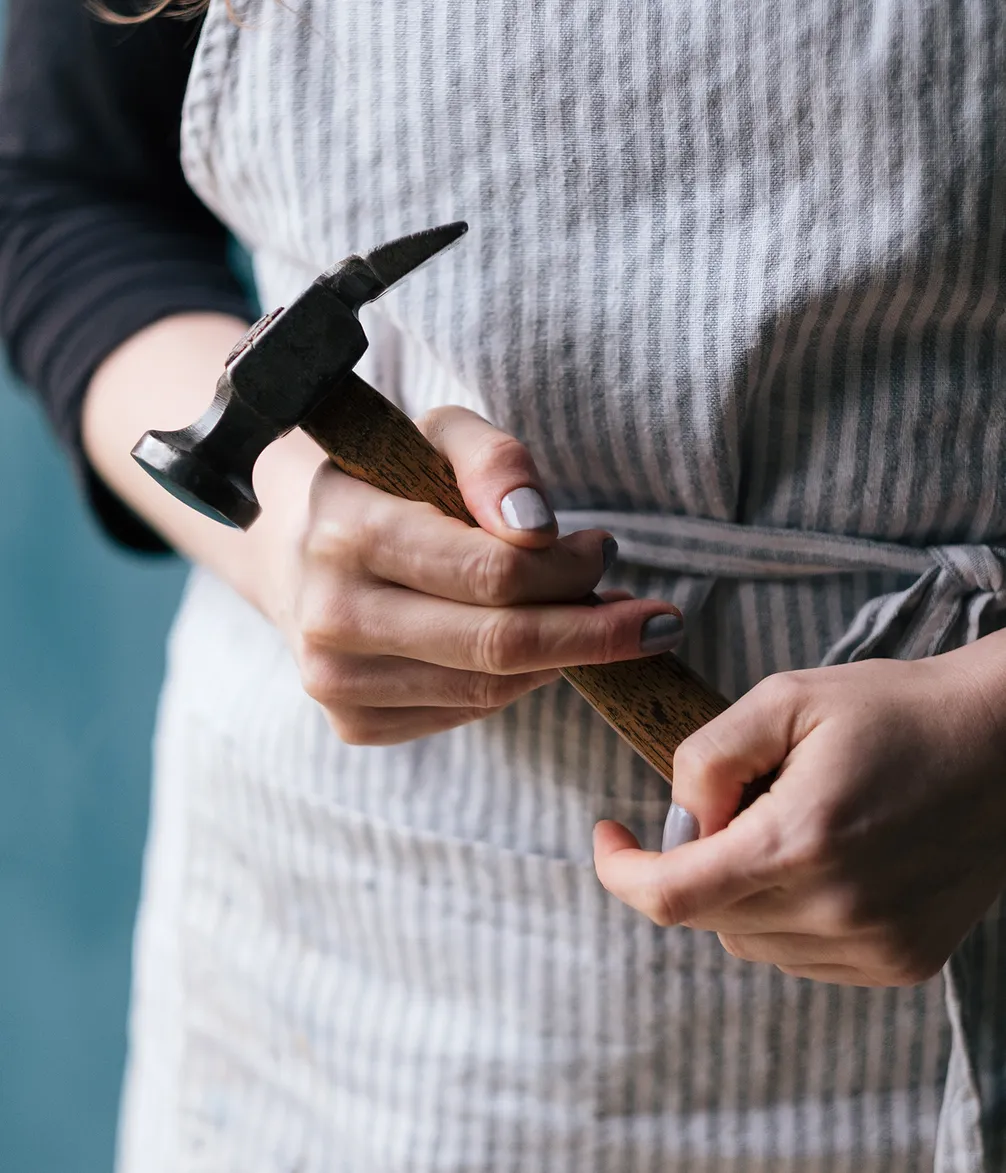
Bookbinding hammer, and sewing the endband. Photo: Mark Lord
I started my business around nine years ago. My studio is small but perfectly formed, packed with what the craft demands – cast iron presses, guillotines, benches, hot blocking machines and countless rulers, bone folders, hammers, knives, brushes, threads and papers. Some belonged to my great-grandmother and are particularly precious, including a well-worn leather paring knife with her initials stamped on the blade. It’s a lovely reminder of the past living on in my work today.
My studio sits on the edge of a rural village, surrounded by nature. It’s a tranquil place, where you can hear birds singing through the windows. Quietly brimming industry within, peaceful nature without: the perfect place for me to work.
One of the great joys of my work is meeting people who share a love of books and hearing their stories and interests. A growing appreciation for books’ personal qualities and the histories they hold may explain why bookbinding has become a more popular hobby. Bookbinding is rewarding and joyous. I love the materials, from soft handmade paper and strong linen threads to cloths in a rainbow of colours, and the repetitive, somewhat soothing process of sewing and folding paper. I suspect others find the same pleasure in it that I do.
Handbound books are tactile. I hope that when a client picks up their book, they feel the care and attention that has gone into it, and, in the case of a fine binding, a sense of the delicacy and preciousness of these objects.

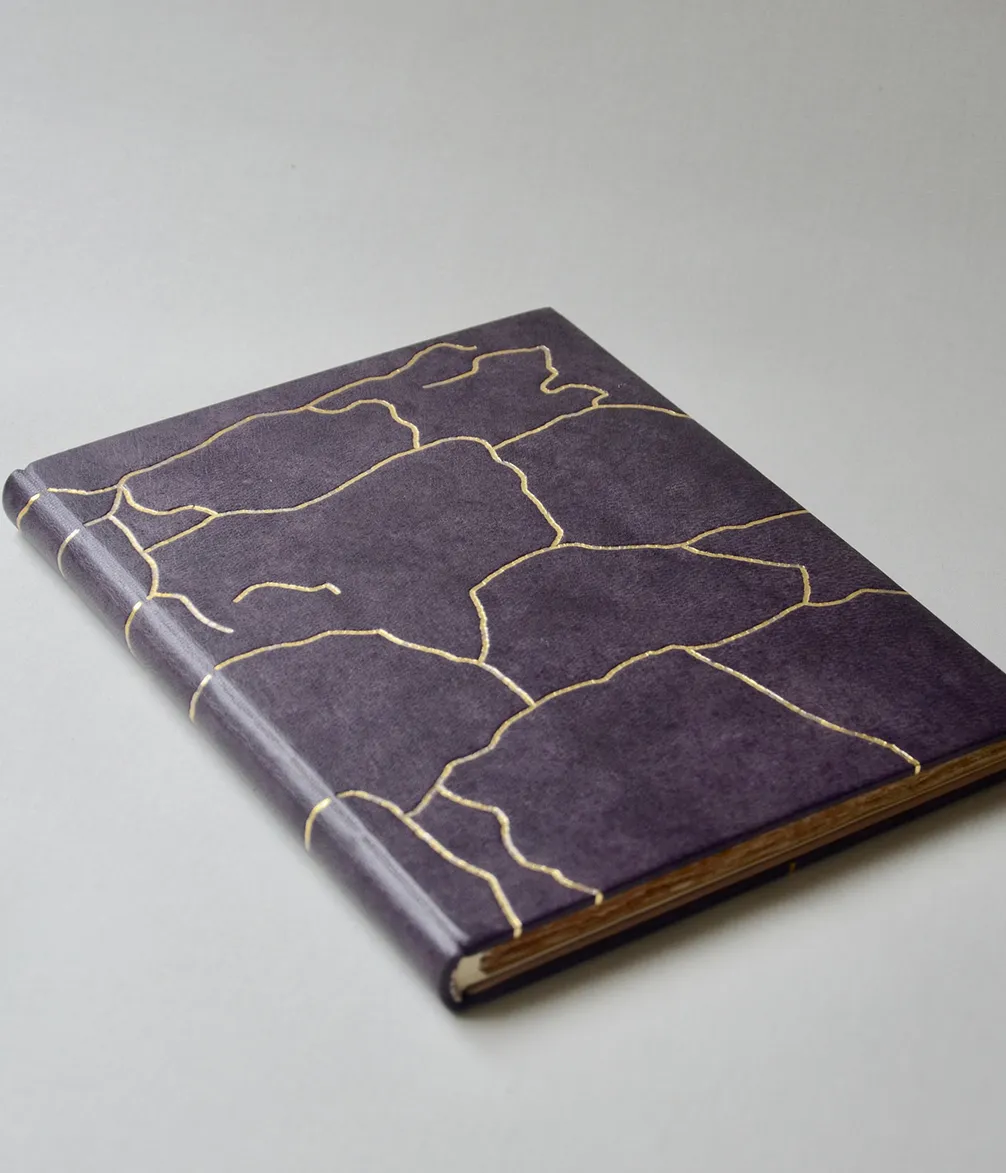
One of Lorna’s hand-bound books. Photo: Mark Lord
A turning point in my practice was rebinding an exceptionally large 18th-century book filled almost entirely with illustrations. Its cover boards were badly decayed, leaving the illustrations unprotected. The owner wanted a historically appropriate binding, but the book’s size demanded modern techniques to reinforce its structure.
The result was a leather-bound book with traditional gold tooling. What stayed with me was the combination of old and new. Bookbinding is an ancient craft, and many techniques have remained unchanged for centuries. I love applying these traditional, handmade methods to modern projects, while introducing modern techniques when working with historical books.
Herontdek herinneringen sneller met speciale functies, zoals gezichtsherkenning en Smart Albums.






 Verenigde Staten