Insights

The most photographed spots across Japan in autumn

Planning a trip to Japan? From Tokyo’s oldest temple to Kanazawa’s most colourful garden, here are ten beautiful spots to have on your radar

Bradley Grantham

Bradley Grantham

Científico jefe de datos

28 sep 2026∙10 min

The most photographed spots across Japan in autumn

Words by Georgina Groom-Rietschy

Japan has experienced a tourism boom in recent years. In 2025, the country welcomed more than 42 million international visitors – a 34% increase from pre-pandemic levels, according to the Japan National Tourism Organisation. Autumn remains one of the most popular times to visit, as temperatures cool and the foliage turns. Our data science team has pinpointed the most photographed places across Japan this autumn.

We compared data from September to November in 2024 and 2025 and found that Kyoto’s Fushimi Inari-Taisha and Kinkaku-ji retained the top two spots, respectively. Sensō-ji in Tokyo and Osaka Castle Park both climbed one place, while landmarks including Meiji Shrine also feature in the top ten. Read on to discover the most photogenic spots to add to your Japan itinerary.

Curious how we calculated the photo index scores? Read the methodology at the end of this article.

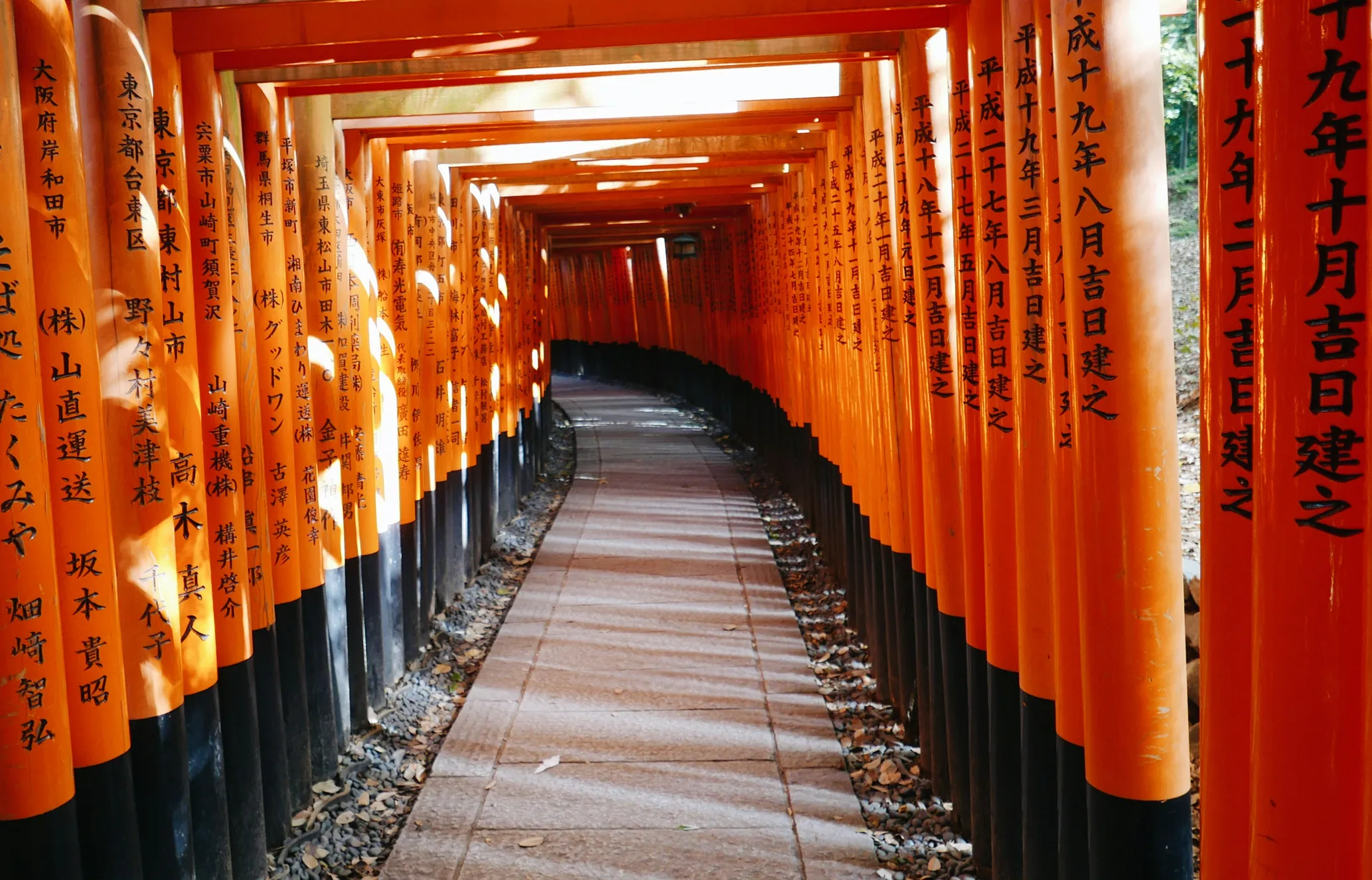
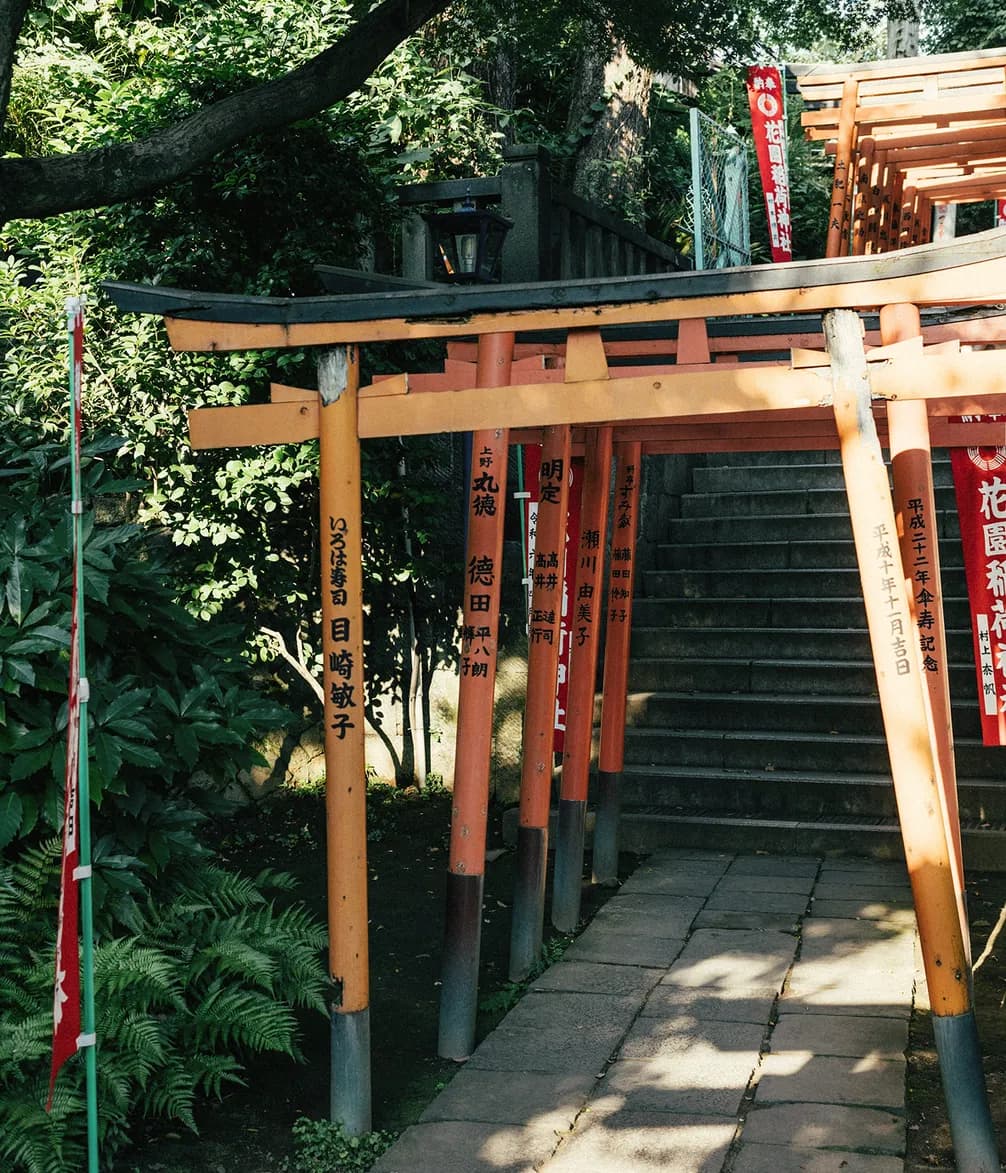
A path lined with numerous orange torii gates inscribed with Japanese characters, creating a tunnel-like effect in soft sunlight.

Fushimi Inari-Taisha, Kyoto. Photo: Falco Negenman, Unsplash

1. Fushimi Inari-Taisha, Kyoto

Photo index score: 100

Fushimi Inari-Taisha is dedicated to Inari, the Shinto deity of rice, prosperity and business. The shrine is free to enter and open 24 hours a day. Arrive at the two-storey Romon Gate – donated in 1589 by Toyotomi Hideyoshi – which marks the boundary between the everyday world and the sacred grounds. Beyond it, follow the Senbon Torii, a sequence of more than 10,000 vermilion gates lining the mountain trails, each donated by individuals in gratitude for prosperity or in hope of future success, their names inscribed on the wood. Get there early for the dappled morning light, and look out for the fox statues – believed to be Inari’s messengers.

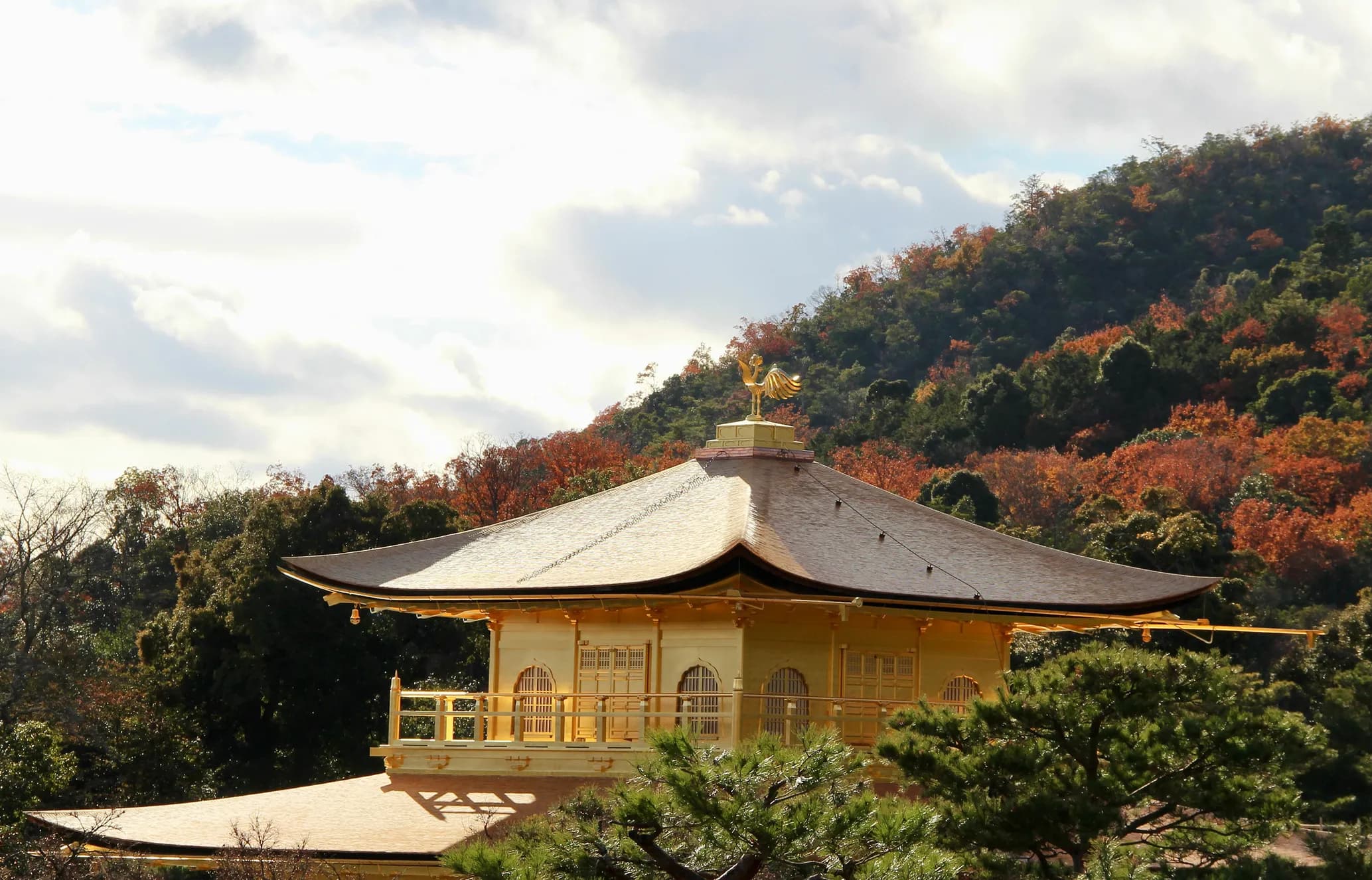
Golden temple roof with a phoenix statue, surrounded by autumn trees and hills under a cloudy sky.

Kinkaku-ji, Kyoto. Photo: Jean-Claude Dumont, Unsplash

2. Kinkaku-ji, Kyoto

Photo index score: 83

Kinkaku-ji, also known as the Golden Pavilion, is one of Kyoto’s most striking sights. The Zen temple is a Unesco World Heritage Site, famed for its pavilion, most photogenic in autumn when gold leaf meets fiery foliage. Beyond the Pavilion, explore the gardens around Kyōko-chi, or Mirror Pond, where calm waters create the classic reflection shot, framed by red and orange maples.

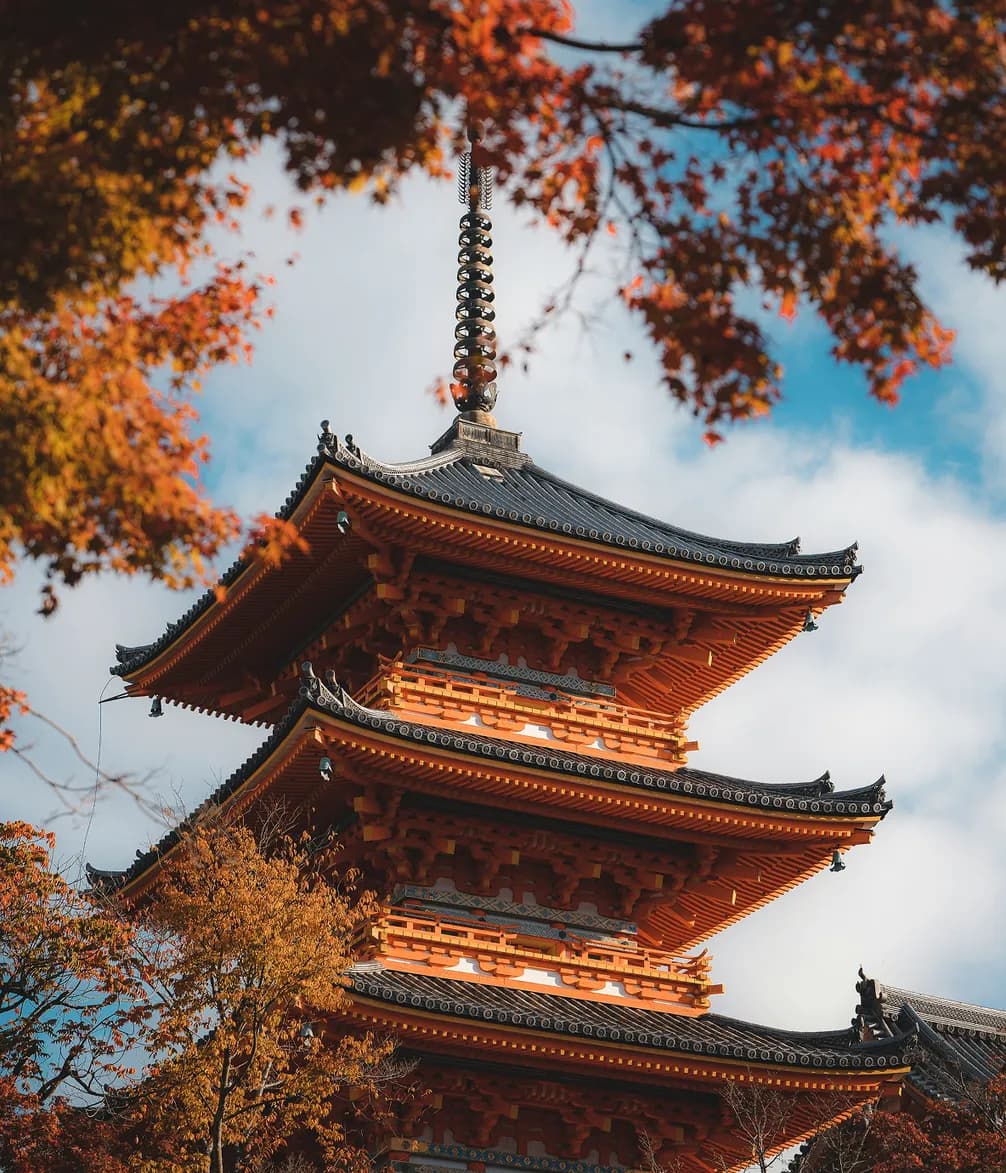
A traditional Japanese pagoda with red leaves in the foreground, set against a partly cloudy blue sky.

Kiyomizu-dera, Kyoto. Photo: William Justen, Unsplash

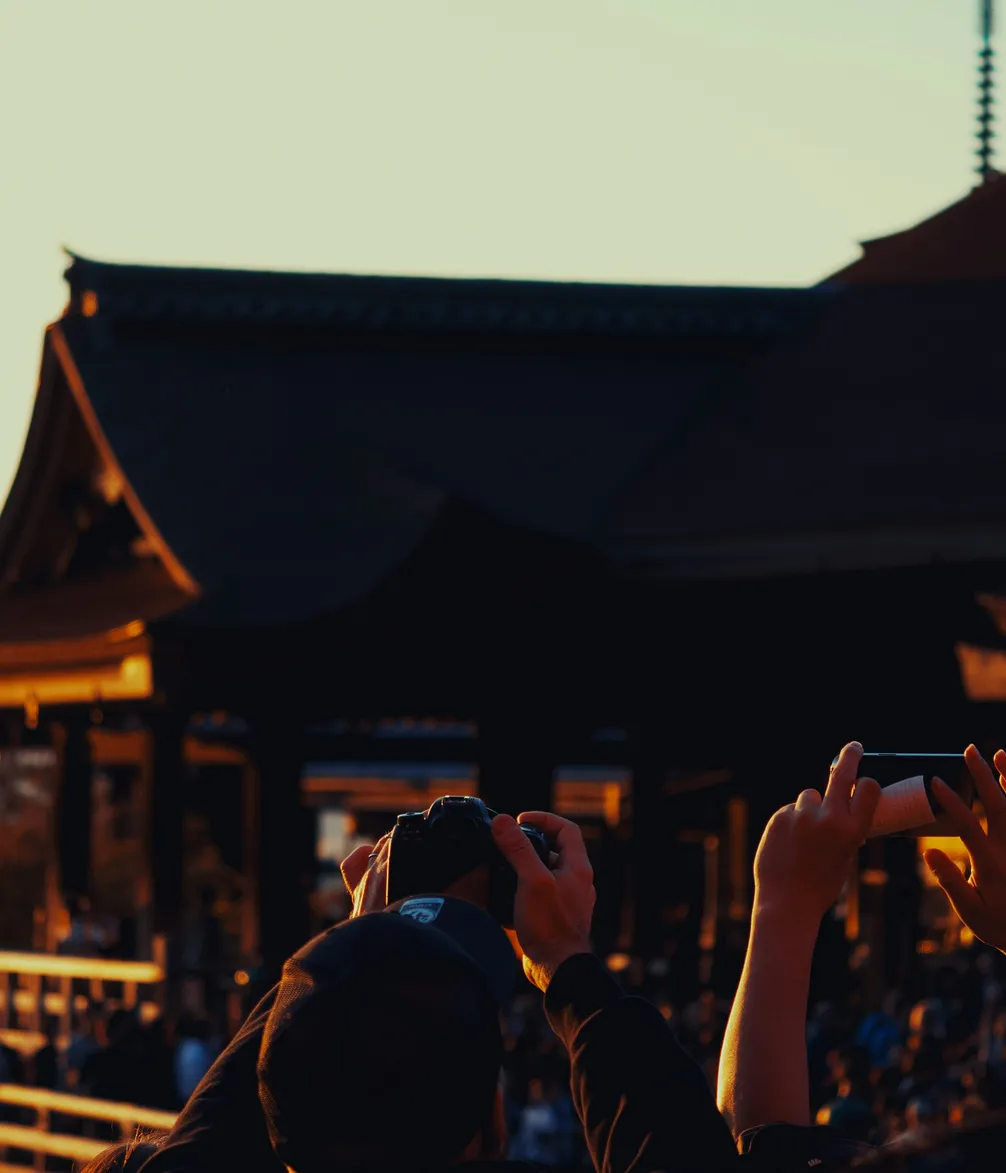
People taking photos with cameras and smartphones at sunset, with silhouettes of traditional architecture in the background.

Photo: Mahesh Ranaweera, Unsplash

3. Kiyomizu-dera, Kyoto

Photo index score: 71

Kiyomizu-dera rewards a visit in any season, with cherry blossoms in spring and maples flaring red in autumn. Its main hall stands 13 metres above the wooded hillside, offering sweeping views of Kyoto. Behind the hall, Jishu Shrine, dedicated to the love deity Ōkuninushi, has stones roughly 10 metres apart; walking between them with your eyes closed is said to bring luck in love. At the temple’s foot, the Otowa Waterfall splits into three streams, each said to grant a wish: longevity, academic success or love. After your visit, explore Higashiyama’s streets, lined with independents selling sweets and crafts.

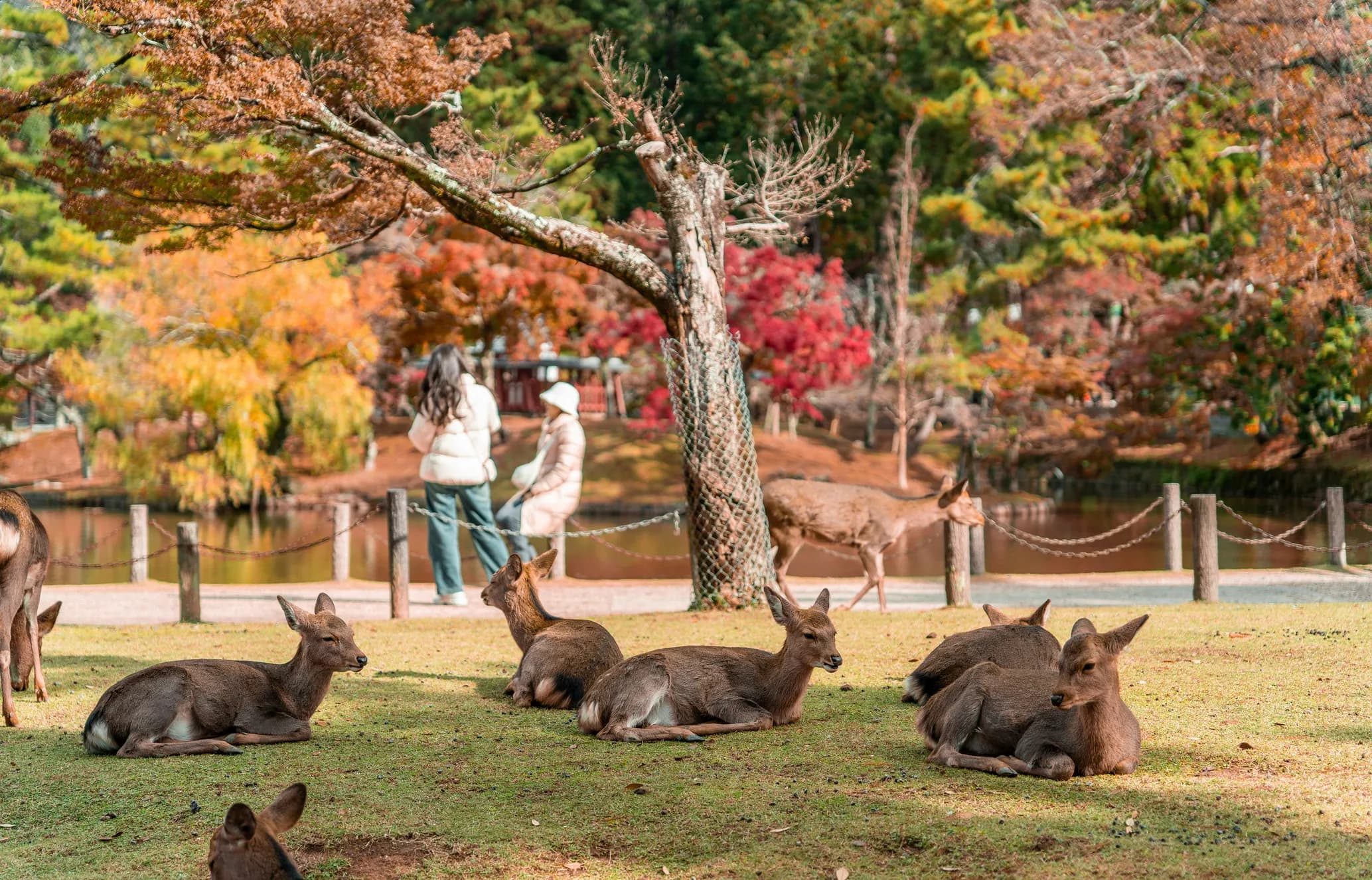
Deer relax on grassy ground in a park during autumn, with colorful trees and two people in the background.

Nara Park, Nara. Photo: Koon Chakhatrakan, Unsplash

4. Nara Park, Nara

Photo index score: 57

Nara, between Kyoto and Osaka, moves at a slower pace than its neighbours. Nara Park is home to more than 1,000 deer, considered messengers of the gods after a deity arrived riding a white deer. Visitors buy crackers to feed them, and many deer bow in return. In autumn, golden ginkgo and red maple trees provide the perfect backdrop for photos, with the hillside veranda of Nigatsu-dō a fine sunset spot. Elsewhere in the temple grounds, the Great Buddha Hall houses the 15-metre bronze Great Buddha, and behind it, a wooden pillar with a hole the size of the statue’s nostril is believed to bring luck to those who squeeze through it.

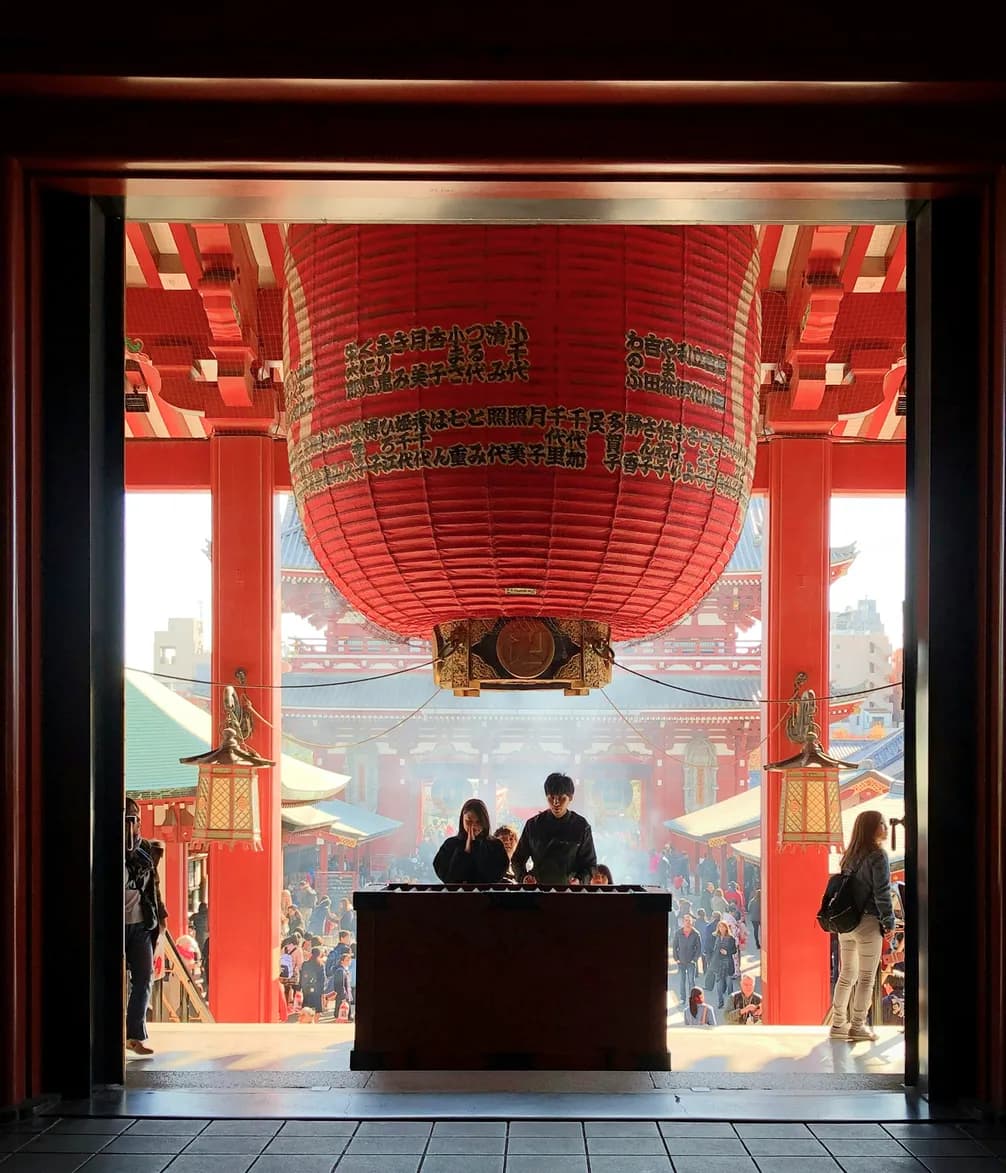
People stand before a large red lantern at the entrance of a bustling temple with vibrant colors and intricate architecture.

Sensō-ji, Tokyo. Photo: Scott Milton, Unsplash

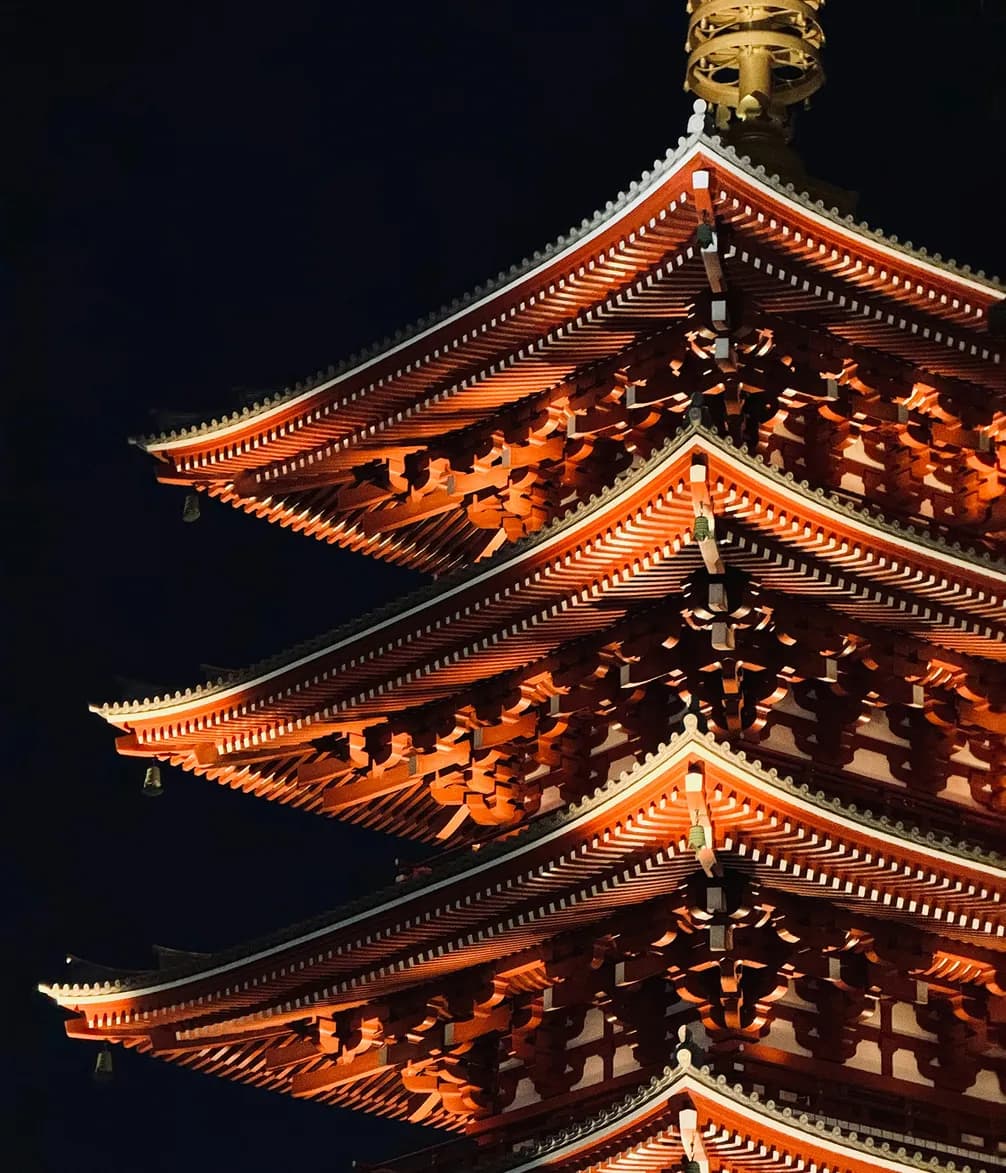
Close-up of a multi-tiered pagoda, illuminated against a dark night sky, showcasing its intricate red and white architectural details.

Photo: Tânia Mousinho, Unsplash

5. Sensō-ji, Tokyo

Photo index score: 53

This ancient Buddhist temple sits in Asakusa, a low-rise district of Tokyo that feels worlds apart from Shibuya and Shinjuku. According to legend, two brothers fishing on the Sumida River pulled up a statue of Kannon, the goddess of mercy, and built Sensō-ji to house it. At the entrance, Kaminarimon Gate hangs a large red paper lantern, a wooden dragon carved on its underside. Beyond it, Nakamise-dōri bustles with stalls selling crafts and sweets, leading to the temple itself – home to a 53-metre, five-storey pagoda (Japan’s second-tallest) and a bronze jokoro burner where visitors waft incense over themselves. Visit at sunset to catch the pagoda illuminated, each tier representing a Buddhist element: earth, water, fire, wind and void.

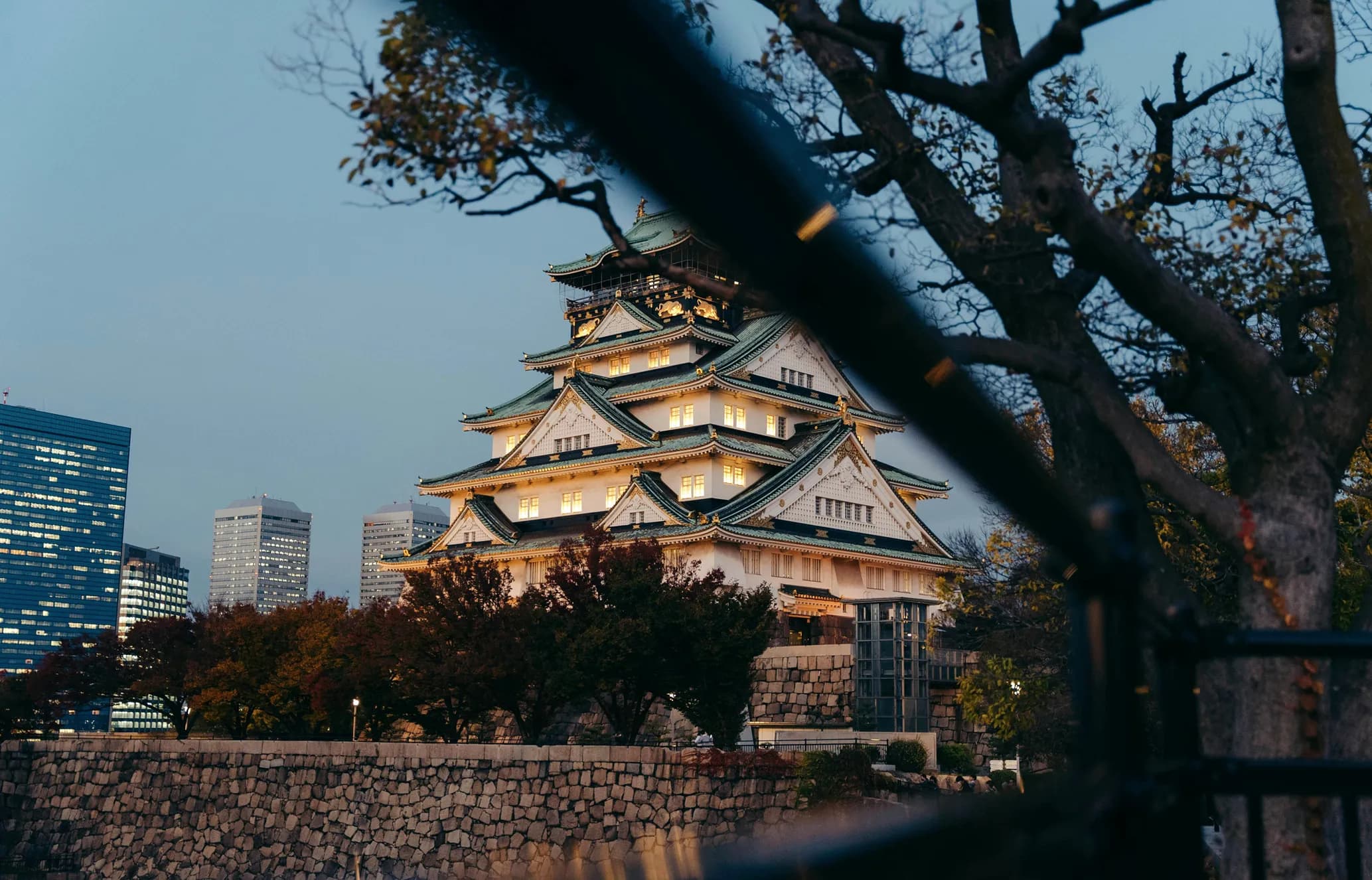
Japanese castle illuminated at dusk, framed by tree branches, with modern skyscrapers in the background.

Osaka Castle Park, Osaka. Photo: Rory McKeever, Unsplash

6. Osaka Castle Park, Osaka

Photo index score: 46

Osaka Castle Park is the green counterweight to a city otherwise all neon and hustle, its moat giving way to the glass high-rises of Osaka Business Park. Toyotomi Hideyoshi built the original castle in 1583, gilding its five-storey keep in gold leaf, before it was destroyed in the 1615 Siege of Osaka; today’s tower is a 1931 reconstruction housing a museum. Head to the Sakura Gate and find the Octopus Stone, a 120-tonne slab named after the tentacle-like mark on its corner. In Nishinomaru Garden, maple trees blaze red in autumn around the white, gold-trimmed walls and the Hoshuan teahouse, best captured at dusk when the light is warm and crowds thin. Afterwards, ride the subway to the Dotonbori Canal to see the bright billboards – Glico Running Man included – before feasting at the street stalls.

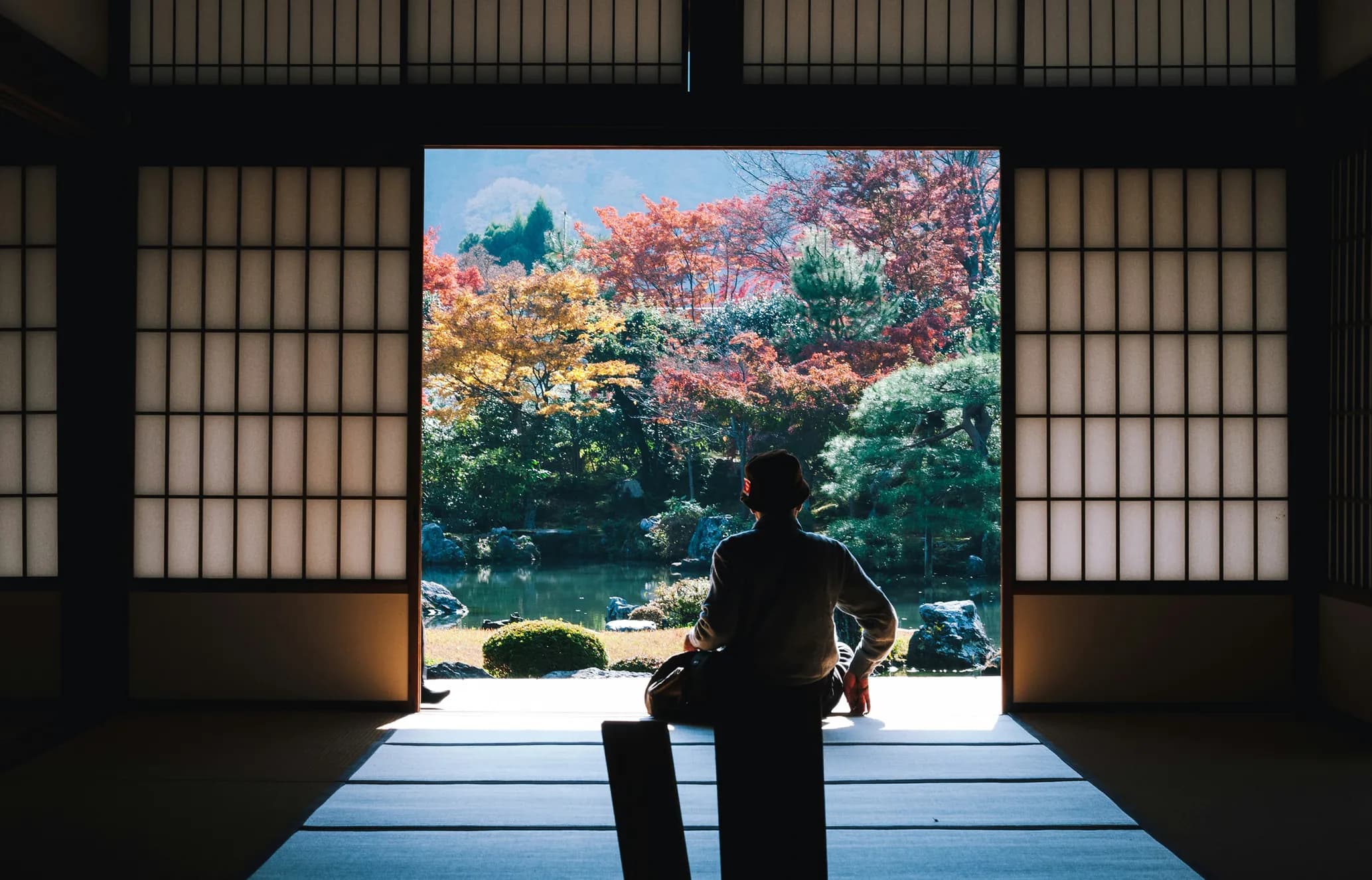
Person sitting in a traditional Japanese room, gazing at a vibrant garden with autumn trees through open sliding doors.

Tenryū Temple, Kyoto. Photo: Masaaki Komori, Unsplash

7. Tenryū Temple, Kyoto

Photo index score: 43

Tenryū Temple sits beside the Arashiyama Bamboo Grove. In autumn, the Sogenchi Garden – part of the temple’s Unesco World Heritage listing – turns orange and red. Here, the forested Arashiyama mountains blend into the garden, while a path along the central pond invites a stroll. Inside, the Dharma Hall’s Cloud Dragon ceiling – hand-painted by Matazo Kayama, its dragon’s eye designed to follow you as you move through the hall – is worth timing your visit around.

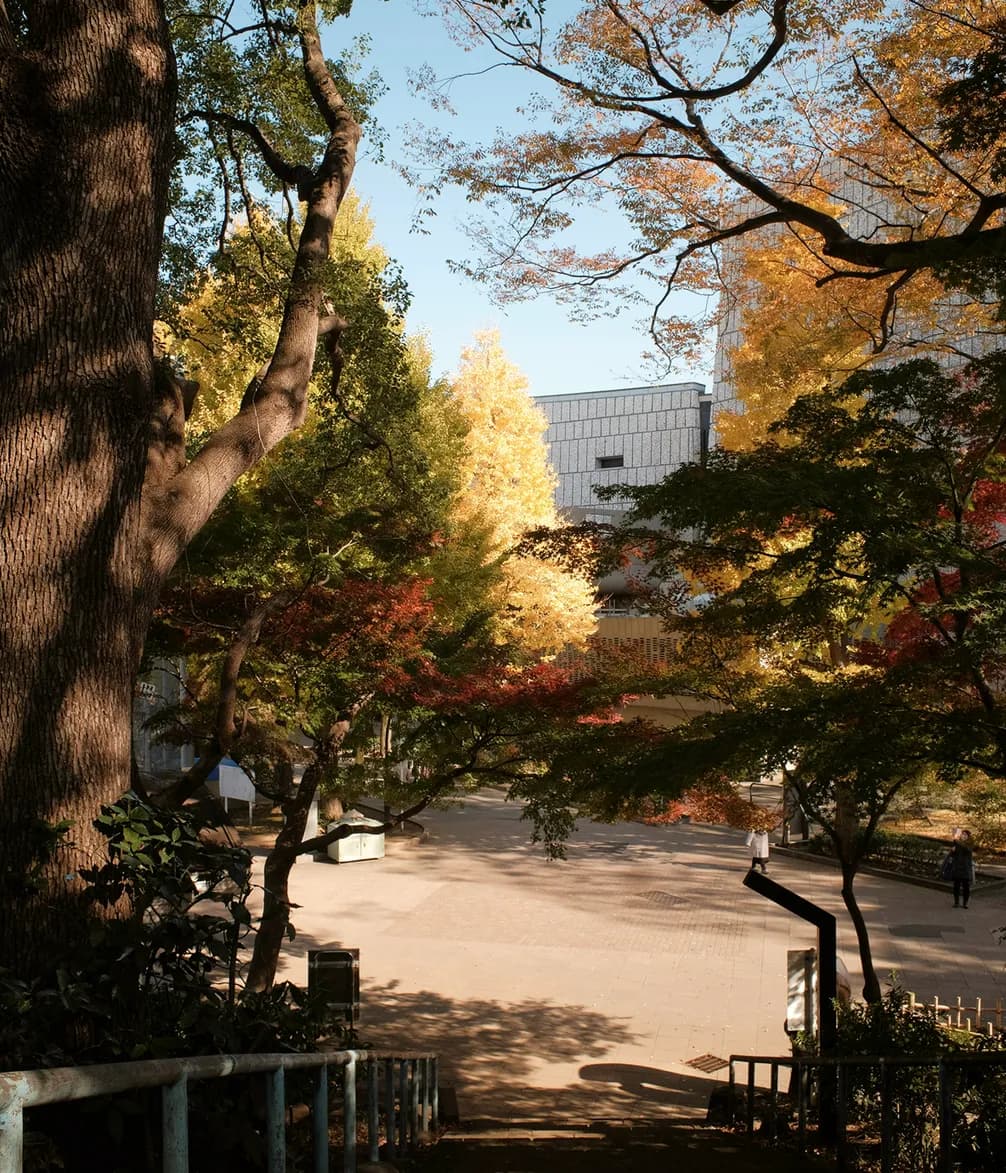
Walkway with trees in autumn foliage shades of yellow, red, and green, leading to a building under a clear blue sky.

Ueno Zoological Gardens, Tokyo. Photo: Mak, Unsplash

Pathway lined with traditional red torii gates, leading up stone steps, surrounded by lush greenery.

Photo: Tsuyoshi Kozu, Unsplash

8. Ueno Zoological Gardens, Tokyo

Photo index score: 42

Ueno Zoological Gardens has anchored Tokyo’s Ueno Park since 1882. Tucked among red, orange and yellow ginkgo trees, it offers respite from sightseeing. Explore the Gorilla Woods, where western lowland gorillas, Sumatran tigers, white-handed gibbons and Asian elephants are on view. The zoo’s East and West Gardens, once linked by Japan’s first monorail, are now connected by Aesop Bridge.

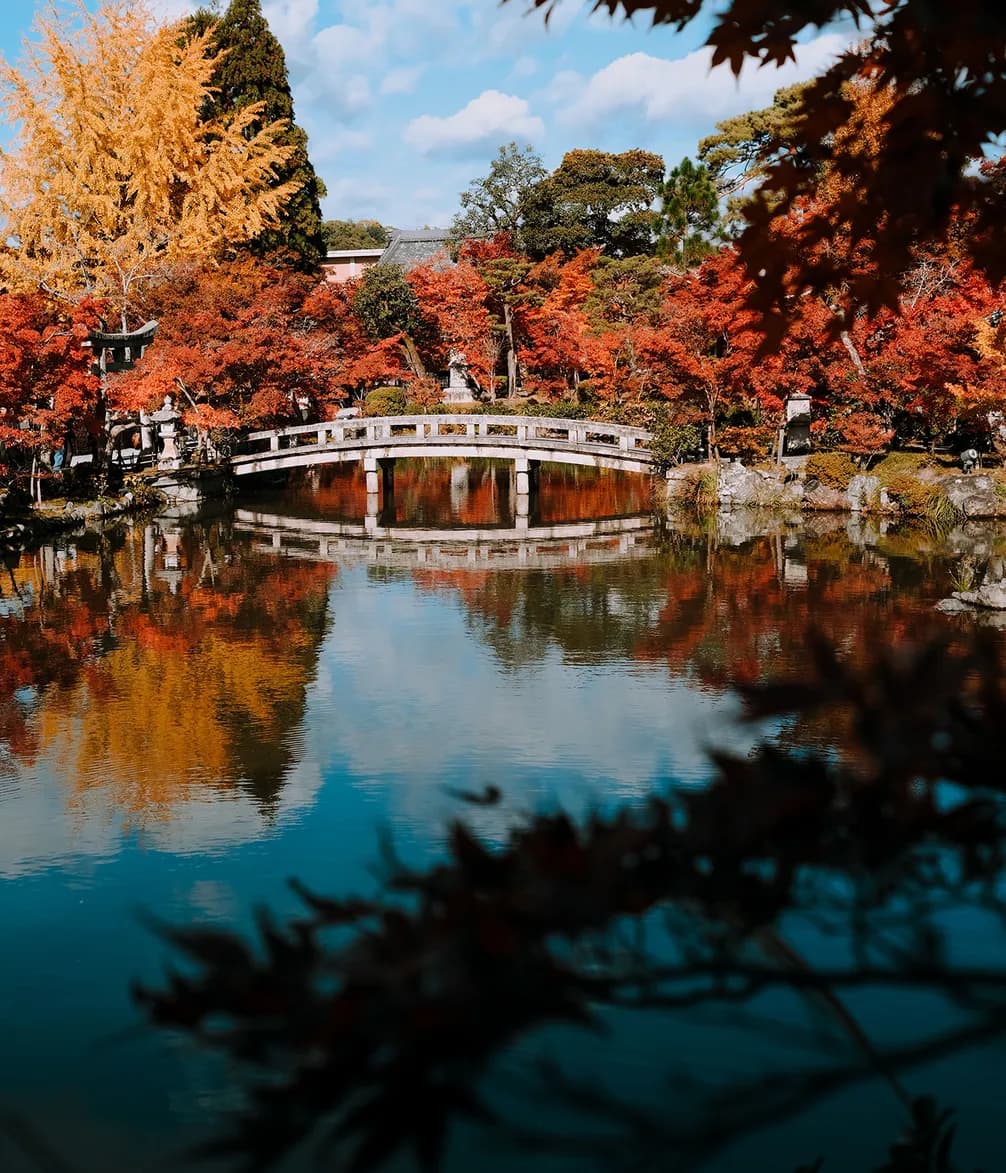
A serene pond reflects a stone bridge and vibrant autumn trees with red and yellow leaves under a blue sky.

Kenrokuen Park, Kanazawa. Photo: Bapak Moto, Unsplash

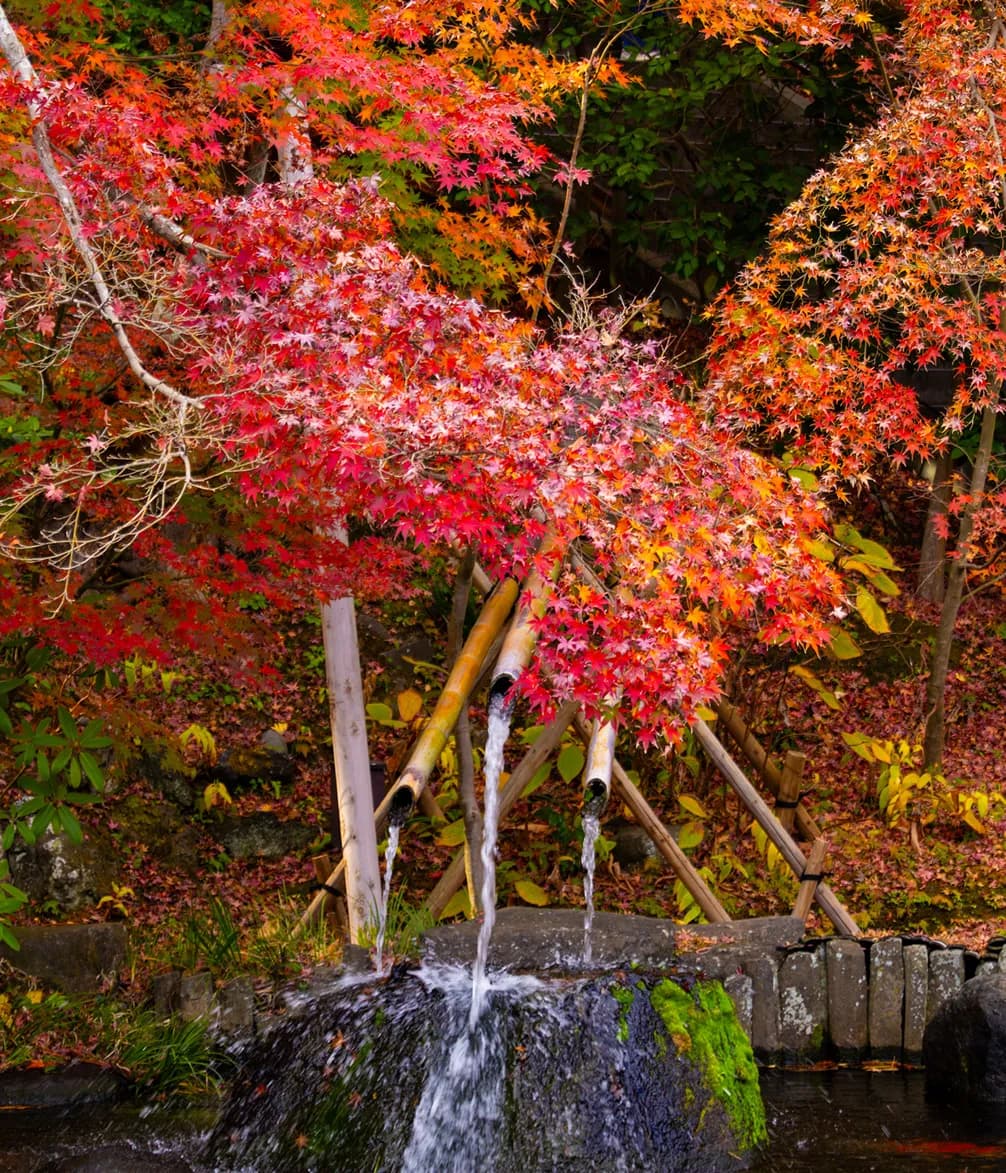
A small waterfall flows through bamboo pipes surrounded by vibrant red and orange autumn leaves against a lush, green and rocky background.

Photo: Emiliano Lara, Unsplash

9. Kenrokuen Park, Kanazawa

Photo index score: 39

Kenrokuen Park is one of Japan’s Three Great Gardens, with teahouses, bridges, water features and 183 plant species. Wander among orange and red maple trees near the Kodatsuno Gate on the garden’s eastern side, then seek out the Kotoji-toro, a two-legged stone lantern on Kasumigaike Pond. Spend the afternoon in Kanazawa’s Kazuemachi and Higashi Chaya Districts, former Edo-period geisha quarters filled with lattice-fronted teahouses, wooden buildings and lanterns.

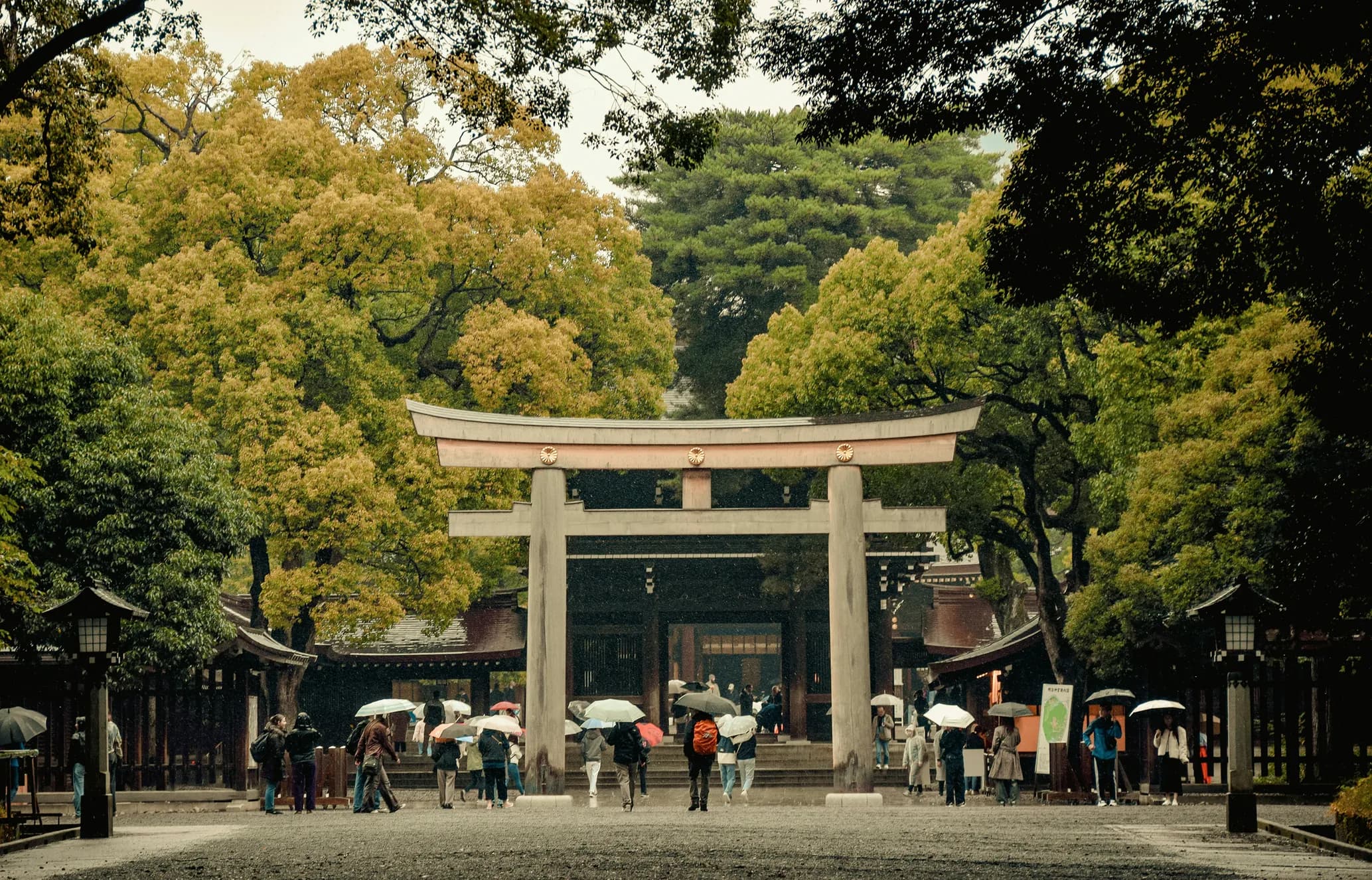
People under umbrellas walk towards a traditional Japanese torii gate surrounded by lush green trees.

Meiji Shrine, Tokyo. Photo: Aestelle, Unsplash

10. Meiji Shrine, Tokyo

Photo index score: 39

A 10-minute walk from Harajuku Station, Meiji Shrine greets visitors with a towering torii gate and dense woodland – some 120,000 trees across 365 species. In mid-November, crowds flock to Meiji Jingu Gaien Ginkgo Avenue, a 300-metre golden tunnel of ginkgo. The Inner Garden predates the shrine and was once part of Kato Kiyomasa’s Edo-period estate. Don’t miss Kiyomasa’s Well, a secluded spot fed by spring water.

Methodology

To determine the most photographed spots in Japan, Popsa’s data science team analysed millions of photos uploaded by customers in 2025. Using location metadata, they identified images taken within Japan’s most visited locations between September and November, and ranked them by total photo volume.

Each spot was assigned a photo index score reflecting the volume of photos taken there compared with all other locations in the dataset. Scores were normalised on a scale of 0 to 100, with the most photographed spot as the benchmark. The result reflects real traveller behaviour, highlighting the places that most inspire people to capture memories.

Lee más historias sobre

Descargar la aplicación

Descubre recuerdos más rápido con funciones exclusivas, como el reconocimiento facial y los álbumes inteligentes.

App StoreApp Store
Descargar la aplicación

Artículos relacionados

A collage of various dogs in different settings, including playful puppies, swimming dogs, lounging dogs, and dogs posing outdoors.
Bradley Grantham

Bradley Grantham

Científico jefe de datos

5 ago 2026∙7 min

Los lugares más fotografiados de Lisboa
Bradley Grantham

Bradley Grantham

Científico jefe de datos

23 jun 2026∙8 min