


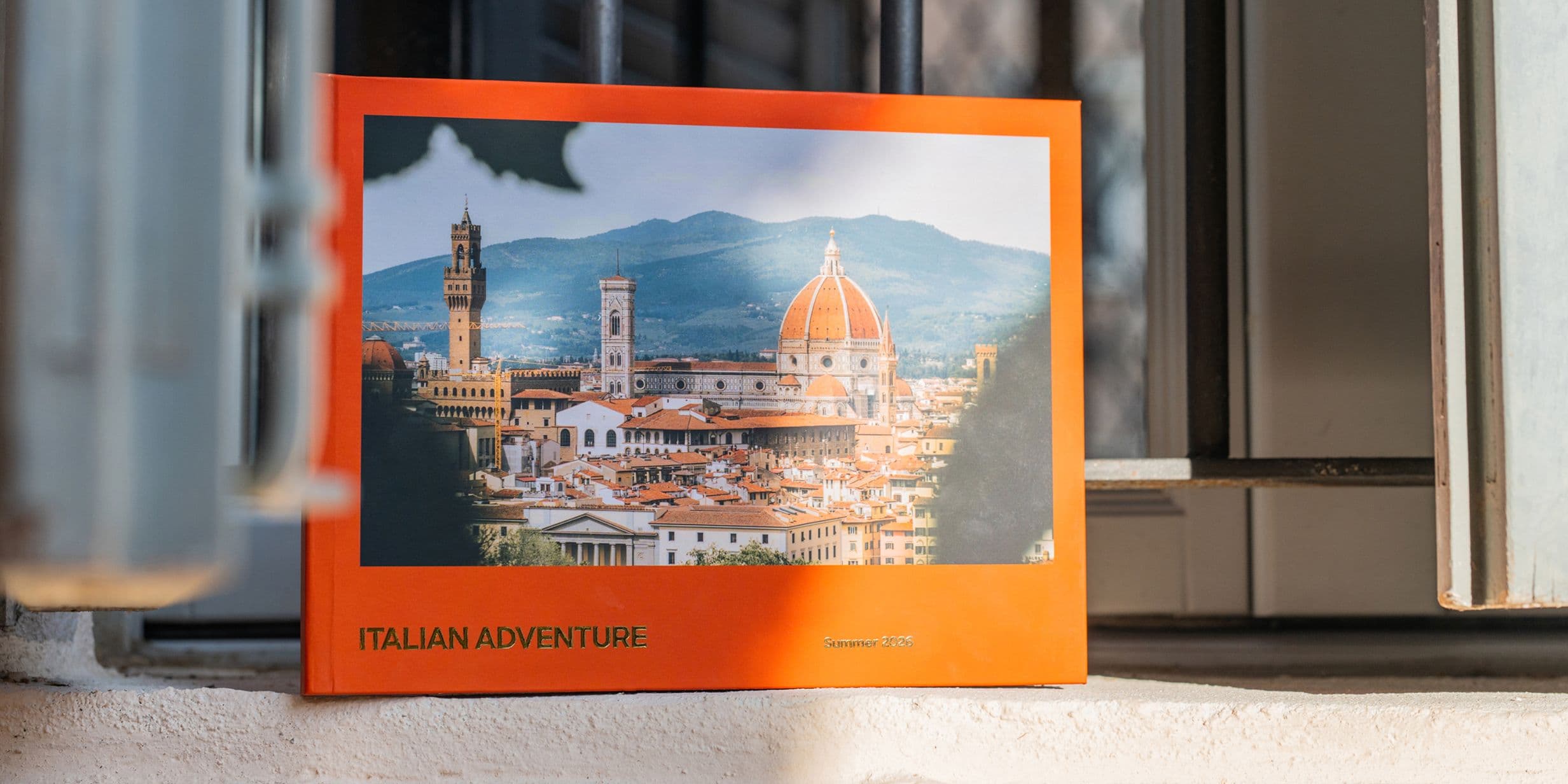
A travel photo book works best when it tells the whole story of a trip, not just the highlights. The shots that make a book feel alive are often the ones you almost didn’t take – the view from the window seat, the tableware you loved or a stylish corner of your hotel. This guide covers what to capture so you have everything you need when it comes to making the book.
What makes a great travel photo book?
The most useful photos for a travel photo book aren’t necessarily the most technically impressive ones. A photo book built entirely from landscape shots can feel flat, while one that mixes big-hitting views with quieter details – the journey, the locals, a shared meal, a heritage experience – transforms a simple slideshow into a story worth revisiting. Before you travel, it’s helpful to consider the spread and what you want the pages to look like. This process tends to encourage more thoughtful shots.

Starting before you leave
Departure day is worth remembering. Your packed bag, your tickets or a purchase made in the airport – these images set the scene and give a photo book a clear starting point. Photographs of your flight essentials, the view from your seat or even a fellow passenger who gave you a great recommendation all double as a practical record of where you went and when. The journey is part of the trip, so be sure to start shooting before you land.
Capturing a sense of place
The obvious shots including celebrated landmarks and famous views are worth taking, but they rarely carry a photo book on their own. Look for the details that define a destination such as a street sign in another language, the light against the architecture at a particular time of day, the chalkboard menu framing the restaurant entrance or the artwork that created the vibe in the bar. These images give a book a sense of place that a postcard shot can’t, provoking memories when you come to revisit the book in the future.
Photographing everyday moments
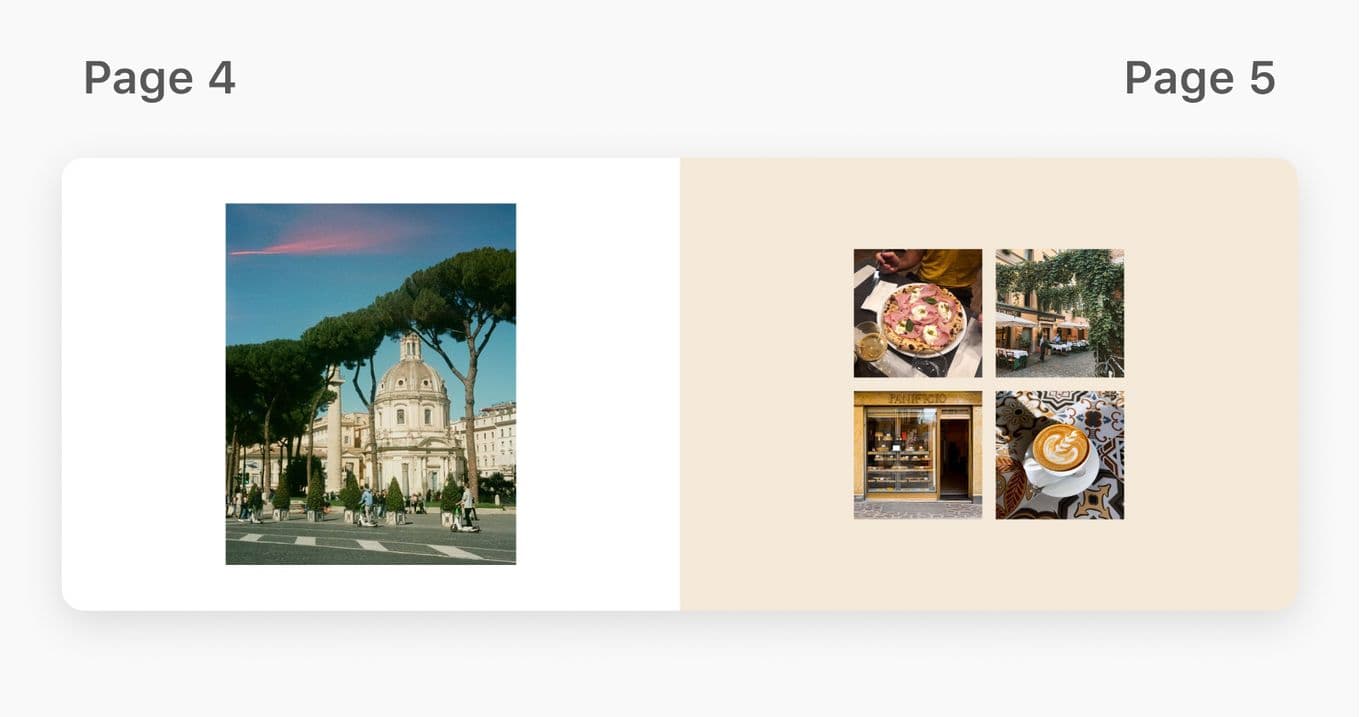
Food is one of the most meaningful ways to remember a place – it connects you to the history and culture of a destination in a way that few other experiences do. Photograph the dish, the tableware, the view from your seat and the furnishings that caught your eye. Street scenes including transport, shop fronts, architecture and locals add colour and texture to a photo book, and tend to be the ones people linger over.

Including people and portraits
Travel photos with no people in them can feel oddly empty when you look back. Even if you prefer not to pose, candid shots of travel companions – reading a map, ordering coffee, looking out at a view – add warmth and turn the photo book into a record of a shared experience rather than a polished destination guide. If you’re travelling solo, look for reflections, shadows or moments where your presence is implied. One or two genuine portraits tend to anchor a book in a way that landscapes alone can’t.
Collecting mementos and keepsakes
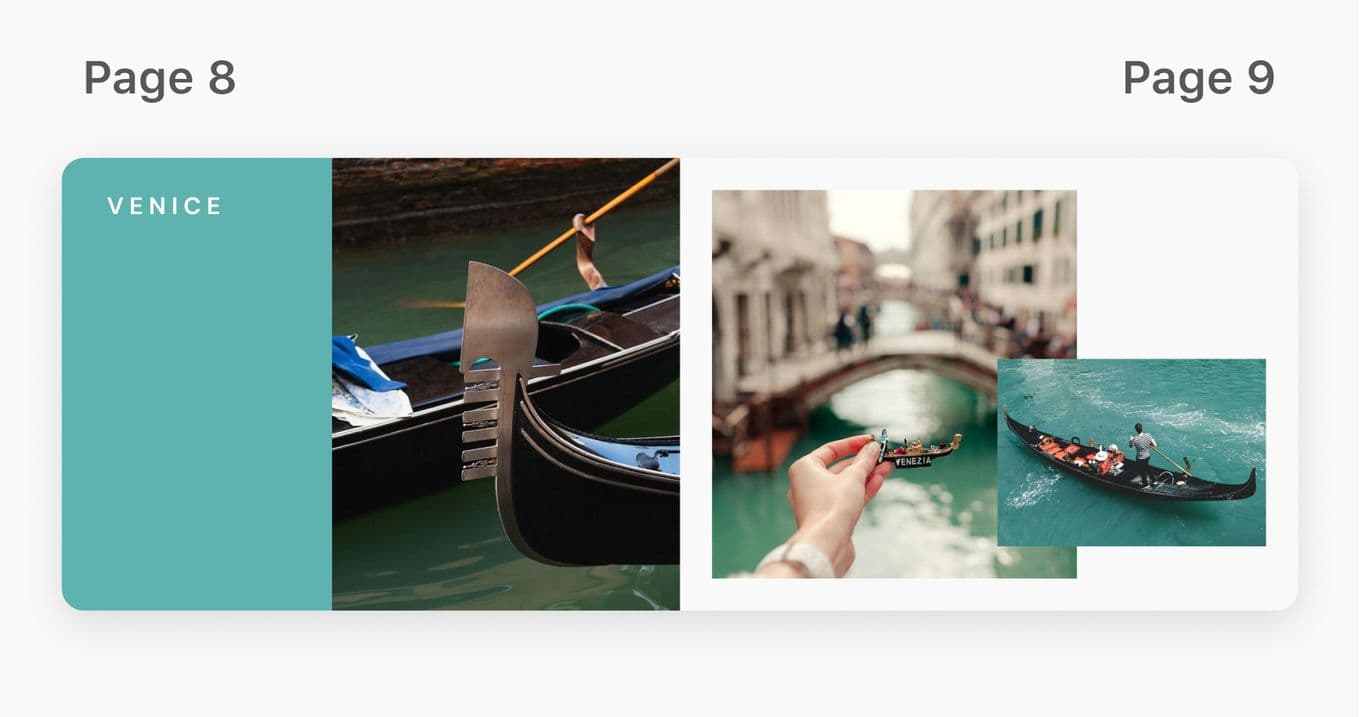
Some of the best material for a travel photo book isn’t a grand scene at all. Museum tickets, a postcard, a label from a bottle of local wine – these are all worth photographing before they get crumpled or thrown away. Often it’s the tangible objects we bring home – a fridge magnet, a piece of beautiful crockery, a handcrafted item of clothing – that anchor a memory to a place more precisely than landscape shots can. These images work well as smaller accent shots or collages alongside landscape spreads.
Documenting the journey home
The return is easy to ignore photographically, but it rounds a book off naturally. The last dinner, the taxi to the airport, the person who greeted you at arrivals – these images give the story a sense of closure. A photo book that begins at departure and ends at return feels complete in a way that a collection of destination shots alone doesn’t.
Designing your travel photo book
A varied camera roll makes the design process much easier than you might expect. When you have a mix of landscapes, details, food, people and mementos to work with, the pages will naturally start to arrange themselves. For guidance on choosing the right size, format and structure, our travel photo book guide covers everything you need to know.
Download appen
Find minderne hurtigere med avancerede funktioner som ansigtsgenkendelse og smarte albummer.




&w=96&q=75)

&w=96&q=75)


 USA
USA