
Stories
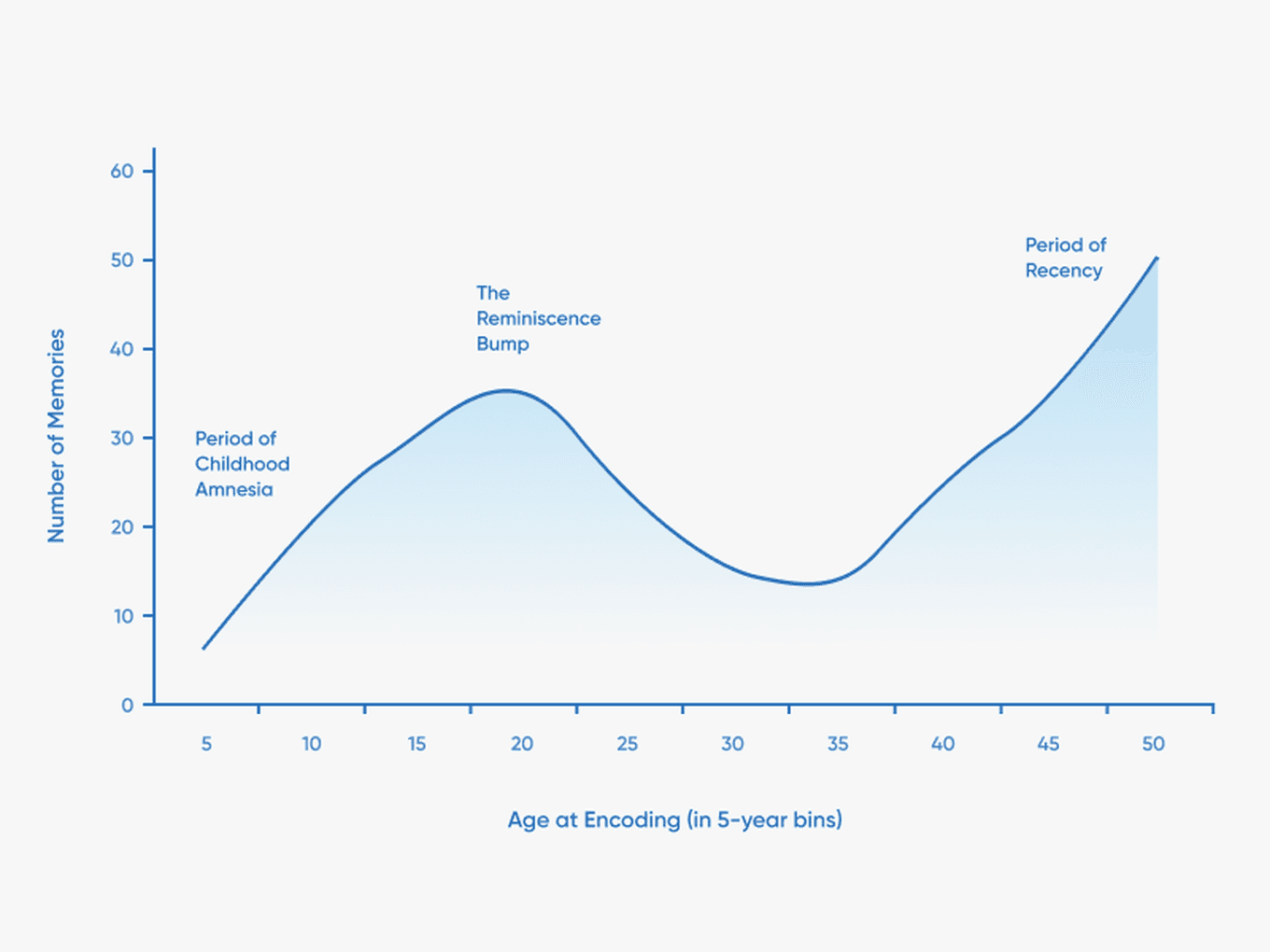
The “reminiscence bump” and why we remember some moments forever
Ever noticed that memories from our late teens and twenties often feel more important, more vivid?

30 May, 2025∙7 min


Article at a glance
Identity formation anchors memory – experiences during adolescence and early adulthood are encoded deeply because they define who we become.
Novelty multiplies recall – first-time experiences create stronger memory traces than repeated routines, making early adulthood disproportionately memorable.
Emotional meaning outlasts factual detail – music, slang and cultural cues from this period retain power because they symbolise the self we were forming.
Memory shifts from recording to storytelling with age – later life revisits early memories to construct meaning, not preserve historical accuracy.








&w=96&q=75)

&w=96&q=75)

&w=96&q=75)


 United States