

Verhalen
Why estrangement can make preserving family photos so important
One writer on displaying pictures of people she’s never met – and how keeping a visual family history benefits the next generation

15 mei 2026∙5 min
Verhalen
One writer on displaying pictures of people she’s never met – and how keeping a visual family history benefits the next generation
15 mei 2026∙5 min
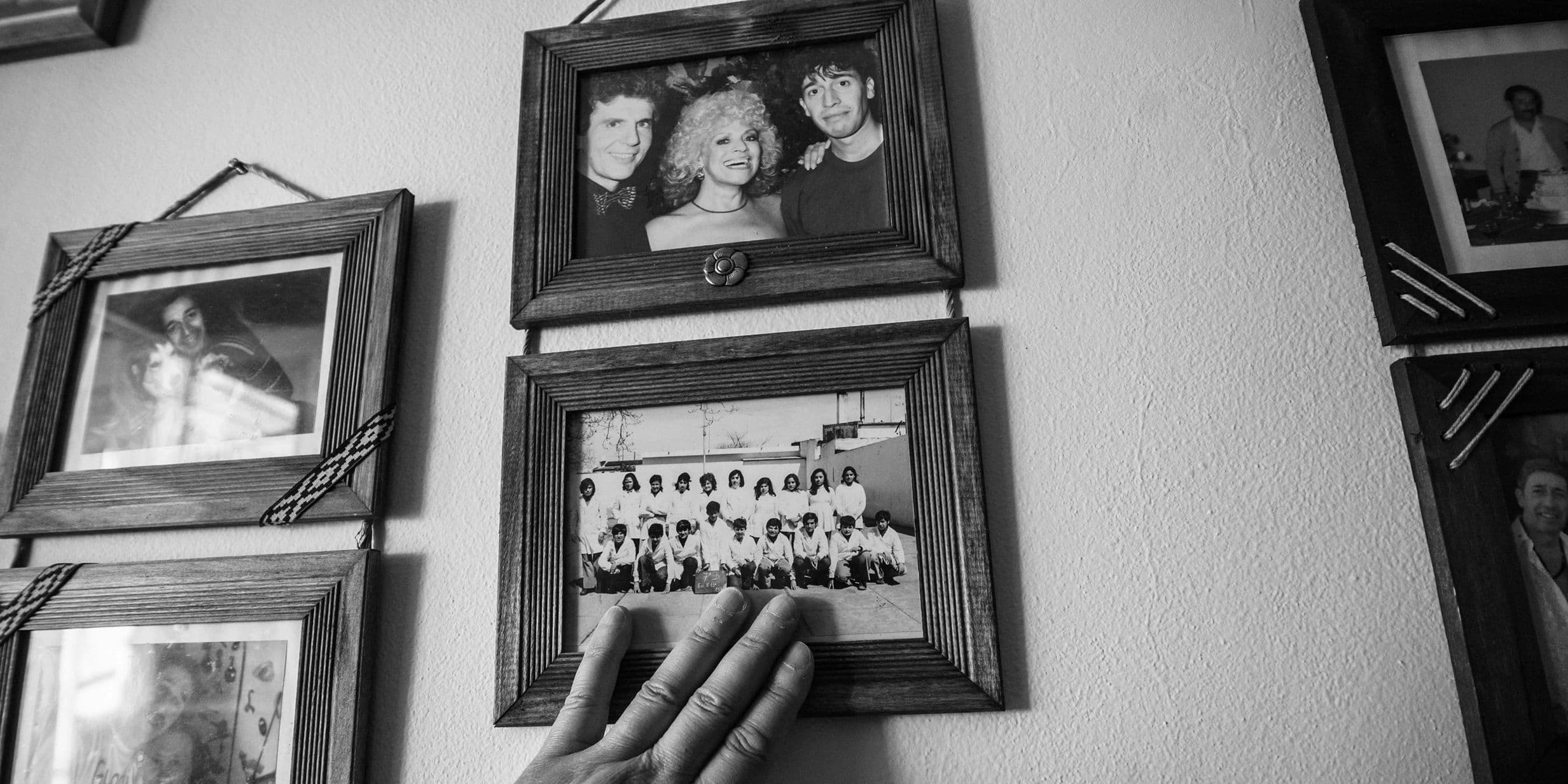
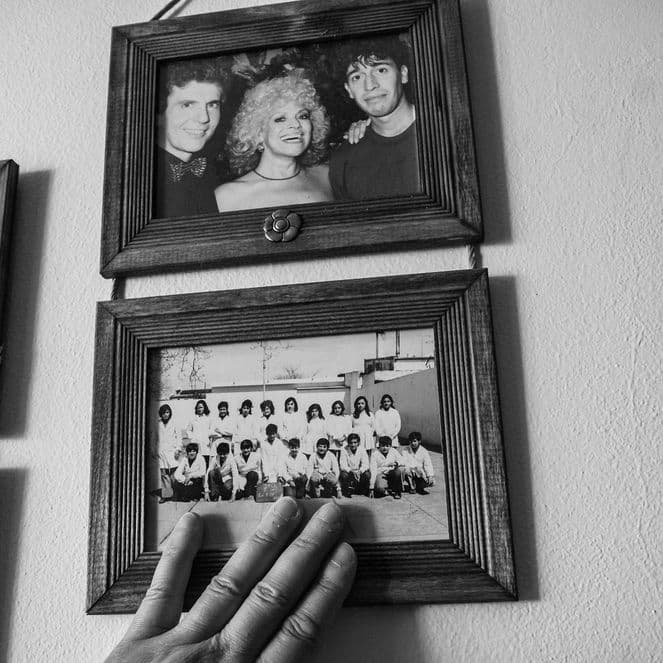
In my hallway there are two photo frames hanging on the wall. I had them made at a local framers, choosing a specific mounting design for each to best showcase the images. In one, a small boy wearing a coat that is too big for him and a bowler hat stands glaring at the camera, with a group of men in soldier uniforms standing behind him, several with cigars in their mouth. No one is smiling – but it’s the 1930s, no one did. It could be a still from the latest Peaky Blinders movie – this is Birmingham, after all. The little boy in the photograph is my grandfather, and the man standing behind him with his hand on his shoulder is my great-grandfather. In the frame next to this one there are pictures of my mother as a toddler, and then as a teenager with the family dog, next to another of her parents and her grandparents, all younger than I am now.
What is significant about these family portraits is that through things out of my control, I don’t know anyone in the pictures except for my mum. Of course, it’s far from unusual that I never met my great-grandparents. And my grandfathers are both now dead. But we are estranged from my dad’s side of the family, while my mother and her mum fell out years ago. Despite this, I still chose to commemorate my family tree in this highly personal way, displaying these pictures in the hallway of my home. They are the first thing that people see when they arrive, and always prompt questions about the people in the images. As my three-year-old daughter gets older, I am glad that she will soon ask me who the people are too, and know their role in her heritage.
We are estranged from my dad’s side of the family, while my mother and her mum fell out years ago. Despite this, I still chose to commemorate my family tree in this highly personal way
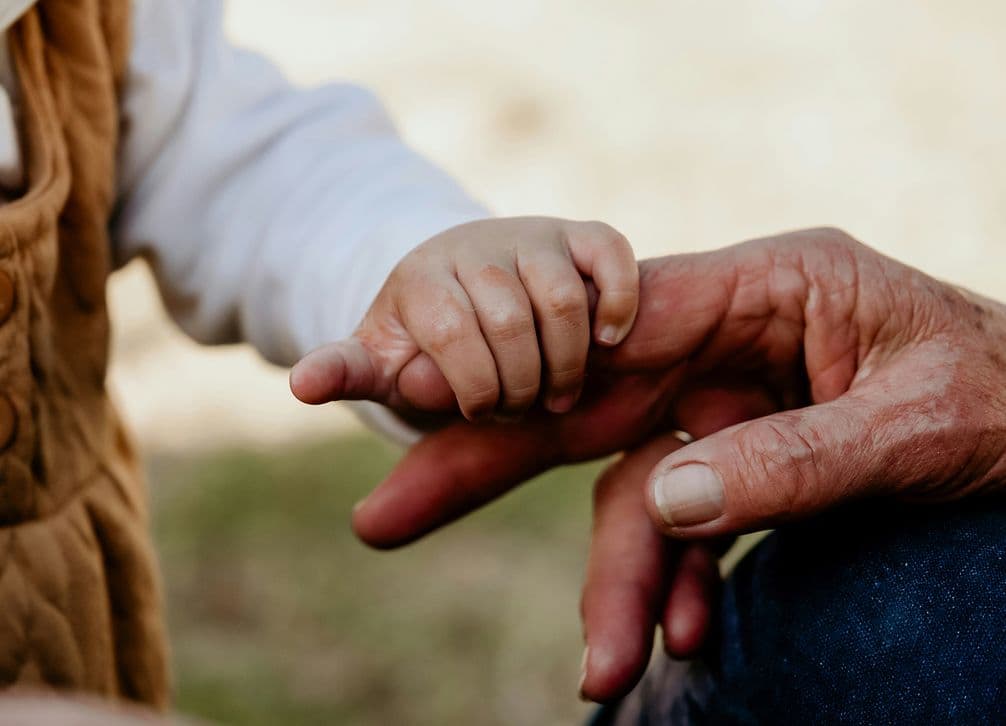
Photo: Unsplash
Having family pictures propped on mantlepieces and hung on walls is very much the norm for most of us. I have fond memories growing up of visiting friends and relatives’ houses and asking endless questions about who was who. I noticed when pictures were added or swapped out. In many ways, it’s an integral part of home life, with photographs to commemorate specific events, like school, university graduation or weddings. Indeed, collecting each of my daughter’s nursery photos has become a favourite tradition of mine – there isn’t one I haven’t bought so far.
Yet when families break up, as they so often do (45 per cent of first marriages, and 60 per cent of second marriages in the UK), it can feel jarring to have old pictures on display. It can make people feel bad, sad or angry. The wronged party might throw photographs away, or more dramatically, cut people out of them. But this can lead to confusion for children – further compounding a sense of loss at the erasure of a person. While it’s obviously not advisable to have your wedding album on display after a split, it’s almost certainly better to preserve the images for a day when your child might want to see them.
I had this experience recently. Following the death of my grandfather last year, my auntie had gone through his old photographs and brought them round for me to look at as she knew I was an amateur family historian. Within this cache I found treasures I’d never seen of my parents’ Seventies-tastic wedding day, my Christening, early birthdays, summer BBQs and more. It was like discovering a long lost little girl that I had forgotten about. Then there were the pictures of my mum as a little girl and my grandparents as newlyweds. Plus two people I’d never seen before, but heard a lot about – my great-grandparents. I looked at their faces to see if I could find traces of my daughter there. She’s the spitting image of my mum at that age.
Within this cache I found treasures I’d never seen – it was like discovering a long lost little girl that I had forgotten about
Photo: Pexels
As technology has infiltrated every area of our lives, physical objects have started to hold more meaning. It’s a rarity now to print a photograph off or to capture something on film instead of digitally. But there’s a magic to having these images around us, to pick up and see, or to stare up at. I was struck when going through my old family pictures at just how many of seemingly innocuous events there were, as well as the combination of clearly posed ones versus the candid shots that capture life as it happens – double chins, closed eyes and all.
In having these old family pictures on my walls, I feel connected to my family – even if we don’t speak. They give me a sense of who I am and who my daughter is. We can’t visit these people, and she will never have known them, but that doesn’t matter. Our family of two is small – but that doesn’t mean it’s just us. Having these pictures reminds us that we are part of something bigger.
Herontdek herinneringen sneller met speciale functies, zoals gezichtsherkenning en Smart Albums.


&w=96&q=75)
20 mei 2026∙6 min
&w=96&q=75)
29 jul. 2026∙6 min

&w=96&q=75)


 Verenigde Staten