

Guides
Popsa vs Mixbook: choosing the right Photo Book experience
From offline creation and paper quality to delivery speed, upgrade costs and satisfaction guarantees – here’s how Popsa and Mixbook compare for customers in the UK

27 Aug 2026∙6 min
Guides
From offline creation and paper quality to delivery speed, upgrade costs and satisfaction guarantees – here’s how Popsa and Mixbook compare for customers in the UK
27 Aug 2026∙6 min
When it comes to designing a photo book, choosing between Popsa and Mixbook depends on what you value most in the process.
Popsa is the stronger choice for customers who want a shorter, simpler creation process, a heavier paper stock, and faster, cheaper delivery options. It also leads on app store ratings, Trustpilot review volume, and independently verified B Corp certification – none of which Mixbook currently matches. Mixbook may suit customers who prioritise the lowest upfront price on a comparable hardcover book, since its non-sale pricing undercuts Popsa’s.
Popsa | Cheerz | |
|---|---|---|
| iOS app available | ✓ | ✓ |
| Android app available | ✓ | ✓ |
| Steps to create a photo book | 10 steps | 10 steps |
| Paper weight | 200gsm | 170 gsm |
| Minimum number of pages | 20 | 24 |
| Base price* | €49 | €38.80 |
| Additional page cost | €0.80** | €0.99*** |
| Quickest delivery (from) | 4-7 working days (€39.99) | 3-4 working days (€9.99) |
| Cheapest delivery option | €8.49 | €4.99 |
| Satisfaction guarantee | ✓ | ✗ |
| Reprint policy | ✓ | ✗ |
| Refund policy | ✓ | ✗ |
| Trustpilot rating (reviews) | 4.4 (120k) | 4.4 (32k) |
| App Store rating | 4.8 | 4.7 |
| Google Play rating | 4.6 | 4.7 |
| B-Corp certified | ✓ | ✗ |
Popsa is best if you:
want to create your photo book from an Android phone, not just iOS
want to get through the ordering process in fewer steps
value heavier, sturdier paper
want the fastest delivery option at the lowest price
prefer to pay less per extra page if your book runs long
prefer matte as the default finish, with gloss available as an upgrade
want the reassurance of a greater number of positive reviews
value a higher-rating on the App Store
want an Android app with a proven Google Play rating
care about independently verified sustainability credentials (B Corp certified)
Mixbook may be a better fit if you:
want the lowest upfront price on a comparable hardcover book
want photo filters built into the editor
prefer a portrait-format photo book, which Popsa does not offer
prefer gloss as the default finish, with matte available as an upgrade
need support outside of standard daytime hours
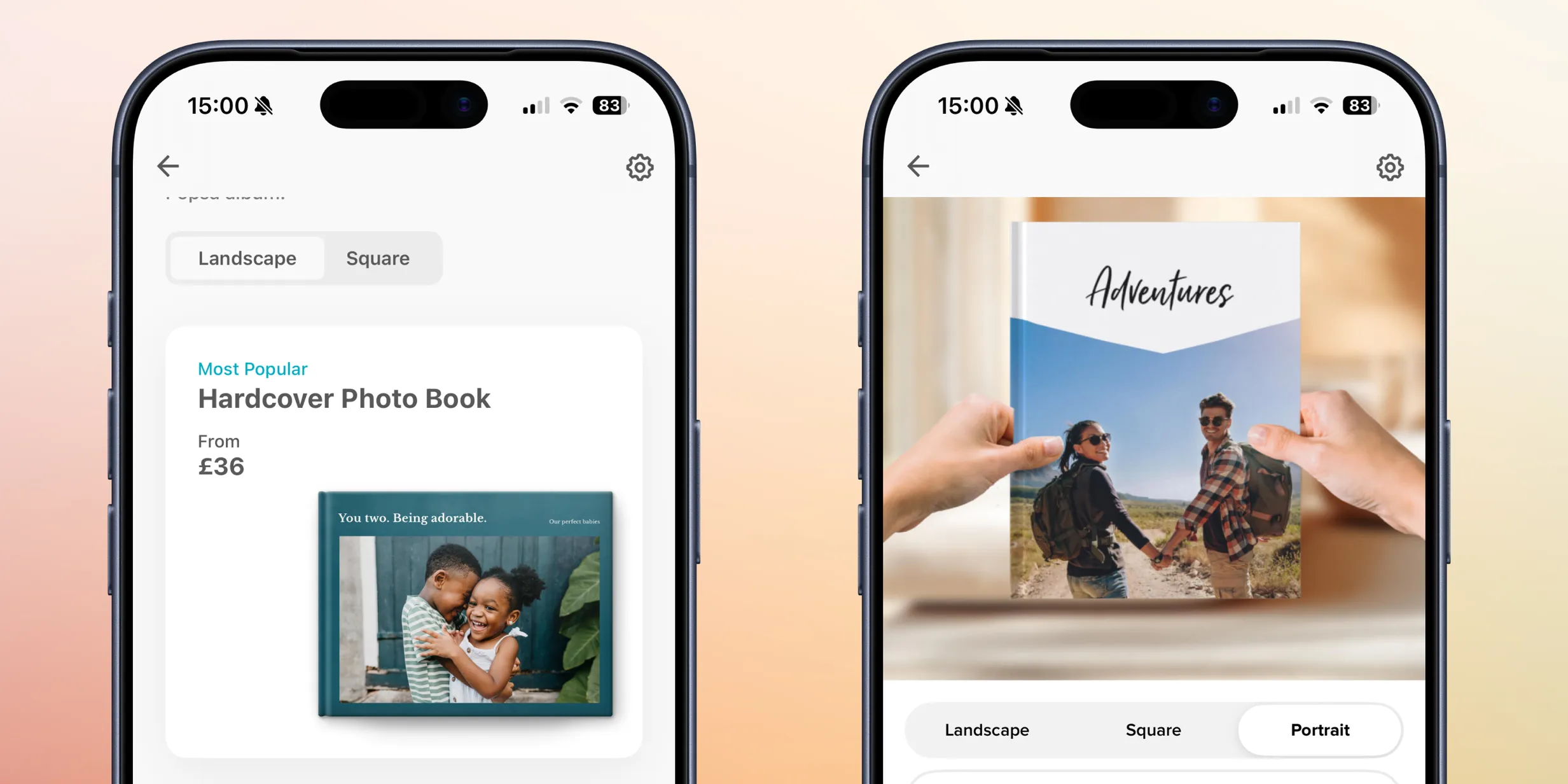
Both Popsa and Mixbook offer iOS apps, browser-based desktop creation and the ability to move between devices mid-project. Popsa also offers an Android app, which Mixbook does not currently support, and it lets you keep working offline (aside from a few AI-powered extras), while Mixbook requires a live connection throughout.
Popsa’s ordering journey also involves fewer steps overall – ten compared with Mixbook’s 15 – including fewer separate choices around cover, orientation, size and paper before you even upload photos. If you use an Android phone, or want the option to keep working without wifi, Popsa gives you more flexibility – and if you want to get a book ordered quickly, it asks you to make fewer decisions along the way than Mixbook does.
Both apps support manual layout control, drag-and-drop placement, undo/redo and the ability to rearrange pages after they’re created. Where they differ is on paper and format: Popsa’s standard paper is heavier at 200gsm (135lb) compared with Mixbook’s stated 100lb, giving it a thicker, sturdier page feel.
Mixbook offers a small edge in creative flexibility with built-in photo filters and a portrait book format, neither of which Popsa currently offers. Popsa gives UK customers three landscape size options against Mixbook’s single UK landscape size. Layflat books and matte and gloss paper finishes are available from both brands, though Mixbook restricts these to specific book types rather than offering them across its full range.
If a thicker, sturdier page feel and broader choice of sizes in the UK matter most to you, Popsa has the advantage. If creative extras like filters or a portrait format are essential, Mixbook is the stronger choice.
Popsa’s fastest delivery option arrives in four to seven days for £9.99, compared with Mixbook’s fastest option of within nine days for £12.99. Popsa also offers tracked and rush delivery, neither of which Mixbook currently provides.
If speed matters, Popsa can get your book to you sooner and for less than Mixbook’s fastest option, with visibility on your order’s progress along the way.
A comparable 20-page hardcover book costs £40 from Popsa and £32.99 from Mixbook, making Mixbook cheaper at non-sale prices. However, Popsa’s per-page cost for extra pages is considerably lower, at £0.69 per single page compared with Mixbook’s £1.29 per page, which only comes in double-page spreads at £2.58 each.
That gap closes the longer the book gets: Mixbook’s lower starting price only holds for around 11 extra pages (roughly a 32-page book); beyond that, Popsa’s lower per-page rate makes it the cheaper overall order. Both brands set the same 20-page minimum for a book.
The gap widens further on upgrades. Popsa offers a cheaper layflat binding upgrade, at £20.00 versus Mixbook’s £44. Paper finish defaults also run in opposite directions: Popsa includes matte as standard with gloss as a £0.49-per-page upgrade, while Mixbook includes gloss as standard with matte as the paid upgrade – so which finish comes "free" depends on which one you actually want.
If upfront price is your main concern for a shorter book, Mixbook’s lower starting price wins – but only up to a point. Add more than around 11 extra pages and Popsa’s lower per-page cost overtakes Mixbook’s cheaper base price, making the overall order cheaper with Popsa.
Ordering a printed product sight unseen carries an element of risk and both brands offer a satisfaction guarantee, a reprint policy for faults on their side and a refund policy, though the specific wording and remedies differ between a reprint-based approach and a broader returns process.
Popsa holds a marginally higher App Store rating (4.8 versus Mixbook’s 4.7), a proven Google Play rating that Mixbook can’t offer since it has no Android app, and a Trustpilot score backed by roughly three times as many reviews. Customer support also differs: Mixbook offers 24/7 live chat, while Popsa’s support hours run from 8am to 8pm.
If something goes wrong with your order, both brands commit to putting it right. If you want support outside of standard hours, Mixbook is available around the clock, while Popsa’s app ratings and review volume may offer extra reassurance before you buy.
Popsa holds B-Corp certification, which Mixbook does not, and states clear commitments around carbon offsetting, FSC-certified paper and biodegradable packaging, with a dedicated sustainability page setting these out. Mixbook states that most of its papers are FSC-certified without confirming all, and that its packaging is 100 per cent curbside recyclable, but offers no equivalent claim on carbon offsetting or biodegradable packaging.
Both brands print locally in the UK for UK orders. If independently verified environmental and social credentials are important to you, Popsa’s B Corp status and more detailed sustainability commitments offer a level of assurance beyond Mixbook’s current claims.
Discover memories faster with exclusive features like facial recognition and smart albums.


&w=96&q=75)
20 Oct 2026∙5 min
20 Oct 2026∙6 min


 United States