


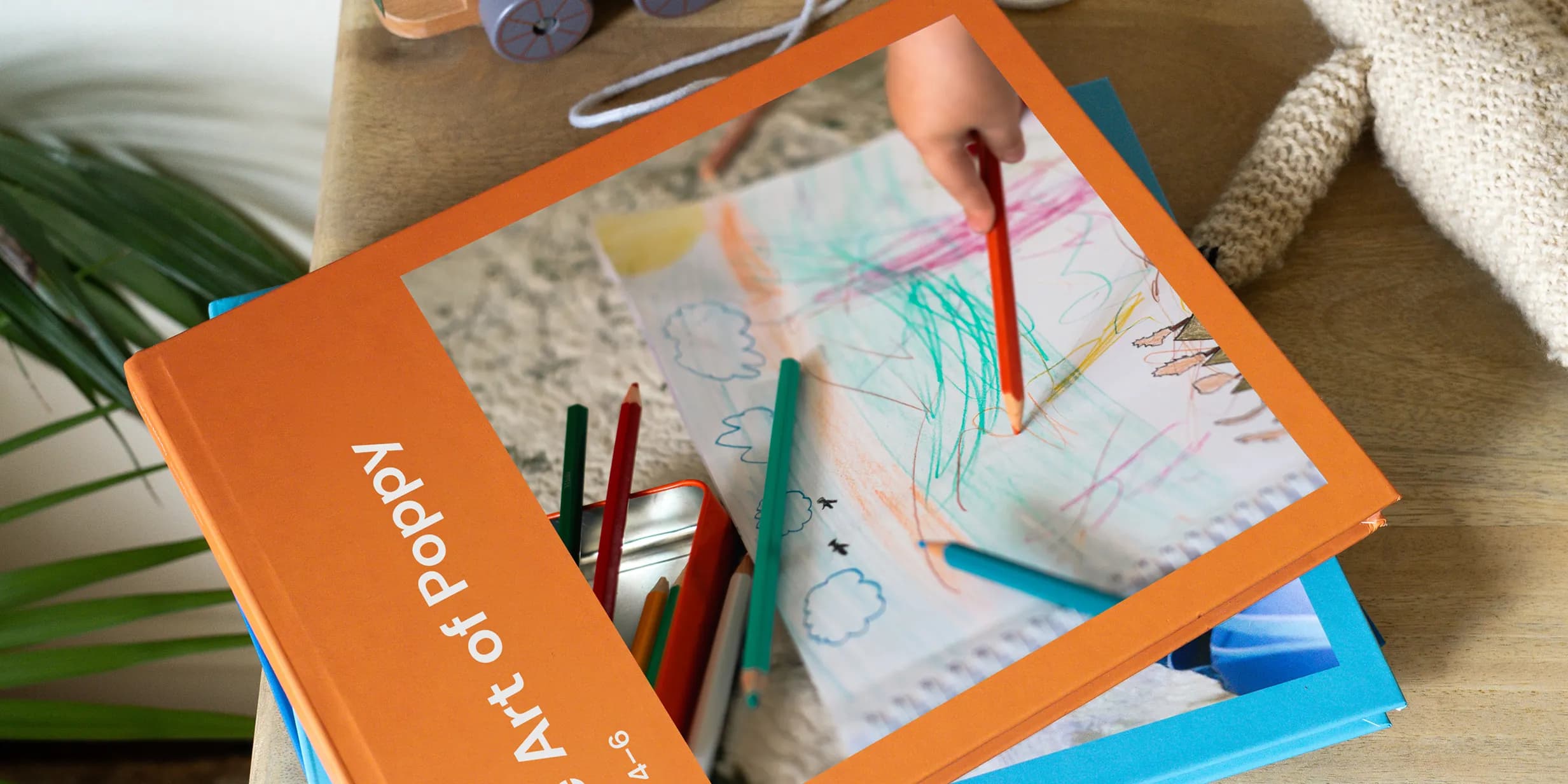
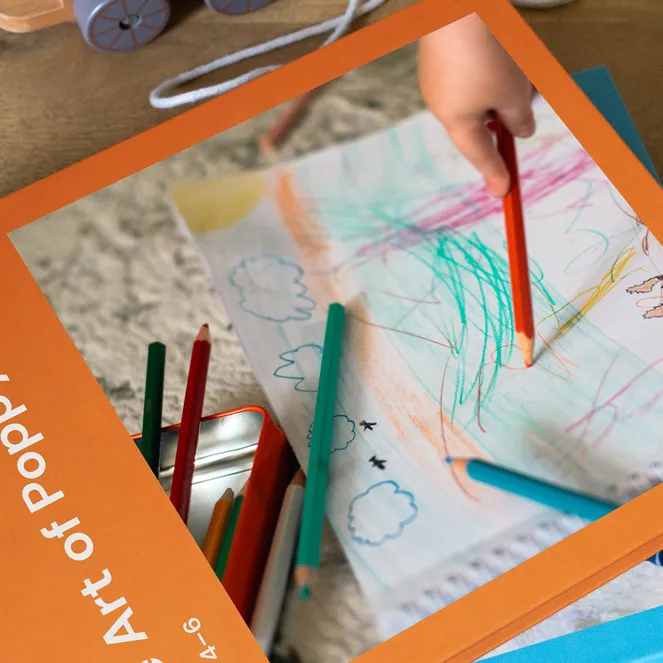
Every parent knows the problem: a drawer, a folder or a growing pile of paintings, drawings and school projects that somehow can’t be thrown away but definitely can’t all be kept either. A photo book is one of the simplest ways to solve this – it turns a wobbly stack of paper into something that actually gets looked at, while freeing you from feeling guilty about the recycling bin.

Hold on to their first works
Photograph as you go
Rather than saving up a year’s worth of artwork for one big session, photograph pieces as they come home, ideally against a plain, well-lit background like a kitchen table or a wall. This spreads the job out so it never becomes overwhelming, and it means you capture pieces at their best before they get creased, faded or lost under something else. A quick photo on your phone is enough – you don’t need a scanner or special lighting to get a result worth printing.
Be selective about what makes the cut
Not every drawing needs to survive. Look for the pieces that say something about that moment – a particular obsession, a milestone like writing their name for the first time or simply a drawing that made you laugh. If your child is old enough, ask them to help choose their favourites too. Being selective isn’t about ranking artistic merit, it’s about capturing a period of childhood you’ll want to remember.

Something to look back on
Add context while it’s still fresh
A drawing on its own loses meaning fast – within a year, even you might not remember what it depicts. A short caption noting the date, your child’s age and, if it’s not obvious, what the artwork actually shows makes all the difference later. If they can talk, ask them to describe it in their own words and use that as the caption instead of your own guess.

Encourage their creativity
Group by theme or age, not just date
Rather than working strictly chronologically, consider grouping by subject – all the family portraits together, all the animals together – or by age, so the progression from scribbles to recognisable shapes becomes part of the story. A book that shows how a five-year-old’s drawing of the family dog differs from their drawing of it two years later tends to be more memorable than a straightforward month-by-month record.
Make it an annual habit
Rather than one all-encompassing book, consider making this a yearly project – one book per school year or per age. It keeps each collection focused, makes the job manageable and gives you a shelf of books charting your child’s imagination as it develops, rather than one overstuffed volume trying to cover everything at once.
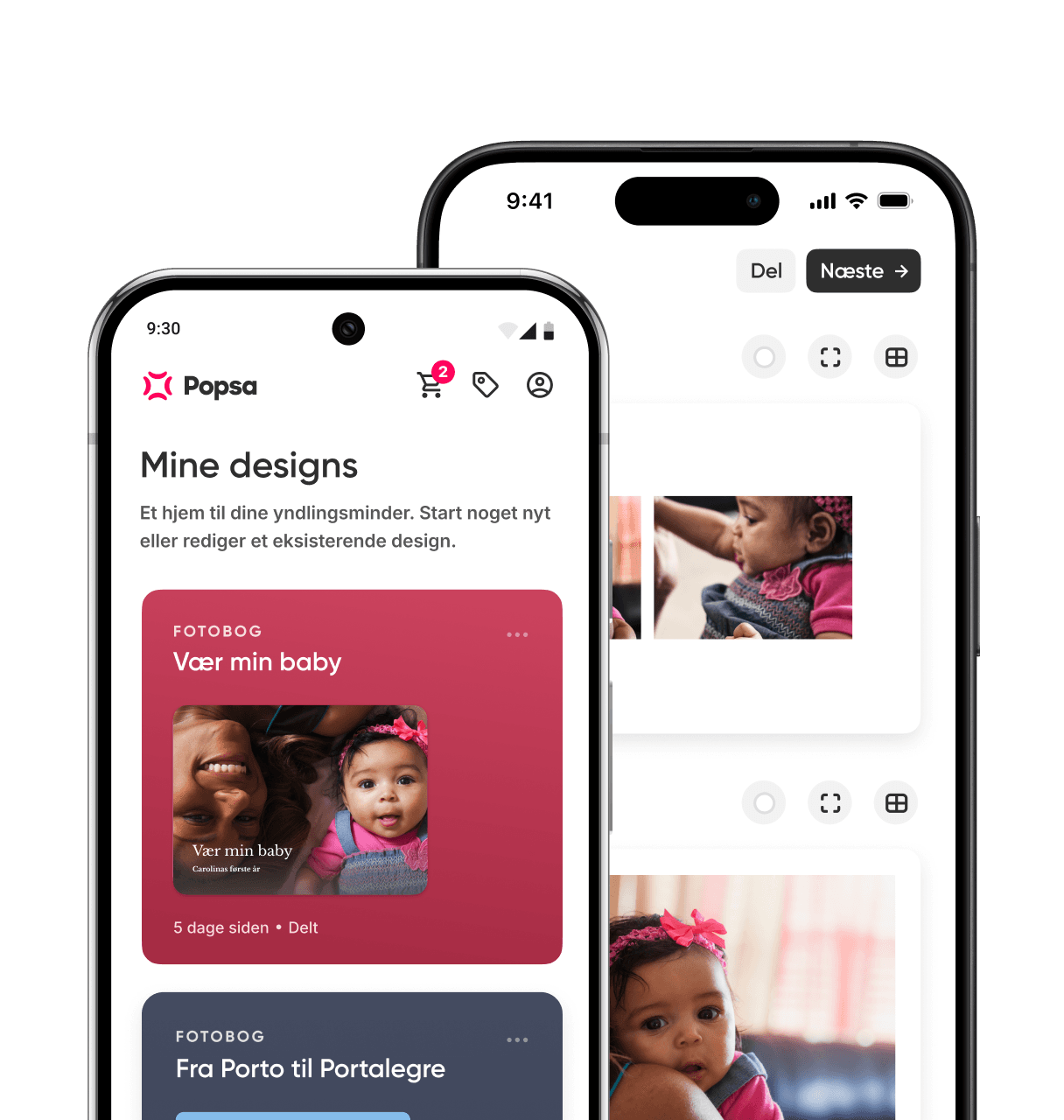
Once you’ve settled on your favourites, Popsa’s app makes the rest easy: import your photographed artwork straight from your camera roll, add captions alongside each piece, and let the app generate an initial layout automatically so you’re refining a first draft rather than starting from scratch.
Indlæser…
Download appen
Find minderne hurtigere med avancerede funktioner som ansigtsgenkendelse og smarte albummer.


Relaterede artikler
&w=96&q=75)
19. aug. 2026∙5 min
13. okt. 2026∙5 min


 USA
USA