Estilo-De-Vida

Table Talk: a new generation of French baking with the founders of Mamiche

Victoria Effantin and Cécile Khayat on their viral babka, making French bakery classics affordable and creating bakeries where everyone feels at home

Woman with long brown hair smiling slightly, wearing a white t-shirt, against a plain gray background.

3 de nov de 2026∙12 min

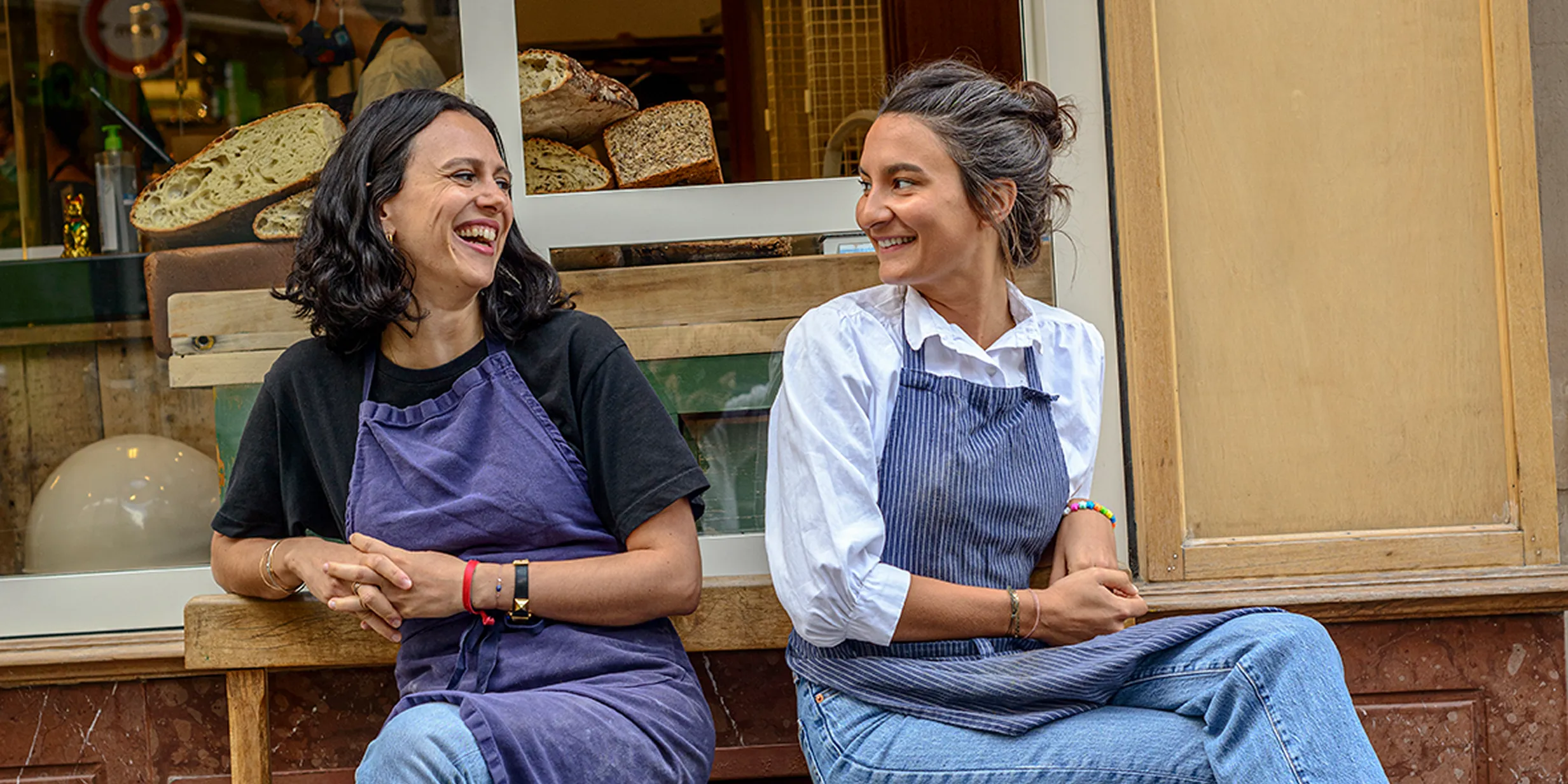
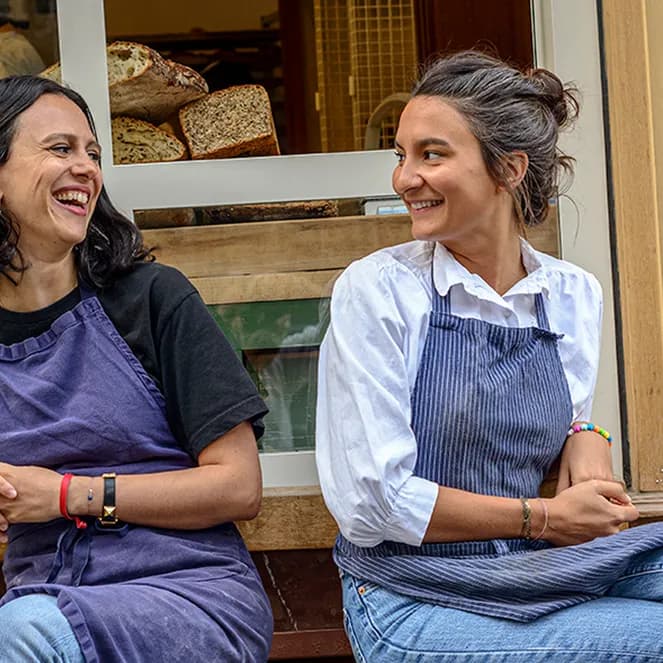
Two women in aprons laugh together on a bench outside a bakery, with fresh bread visible in the window behind them.

In a city with a bakery on almost every corner, it is hard to stand out, let alone challenge tradition. Yet Victoria Effantin and Cécile Khayat have done both with Mamiche, one of Paris’s best-loved bakeries. Since opening their first boulangerie in 2017, the pair have built a devoted following for their unfussy approach to French classics and their commitment to keeping them affordable. Their now-viral babka – a knotted, chocolate-filled brioche scented with orange blossom – has become their signature, winning over local regulars and first-time visitors alike.

The duo have built Mamiche into a neighbourhood fixture, with bakeries in Pigalle and Canal Saint-Martin. Their success lies in flavour-packed, uncomplicated bakes served in spaces that feel like home. We caught up with the pair to discuss the story behind their signature babka, why keeping French bakery staples accessible matters and how they’ve made the everyday ritual of a pastry feel special.

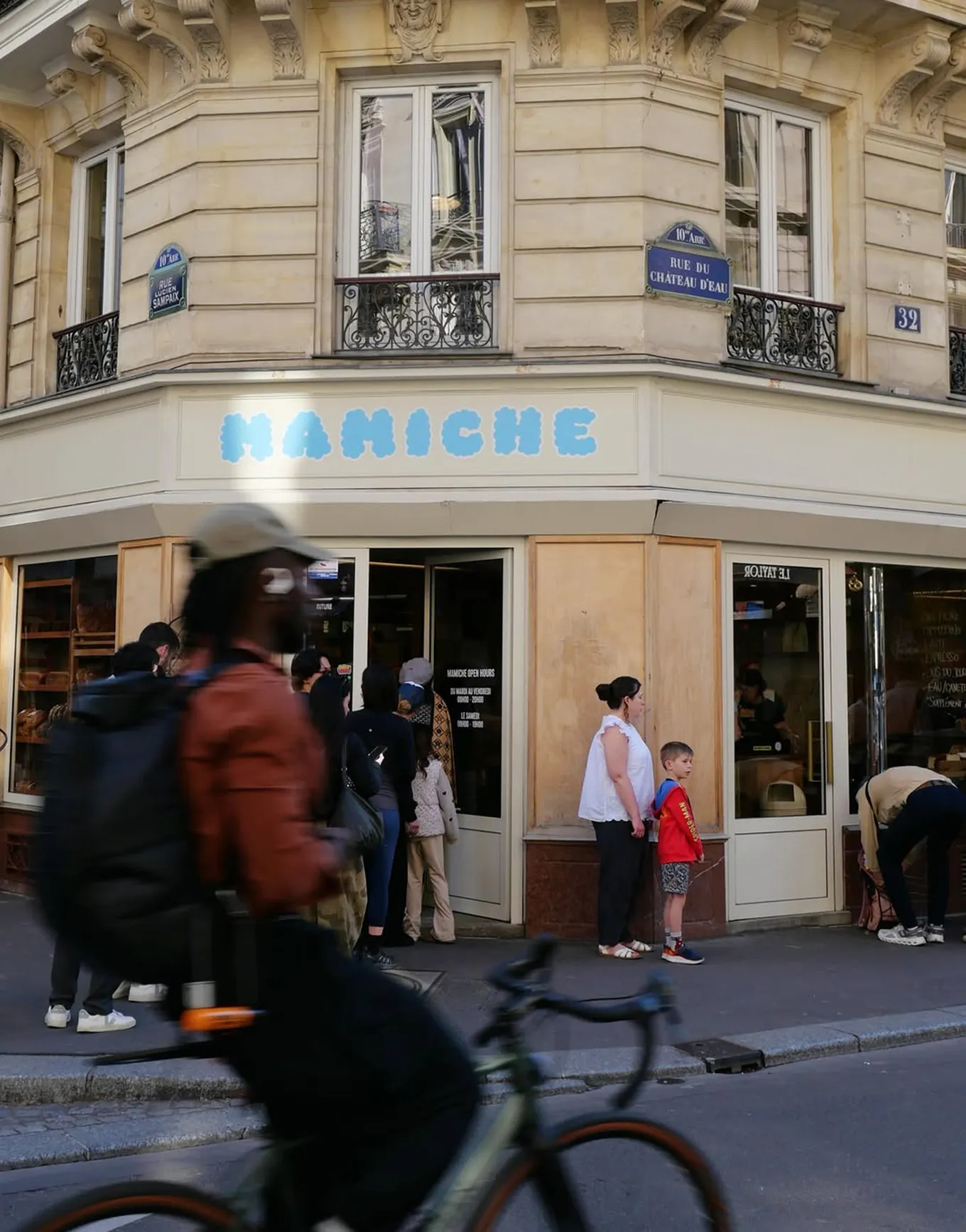
A blurred cyclist passes a Parisian street corner building with the "MAMICHE" bakery, featuring ornate windows and people on the sidewalk.

The exterior of Mamiche in Canal Saint-Martin. Photo: Mamiche

What did food mean to you growing up?

For both of us, food has always been about more than eating. It’s about bringing people together, sharing something delicious and savouring everyday moments around the table. We both have a real affection for the traditional French bakery – the kind of place you grew up visiting, where you can pick up something simple, flavourful and affordable. That’s what we wanted to recreate with Mamiche: somewhere familiar, comforting and generous, with a fresh energy all of its own.

Tell us about a memorable bread or bake you each loved as a child

Cécile: Childhood food memories are rarely about anything sophisticated. It’s often the simplest things that stay with you the longest: a really good baguette, a buttery brioche, a classic French pastry. That ethos remains at the heart of what we do today. We’ve never been drawn to pastries with 15 different textures and flavours. It’s about doing simple things exceptionally well.

Victoria: My grandfather used to bring back an enormous brioche from Isère, a traditional speciality from the region around Romans-sur-Isère, delicately flavoured with orange blossom. And when I say enormous, I mean enormous. We’d eat it with little squares of chocolate: pure heaven. I still remember the heady scent of orange blossom and the excitement of seeing him arrive with it.

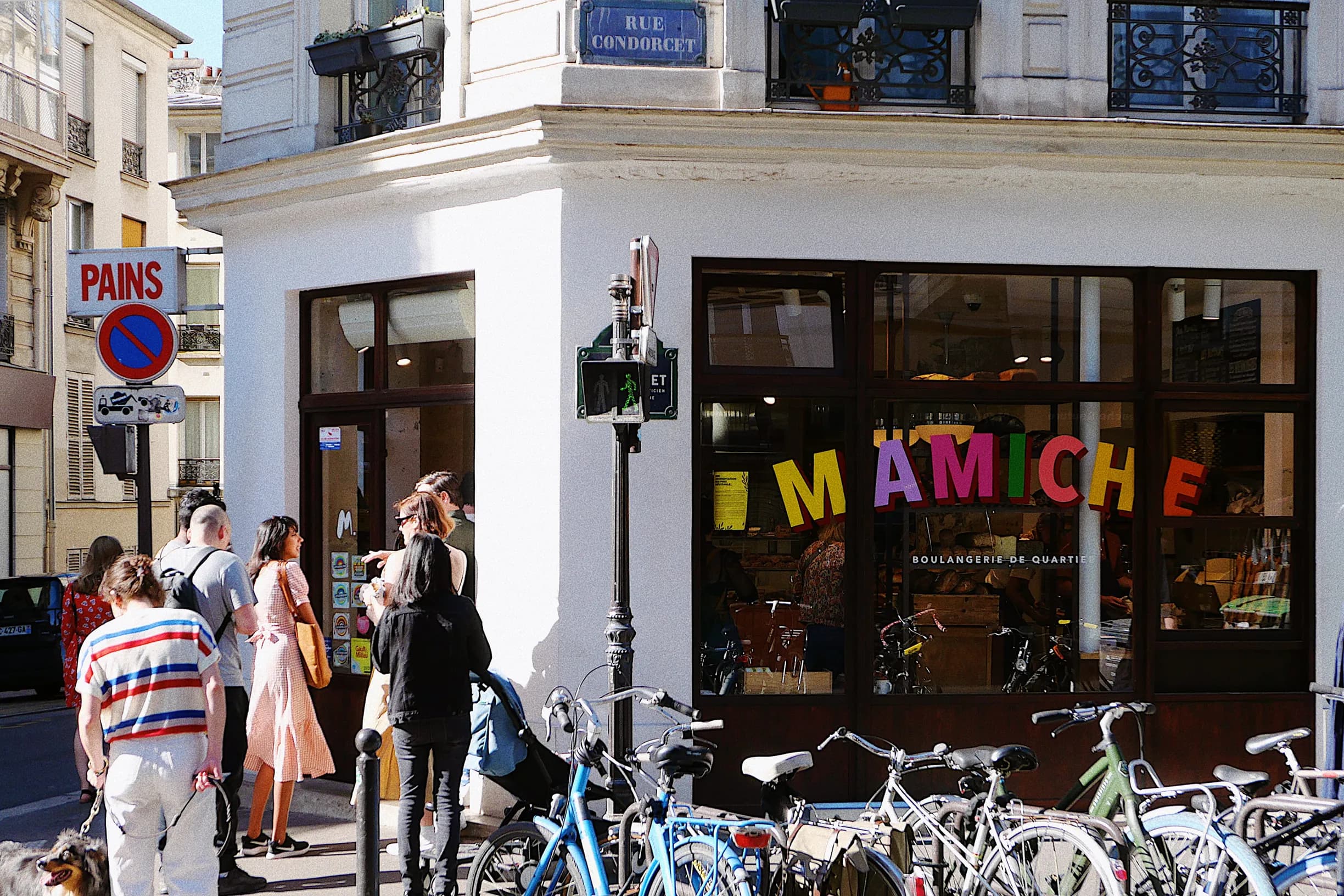
People and bicycles outside "Mamiche Boulangerie" on a sunny Paris street, Rue Condorcet. A dog is on a leash nearby.

The exterior of Mamiche in Pigalle. Photo: Mamiche

A person carries a precarious stack of about 12 white "MAMICHE" boxes, obscuring their face, in a bustling bakery.

A look inside Mamiche. Photo: Mamiche

A bakery counter overflowing with artisanal breads, sweet pastries, and a chocolate babka, with price tags visible. A baker stands in the background.
Golden Galette des Rois with spiral design and powdered sugar center, displayed in a bakery window with baguettes and a person.
A wooden crate filled with golden-brown artisan bread loaves, each scored with a white flour "M" on top.

What inspired you to open Mamiche?

C: Paris’s food scene was evolving, with restaurants and pâtisseries becoming more creative, but bakeries seemed to be standing still. We wanted to bring a fresh perspective to the traditional French boulangerie and make visiting one exciting again.

V: We met while working in food marketing. Cécile had trained as a pastry chef, and I’d always dreamed of opening a bakery. When I found out, I immediately suggested we open one together. I went back to school for the CAP Boulanger, a professional baking qualification, so between us we had both bread and pastry. Our marketing backgrounds helped us shape Mamiche as an experience, not just a bakery – somewhere with a strong identity and a genuinely welcoming atmosphere.

Mamiche is often credited with bringing babka to Paris. How did it find its way onto your counter, and why has it stayed?

C: We discovered babka by chance in New York, at Dean & DeLuca, which has sadly since closed. We spotted it on a shelf and thought, “What on earth is that? It looks amazing!”

V: We tasted it and were blown away. Some Jewish bakeries in Paris already sold babka, mostly the traditional poppy-seed version, but chocolate was less common. We created our own, with chocolate and a touch of orange blossom, and spent a long time perfecting it before opening Mamiche.

It was on the counter from day one. At first, people were intrigued but unsure what to make of this twisted, chocolate-filled brioche, so we offered them a taste. They fell in love with it, and word quickly spread. We’ve never changed the recipe.

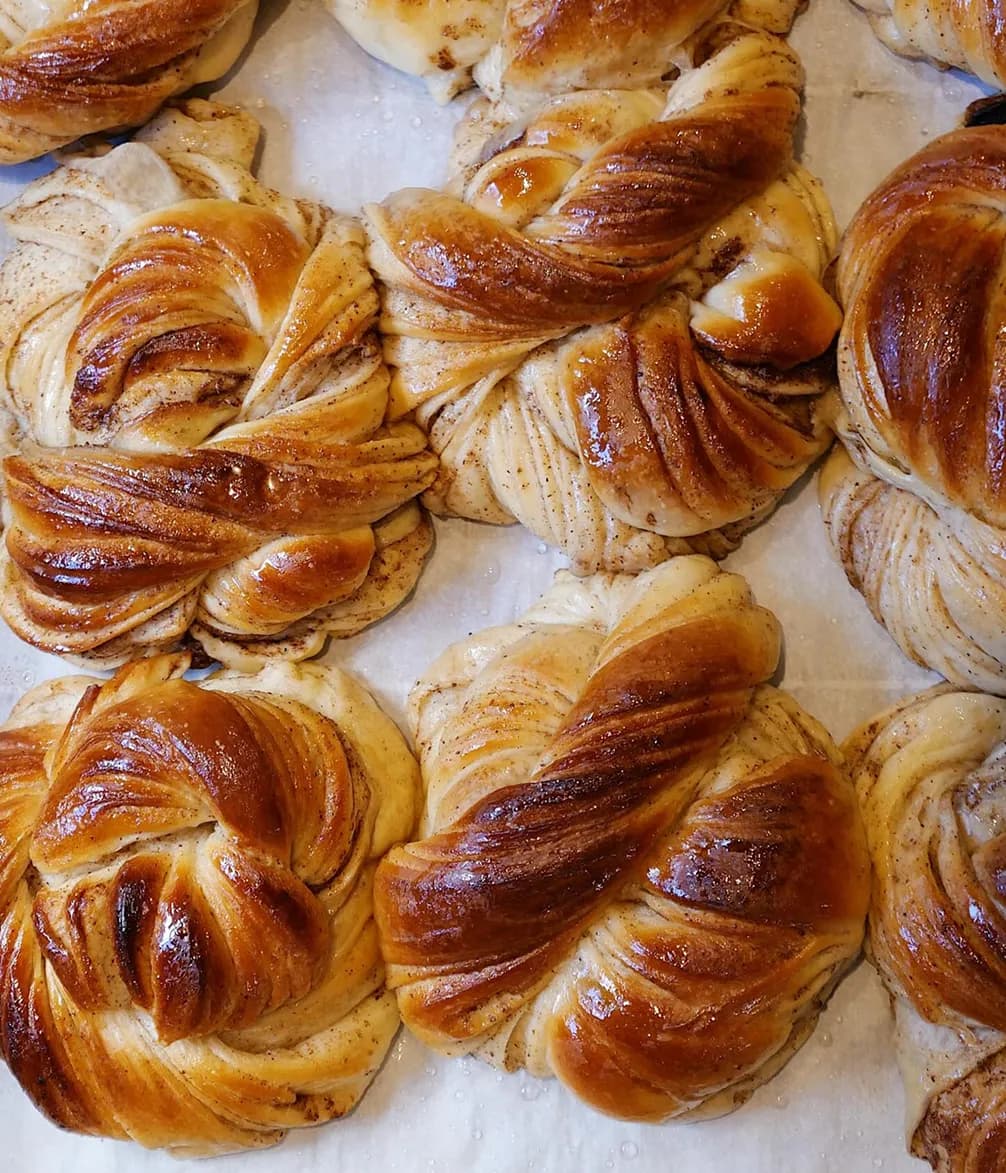
Close-up of golden-brown, glazed cinnamon knots with swirled dough and visible spice, resting on a white surface.

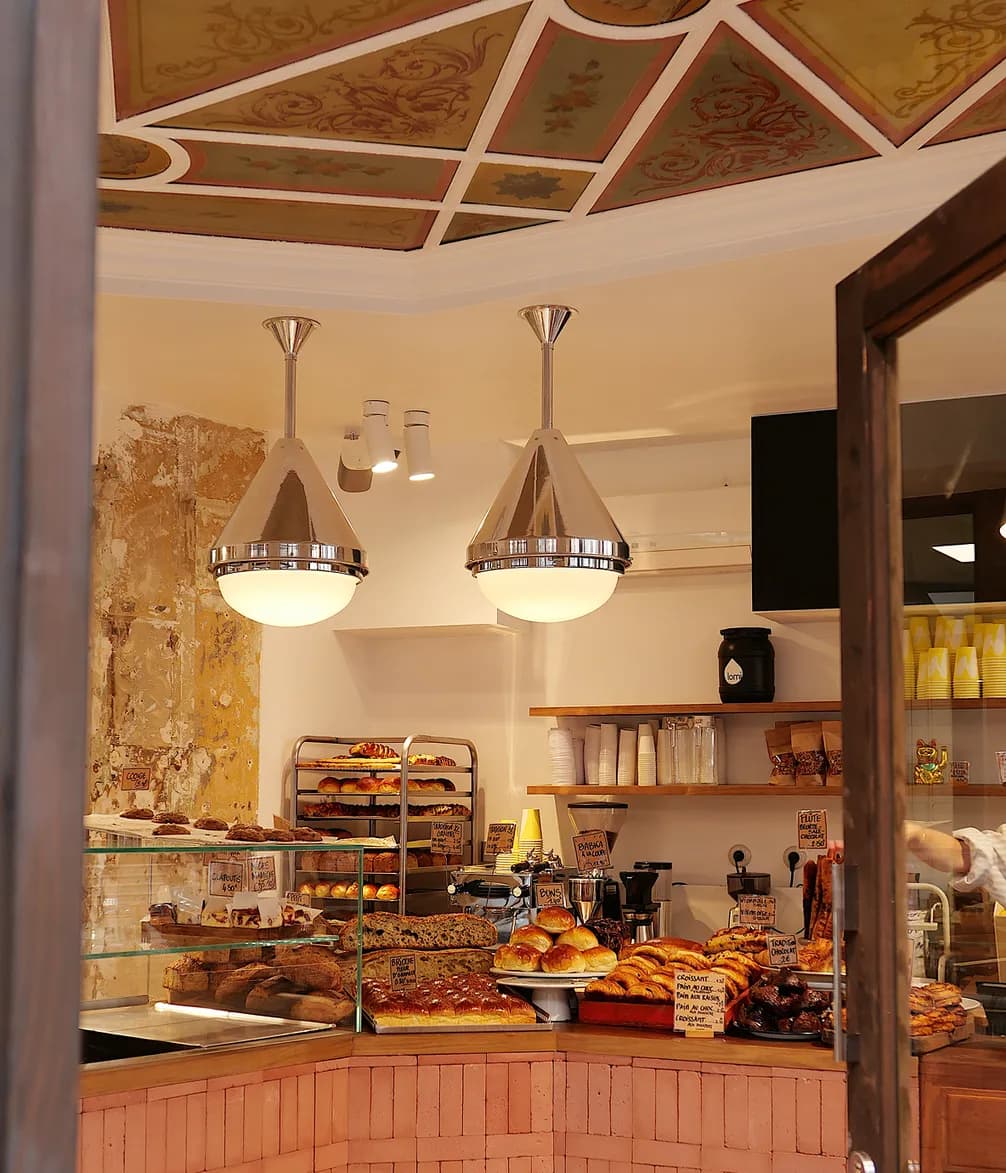
Freshly baked cinnamon buns, and counter settings at Mamiche. Photos: Mamiche

Interior of a bakery with a counter full of pastries, bread, and cakes, under an ornate painted ceiling and modern chrome lights.

Talk us through a typical day at Mamiche

V: The day starts long before the neighbourhood wakes up. There is something quite magical about those first hours: the ovens are on, the dough is being worked and the first pastries are coming out. Once the doors open, the pace shifts from morning coffee and croissants to lunchtime sandwiches and afternoon treats. That’s what we love about a bakery – it takes on a different life throughout the day.

C: Behind the counter, everything is a team effort. Bakers, pastry chefs, sandwich makers and sales staff all play their part. It’s hard work, fast-paced and occasionally chaotic, but that’s what makes it exciting. By closing time, we’re already planning for tomorrow.

Your traditional baguette has stayed affordable, even at the expense of margin. Why does that matter so much to you?

V: From day one, we wanted Mamiche to be a true boulangerie de quartier. We were among the first to put those words on our shopfront in Paris. For us, modernising the French bakery was never about making it elitist, but about keeping it accessible. That’s why we’ve fought to keep three French classics affordable: the baguette, brioche and chou.

Our baguette still costs just €1. Made with Label Rouge flour and sourdough, it offers a level of craftsmanship that’s increasingly rare at that price in Paris. It may not make financial sense, but it’s a matter of principle. If your neighbours can no longer afford their daily bread, you’ve missed the point of being a neighbourhood bakery.

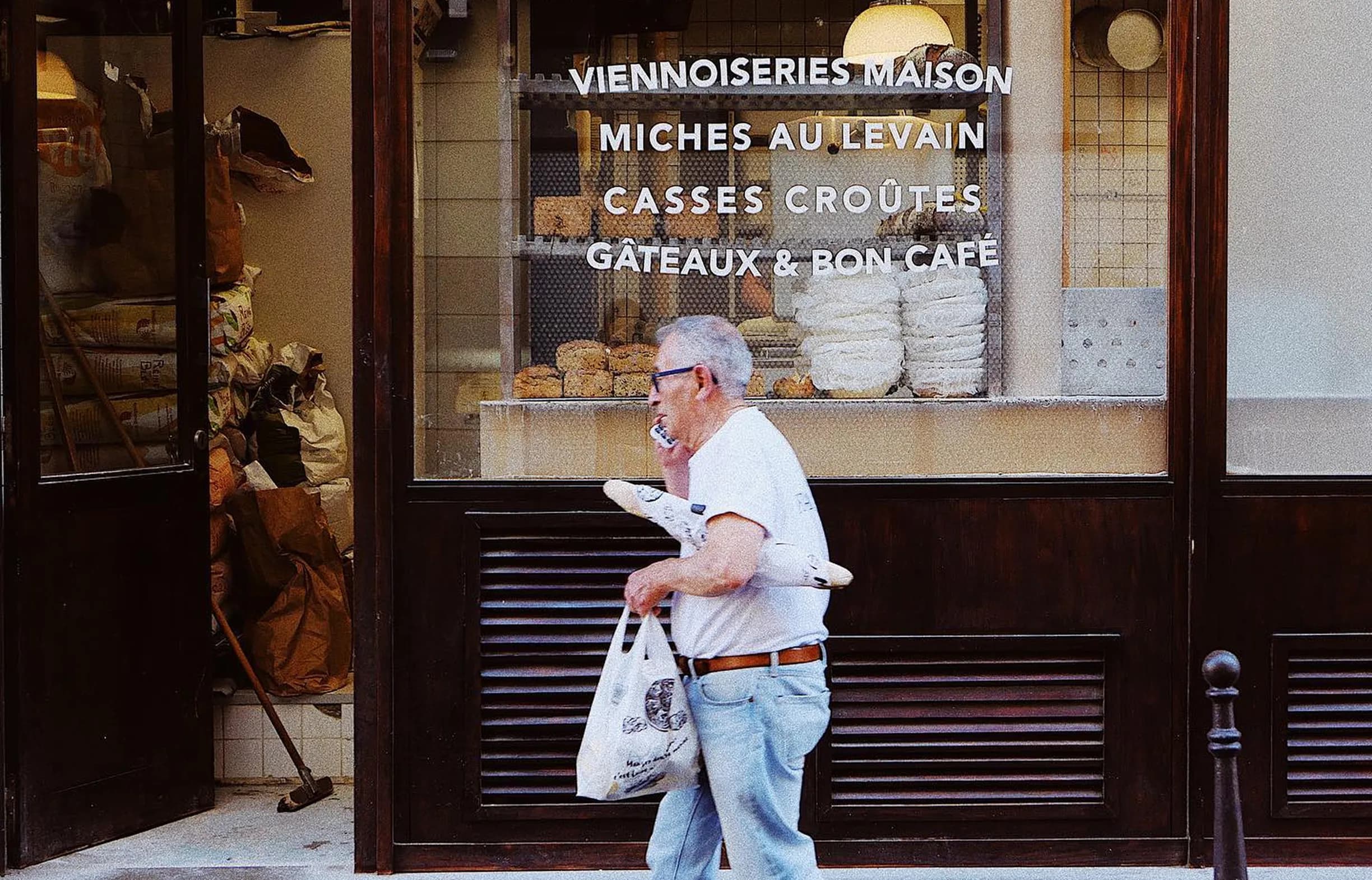
An older man carrying a baguette and a shopping bag walks past a bakery window displaying bread and signs in French.

Mamiche in Pigalle. Photo: Mamiche

What does being a boulangerie de quartier mean to you, in a city with a bakery on almost every corner?

V: For us, it’s a place where everyone feels welcome: the woman who’s lived around the corner for 40 years, local families and the crowd in town for fashion week. We love bringing such different people together over the same products. Our counter combines French classics with a few unexpected creations. We wanted to bring back the neighbourhood bakery of our childhood: generous, familiar and full of life, with room for everyone.

How would you describe the vibe of your bakeries?

C: We felt that bakeries could be quite serious places, so we wanted Mamiche to feel different – relaxed, lively and full of energy, with music playing, people chatting, the team laughing and everyone greeted with a smile. Our two bakeries each have a personality shaped by their neighbourhood, but share the same spirit. We never wanted a precious, boutique-style space; instead, we wanted somewhere warm, welcoming and full of life.

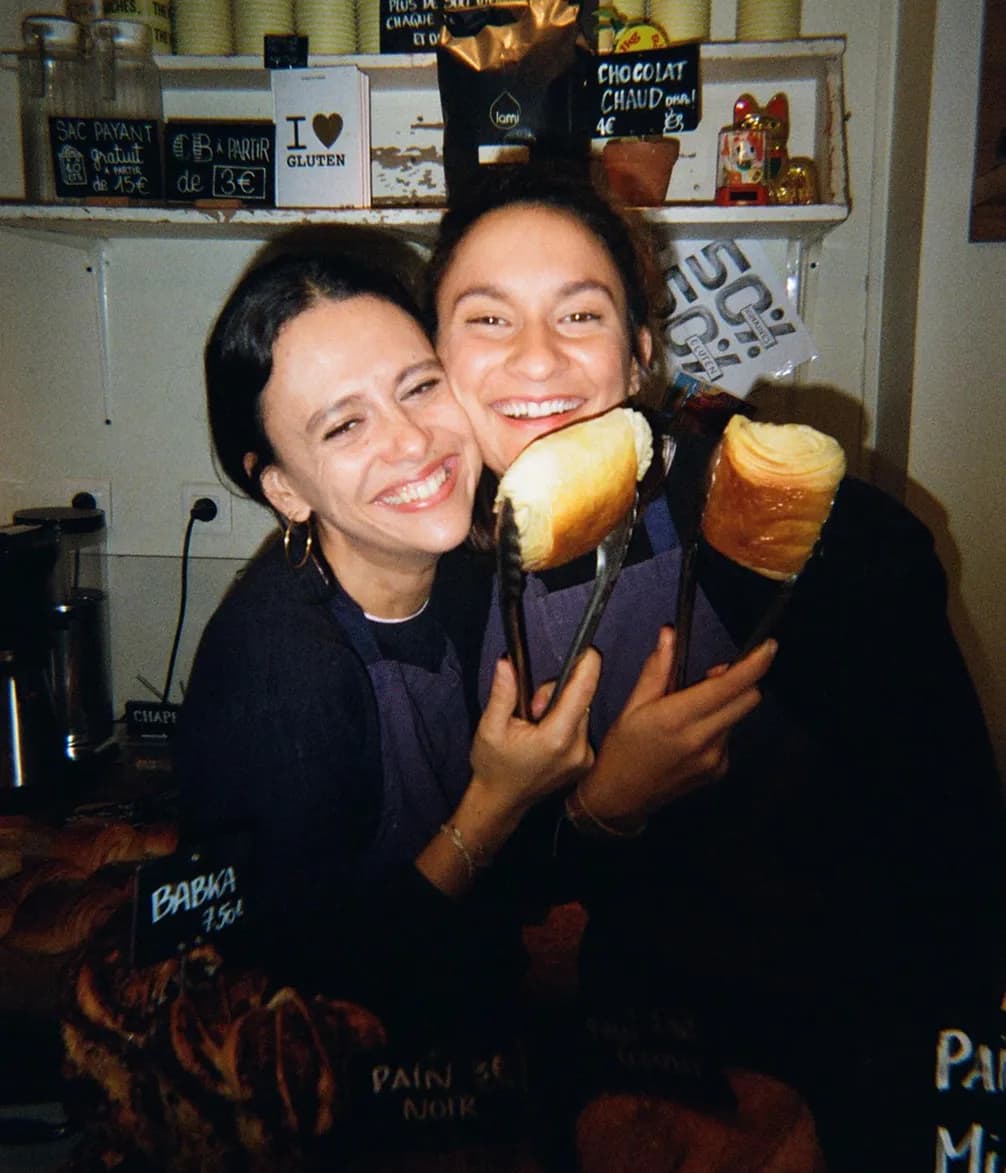
Two joyful women in aprons hug in a bakery. One holds two pastries with tongs, surrounded by baked goods and signs.

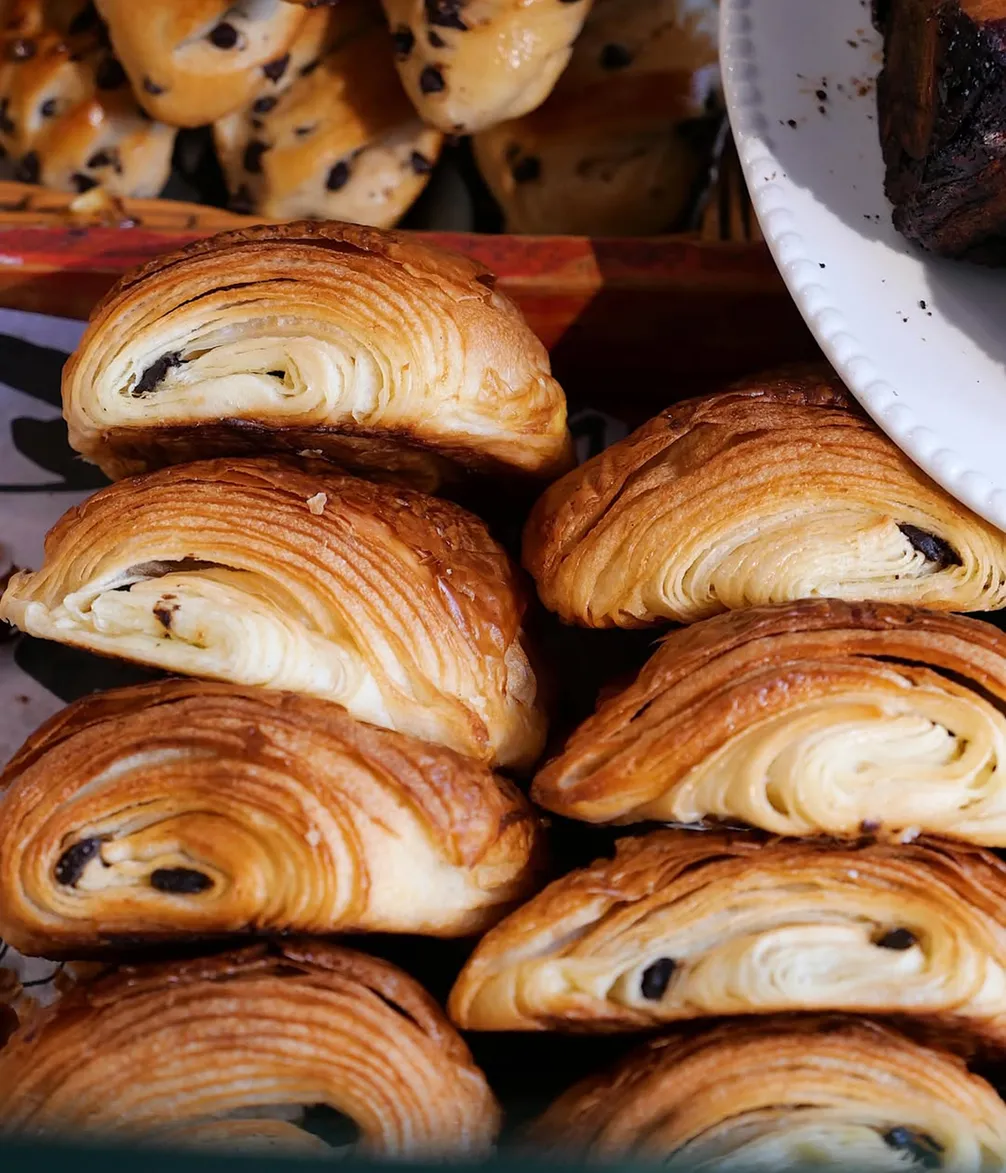
Cécile and Victoria, and a pile of pains au chocolat. Photos: Mamiche

A pile of golden-brown chocolate croissants, showing flaky layers and dark chocolate, with blurred chocolate chip muffins in the background.

Is there a regular or a neighbourhood ritual that sums up Mamiche?

V: What we love most is the relationship between our teams and our regulars. There is something special about customers who don’t even need to order because we already know exactly what they want. People popping in for a baguette, stopping for a quick chat or bumping into neighbours – it’s those little everyday moments that make Mamiche feel like part of the neighbourhood.

What advice would you give women starting out in baking?

V: Oh, we could write a book about that! When we started, we weren’t taken seriously. Two young women from marketing wanting to open a bakery in such a traditional, male-dominated industry? Not everyone was convinced. We experienced plenty of sexism during our training and while setting up Mamiche, and some suppliers could barely hide how ridiculous they thought we were. Starting out is intimidating enough without constantly proving you deserve to be there, but we didn’t let it stop us.

Don’t let anyone make you feel you don’t belong. Ask questions, learn everything you can, surround yourself with good people and trust your ideas. You don’t have to follow the men who came before; doing things differently can lead to the best ideas. And if someone laughs at you when you walk into a room, give them a good reason to remember you when you walk out.

We’re visiting Mamiche. When should we come, and what should we order?

C: Come hungry! Visit in the morning, when the bakery is buzzing and the counters are full. Start with a croissant and a baguette tradition – you can tell a lot about a bakery from its simplest products.

Then, of course, try the babka. It’s still one of the products we’re most proud of. The Chou Vanille is another must-try. And if you’re visiting around lunchtime, don’t leave without trying one of our sandwiches. Ask the team – they know the products better than anyone.

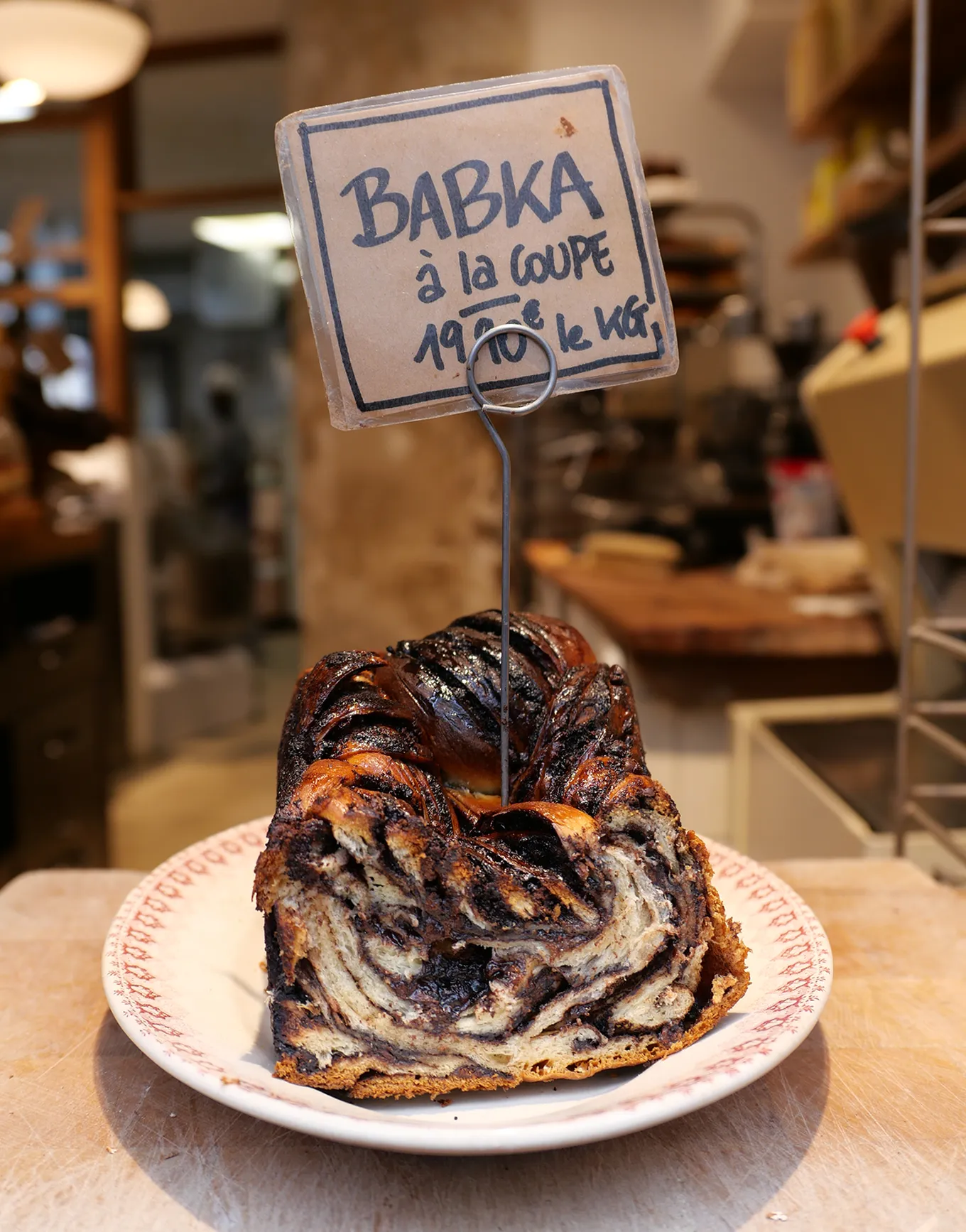
A sliced chocolate babka with visible swirls on a plate, featuring a "Babka à la Coupe 19.90€/kg" sign, in a bakery.

Mamiche’s chocolate babka. Photo: Mamiche

Mamiche’s babka

Babka is one of our signature bakes. What began as a discovery in New York has grown into a firm favourite, and one of the most rewarding things is watching people’s faces light up when they try it for the first time. There’s something special about creating a bake that becomes part of people’s everyday lives.

Serves eight

Ingredients

For the brioche dough

  • 250g T45 flour

  • 30g caster sugar

  • 1 tsp fine salt

  • 10g fresh baker’s yeast

  • 12g orange blossom water

  • 3 medium eggs

  • 165g unsalted butter, softened

For the chocolate filling

  • 60g unsalted butter, softened

  • 36g caster sugar

  • 102g cocoa powder

For assembly

  • Chocolate chips, for sprinkling

  • Sugar syrup, made with 30g water and 30g sugar

Method

Put the flour, sugar, salt, yeast and orange blossom water in a stand mixer bowl, keeping the yeast away from the salt and sugar. Add the eggs and knead on slow speed for 2-3 minutes, until smooth.

Gradually add the softened butter, then increase the speed and knead for five to six minutes, until the dough whips around the bowl and pulls away from the sides. Finish briefly at very high speed. Shape into a ball, place in a bowl, cover with a damp cloth and leave to rise at room temperature for one hour, until almost doubled in size. Refrigerate for two hours to firm up.

Roll the chilled dough on a lightly floured surface into a rectangle about 4mm thick. Wrap in cling film and refrigerate for 20 minutes.

Meanwhile, make the filling. Using the paddle attachment, beat the butter and sugar until creamy. Reduce the speed, gradually add the cocoa, then finish on high speed until smooth.

Spread the filling evenly over the whole dough, then scatter generously with chocolate chips.

Roll the dough up tightly from a long side, especially at the start. Slice it in half lengthways to expose the layers, then plait the halves, cut sides up. Pinch and tuck the ends under slightly. Place in a greased 18cm loaf tin. Cover and leave to rise somewhere warm, such as near a radiator, for one to two hours, until almost doubled.

Preheat the oven to 180°C. Bake for 40 minutes, covering with foil if the top browns too quickly. Brush the hot babka lightly with the sugar syrup, then cool before slicing.

Visit Mamiche’s bakeries in Paris. Victoria Effantin and Cécile Khayat’s babka is also available to order for delivery across the city.

Transferir a aplicação

Descubra memórias mais rapidamente com funcionalidades exclusivas, como o reconhecimento facial e álbuns inteligentes.

App StoreGoogle Play
Transferir a aplicação