

Podroze
Nepal: two journeys, 15 years apart
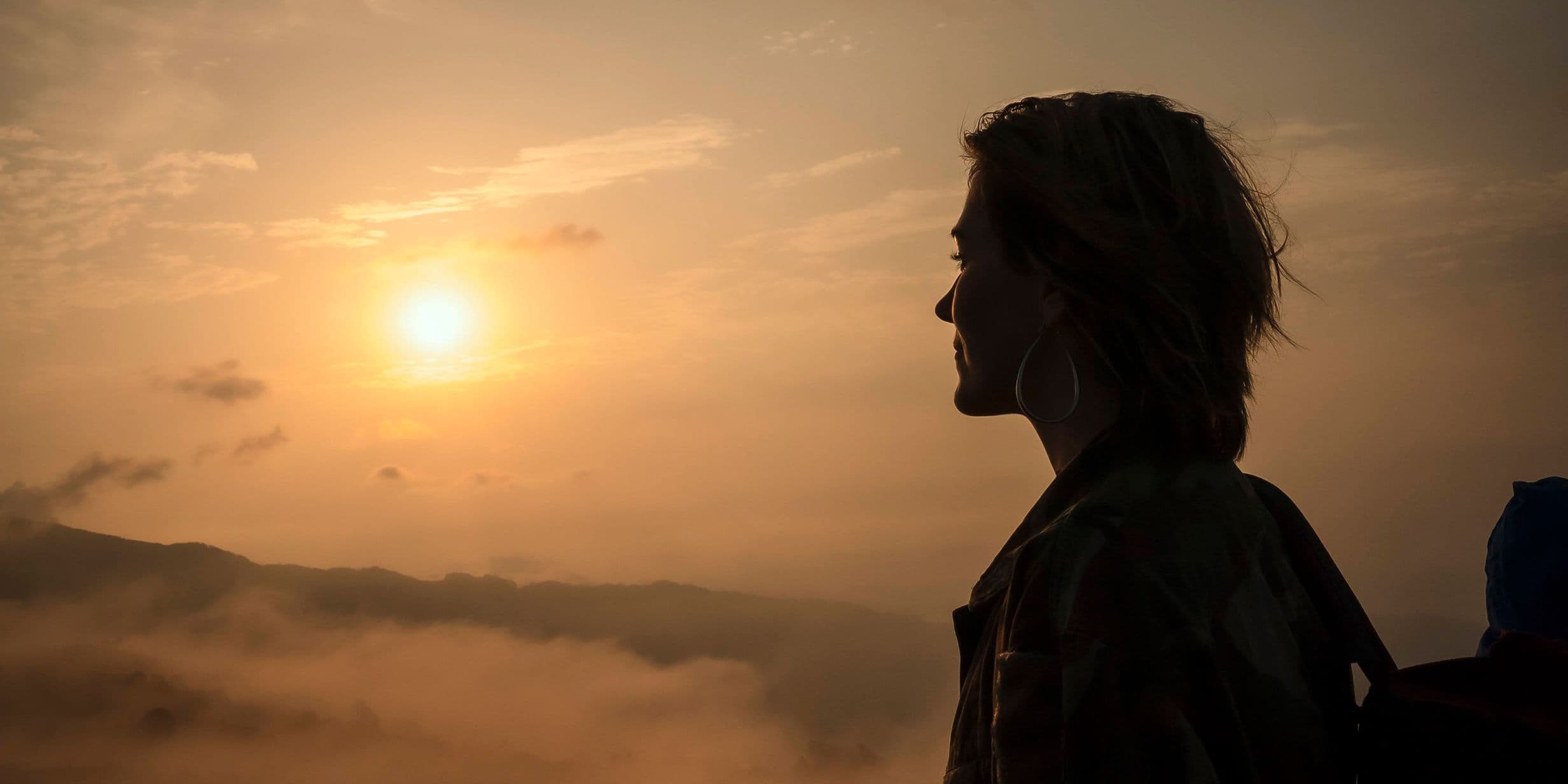
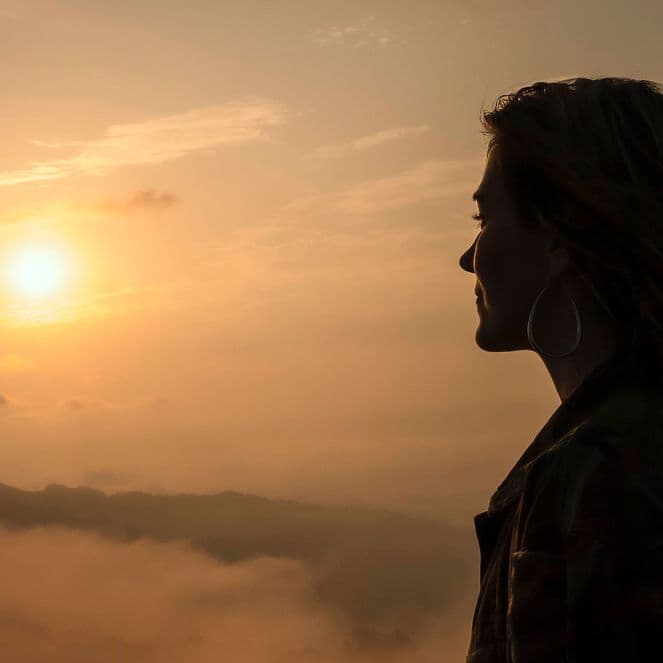
Aged 18, Imogen Lepere found freedom on a solo adventure that changed her life – then her return set her on an unexpected new path

17 sie 2026∙7 min
Podroze
Aged 18, Imogen Lepere found freedom on a solo adventure that changed her life – then her return set her on an unexpected new path
17 sie 2026∙7 min
My first time solo travelling coincided with my first Big Heartbreak. In those liminal years between childhood and adulthood, we clung to one another through everything. We argued about the names of future children, applied to the same university and tattooed each other’s initials into our teenage skin. Yet when I decided, aged 18, to spend six months in a Nepalese village with no internet or phone reception, I knew it was something I had to do alone.
On the bus from Kathmandu to the village of Chaukot – where I was “helping out” in the local school (a voluntourism scheme that turned out to be a scam) – I cried so much I could scarcely see the road. The next morning, as the villagers rose at sunrise to feed their animals, I woke weeping. Much to the distress of my host mother, a gentle woman called Maia, I was too heartbroken to tackle the mounds of rice and dhaal she served in a small kitchen. Concerned by my dramatic weight loss, she insisted on a daily mug of warm yak’s milk, in which lumps of fat floated like bloated fish. I cried about that too.
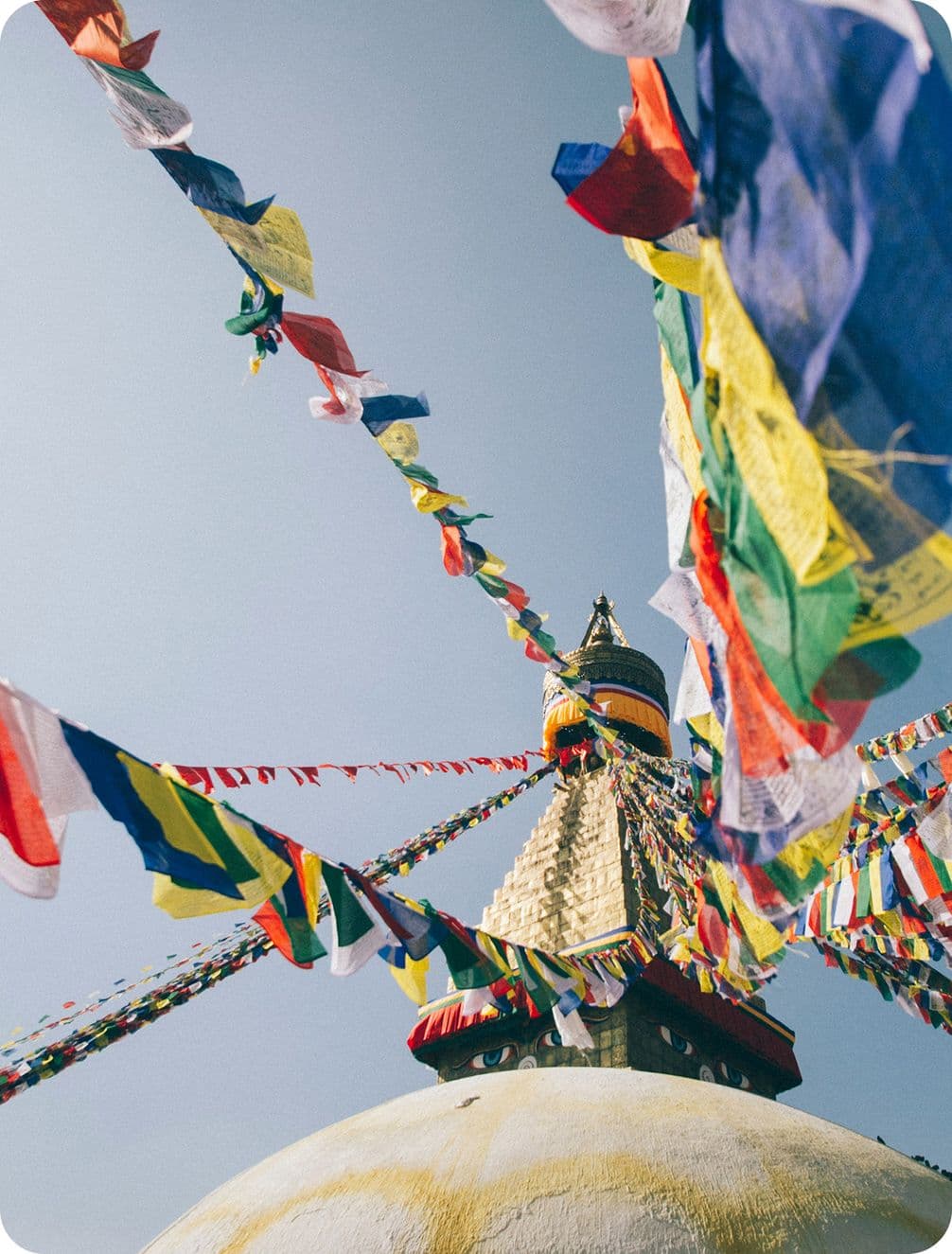
Boudhanath Stupa, Nepal. Photo: Jonny Kennaugh, Unsplash
However, as nature’s pendulum swung between sunrise and total darkness, this magical mountainous country seeped into my bones. It was 2013 and, after a decade-long civil war that limited investment in infrastructure, electricity was sparse. The Hindu monarchy had fallen in 2008 after 240 years, and the constitution for the new democratic and secular republic would not be drawn up until 2015. In Chaukot, women smeared red sandalwood paste on their foreheads and left offerings before the shrine of Vishnu each morning. While children and neighbours spent evenings watching Nepali soaps on the village’s single television, Maia popped maize over a clay oven in the goat house as the moon gilded the valley.
One afternoon a few months into the trip, as I flew along an unpaved mountain road on the back of a moped to post a letter to my parents, I noticed that heartbreak’s ache had given way to a new sensation – spaciousness and a sense that anything could happen. Now I know this feeling by another name: freedom.
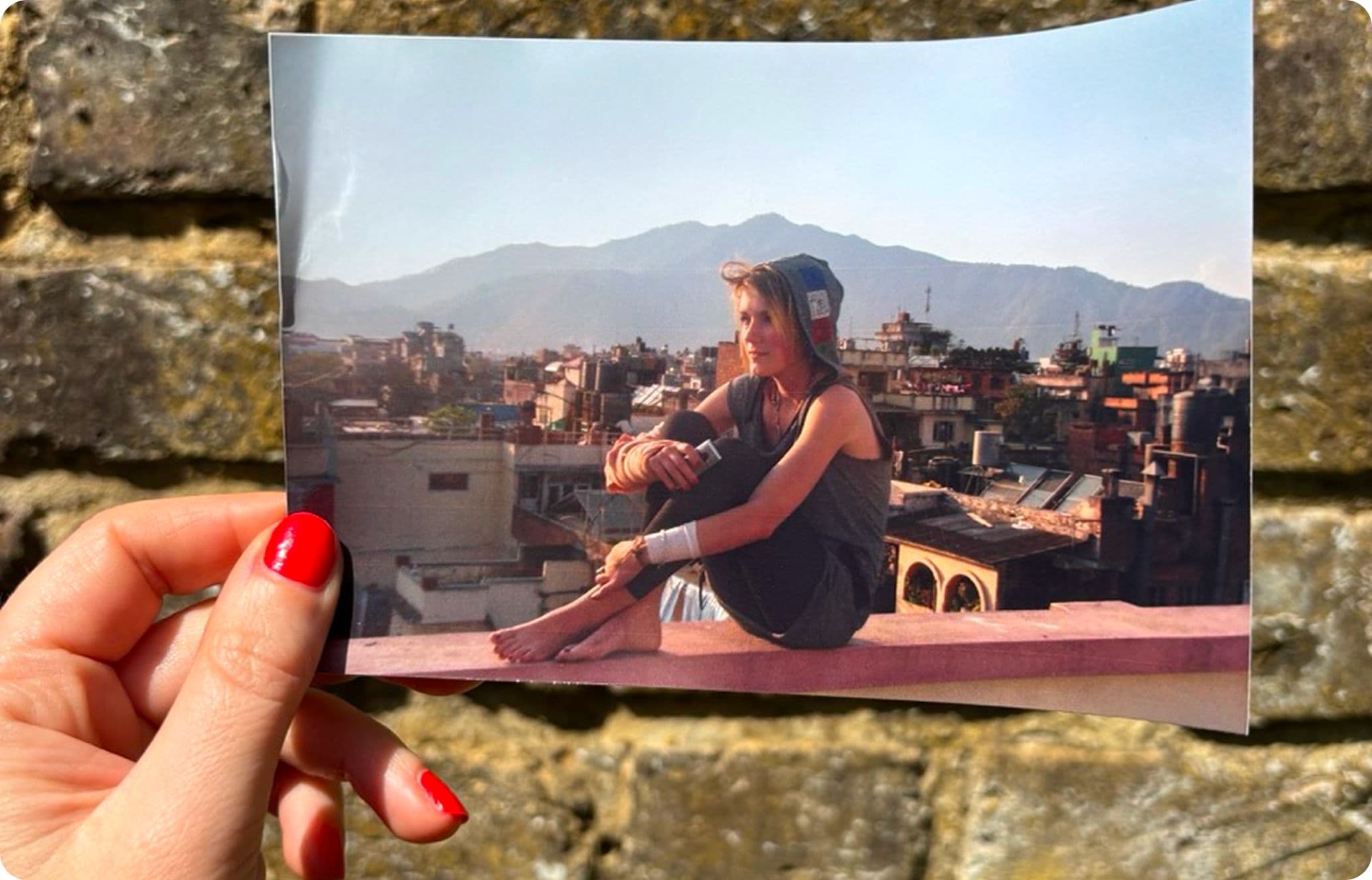
Imogen in Nepal, 2013
The photo that embodies this transition was taken on a disposable film camera by a fellow tourist at a Kathmandu hostel just before I flew home to London. I am sitting on a rooftop, both arms clumsily bandaged (one from an infected burn, the other a fractured elbow), looking into the far distance. Perhaps I could already see all the horizons I would go on to chase. The story I wrote about this trip (catchily titled Life, love and lingerie shopping in the Himalayas) went on to win a competition that launched my career as a travel writer. A backpack-wearing, wild-haired wanderer with a focus on community tourism was born.
Fifteen years later, I am back in Nepal – this time travelling with photographer Mark Rammers. While my stay as a backpacker felt endless, we have little more than a week to report on a story for The Guardian. We are in the little-visited Dhankuta region in the country’s far east, visiting the village of Sipting, which is one of the traditional homes of the Indigenous Aath Pahariya Rai community. As rising temperatures, seasonal flooding and erratic monsoons force droves of Dhankuta’s subsistence farmers over the border into India, this remote region is exploring international tourism for the first time.
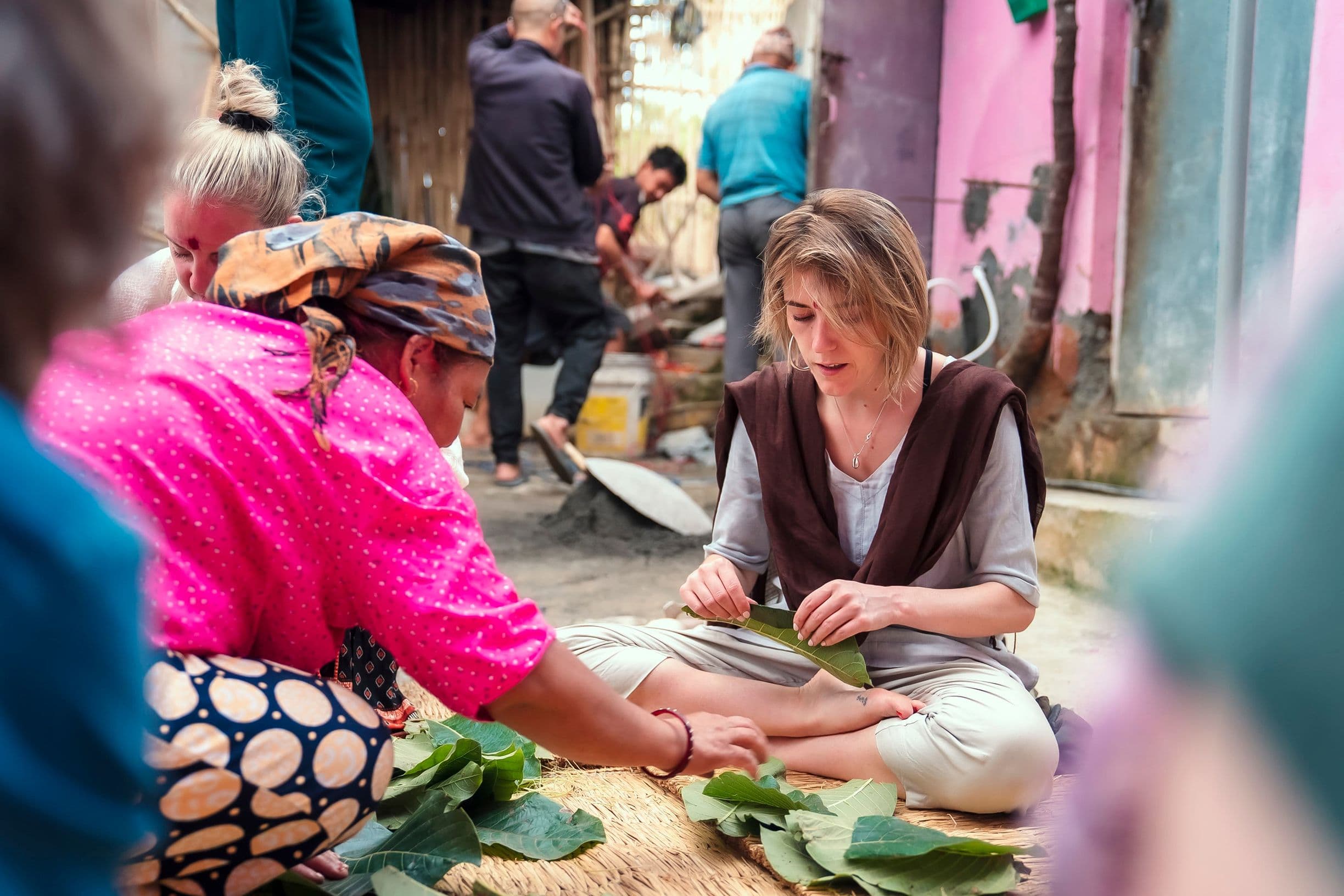
Imogen, Nepal, 2025. Photo: Mark Rammers
With support from Community Homestay Network – a social enterprise that encourages the spread of tourists away from honeypot areas such as Everest and Annapurna, and into homestays in villages struggling with depopulation – five women from Sipting have decided to open their homes. Mark and I are among the first guests.
Sipting is even more remote than Chaukot, but it also echoes with cows bellowing plaintively. As my host, Prem Maya, leads the way up flight after flight of steps hewn into the face of the mountain, a venerable lady who is digging up wild greens with a knife straightens up to stare at my blonde hair. Prem’s house is higher than any other in the village and, although she is shy, a copper water jug by my bed and towel folded in the shape of a butterfly reveal that she has prepared for my arrival with just as much care as Maia did all those years ago. Speaking through James Maharjan of Community Homestay Network, who is acting as a translator, she says: “I’m not sure where you’re from and I haven’t seen many people who look like you, but I am very glad you’re here.”
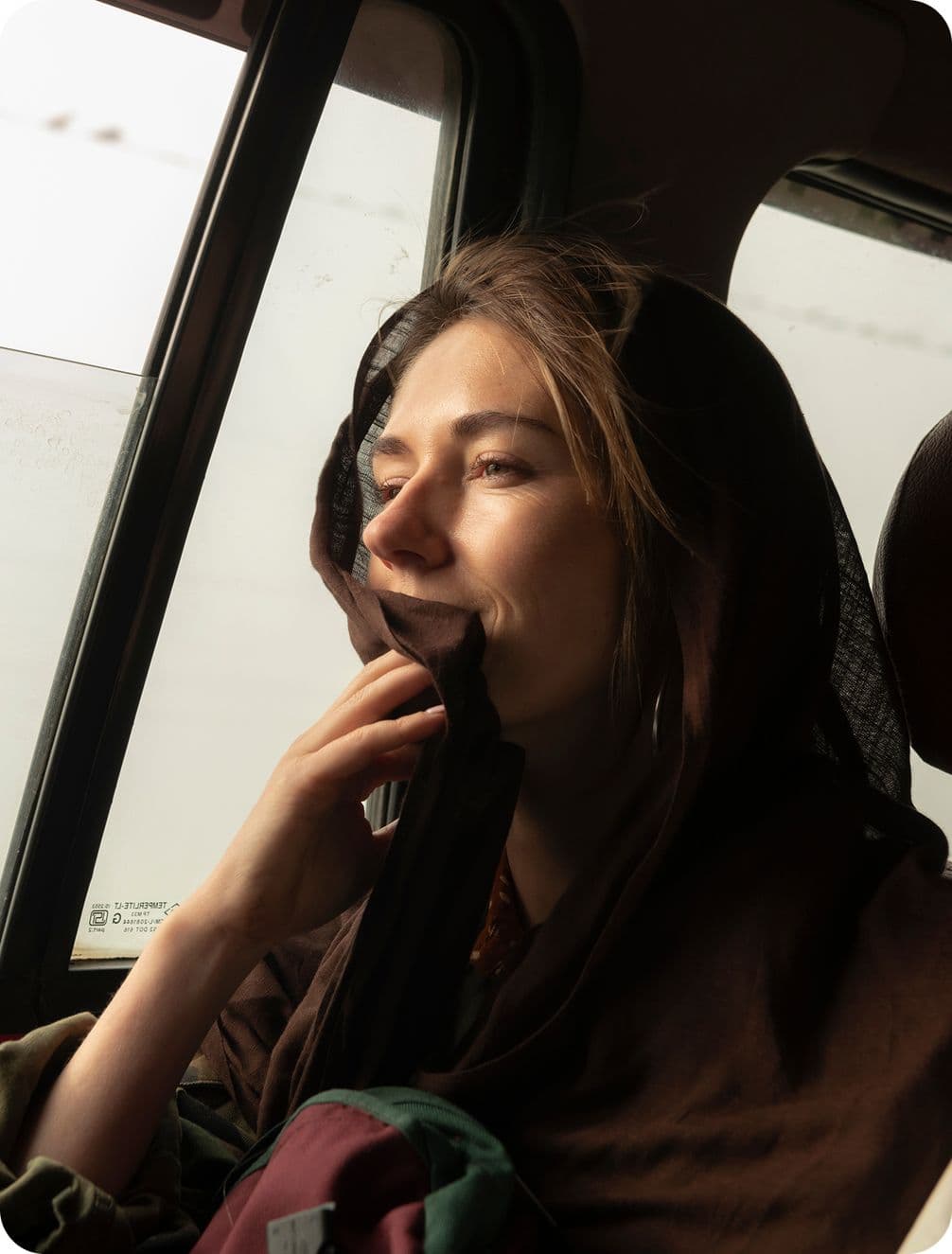
Journeying through Nepal in 2025. Photo: Mark Rammers
As the door closes behind them, I sit on the windowsill and gulp lungfuls of rarified air. The valley far below is a golden inkwell in the afternoon sun and a raptor circles above. It had been a particularly challenging year for me in terms of balancing the sometimes difficult realities of travel – jet lag, fevers, parasites, dangerous locations and a tidal wave of new information – with the inherent pressures of being a freelance journalist. In fact, I’d felt so burned out that I’d considered cancelling the trip, unsure whether I would have the capacity to do the community’s story justice. However, when I chanced on that photo of my 18-year-old self, I knew I had to come. The six months I spent living with a Nepalese family shaped my life. Returning to tell the story of another community offering visitors a similar experience felt too meaningful to miss.
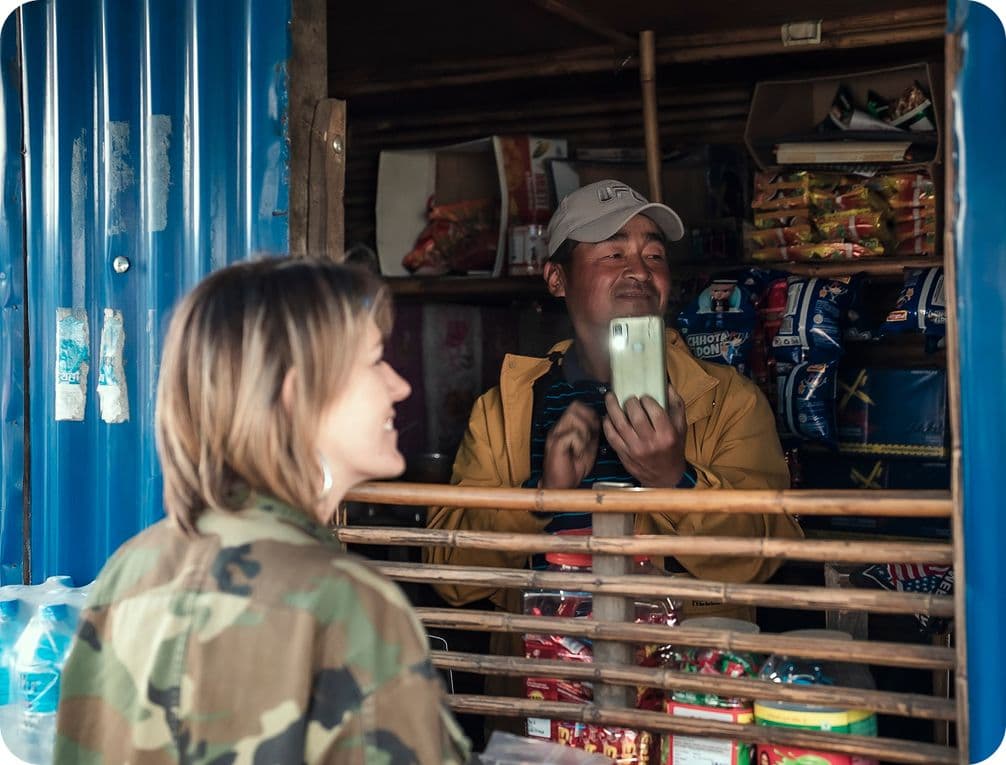
Meeting Nepalese locals in 2025. Photo: Mark Rammers
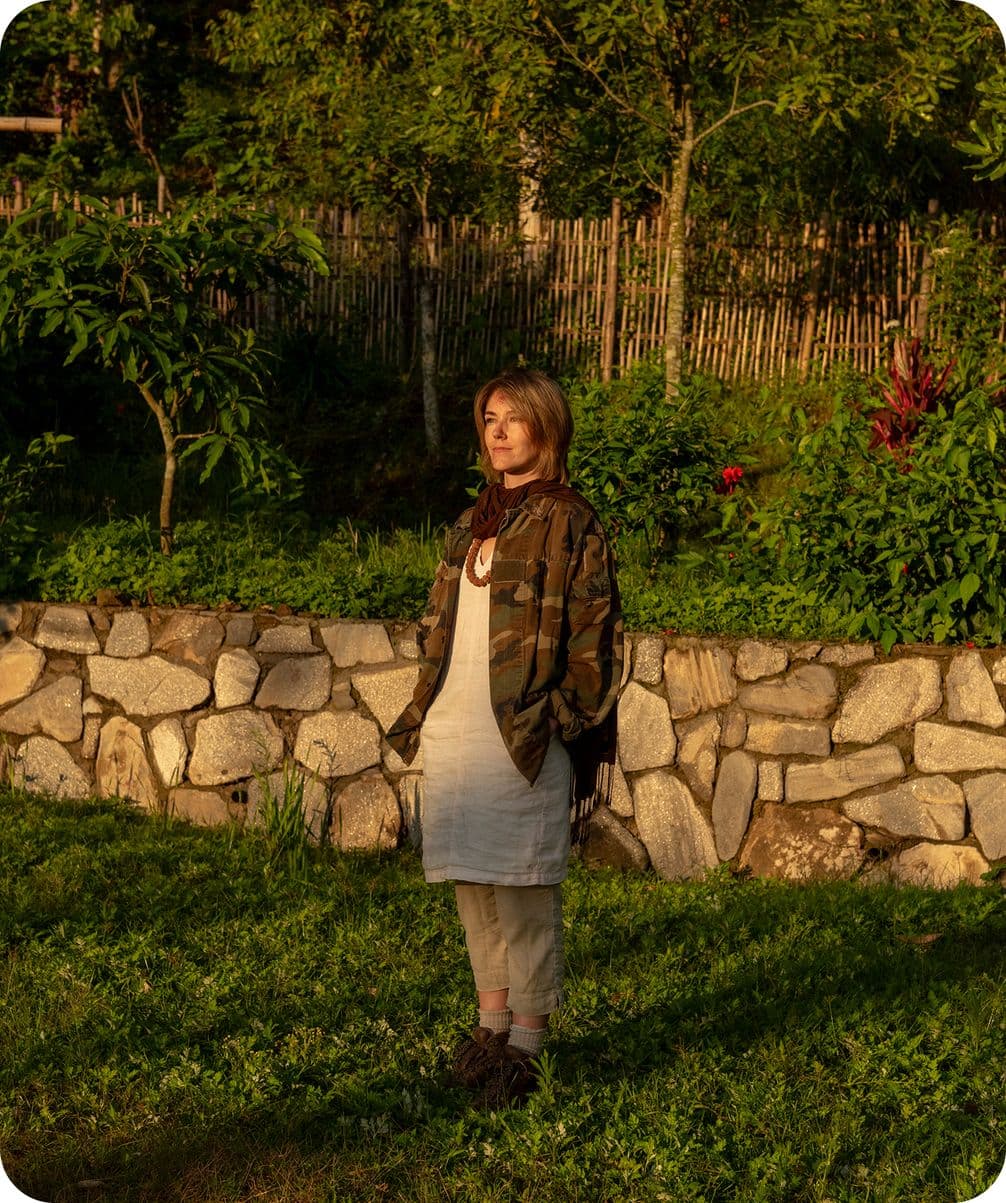
Imogen, Nepal, 2025. Photo: Mark Rammers
Over the next few days, Nepal gently rocked me once more. Prem’s house was the only one in the village that didn’t have internet, so I was able to avoid the social media addiction that has (understandably, given their geographic isolation) gripped Nepal’s youth since a 2021 government-backed project rolled out 4G in rural areas.
Prem’s English-speaking daughter, Alina, is home from college. Although she wears make-up and clothes that wouldn’t look out of place in London, her stories somehow remind me of the smell of roses and damp grass on summer evenings in my mother’s garden. She recalls spirits whispering in her ear as she tended her father’s goats; tucking sprigs of mugwort behind her ear to protect her energy as she wandered paths made unfamiliar by darkness; and believing that the stars had legs and walked with her as her father carried her up the mountain to bed as a child.
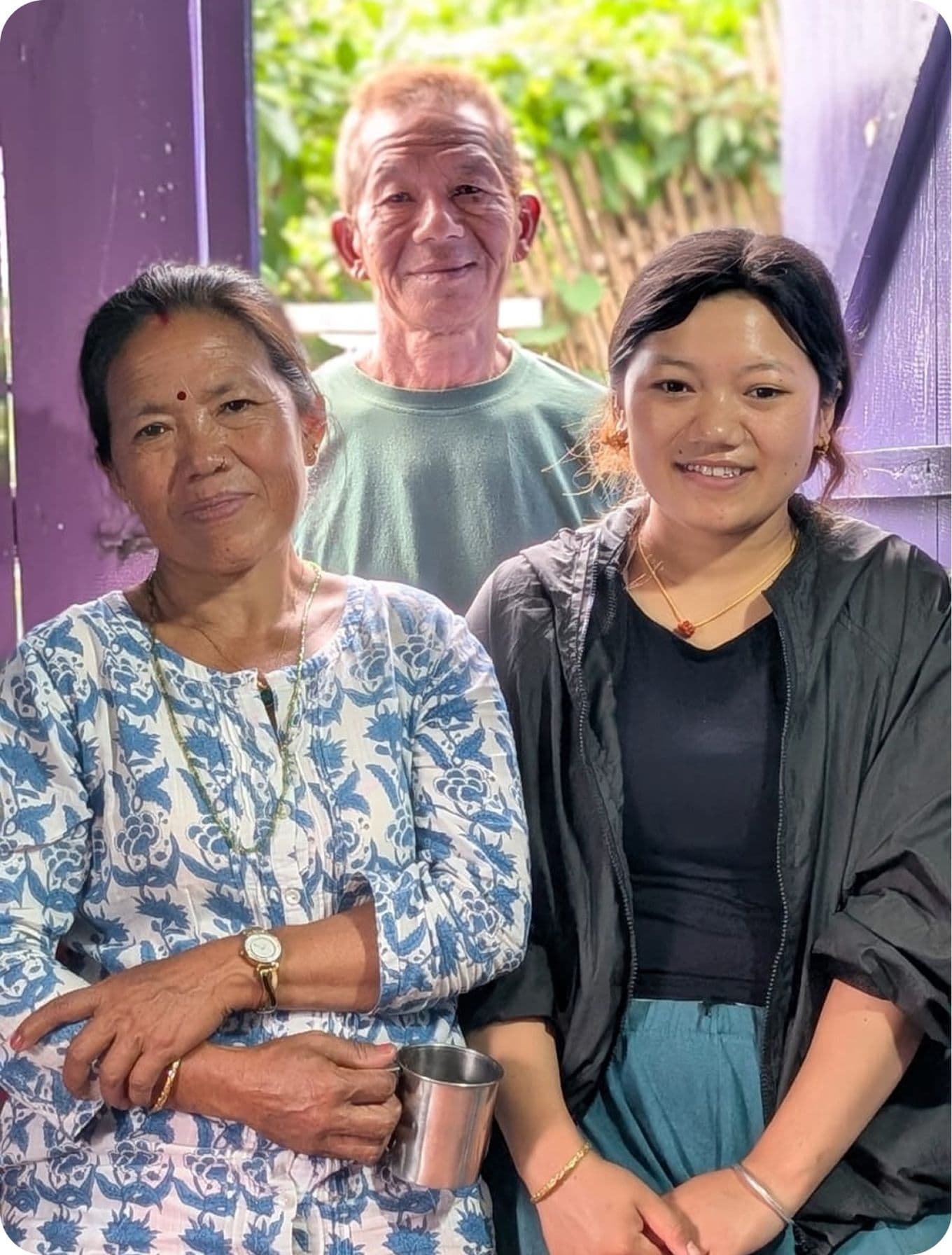
Prem and her daughter Alina. Photo: Imogen Lepere
She tells me that she longs to travel to Australia, Paris and London, but her reason stops me short. “Yes, I want to see the world, but mostly I want to leave so I can come home and look after my parents with the money I’ve earned,” she says. “It’s peaceful here and the air is clear. Why wouldn’t I want to come home?”
Soon after I returned to the UK, I moved into the first apartment I have ever owned, in south Devon, where my mother’s family have ancient roots. It’s a small town and not somewhere I would ever have believed could hold me. My first trip to Nepal may have taught me about the freedom of leaving, but on my second I discovered the freedom that comes from having a home to return to.
Szybciej przywołuj wspomnienia dzięki ekskluzywnym funkcjom, takim jak rozpoznawanie twarzy i inteligentne albumy.


&w=96&q=75)
16 cze 2026∙6 min
&w=96&q=75)
28 lip 2026∙7 min
&w=96&q=75)


 Stany Zjednoczone