
Stories
Memory Architects: the undertaker – Rupert Callender
Meet the radical undertaker dismantling tradition and creating funerals that offer families a communal and profoundly memorable experience

3 Dec, 2025∙7 min
Stories
Meet the radical undertaker dismantling tradition and creating funerals that offer families a communal and profoundly memorable experience
3 Dec, 2025∙7 min
Undertaker Rupert Callender has spent nearly thirty years dismantling the quiet machinery of the modern funeral industry. His work is guided by the belief that grief should be witnessed, not hidden; that the living must be part of the farewell, not just observers to it. Each ceremony he leads is shaped by the people involved – their language, their humour, their need for meaning – rather than by inherited convention.
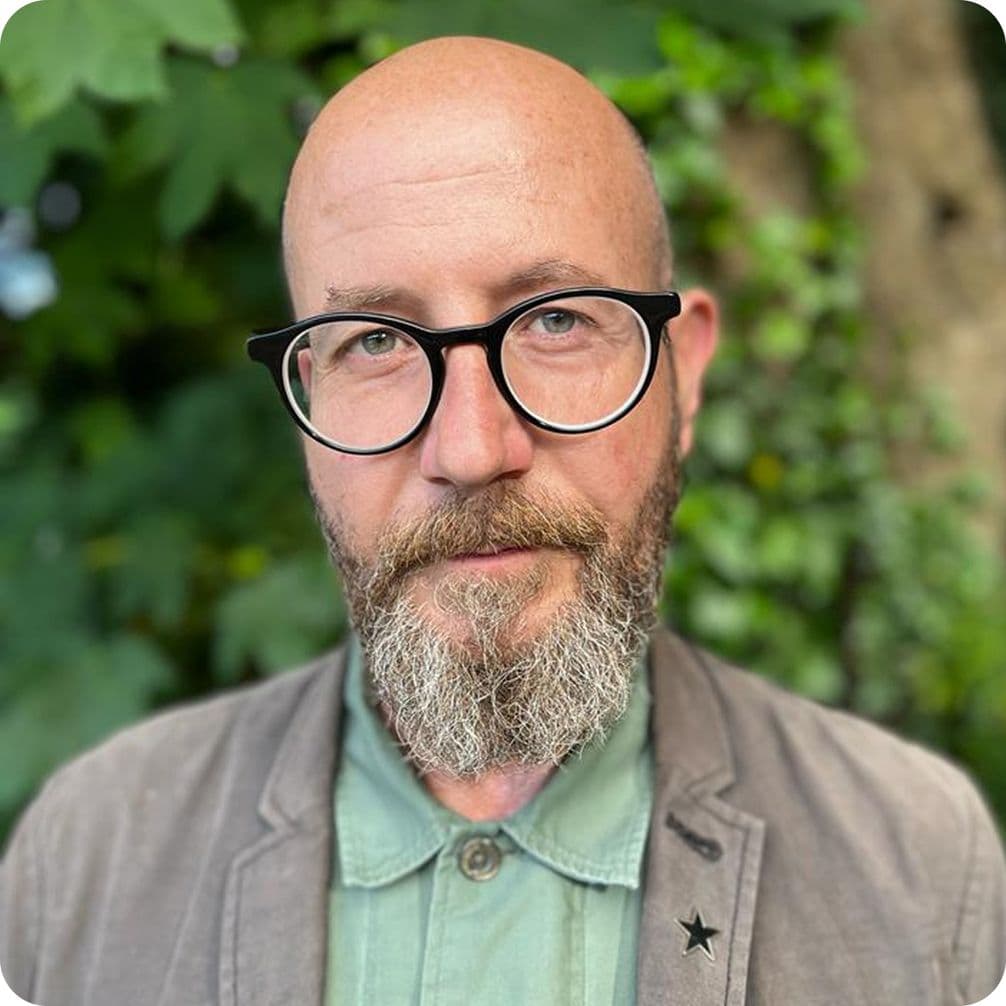
Rupert Callender
For Rupert, memory is not a passive archive but a collective act. He encourages families to pick up the spade, to carry the coffin, to sing without feeling self-conscious. These gestures, both ordinary and profound, stitch memory into movement – proof that love can be physical and remembrance can be made by hand.
As one of Britain’s most unconventional undertakers, Rupert’s legacy lies in helping others face death without euphemism or fear. In doing so, he reshapes not only how we grieve, but how we live with the memories that remain.
Both were defining moments in my life – particularly my father’s sudden death. I adored him, and not going to his funeral meant that my last memory of him became fixed in my mind, almost to the point of iconography.
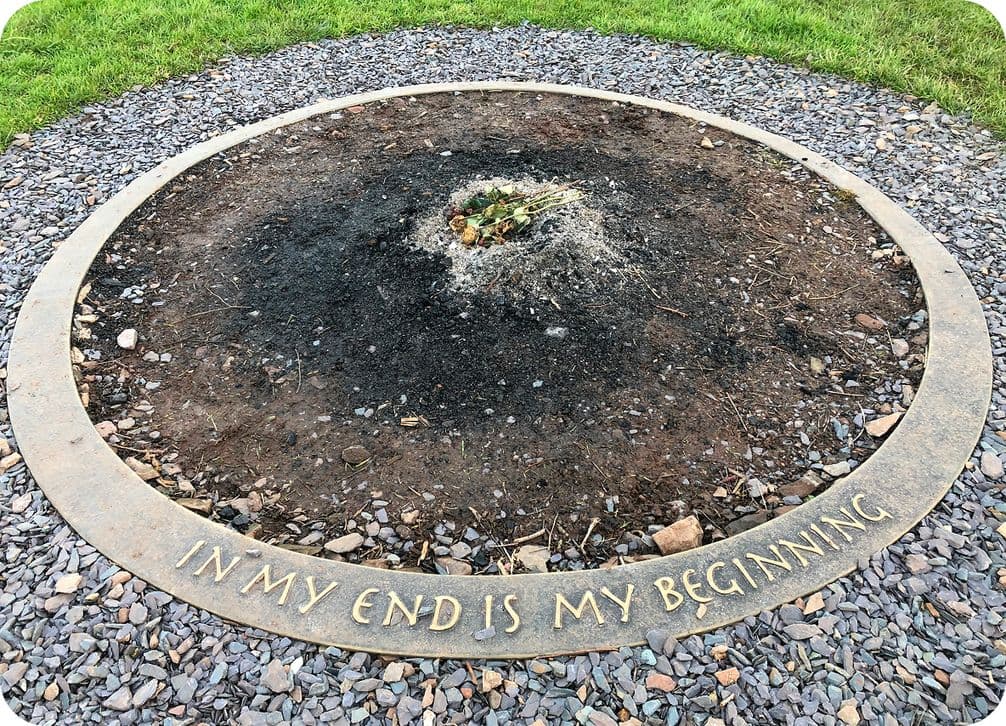
The Ancestors’s Fire at Sharpham Natural Burial Ground
I was 29 and watching a programme about Nicholas Albery, the founder of a charity called The Natural Death Centre. His idea was to try and do for death what hippies had done for birth – to de-medicalise it and draw back the curtains of obfuscation put up by the church and the funeral industry. It was a lightbulb moment for me. I knew I could put my own experiences of grief to good use. I read every book I could get my hands on about death and I learnt by doing it – the first dead body I ever touched was the first funeral I did.
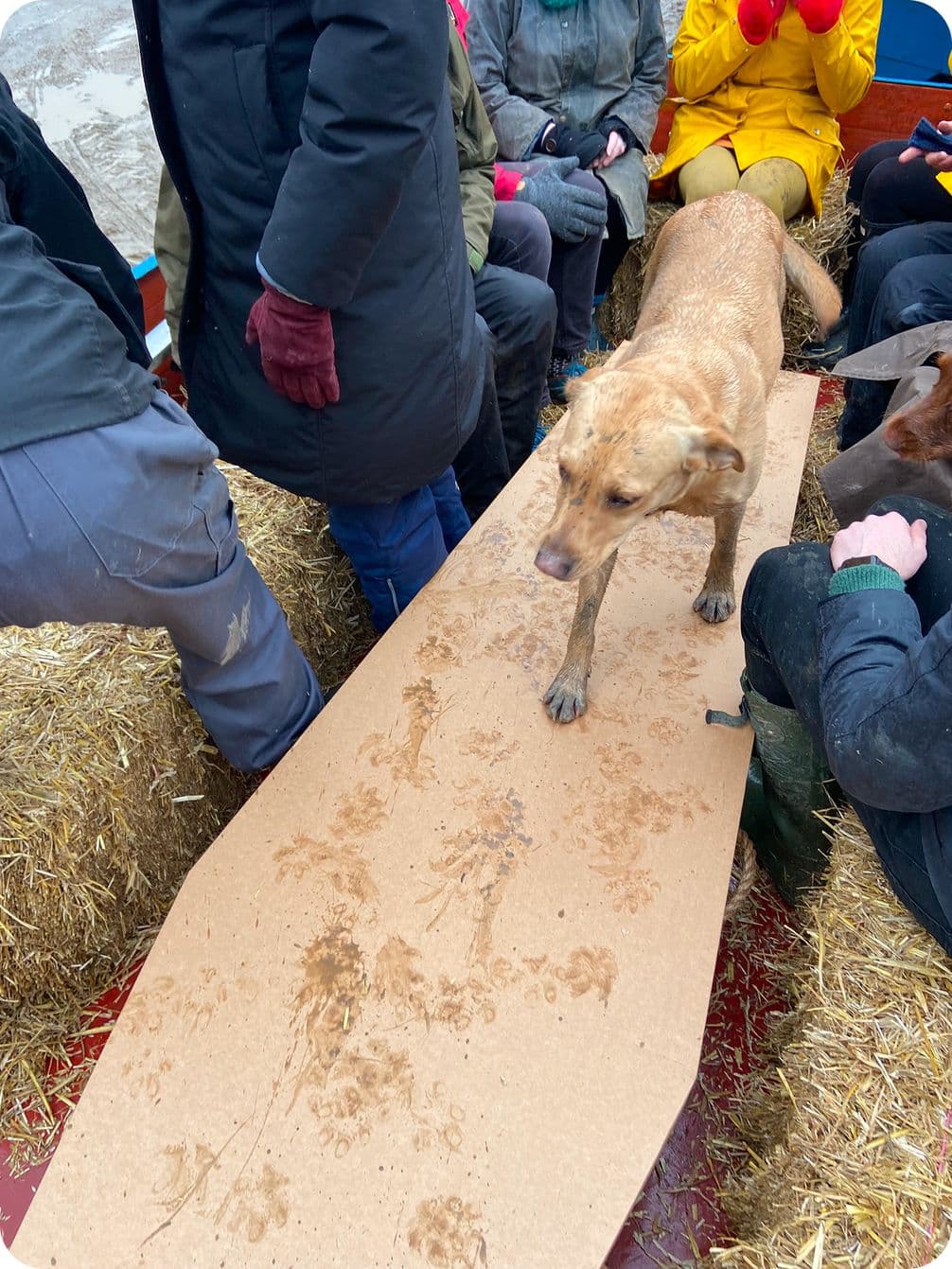
A farmer’s coffin before being taken on a trailer to be buried on his land
The simplest things are often the most effective; acts that are woven with meaning and poignancy, like carrying the coffin or tens of people – men, women and children – passing a spade between them to do the solemn task of covering the coffin with soil. And singing together. I once gathered all the mourners around the coffin in a tight circle, and we sang Pink Floyd’s “Wish You Were Here” at the top of our voices, the stereo turned up to the max.
But the best funeral ritual wasn’t created by me. It was the idea of the 11-year-old son of the woman we were burying. Her family had made the hardest of decisions – to turn off her life support. As they did this, her son read from a book he’d been reading to her for weeks. At her funeral, right after we had lowered her into the grave, he pulled up a chair, sat down and finished reading the last four pages of the book. It was one of the most electrifying moments of my life.
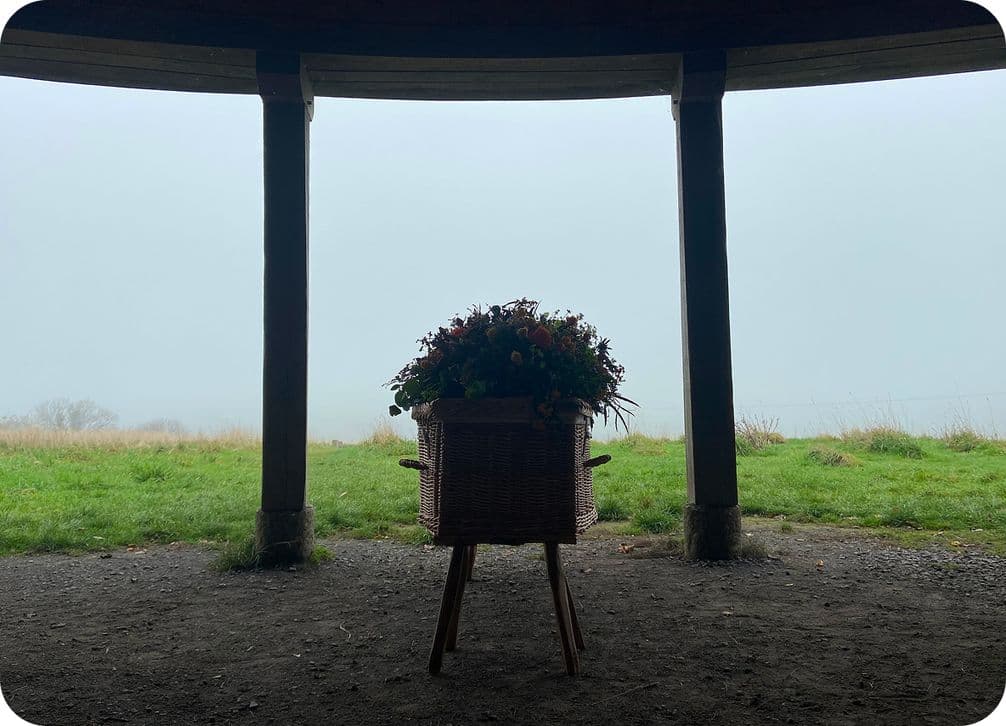
Sharpham Meadow Natural Burial Ground
It’s normal for people to be nervous about our approach; they may have a fear of trite new age nonsense or a worry we’re going to push them too far out of their comfort zone. But without exception, by the end of the funeral, everyone is completely onboard. It’s because we don’t include culturally inappropriate rituals or things that might make someone feel uncomfortable. If anything, we do the opposite, stripping everything back to its essence and talking about the person who died truthfully and with authority. A Christian who came to one of our funerals said that it was the most “religious” ceremony he’d ever been to, even though there was no religious content at all. It was one of the best compliments we have had.
After 25 years as an undertaker, I believe that children should very much be included in all aspects surrounding a death, particularly around the body. Children don’t have the cultural baggage we do around death – they are invariably curious, sad, then bored. How you deal with children around death is crucial to how they will cope with it for the rest of their lives.
I remember bringing a woman back to her daughter’s home after she had died. When we returned in the morning, a four-year old was quietly talking to her dead grandmother, while two other children played around them, and we took photos to reinforce their presence during this time. It was the most natural thing I’ve ever seen.
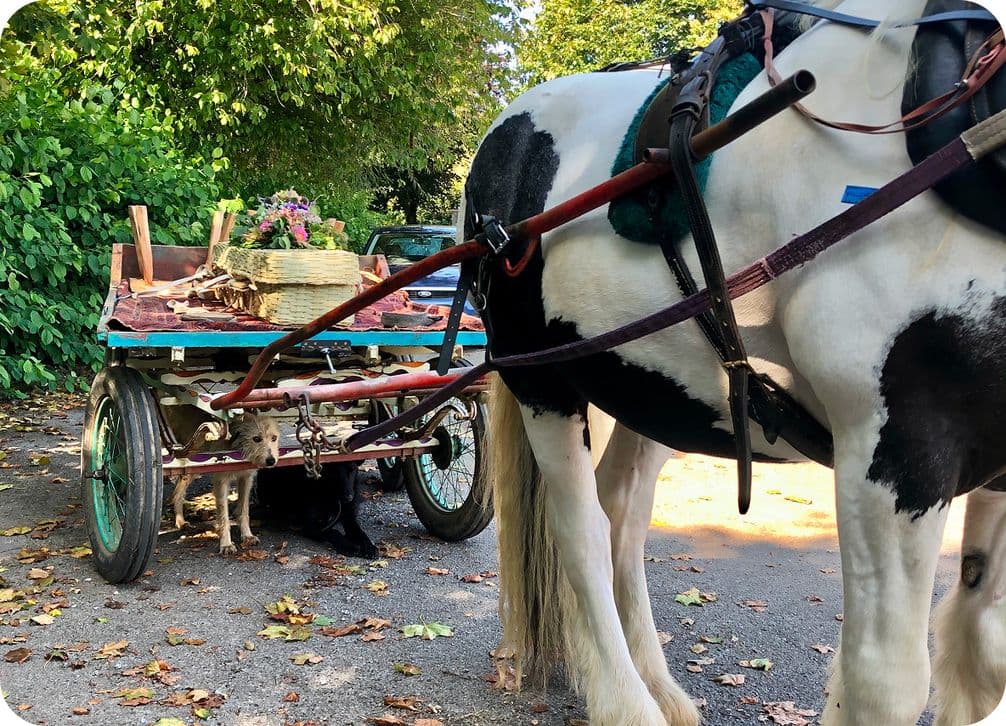
A horse-drawn cart carrying a coffin
Often, before we seal the coffin together, a family will place photographs of themselves with the dead, a way of accompanying them into the future and anchoring themselves in the past at the same time. Once we held the funeral for a man who ran a bird rescue centre – his family placed feathers from his favourite birds in his coffin and carried him around the aviaries to say goodbye.
We did a funeral two years ago for a young man, 11 years old, who died from a condition that was identified at birth; in other words, his parents had known this was coming. His father was a talented carpenter and, over time, had made his son’s coffin as a beautiful boat with a curved head like a Viking ship. We buried him at Sharpham Meadow, a burial site I set up for the Sharpham Trust, down river from the town we live in. His boat coffin was placed on a large kayak and was canoed down the river accompanied by three other kayaks containing about 35 people. The image of his boat coffin being mournfully taken down stream into the mist was unforgettable.
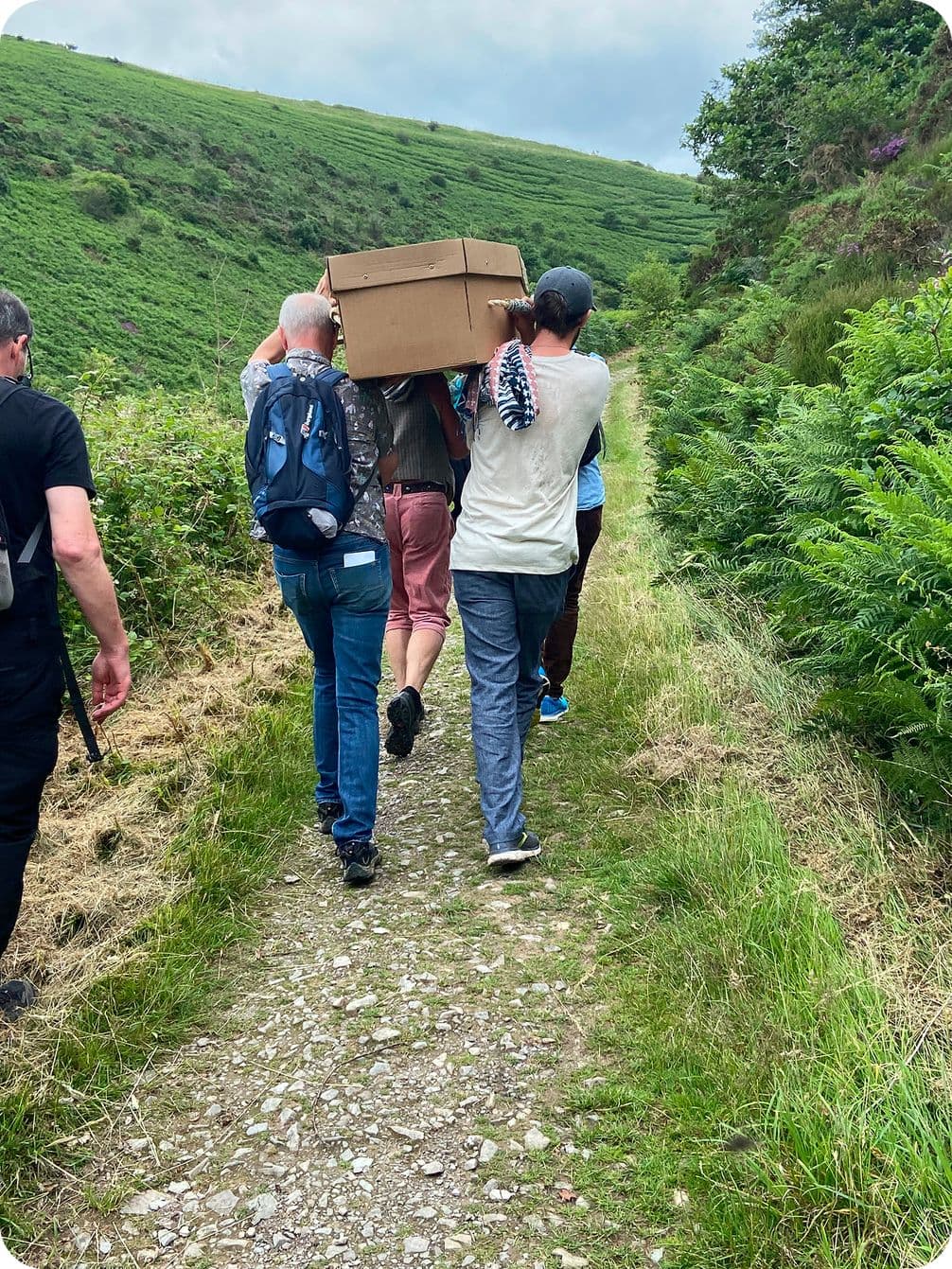
A coffin was carried a mile and a half up a coast path for a funeral on the cliff top
Often death follows a progressive illness such as cancer or Alzheimer’s, and families have had to deal with a gruelling, sometimes horrific, last few days, weeks or months. We try to reassure them that these memories – of illness and degradation – will fade. A funeral is about reclaiming the dead person from the narrative of their illness, but it’s tricky as family members can be traumatised by watching someone they love suffer. But as time passes, those memories do fade, and happier recollections come back.
Well, as a person, of course I hope everyone remembers me as absolutely awesome, funny, sexy, kind, exciting and clever! Not all the shortcomings that litter my otherwise pristine personality – moroseness, moral cowardice, pettiness, laziness. But the beauty of this, and the solid truth that has rattled down to me over the years, is that people will remember you in their own way, in the almost unrecognisable (to you) way in which they knew you.
As for my work, I consider myself a radical dissenter, part of a long line of dissenters stretching back into time. I hope that my work will show that a rank amateur with their heart in the right place, and the best kind of ancestors at your back, can fight a good fight – even if you lose. And that the fight carries on. The American philosopher Henry Thoreau once said: “Let your life be a counter friction to stop the machine.” I’ve given it a go, jamming up the mechanism of the unthinking juggernaut.
Rupert’s book What Remains? Life, Death and the Human Art of Undertaking is available now
Discover memories faster with exclusive features like facial recognition and smart albums.



&w=96&q=75)
&w=96&q=75)
&w=96&q=75)


 United States