
Photography
Why the best family photos might not show anyone’s faces
Photographer Anya Tilden on how removing identity from images can unlock deeper storytelling – and why more families are asking for it
26 Mar, 2026∙5 min
Photography
Photographer Anya Tilden on how removing identity from images can unlock deeper storytelling – and why more families are asking for it
26 Mar, 2026∙5 min
Being a photographer nowadays, especially one who works with families, comes with new considerations and challenges. Beyond light, composition and timing, we have to think about how images are shared, reused and sometimes misused. Social media, rapid developments in AI, and growing awareness among parents about protecting their children’s identities have changed the way many clients feel about having visible faces in photographs.
The idea that images can be altered, taken out of context or manipulated through AI tools makes many people cautious – and understandably so. As photographers, this puts us in a position where we need to adapt, not just technically, but creatively. For me, this shift has led to a stronger focus on faceless photography. Photographing emotions without showing faces is a challenge, but it’s also an opportunity to rethink how we tell stories. When faces are removed, other elements step forward: body language, light and shadow, color temperature, framing and composition. These are the tools that carry emotion and meaning.
This approach has pushed me to become more intentional and more thoughtful as a photographer. It encourages deeper storytelling and helps create images that feel personal yet respectful of privacy. In the sections that follow, I’ll share some of the ways I approach emotional storytelling without relying on facial expressions, and how this way of working has shaped my photography in a positive way. When faces are not the focus, gesture and body language become the key emotional anchor. Emotion can be carried almost entirely through posture, touch or active movement. Here are some of my favourite faceless photographs.

Photo by Anya Tilden
Mum’s seated position feels protective and grounded, while the way her head turns slightly away, towards the window and the light, suggests a quiet pause. The emotion here reads as a calm, peaceful and intimate moment.

Photo by Anya Tilden
The image with the baby carries a very different energy. Here, emotion comes from movement and interaction. There’s a sense of fun, mischief and immediacy in the scene, an everyday moment many parents will instantly recognise. Even without clearly visible faces, the emotion is unmistakable. The story lives in the tension, balance and physical relationship between the two. Composition then begins to take over as the emotional narrator. By removing identity, framing choices shape how the viewer reads the moment.

Photo by Anya Tilden
In the image of the pregnant body with flowers, the face is cropped out intentionally so that all attention stays on what matters most, the body itself. By removing identity, the composition directs the viewer towards the emotional core of the image rather than the individual. By cropping out the face, controlling light and choosing symbolic elements carefully – sunflowers, in this instance – the frame itself becomes the emotional narrator. When identity is removed, thoughtful composition helps the viewer understand what to feel and where to look without needing a face to explain the moment.

Photo by Anya Tilden
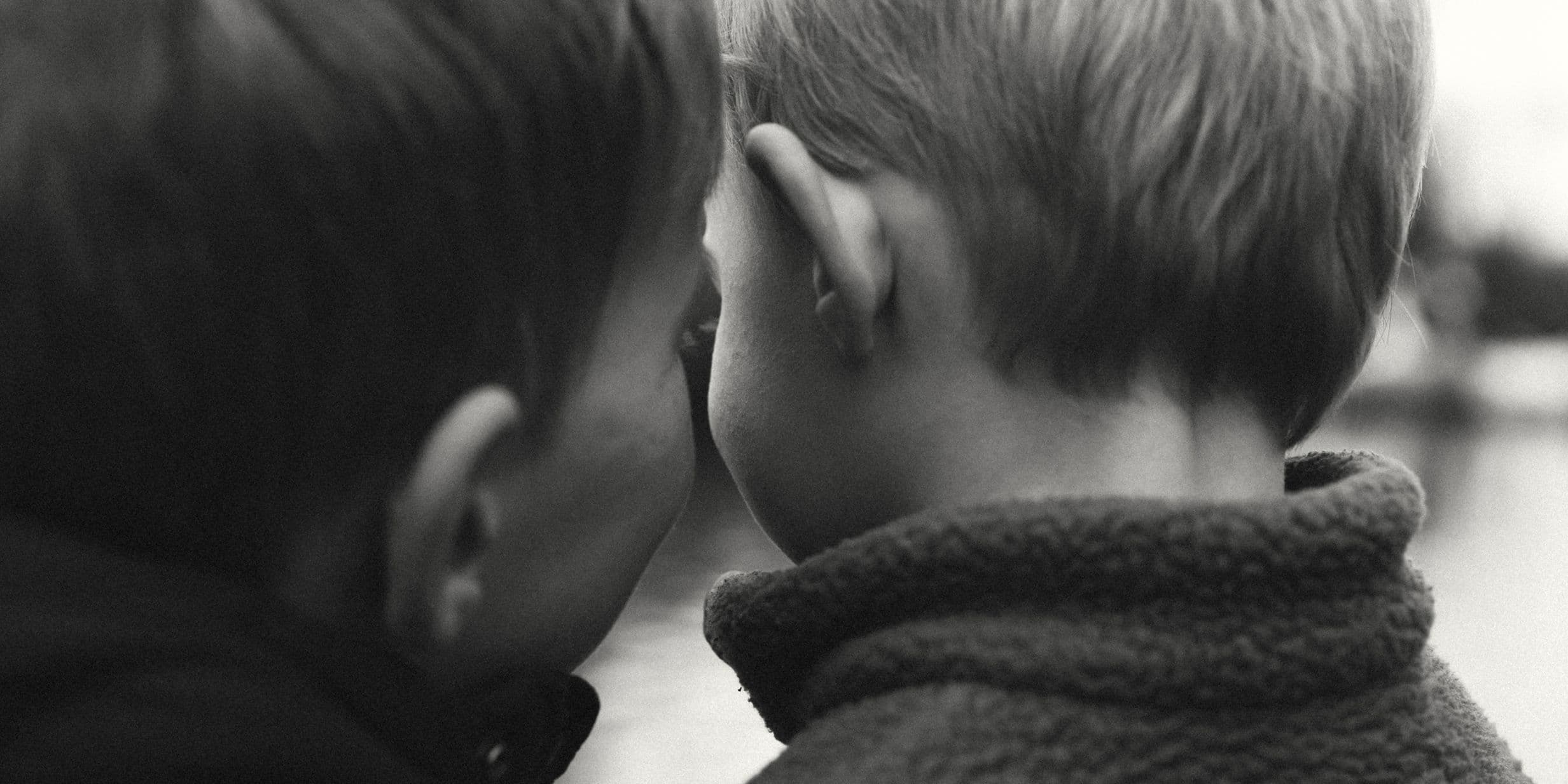
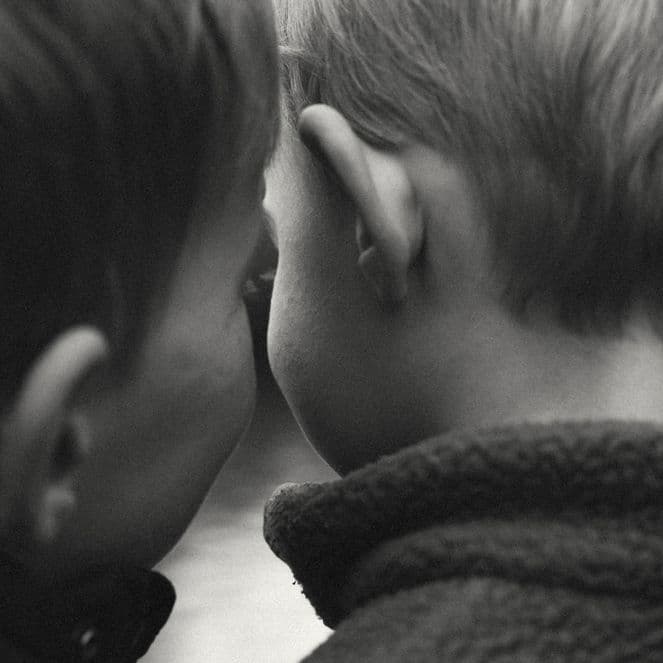
Another example of composition acting as the emotional narrator is this image where the faces of two boys are intentionally cropped very tightly. The framing is close enough to suggest closeness without revealing identity. This tight crop removes context and replaces it with feeling. By coming in so close, the image invites the viewer into a private space, one that feels playful and intimate at the same time. There’s a sense that something is being shared – a secret, a joke, a quiet moment of cheekiness. Even without faces fully shown, you can tell they’re smiling. Identity remains anonymous, but the emotion is unmistakable.
By cropping close and focusing only on the details that matter, composition alone carries the narrative. It’s a reminder that sometimes, showing less allows the story to say more. When faces are absent, atmosphere is invaluable in shaping emotion. Light, colour and texture work together as a kind of sensory language, helping the viewer feel the image rather than analyse it. Soft or harsh light, warm or cool colour palettes and visible textures all influence how a photograph is experienced emotionally, even before the subject is fully understood.

Photo by Anya Tilden
In this image, mood is driven by a combination of strong light, warm colour and tactile materials. The bright sunlight creates a sense of warmth and positivity, instantly suggesting joy, energy and ease. Translucent fabrics, curtains, skirts and dresses allow light to pass through, softening the scene while keeping it dynamic. This interaction between light and texture makes the image feel airy and alive. The warm colour palette, with yellow tones in the walls and overall warmth throughout the frame, reinforces feelings of nostalgia, happiness and the carefree nature of spring or summer. Everything in the image works together to support a sense of play and shared joy.

Photo by Anya Tilden
This snapshot takes a very different approach. Here, the colour palette is cooler and more restrained, shifting the emotional focus inwards. Attention is drawn deliberately to the mother’s hands, and the cooler tones help isolate that connection without distraction. Grain is added intentionally to introduce texture, emphasising the feel of human skin and giving the image a subtle, film-like quality. The light is soft and gentle, which suits the intimacy of the moment. I often choose soft lighting for skin-to-skin or quiet interactions, as it supports feelings of calm, closeness and tenderness rather than intensity.

Photo by Anya Tilden
In faceless photography, the environment often becomes an extension of the subject. Surroundings and location are not just backgrounds, they continue the story and help contextualise emotion when identity is removed. Where a photograph is taken can say just as much as who is in it. Most of my work takes place in my clients’ homes, and that choice is intentional. A home reflects daily life, routines and personality. Sometimes I photograph people within their space, and other times I photograph the environment on its own, focusing on details of interiors, light falling across a room or quiet corners, all of which can create context to the story and emotion I aim to capture.

Photo by Anya Tilden
Outdoor locations work in a similar way. Weather, season and light all add layers of meaning. Looking back at images later, you can often remember exactly how the day felt, whether it was warm or cold, bright or overcast, calm or energetic.
Photographing without exposing faces pushes me out of my comfort zone and encourages me to think differently as a creative. It constantly asks the question: how can I tell a meaningful human story without relying on facial expression? What this approach reveals is just how much information exists beyond the face. Gesture, light, composition, atmosphere and environment all carry emotional weight. Protecting privacy does not mean sacrificing depth or connection. In many cases, it does the opposite, inviting stronger storytelling, deeper engagement and images that feel timeless.
By removing faces, the image invites the viewer in a deeper participation, encouraging them to fill in the gaps and engage with the story on their own terms. This active participation helps build a stronger, more meaningful connection between the viewer, the image, and the story being told.
Vind herinneringen sneller met exclusieve functies als gezichtsherkenning en slimme albums.




&w=96&q=75)
21 Jan, 2026∙8 min

&w=96&q=75)
14 Aug, 2025∙6 min

&w=96&q=75)
27 Aug, 2025∙10 min


 Verenigde Staten