
Voyages
Seven of the most beautiful train journeys in the world
From Norway’s midnight sun to the world’s highest railway – train travel at its most breathtaking

17 juin 2026∙6 min
Voyages
From Norway’s midnight sun to the world’s highest railway – train travel at its most breathtaking
17 juin 2026∙6 min
Monisha Rajesh is a British journalist and acclaimed travel writer specialising in rail journeys. Her 2019 book Around the World in 80 Trains won the National Geographic Travel Book of the Year. Her work focuses on cultural immersion, navigating global landscapes via train networks.
Travellers are becoming more thoughtful about how they move through the world, swapping fly-and-flop holidays for slower, immersive experiences where they can connect with their surroundings and limit their carbon footprint. Rail travel embodies this philosophy, offering a window into jungles, deserts and mountains. From Belmond’s Andean Explorer carrying passengers into the folds of the Peruvian Andes to the storied Reunification Express threading through the backstreets of Hanoi, here we highlight seven of the world’s most beautiful railway routes that transform a journey into a destination.
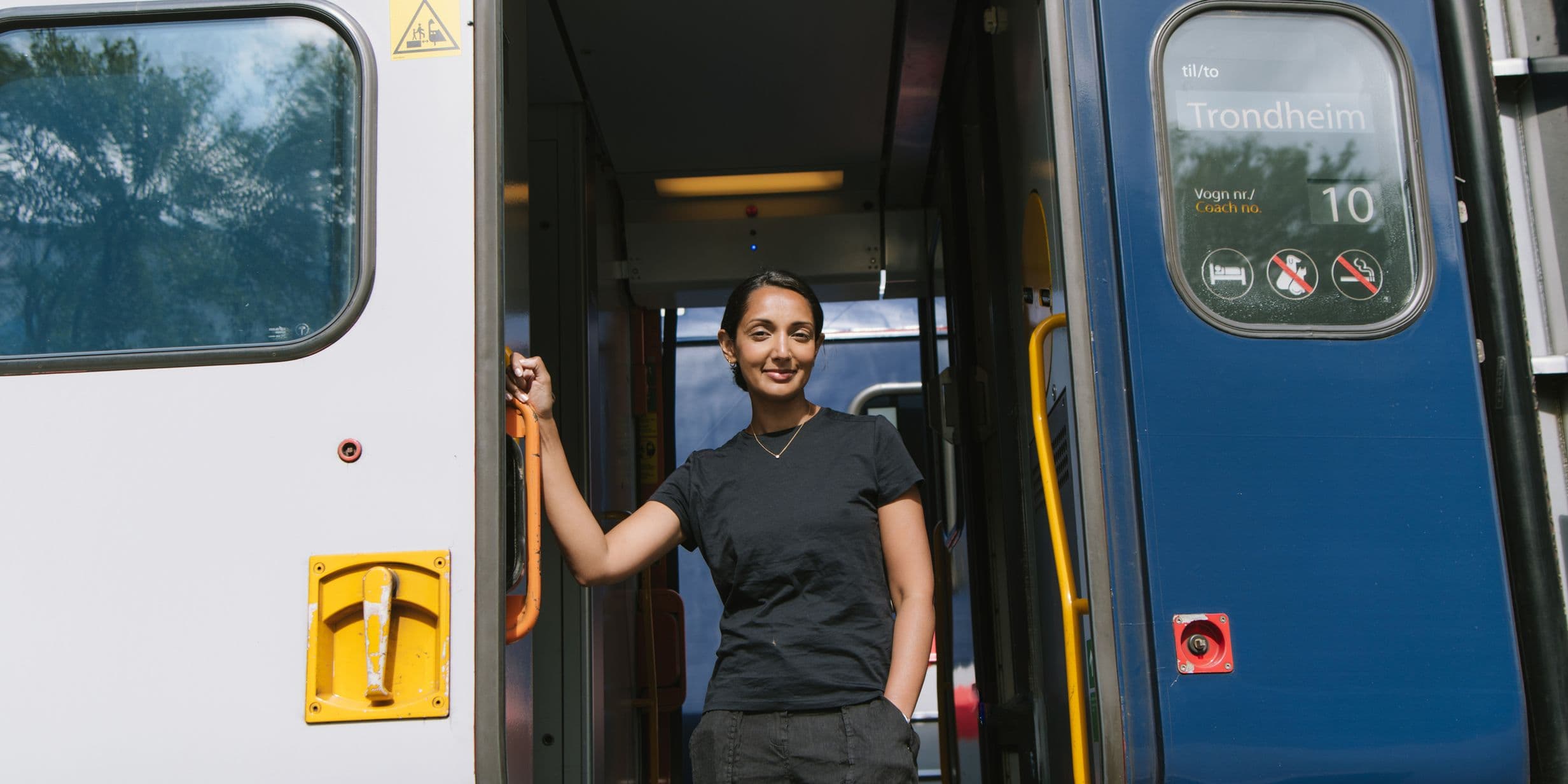
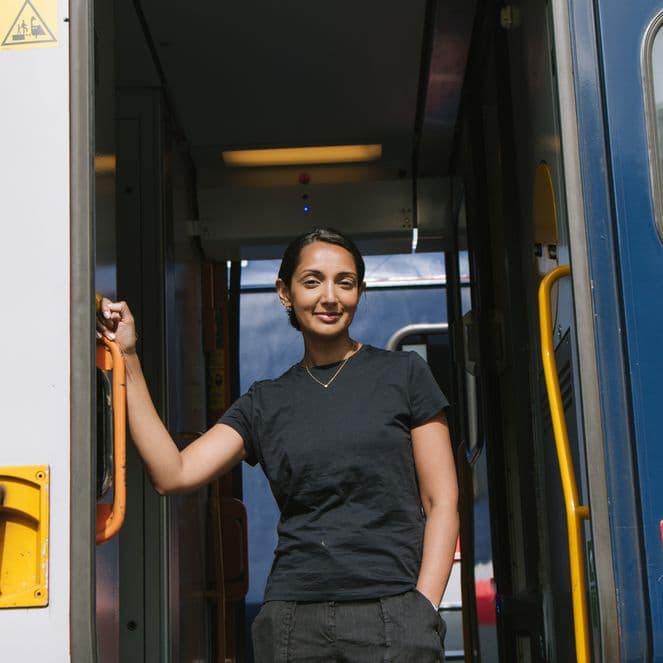
Monisha on the Nordland line from Trondheim to Bodø. Photo: Marrc Sethi
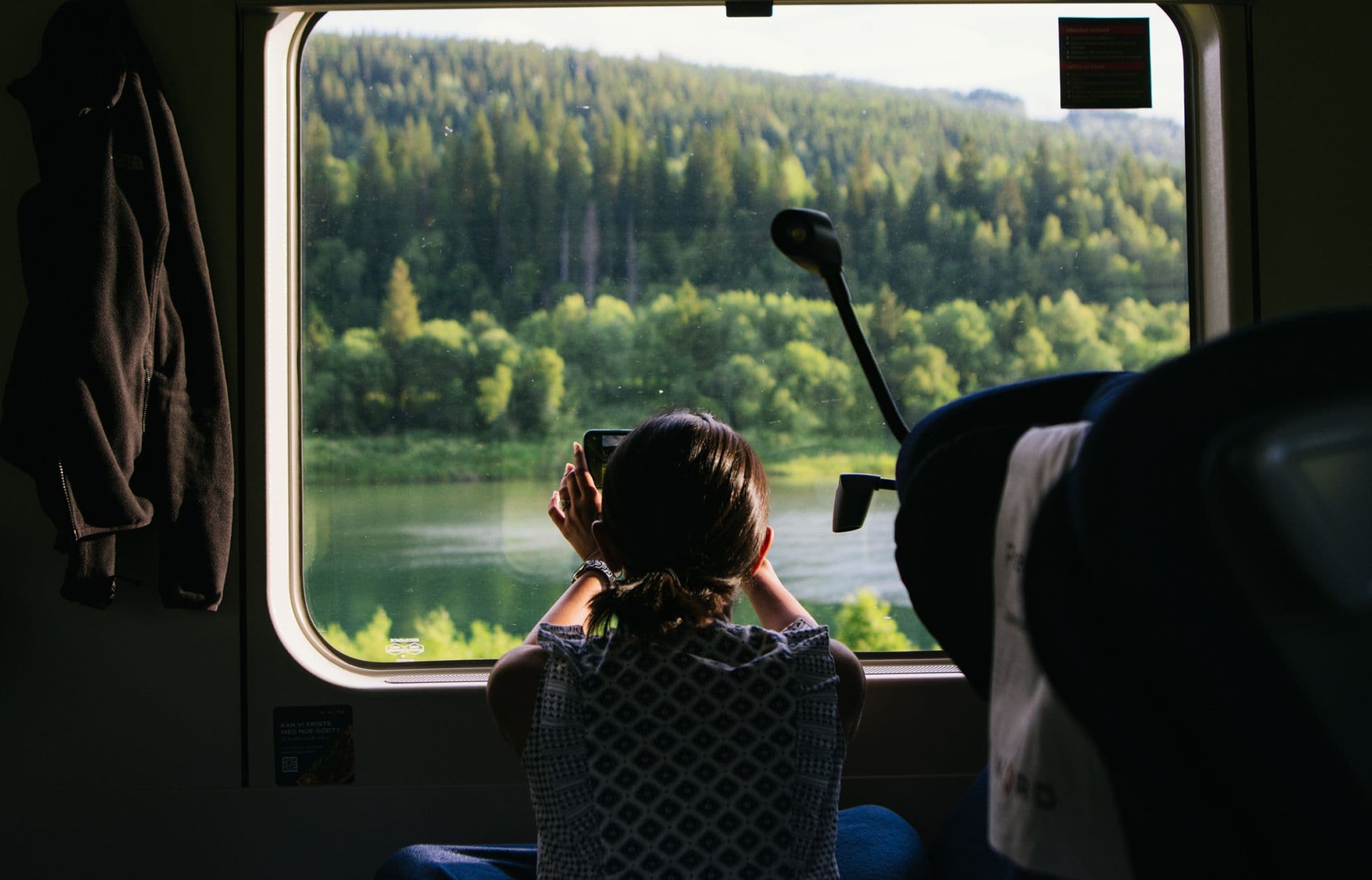
Spanning 725km, the Nordland line is Norway’s longest, pulling passengers around the pebbly shores of the Trondheim fjord, before barrelling through Trøndelag’s spruce forests, where roe deer skitter in the twilight. Crossing 293 bridges and 154 tunnels, this service is best taken overnight between mid-May and mid-July, during the hours of the midnight sun, when the fjord moves like a body of molten metal, a blaze of almost-sunset flooding it with pink and red hues. The train is soundless, allowing passengers to sleep peacefully and wake just south of the Arctic Circle to the showstopping Saltfjellet mountains, their peaks already aglow in the Nordic dusk. With a coffee and kanelboller (a sticky cinnamon bun), find a seat on the right in the dining car and follow the flow of the fjords past pine forests, keeping your eyes peeled for reindeer roaming the slopes.
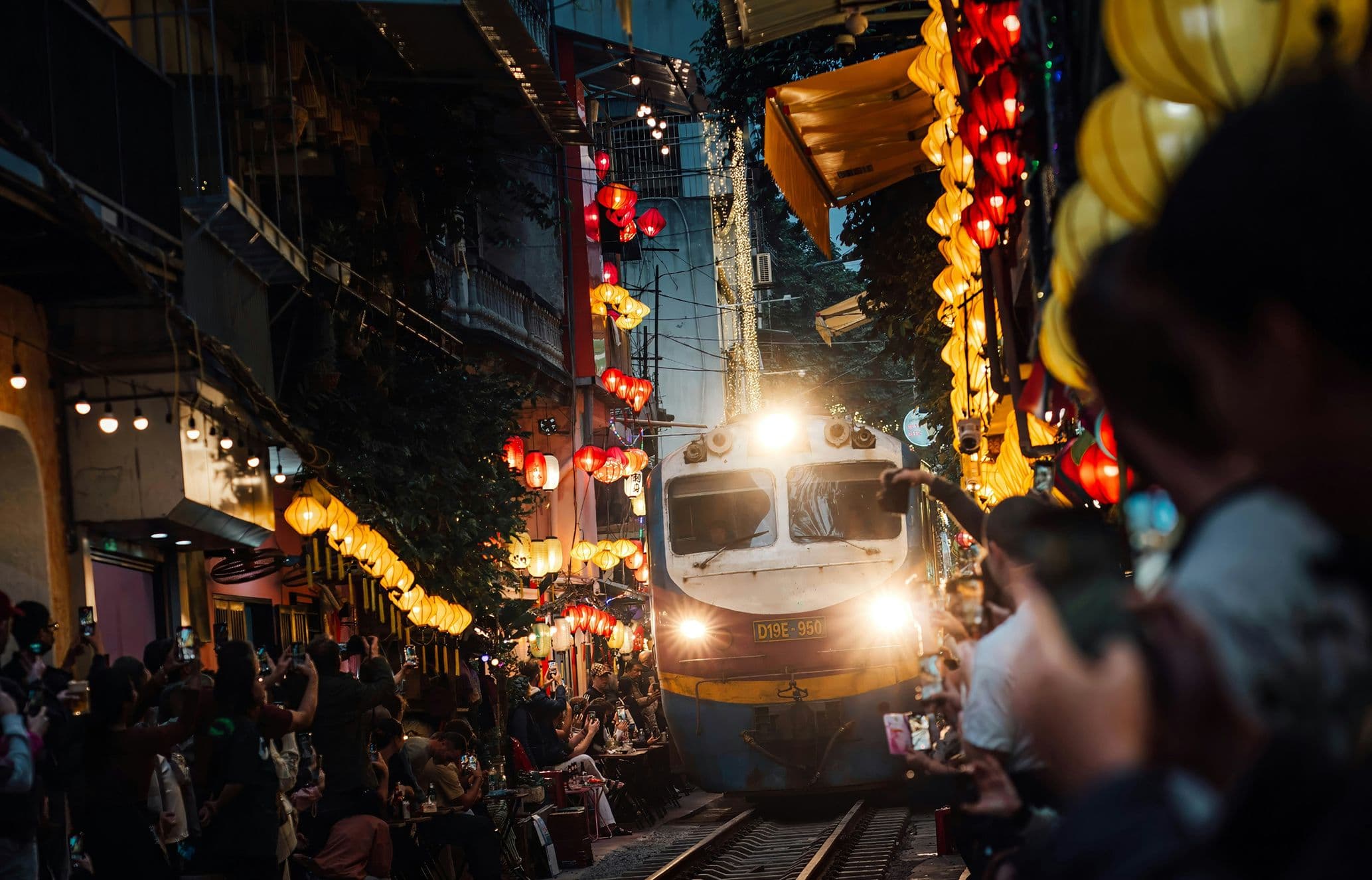
The Reunification Express in Hanoi. Photo: Elric Pxl, Unsplash
The North-South Railway line was rebuilt in 1976 as a symbol of unity following its destruction in the Vietnam War. Shortly after, the Reunification Express restarted journeys between Hanoi and Saigon. Running the length of the country over two nights, this train houses tourists in couchette compartments and local commuters on narrow bench seats, with baskets of poultry stowed at their feet. Keep the curtain open as the train crawls out of the capital after dark, dissecting the guts of the city – chefs hosing pans in alleys, friends playing cards under trees, families winding down for the night. By morning the scent of wet paddy floods through the open windows where palms flank the tracks, waxy leaves flapping against the barred windows. Stay on the left as the train snakes between Hué and Da Nang around a cliff face, and the South China Sea emerges in a haze of blue.
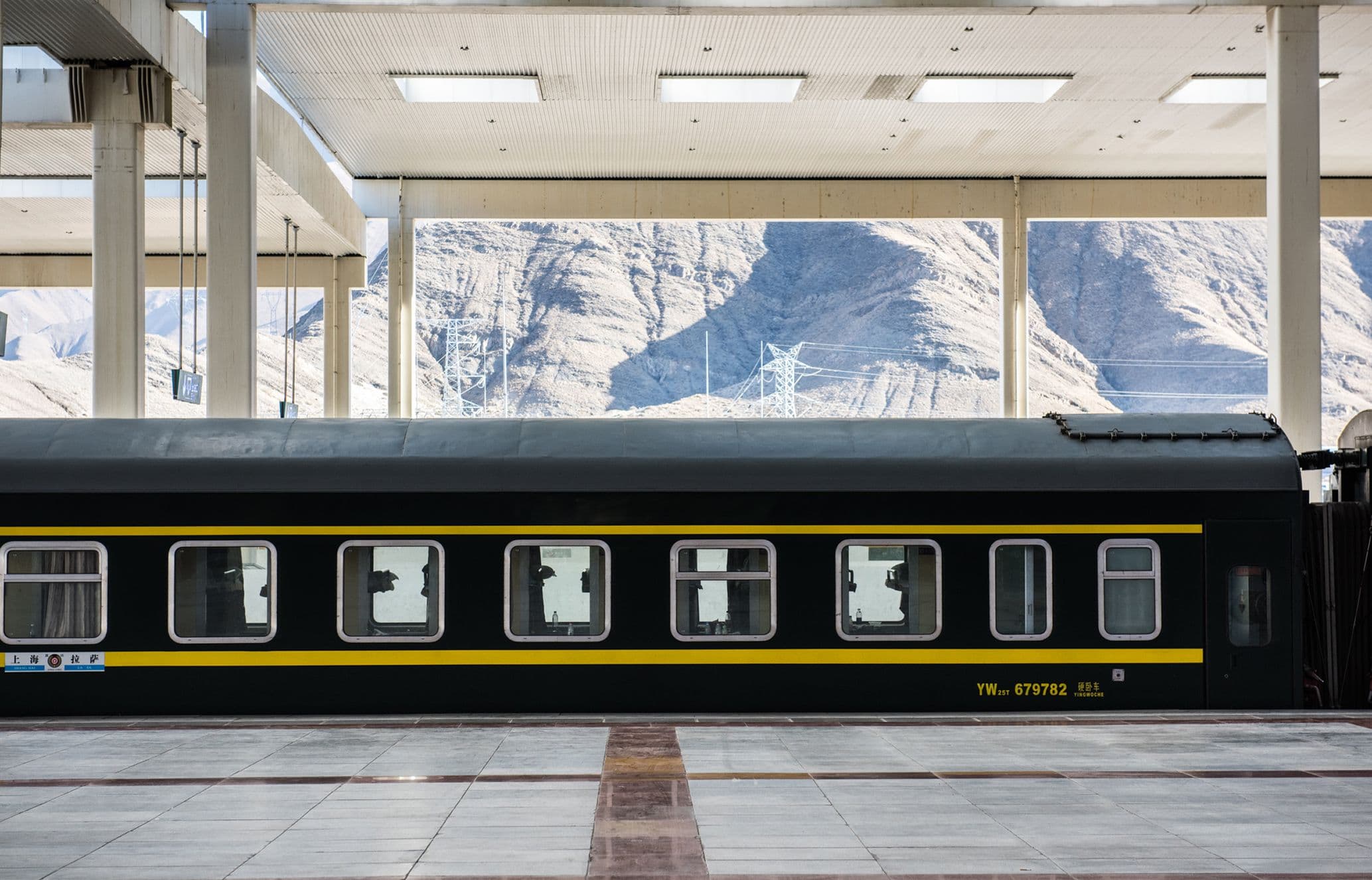
The Qinghai-Tibet railway from China to Tibet. Photos Marc Sethi
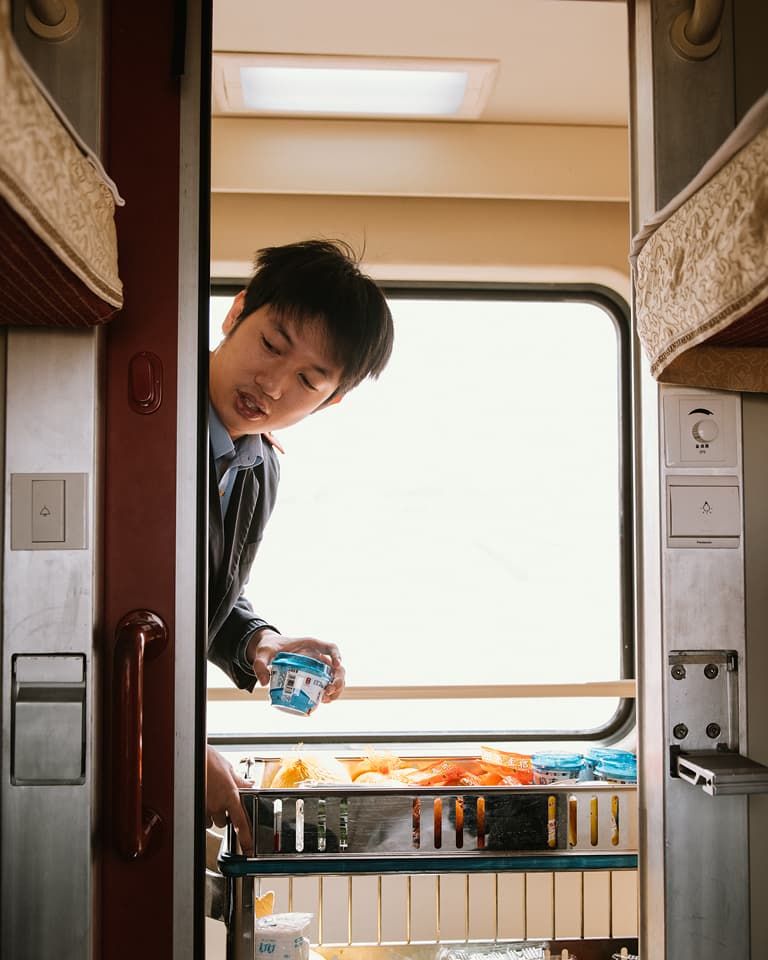
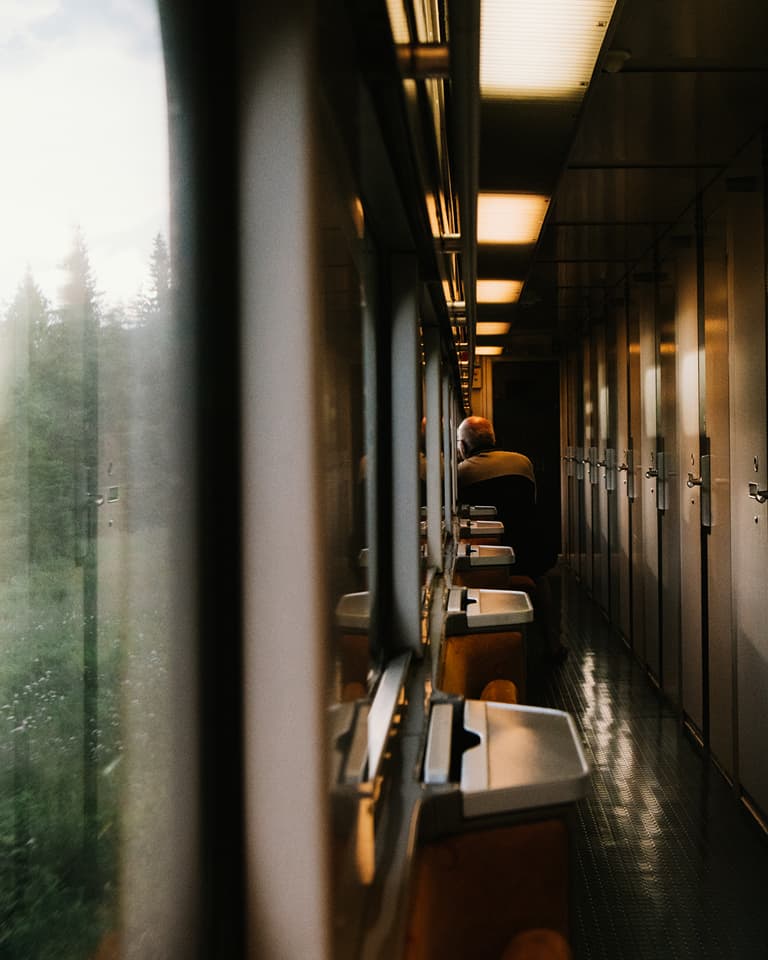
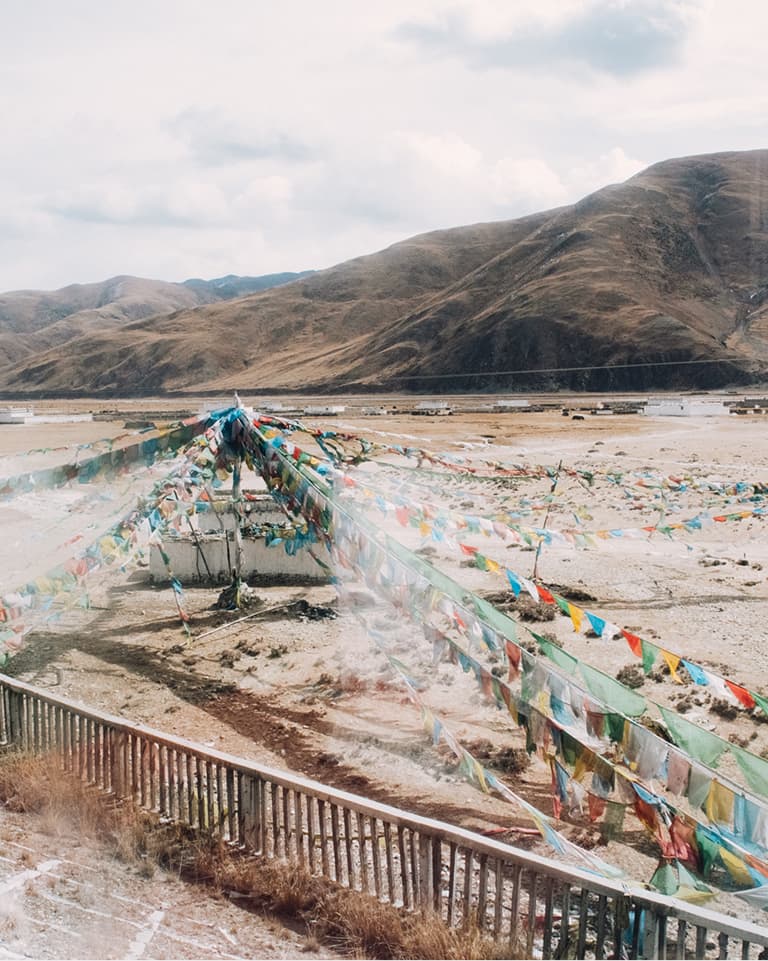
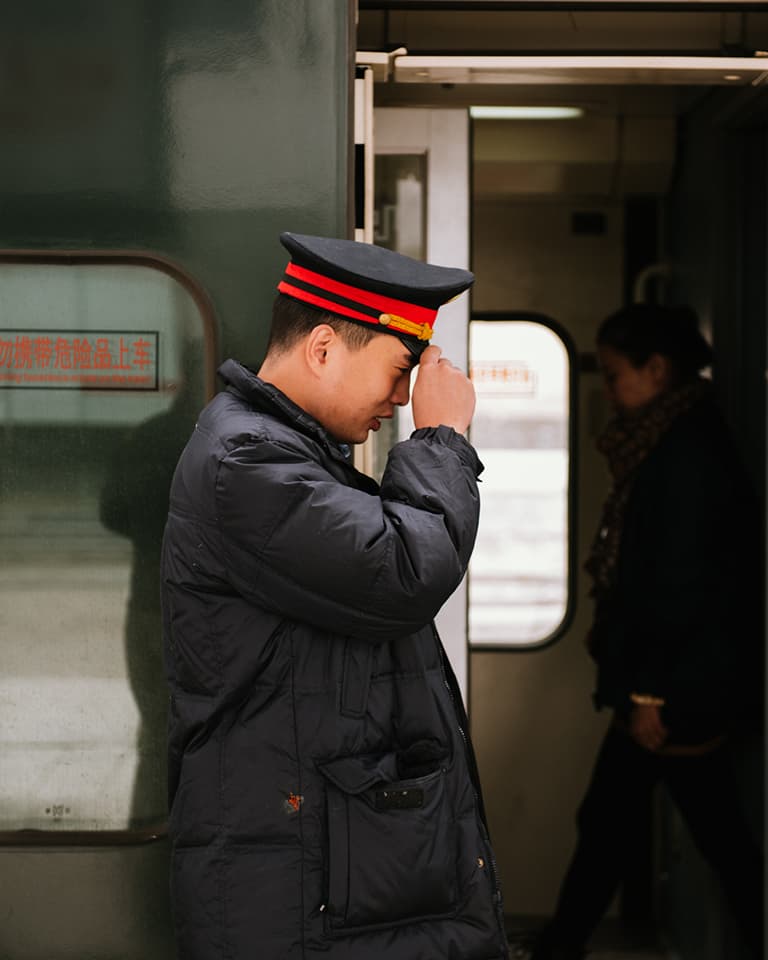
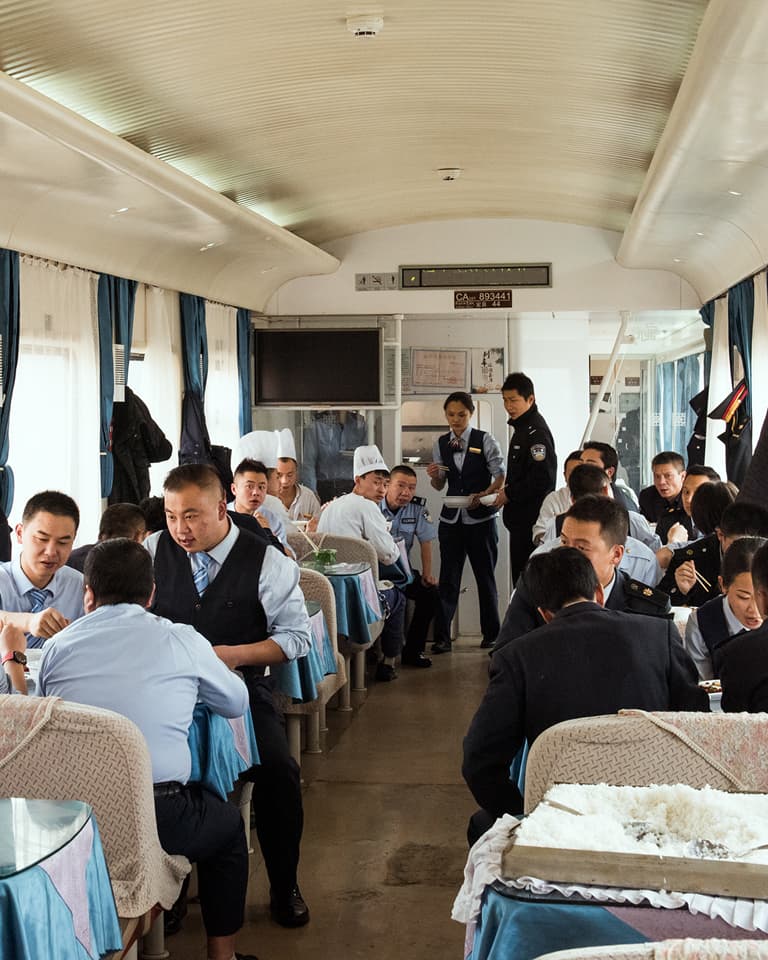
Few journeys take your breath away but the train from Xining in China to Lhasa in Tibet runs along the highest track in the world, requiring purified oxygen to be pumped into the compartments overnight. Taking 20 hours, the Z8991 service departs just before 10pm, moving under the cover of darkness before dawn breaks over the dry, yellow expanse of the Qinghai plateau, where the sky is a spotless blue and the Earth reveals itself with a terrifying rawness. For hours the train runs alongside lakes that appear like oceans, suede-soft mountains that dissolve into the distance and dreadlocked yaks who dot the plateau. As it climbs into the crags of the Kunlun Mountains, the compartments shimmer with a glow from the surrounding ice and snow. On the descent into Lhasa, coloured prayer flags flutter on the breeze, a Buick showroom rolls into view and the Chinese flag flaps ominously above the station.
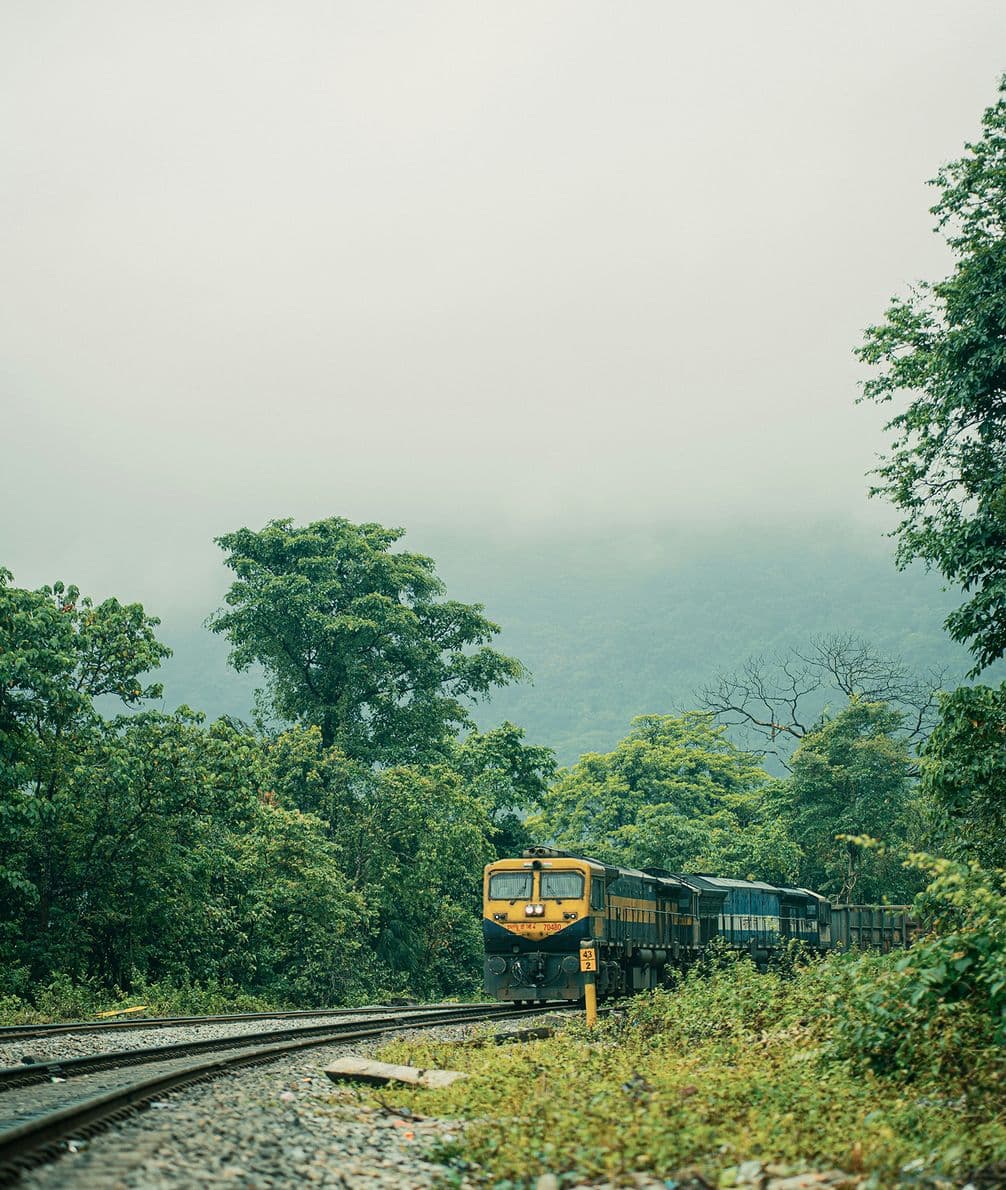
The Mandovi Express in Goa. Photo: Arun Prakash, Unsplash
The Mandovi Express inches out of the shadows of Mumbai’s Chhatrapati Shivaji Maharaj Terminus just after 7am, clanking through the heart of the megacity where koels call from the trees and the smoke from cooking drifts in through open doorways. Curving west, the service runs down the Konkan coastline en route to Goa, with the Sahyadri Hills on one side and the Arabian Sea shifting on the other. Famed for what many consider the finest pantry car on Indian Railways, the train also draws hawkers hauling their wares up the aisles – picture hot samosas, fresh biryani and copious cups of honey-sweet tea. Travel in 3AC class, where everyone chats and swaps snacks, and open windows allow passengers to gaze upon coconut groves and criss-crossed palms as the train passes through 92 tunnels and more than 2,000 bridges – including the pinnacle, the Panval Nadi Viaduct, the second-highest in India.
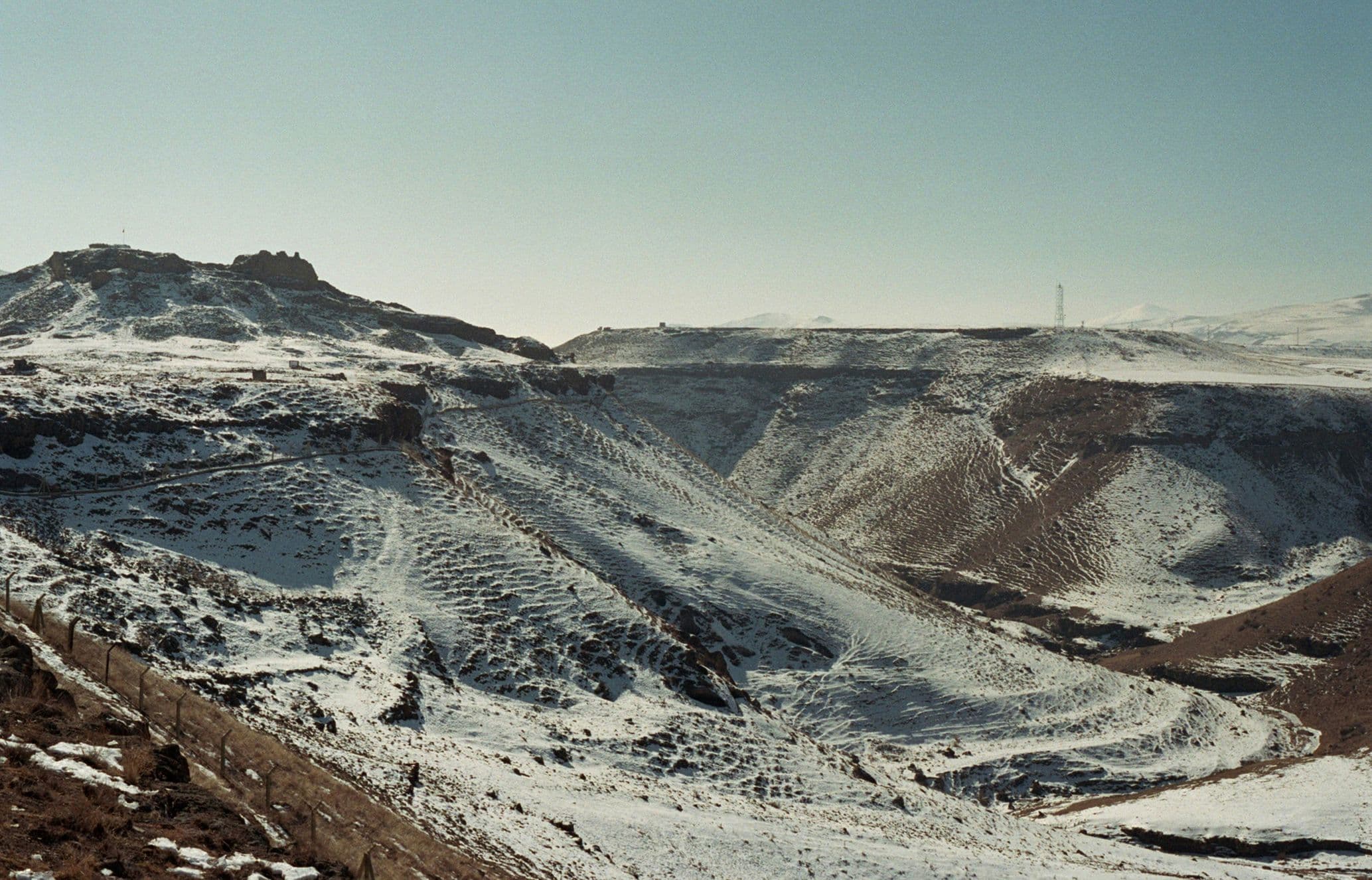
A view of Kars from the Doğu Express. Photo: Hakam Magdea
Running since the 1930s in various guises, the Doğu Express has become a phenomenon in recent years after a Swedish YouTuber posted footage of the snowscapes and ribbons of black river along the route from the Turkish capital to Kars on the northeastern border near Armenia. This service is now booked up by Gen Z domestic tourists the moment tickets are released, who string up lights in the compartments and lay out picnics of pastries, cheese and cold cuts, bonding over the beauty on their own doorstep. Popular in winter, the train takes 26 hours, cutting through snowdrifts, drumming across bridges and bringing passengers within throwing distance of the Anatolian mountains. Passengers make friends in the dining car where the grill sizzles with kebabs, share baklava, play music or meditate on the wilderness as the train follows the curves of the Euphrates River.
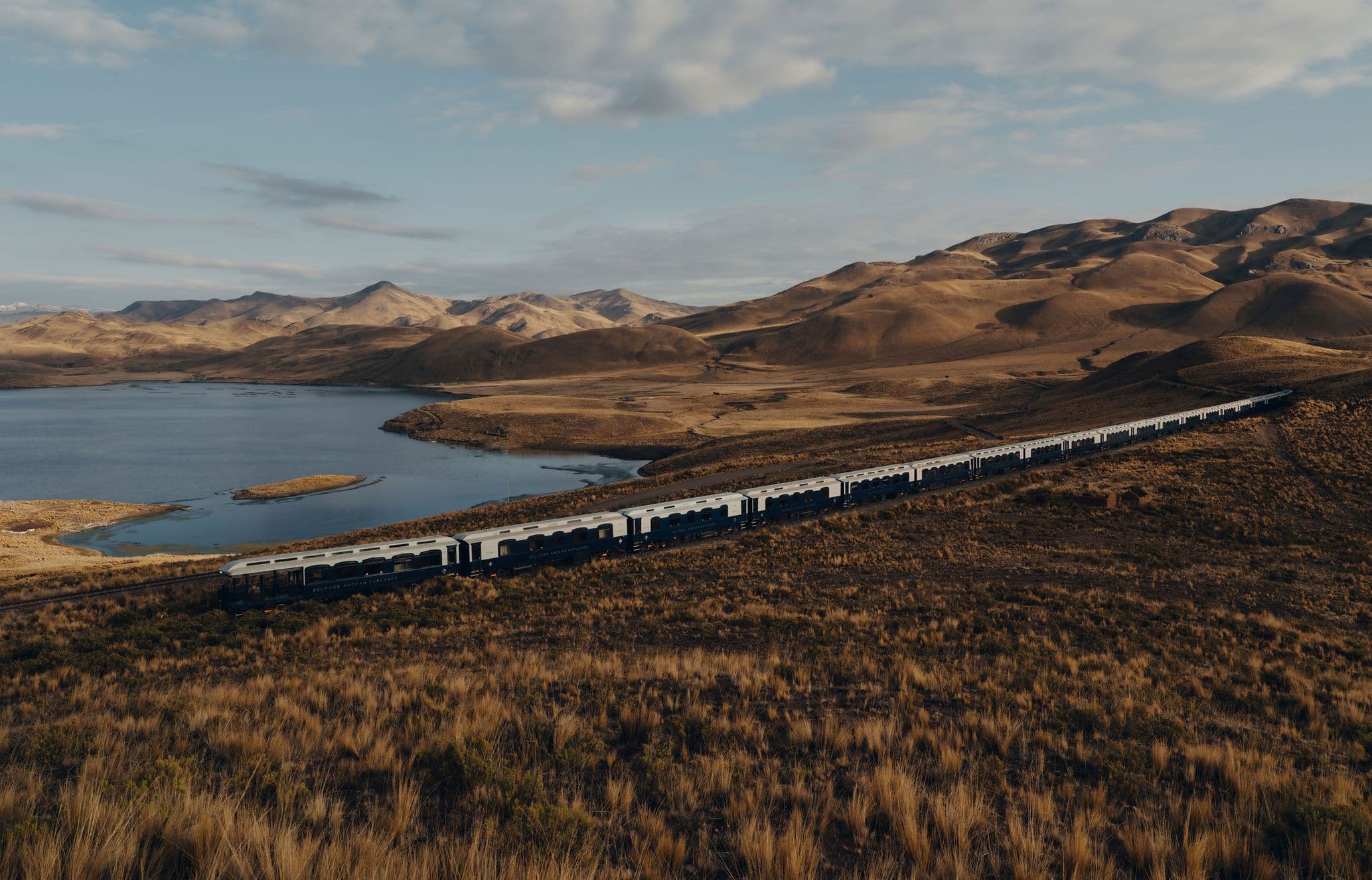
The Andean Explorer. Photos: Belmond
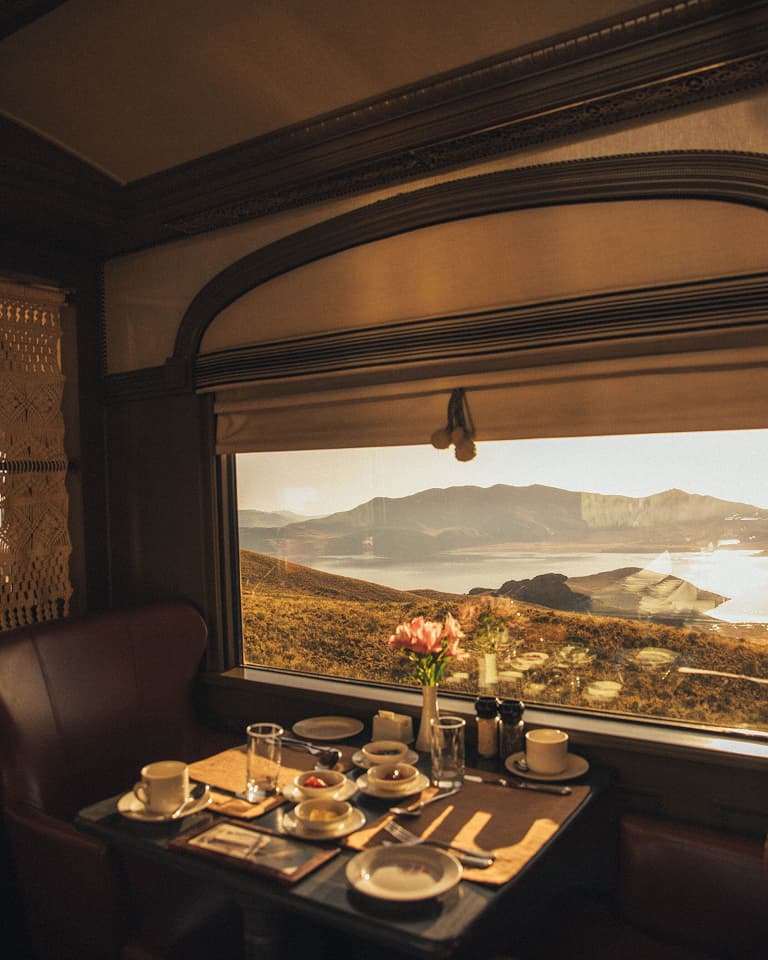
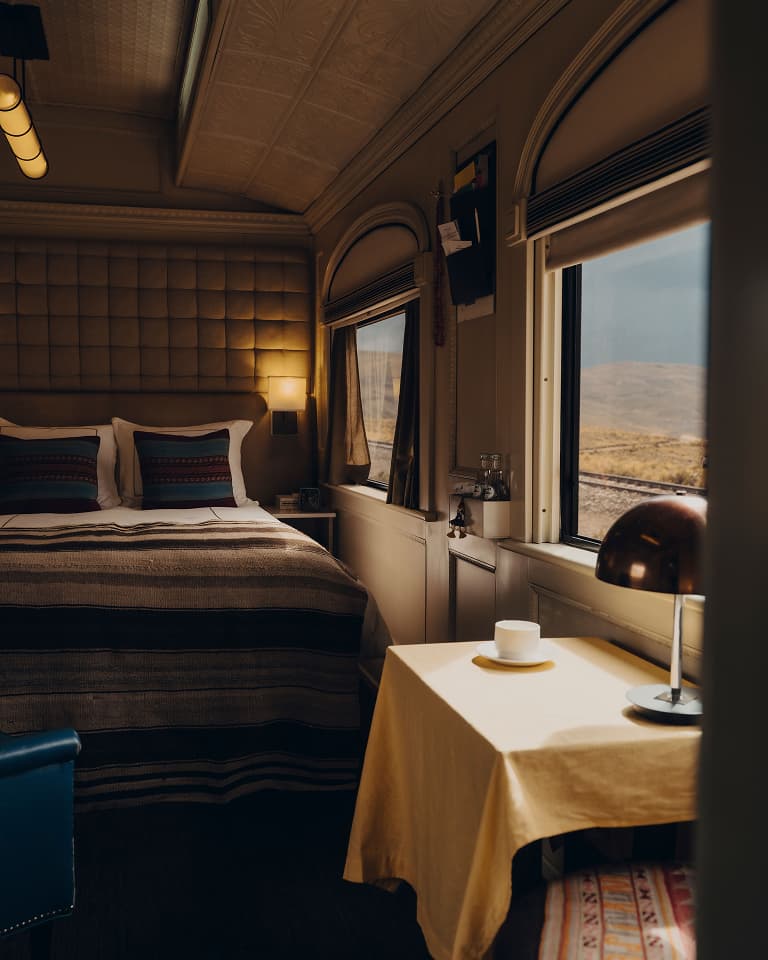
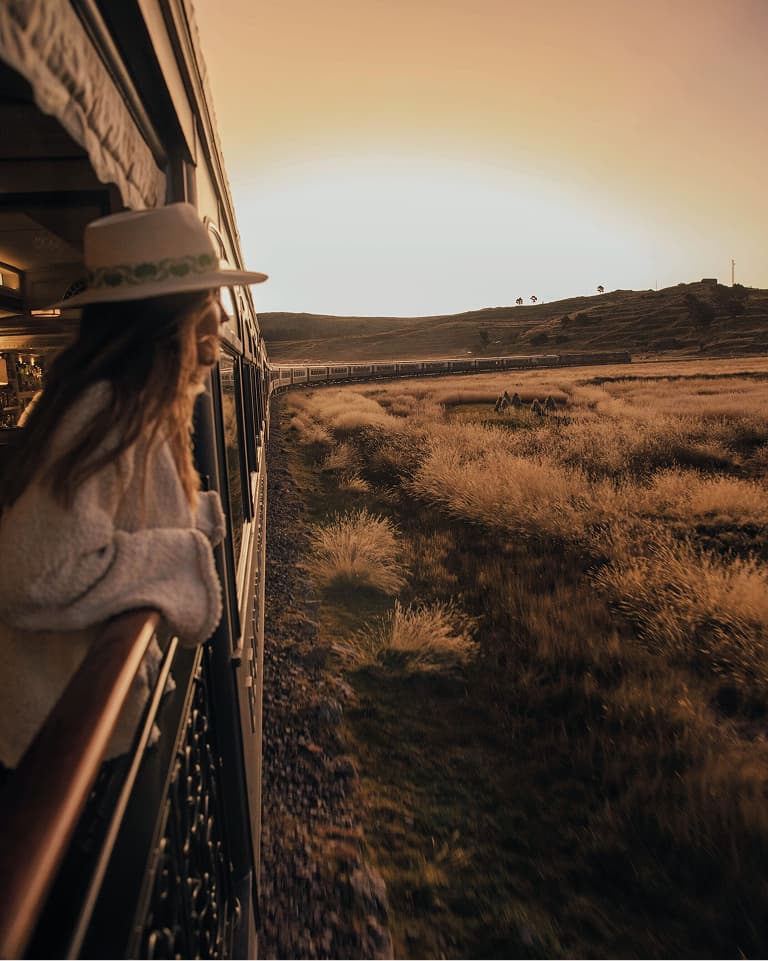
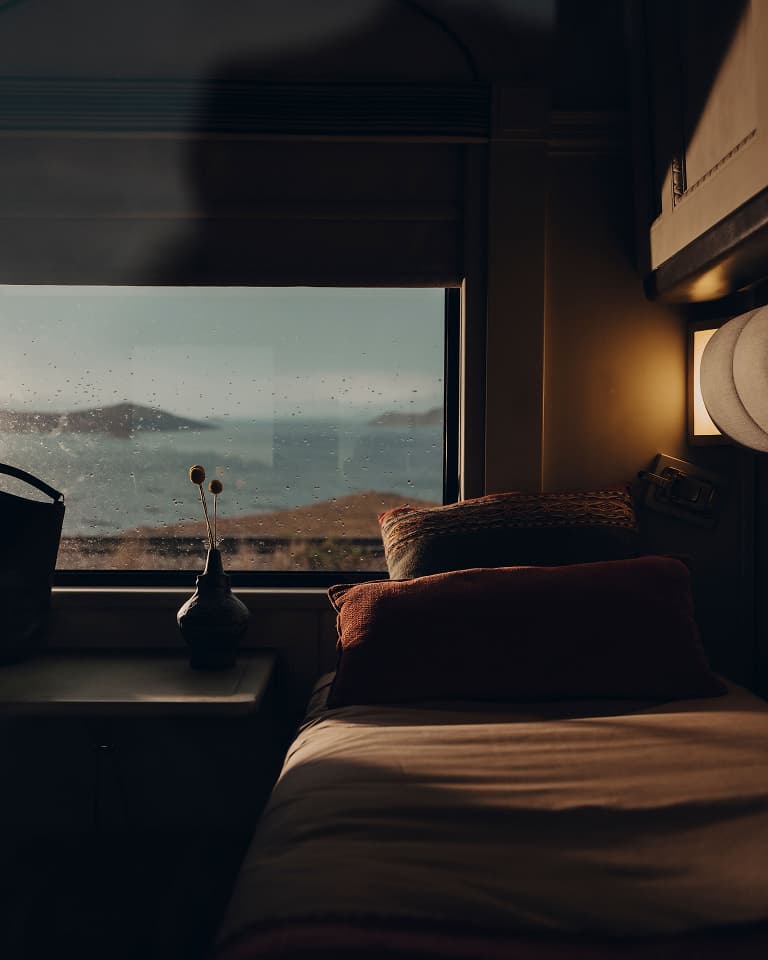
The highest luxury sleeper service in the world, the Andean Explorer is the only passenger train carrying travellers into the folds of the Peruvian Andes. Setting off from Cusco, the former capital of the Inca empire, the train winds south to Puno, thumping along canyons where the rich green waters of the Urubamba River bubble over boulders, and llamas kneel along the banks. Stepped andenes cut into the slopes, testament to the Incas’ ingenuity in creating microclimates to cultivate quinoa, grains and potatoes – ingredients that appear on the train’s menu, alongside citrus-fresh ceviche, trout caviar and skewered beef tenderloin. With a pisco sour in hand, stand on the open-air observation deck, feel the wind whip off the mountainsides while sunlight blazes across streams that glint and flash below. As darkness descends and shadows fall across the slopes, the landscape transforms into a mystical expanse where long grass whispers and the stars burn by the billions.
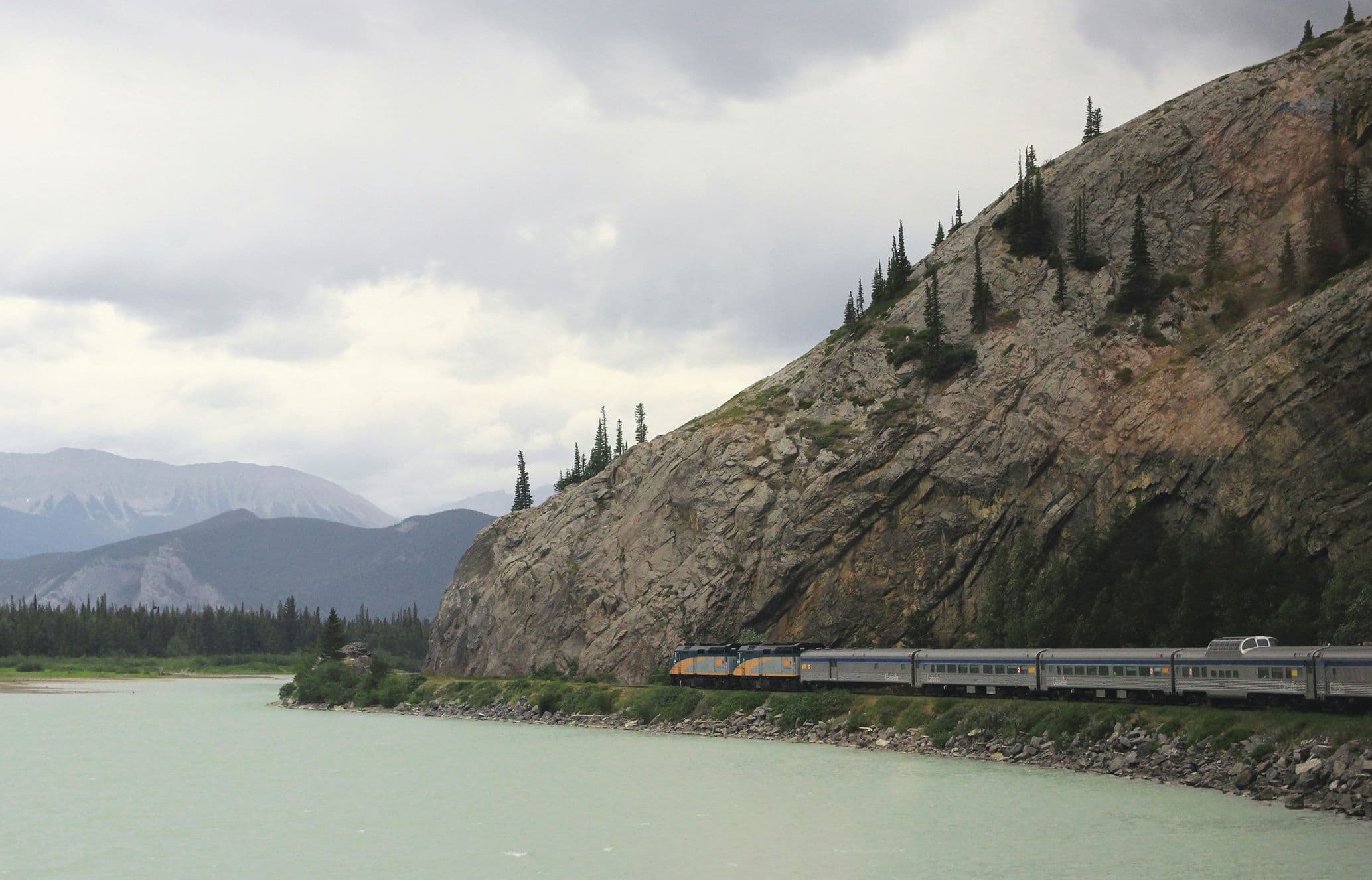
The Skeena. Photo: Damien Dufour, Unsplash
Canada’s VIA Rail’s Train 5 takes passengers from the border of Alberta deep into British Columbia’s untamed northwest. Fondly known as the Rupert Rocket – or the Skeena – it departs from the wilderness of Jasper National Park, making its unhurried way over two days to the port city of Prince Rupert. With trackside views of the Rockies – rivers tumbling and frothing, caribou emerging from the woods, grizzlies roaming the forest fringe – the journey feels more like a safari on tracks, with a tangible buzz of excitement on board. Better still, this is a flag-stop service, meaning the driver will stop for anyone stepping out from the forests – mushroom pickers, fishermen, lost hikers – offering an insight into the workings of Canada’s isolated communities. Travel in autumn for a palette that pops against a blazing blue sky – teal-green lakes gleaming like glass, the slopes aflame with red, gold and yellow. In quiet moments, prop open the upper half of the vestibule door to breathe in the scent of balsam pine as the wilderness rolls past.
Monisha Rajesh’s fourth book Moonlight Express: Around the World by Night Train is published by Bloomsbury.
Replongez dans vos souvenirs en toute simplicité grâce à des fonctionnalités exclusives comme la reconnaissance faciale et les albums intelligents.



&w=96&q=75)
Siobhan Ferguson
Photographe
24 oct. 2025∙9 min

&w=96&q=75)
Ben Olsen
Rédacteur Popsa
30 oct. 2025∙4 min
&w=96&q=75)
Scott Little
Photographe
17 sept. 2025∙9 min


 États-Unis