

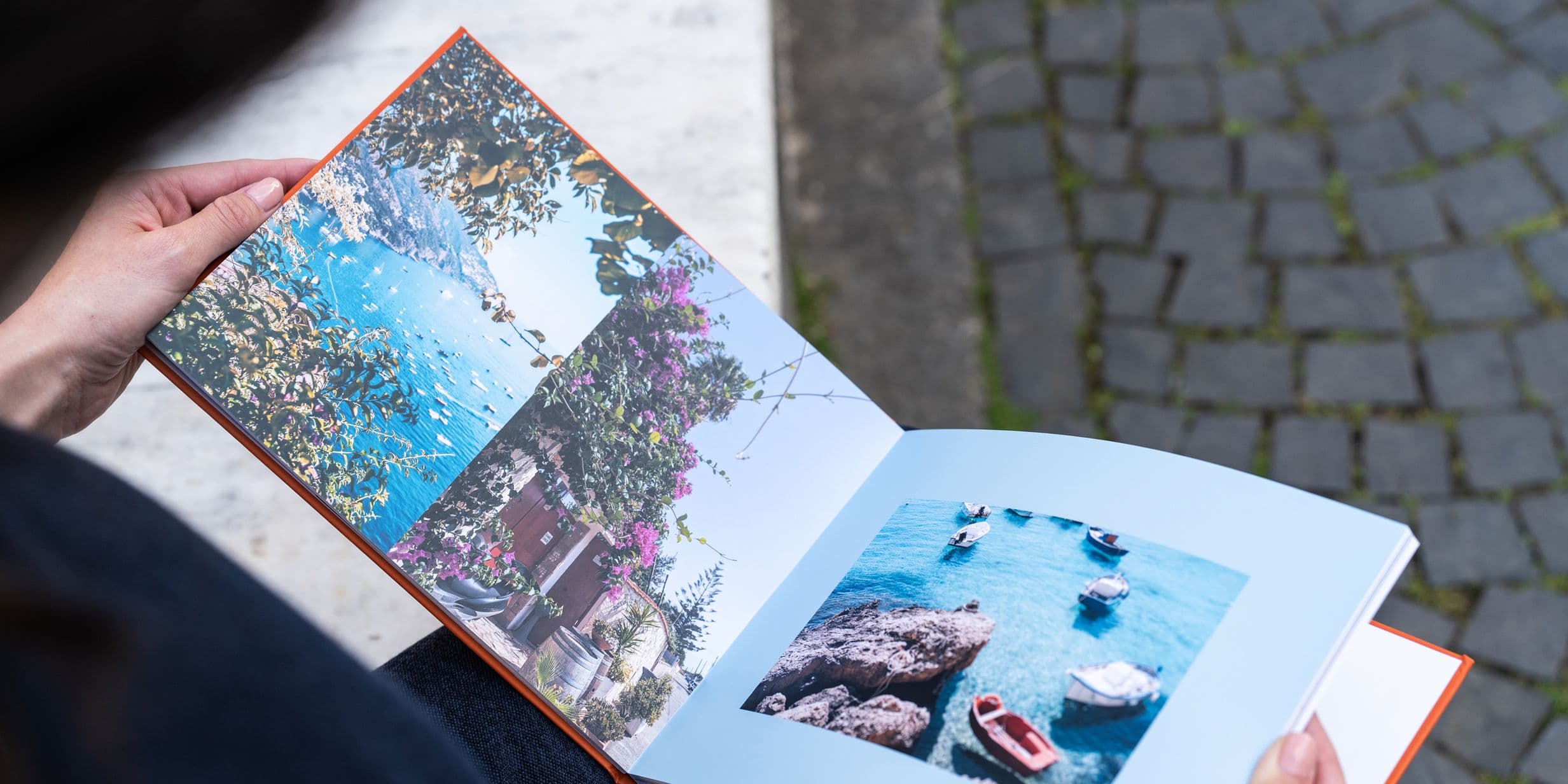
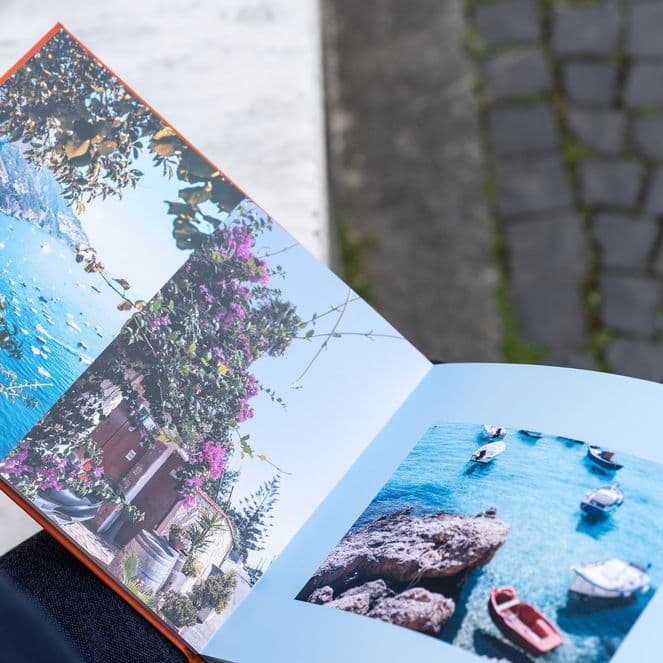
There’s a particular sadness to travel photos left on a phone. You spent two weeks somewhere extraordinary. You took 600 photos. You looked at them twice on the plane home and then they sank to the bottom of your camera roll, buried under screenshots and food pictures, never to surface again. A travel photo book rescues those images from digital oblivion and turns them into something you’ll actually engage with. More than that – it turns a trip into a story.
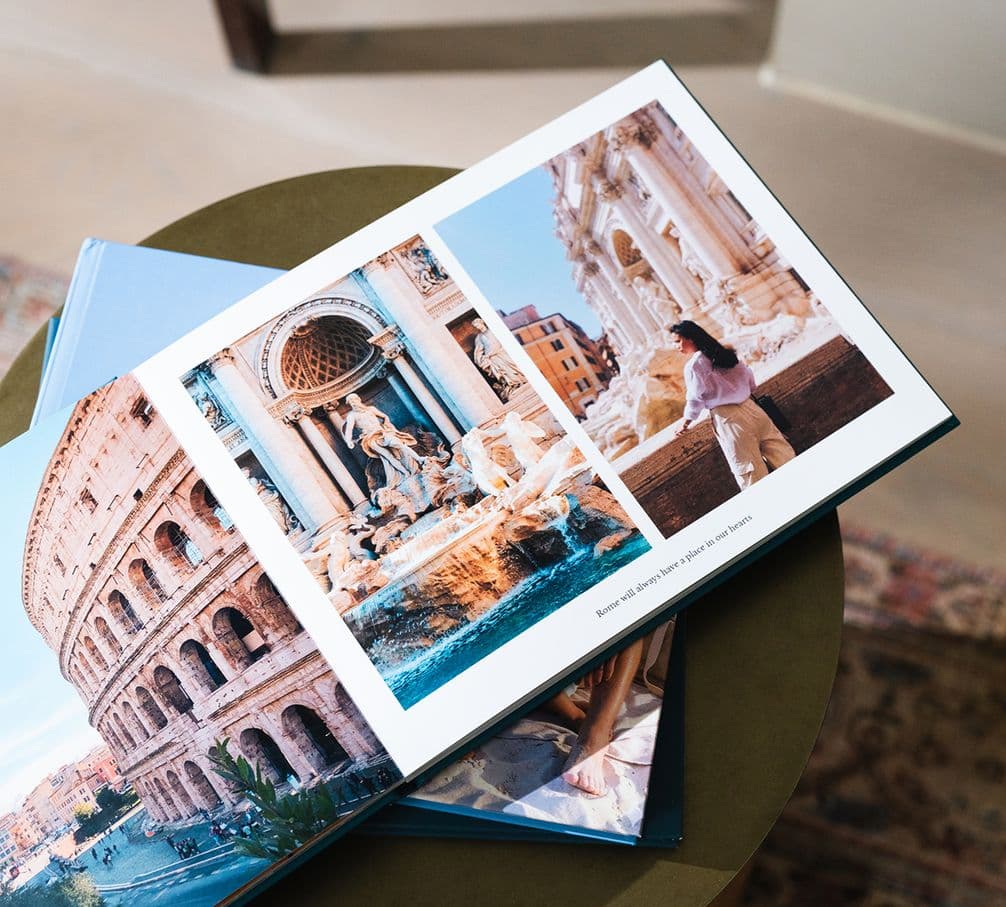
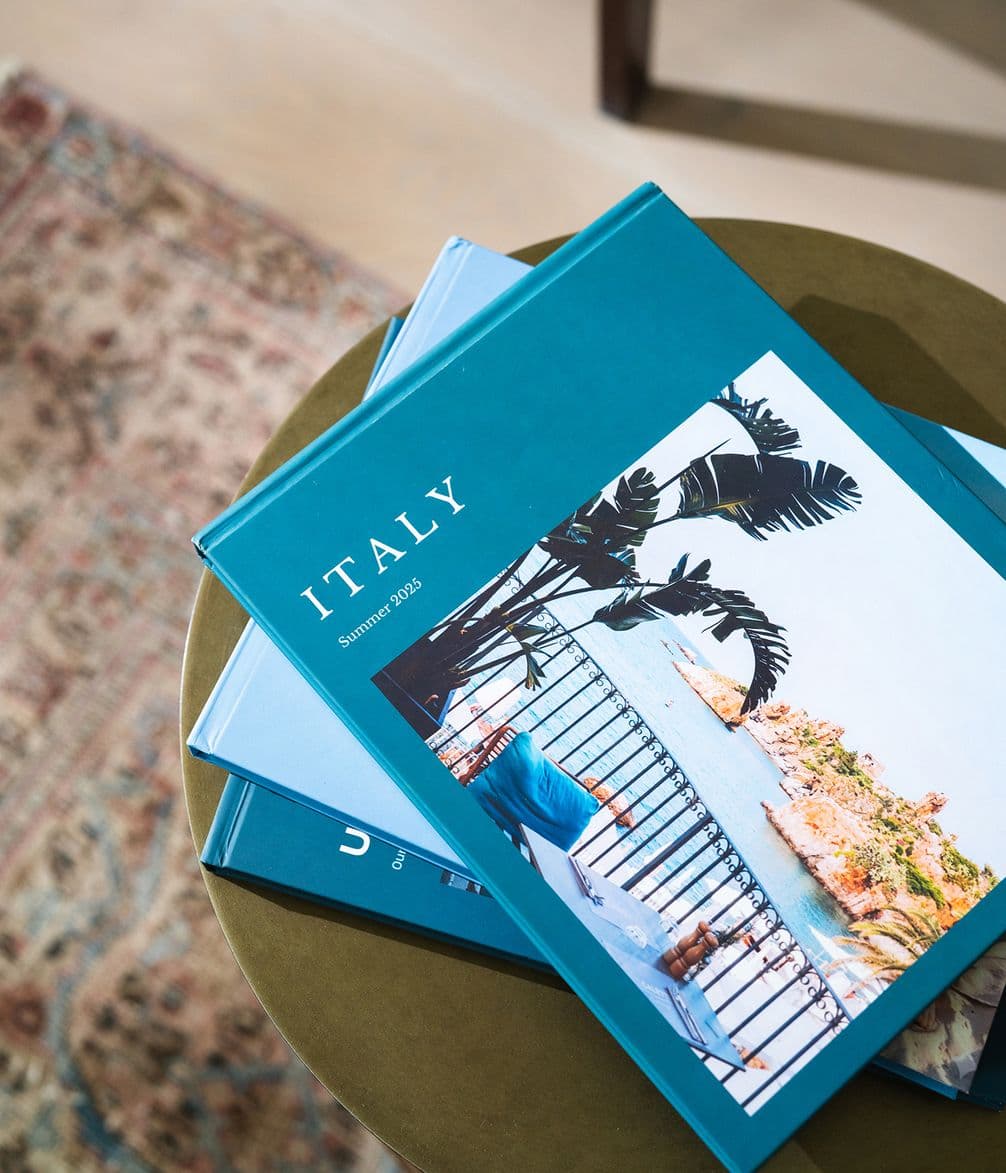
Why travel photography works so well in print
Travel photos tend to be better than everyday photos. You were paying attention. You were in new places with interesting light. You were looking. That quality of attention shows up in the images, and print does them justice in a way a phone screen never quite manages. Colour, texture, scale – it all lands differently on a printed page. A good travel photo book is also a different kind of souvenir – it’s a document of how you actually experienced a place, not just that you were there.
How to edit your trip photos down
The editing process is where most people get stuck. Six hundred photos is too many. Here’s a reliable method: do a fast first pass and mark anything that’s blurry, a duplicate or obviously throwaway. Then do a second pass and mark your genuine favourites. The difference between those two passes is your working set – usually 60 to 100 images. From there, aim for the best 40 to 60 for the actual book. If a series of similar photos exists, pick the one that best represents the moment. Editing tightly is the single biggest thing you can do to improve a photo book.
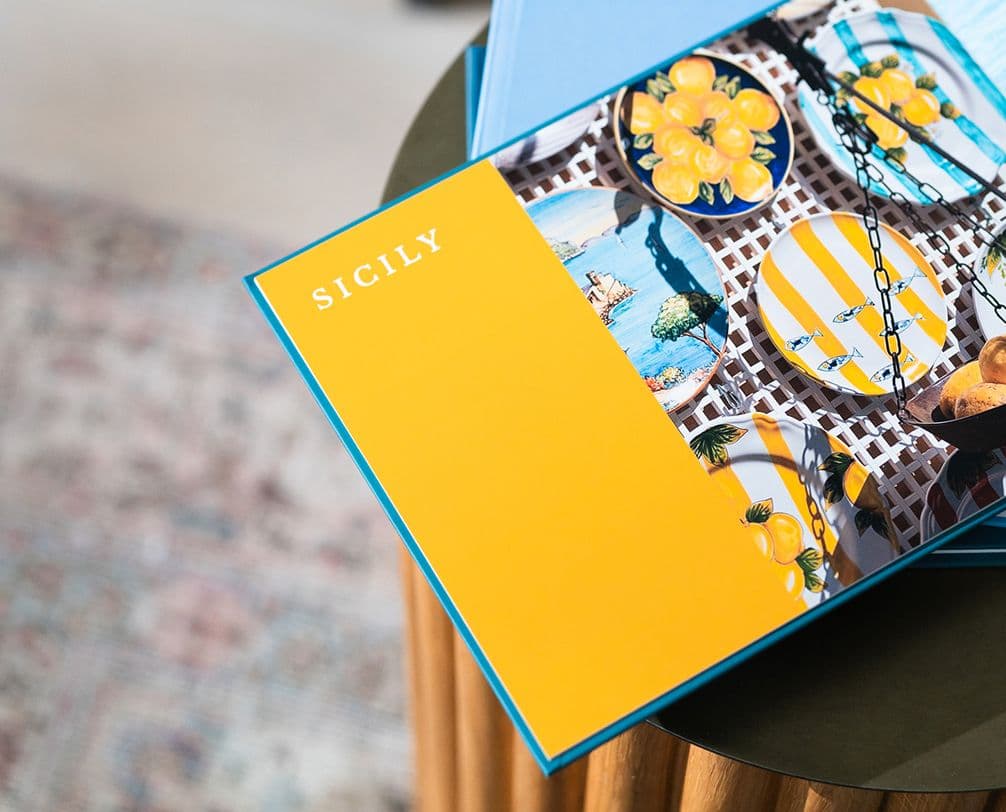
Structuring the narrative
Chronology is usually right for travel books. You arrived, you explored, you left. That structure mirrors the experience and gives the book a natural arc. Within that, you can organise by place or by day, depending on how the trip was structured. Leave a little room for reflection – a text page or a spread with a single image and a caption can give the book breathing space. Some of the best travel photo books pause to let a moment land rather than filling every page.
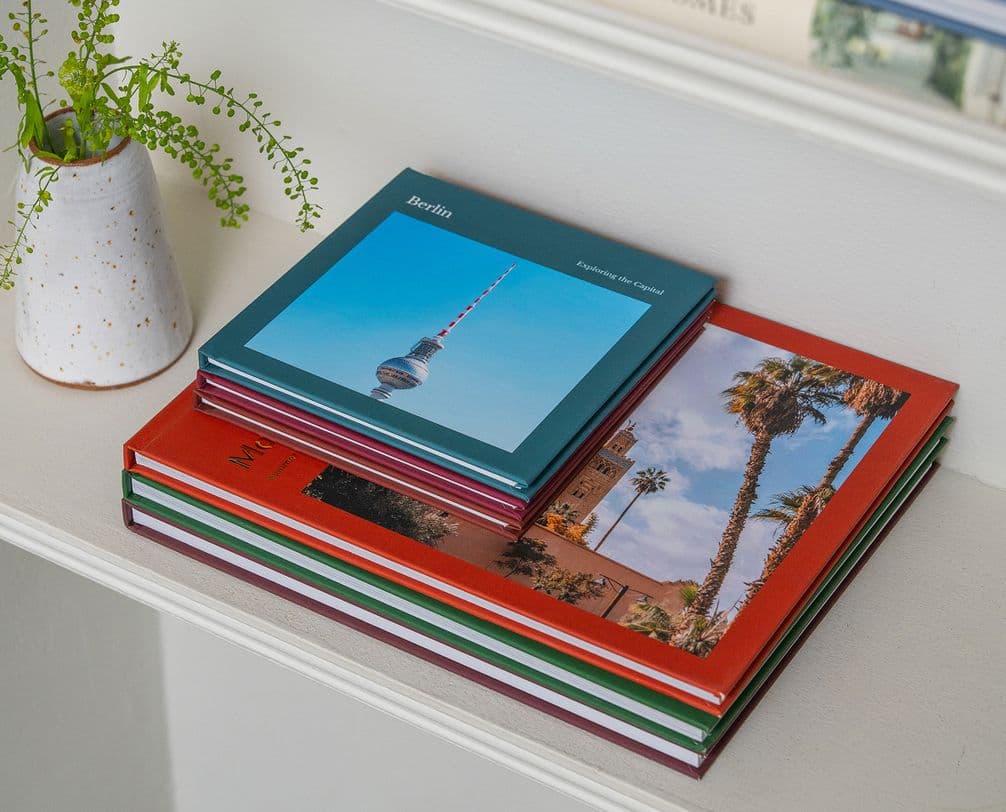
Choose a format that suits the photography
Landscape photography – wide vistas, coastlines, mountain ranges – looks best in a landscape or large square book where images can breathe. Portrait-heavy travel (street photography, people, markets) works well in any format, but a square book handles both orientations with less compromise. Popsa’s range of Photo Book sizes covers every kind of trip: a Large Hardcover for a trip of a lifetime, a compact Square for a city break. The format itself is part of how the story is told.
Téléchargez l'application
Replongez dans vos souvenirs en toute simplicité grâce à des fonctionnalités exclusives comme la reconnaissance faciale et les albums intelligents.


Articles connexes
&w=96&q=75)
Nathan Cook
Écrivain Popsa
10 sept. 2025∙6 min
&w=96&q=75)
Jason Kaye
Rédacteur Popsa
29 oct. 2025∙4 min

&w=96&q=75)
Lucy Halfhead
Responsable éditoriale Popsa
28 oct. 2025∙7 min


 États-Unis