


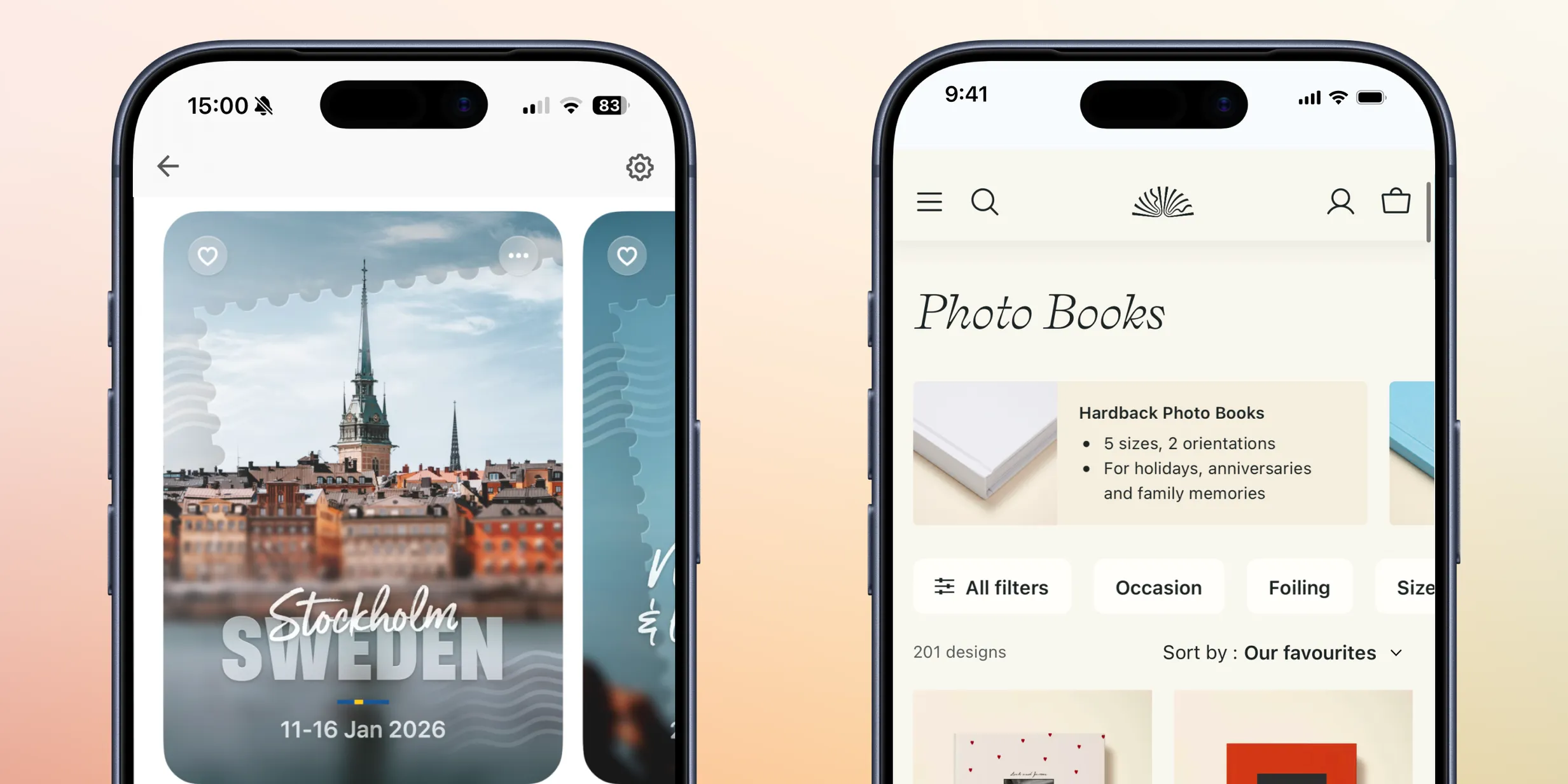
Choosing between Popsa and Papier for a photo book depends on what you value most.
Popsa is stronger for customers wanting dedicated iOS and Android apps, ready-made albums from their camera roll, more layout control and a lower list price on a comparable hardcover. It also leads on Trustpilot rating, review volume and app store ratings, and is B Corp certified. Papier may suit customers wanting the quickest, cheapest delivery, standard gloss pages, a portrait format or a wide choice of designed covers, including foil and die-cut.
Popsa’s app also does the searching for you. Its Memories feature scans your camera roll to build albums: Rewinds gathers highlights from the past month or year, and Journeys brings back forgotten holidays and day trips. Each is a ready starting point for a book. Papier’s editor starts with photos you upload yourself.
What Popsa offers
Popsa is the better choice if you:
want to create your photo book in a dedicated iOS or Android app
want to keep working on your book without an internet connection
want more freedom to adjust page layouts
want a lower list price on a comparable 24-page large landscape hardcover
want to make a shorter book, with a 20-page minimum against Papier’s 24
want the flexibility to add a single page at a time
prefer matte as the default finish
want AI suggestions to help you write captions
want a higher Trustpilot score across a much larger number of reviews
value highly rated apps on the App Store and Google Play
care about independently verified sustainability credentials (B Corp certified)
What Papier offers
Papier may be a better fit if you:
are happy to design in a mobile or desktop browser rather than an app
want faster delivery
want the cheapest standard delivery
prefer gloss as the default finish, at no extra cost
want a portrait-format photo book
want a large choice of designed covers, including gold foil and die-cut windows
want photo filters inside the book editor
Getting the job done
Popsa offers dedicated iOS and Android apps alongside browser-based creation. Papier has no app. Its editor runs in a mobile or desktop browser and, Papier says, works best online. Popsa’s app also works offline, though a few features, such as AI captions, need a connection.
Both brands can lay out a book for you. Papier offers an autofill button that it says can finish a book in about five minutes. Popsa arranges your photos automatically in chronological order. The real difference shows when you want to change things. Papier offers 22 preset page layouts, but you can’t add, move or resize their photo and text frames. Popsa is more flexible. You can switch each page between layouts, drag photos into place, zoom and crop within the frame, run images edge to edge and choose where captions sit. You can also reorder pages, undo any change and reopen a finished book to rework it.
If you’d rather create in an app, start from ready-made albums, work offline or shape layouts around your photos, Popsa gives you more room.
Creative outcome
Both brands use 200gsm paper as standard, so the starting page weight is the same. Papier’s standard pages have a glossy sheen, included in the price, while Popsa includes matte as standard, with gloss available as an upgrade.
Papier’s strongest card is its covers. It offers around 200 cover designs, including gold foil, die-cut windows that show a photo inside, and fabric. It also offers a portrait format, which Popsa doesn’t, and photo filters in the editor. Turn the cover, though, and the choice narrows: a handful of background colours, and stickers that Papier lists as coming soon.
Popsa offers more ways to personalise the pages, with emoji support and AI caption suggestions. It also makes a magazine-style booklet, which Papier doesn’t.
For a striking designed cover or a portrait book, choose Papier. If you want more ways to personalise the pages inside, Popsa is the better fit.
Delivery speed and cost
Delivery is where Papier pulls ahead. Papier prints and dispatches photo books within two to five working days. Its Express service then delivers in one working day for £6.99, so its fastest route takes three to six working days. Popsa’s fastest option takes four to seven working days for £9.99. Papier’s cheapest delivery is also lower, at £4.99 against Popsa’s £5.99.
If speed or low delivery costs matter most, Papier has the edge.
Price clarity and fairness
Papier’s minimum is 24 pages, so we’ve compared 24-page books. A 24-page large landscape hardcover costs about £42.76 from Popsa (£40 for 20 pages plus four extra pages at £0.69 each) and £54 from Papier, making Popsa about £11 cheaper at non-sale prices.
Popsa also lets you start smaller, with a 20-page minimum, and add pages one at a time at £0.69 each. Papier adds pages in pairs, up to 100.
Upgrades cut both ways. Gloss paper is included at Papier, while Popsa charges £0.49 per page for it. A presentation box costs £7.99 from Popsa and £10 from Papier.
If you’re paying full price, or making a shorter book, Popsa is the cheaper option. If you want free gloss pages, or you’re buying in a Papier sale, the gap narrows or reverses.
Trust and reassurance
Ordering a printed product sight unseen carries risk. Both brands promise to put things right, but on different terms. Popsa says it will reprint your order free of charge if anything goes wrong. Papier asks you to get in touch within 30 days if you’re not completely happy, and says it will sort it, though it doesn’t normally accept returns on personalised items.
Both brands offer live chat and a web contact form, but no phone support. Popsa’s support runs 8am to 6pm, starting two hours before Papier’s: 10am to 6pm Monday to Thursday, 5pm on Fridays.
Reviews are where the gap is widest. Popsa holds a Trustpilot score of 4.4 from around 120,000 reviews, compared with Papier’s 4.0 from around 10,000, and Papier’s score covers its whole range, most of which is stationery rather than photo books. Popsa’s apps are rated 4.8 on the App Store and 4.6 on Google Play; Papier has no app to compare against.
Values and responsibility
Popsa is B Corp certified, and its sustainability page sets out clear commitments on carbon offsetting, FSC-certified paper and biodegradable packaging.
Papier makes most products to order to cut waste, says its paper is ethically sourced, and packs its photo books in plastic-free, home-recyclable cardboard and paper. It makes no claim to carbon offsetting.
The verdict
Papier makes an aesthetic book with a beautiful cover, and it gets it to you quickly. But for most people, Popsa is the stronger all-round choice: dedicated apps that curate your photos, more control over your pages, a lower list price and a far stronger review record.
Téléchargez l'application
Replongez dans vos souvenirs en toute simplicité grâce à des fonctionnalités exclusives comme la reconnaissance faciale et les albums intelligents.


Articles connexes

Nathan Cook
Écrivain Popsa
15 sept. 2026∙6 min

Oliver McQuitty
Product Director
16 juin 2026∙6 min
Nathan Cook
Écrivain Popsa
10 sept. 2026∙6 min


 États-Unis