

Photography
Mastering reflections in photography
On reading the wind, earning the location and why the best shots often come after everyone else has gone home

16. heinä 2026∙7 min
Photography
On reading the wind, earning the location and why the best shots often come after everyone else has gone home
16. heinä 2026∙7 min
Canadian nature and adventure photographer Jamie Justus Out (@jamieout) finds his inspiration in the great outdoors, teaching others about composition, editing techniques and scouting locations.
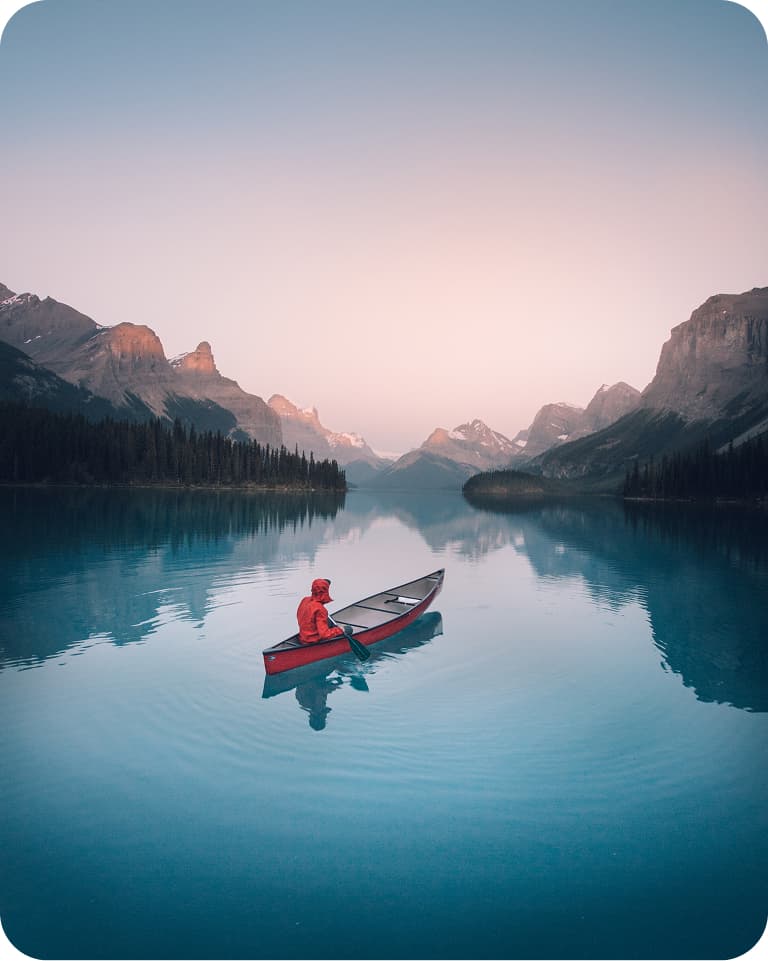
We pulled up early to Maligne Lake in the Canadian Rockies, loaded the canoes and pushed off into what felt like a perfect morning. Good friends, glassy water, mountains on every side. About halfway through the 23km paddle to Spirit Island, the weather had other ideas – the wind came up, the clouds dropped and the whole trip took on a slightly grimmer character than any of us had signed up for.
And then we rounded the bend to reveal Spirit Island – the peaks reflected so cleanly in the still water below that for a second you had to think about which way was actually up. I grabbed my camera, climbed the hill behind the island for some height, and shot wide at 16mm. The light was flat, overcast and completely wonderful. I’ve taken a lot of photographs over the years but that morning produced some of my favourites.
It’s also a pretty good anecdote to sum up what reflection photography is all about. It’s not always the bluebird day you planned for. Sometimes the wind picks up at the wrong moment and you end up somewhere between uncertain and slightly cold – and sometimes that’s exactly when the water goes still and the light does something you couldn’t have predicted. I’ve been shooting nature, wildlife and travel for over a decade, from the Canadian Rockies to the streets of Helsinki, and reflections keep showing up as one of the most compelling things a camera can capture. Here’s what I’ve picked up along the way.
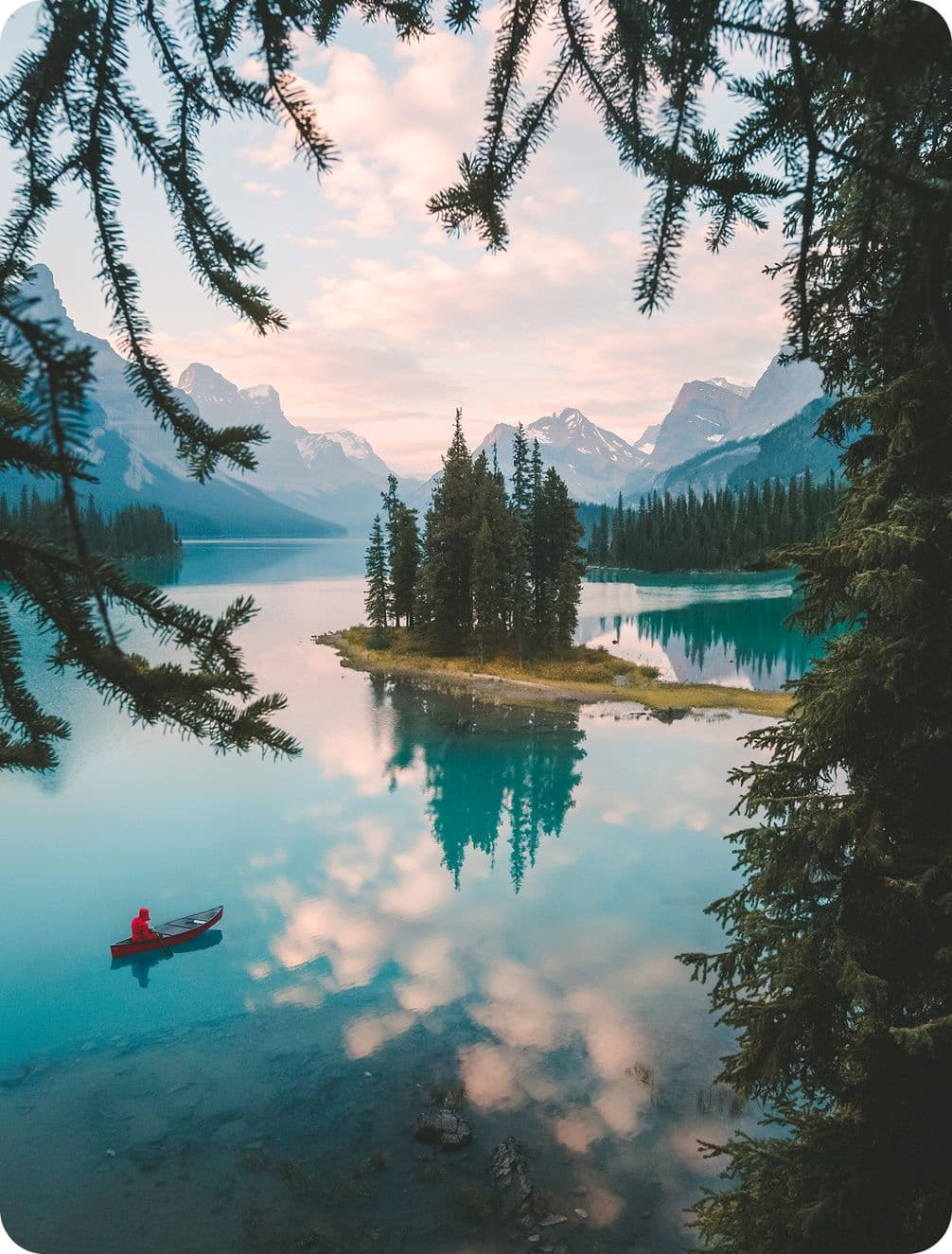
Photo: Jamie Justus Out
Still water is the foundation of almost every great reflection shot, and it comes down to one thing: wind. Even a faint breeze will break up a lake surface and turn a clean reflection into something impressionistic – beautiful in its own way but not what you want if you’re hoping to capture a perfect mirror. Wind is naturally at its lowest in the hour before and after sunrise, which is one of the best reasons to set that early morning alarm. I use an app called Windy to check hourly forecasts for a specific location the night before a shoot. It won’t always go your way, but making an informed decision rather than just hoping for the best dramatically improves your odds.
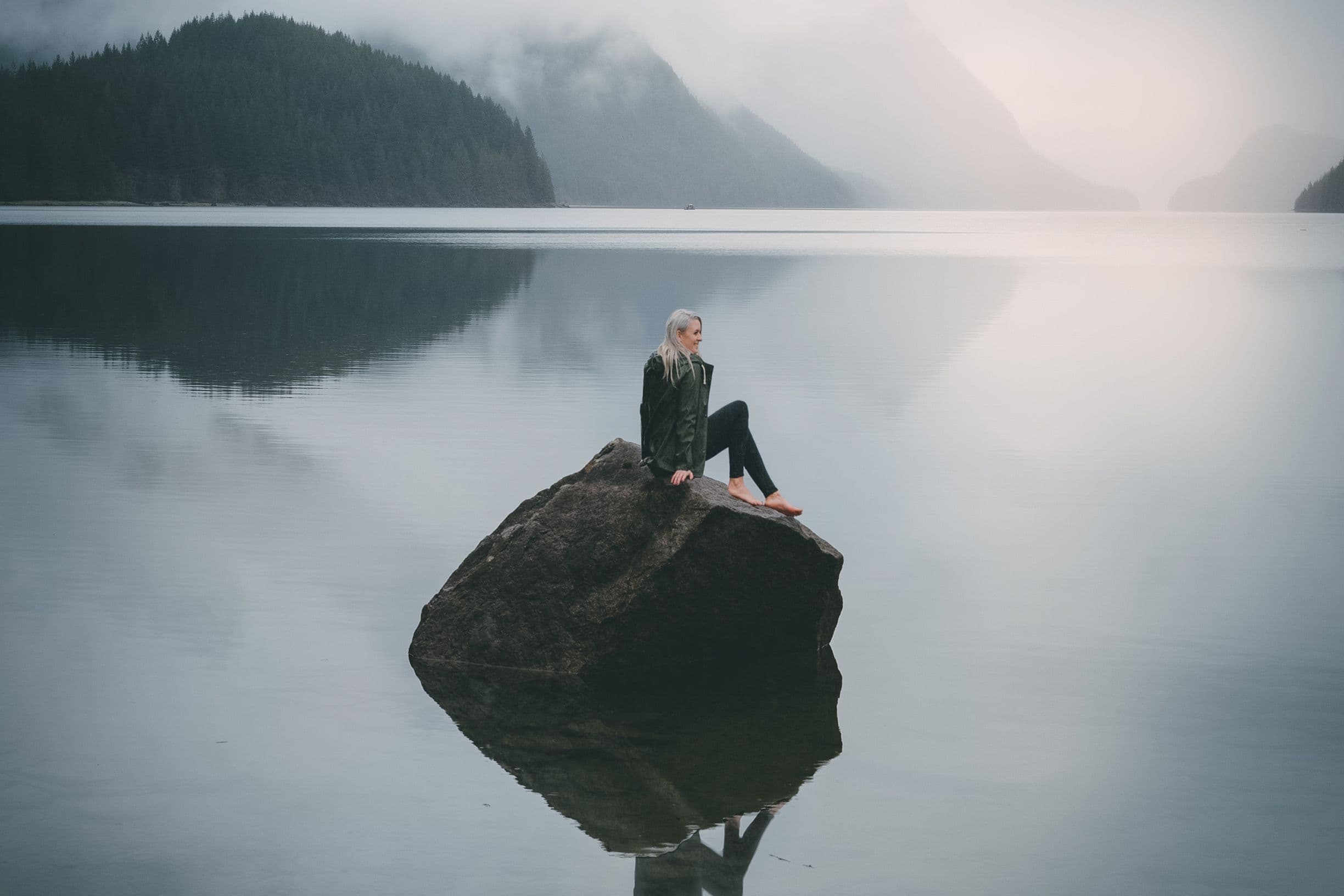
Photo: Jamie Justus Out
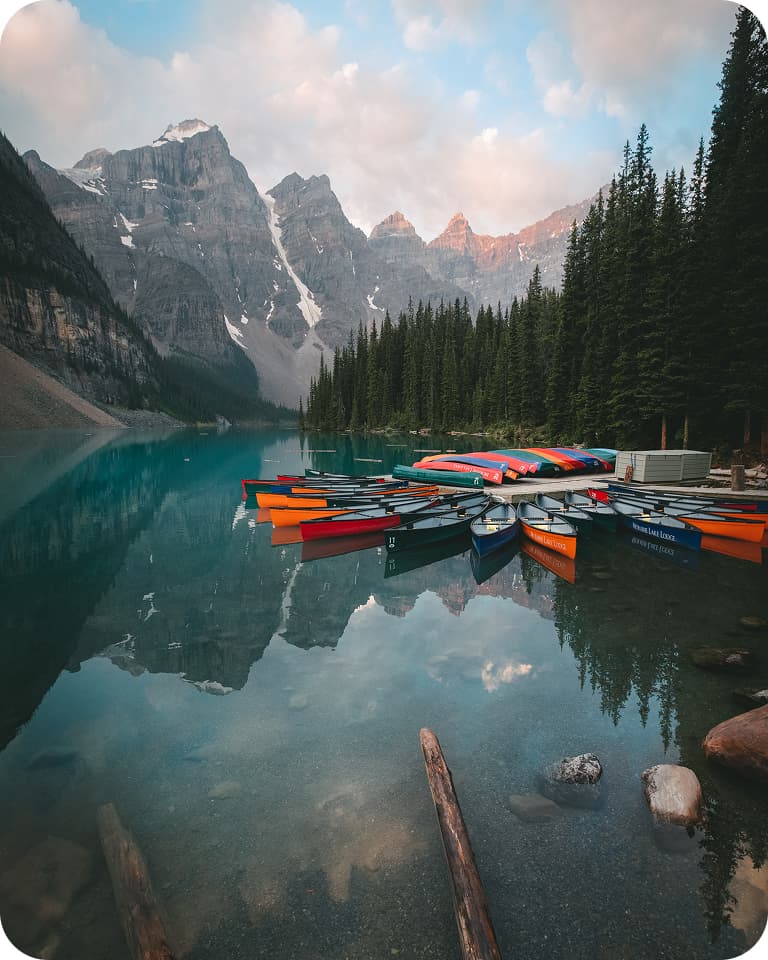
Golden hour gets talked about endlessly, but for reflections it’s not just about light quality, it’s about angles. Low, raking light hitting a water surface creates warmth and depth that midday sun simply can’t match. I plan every major lake shoot around sunrise using PhotoPills, which lets you map exactly where the sun will rise relative to your composition. Moraine Lake near Lake Louise, and Spirit Island at Maligne Lake in Jasper are two spots I’ve returned to multiple times, and the difference between arriving at the right moment versus 15 minutes later is never small.

Photo: Jamie Justus Out
The single most impactful change you can make costs nothing: get your camera closer to the ground. The lower your lens sits relative to the reflective surface, the more that reflection fills your frame. A modest puddle at standing height can become something extraordinary when you’re lying flat on the pavement. On a wet evening in Helsinki, I spotted a tram reflected in the rain-soaked cobblestones and dropped down to get the camera almost level with the street. A few people stared as they stepped around me. It was mildly awkward. The photograph was worth it.
A reflection on its own can feel weightless. Anchoring it with a strong foreground element gives the image structure and pulls the eye into the scene. Lake Agnes, above Lake Louise, is one of the most quietly spectacular spots in the Rockies in late autumn when the first snow hits the peaks but the water is still unfrozen. I wanted to use the tea house canoe as a foreground – bow pointing out across the water towards the lodge and mountains – except it belonged to the tea house owners and we’d hiked up with a paddle but no boat. They agreed to lend it, on the condition we brought them back a print. The following spring, my friend hiked up and delivered it.
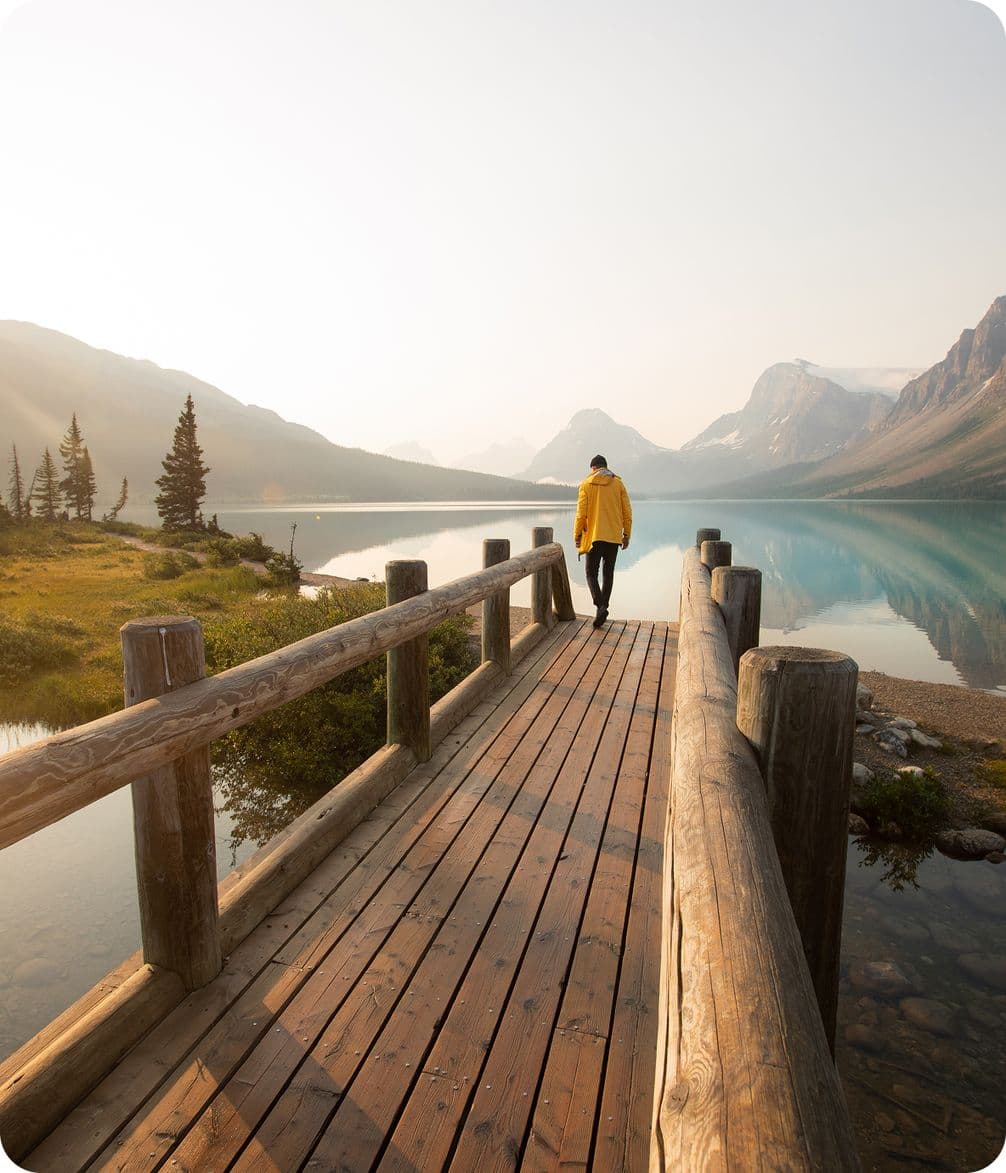
Photo: Jamie Justus Out
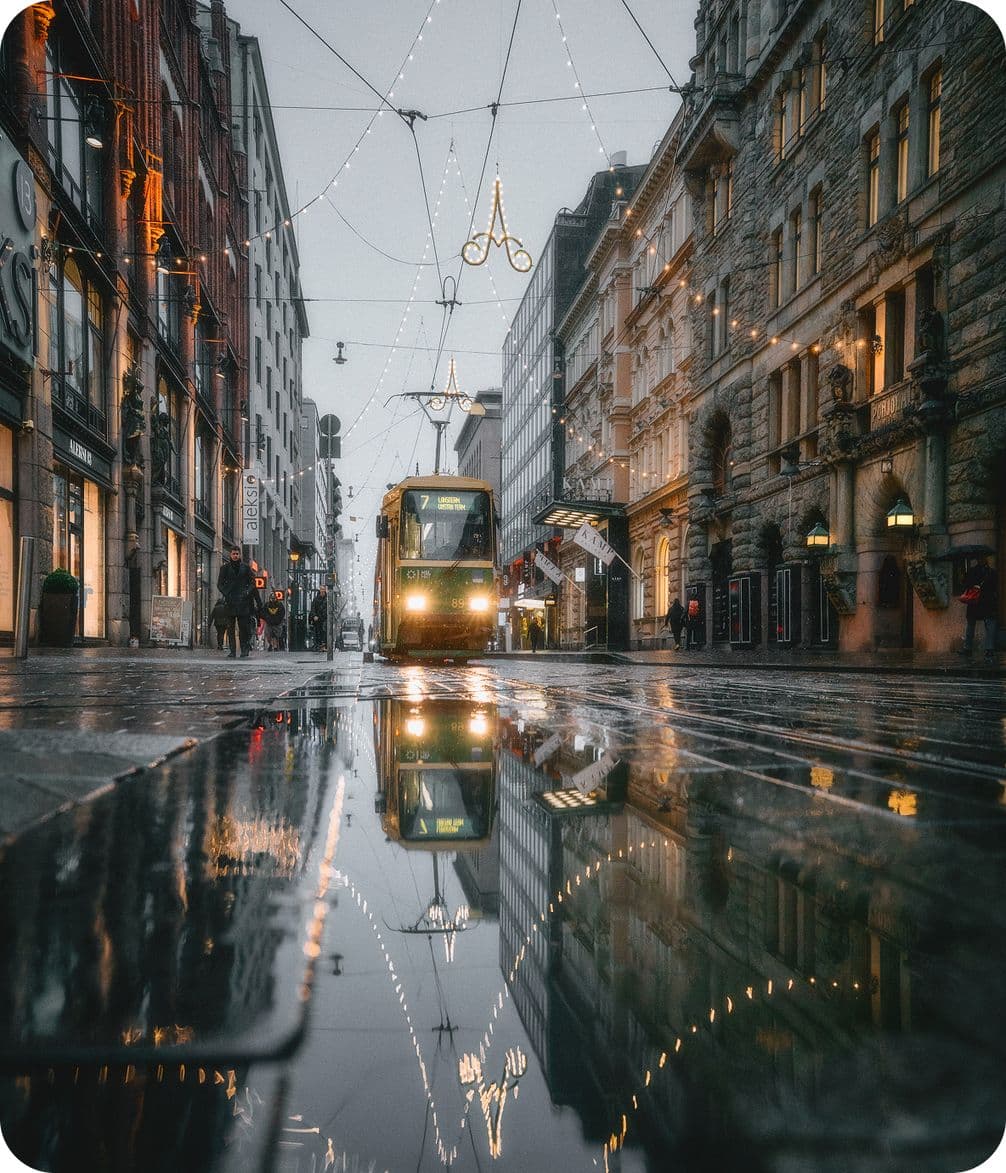
Photo: Jamie Justus Out
When conditions aren’t giving you the still, clean reflection you came for, a neutral density (ND) filter changes what’s possible. By reducing the light hitting your sensor, it lets you use a much slower shutter speed, smoothing choppy water into something silky and abstract – less literal, more atmospheric, often more interesting anyway. I use a 6-stop ND for most situations, stretching to 30 seconds or more in overcast conditions. It won’t fix bad light but it gives you a creative option when conditions are fighting against you.
Reflection photography often puts a bright sky directly above a darker surface, and cameras want to average the two out in a way that serves neither – the sky blows out or the reflection goes muddy. Expose for the highlights and recover the shadows in post; shooting RAW gives you the latitude to do this properly. Bracketing three to five frames and blending them is another reliable approach, and a graduated ND filter can bring your exposure range under control in-camera. It takes practice but once it clicks it becomes second nature.
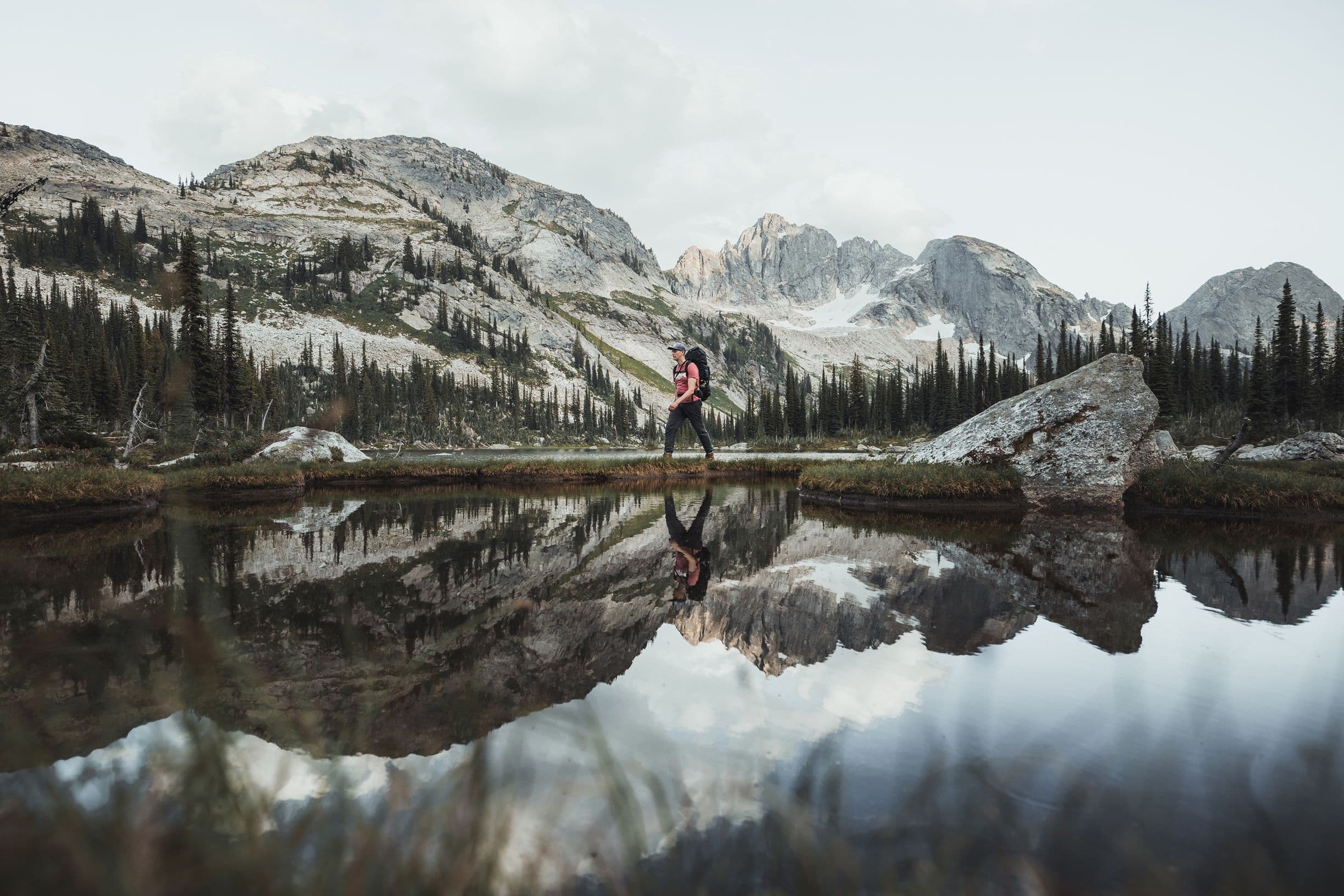
Photo: Jamie Justus Out
Some places reward the effort it takes to reach them in ways that go beyond the photograph. Lake O’Hara in the Canadian Rockies is one of those. Access is tightly controlled, whether you try for the day bus, the Elizabeth Parker Hut lottery or one of the limited camping spots, none of it is straightforward, which means when you get there, you’re sharing it with almost nobody. The cabins skirting the edge of the lake are extraordinarily photogenic in the early morning stillness. It never disappoints. I’m heading back this summer with my family, already thinking about the shots.
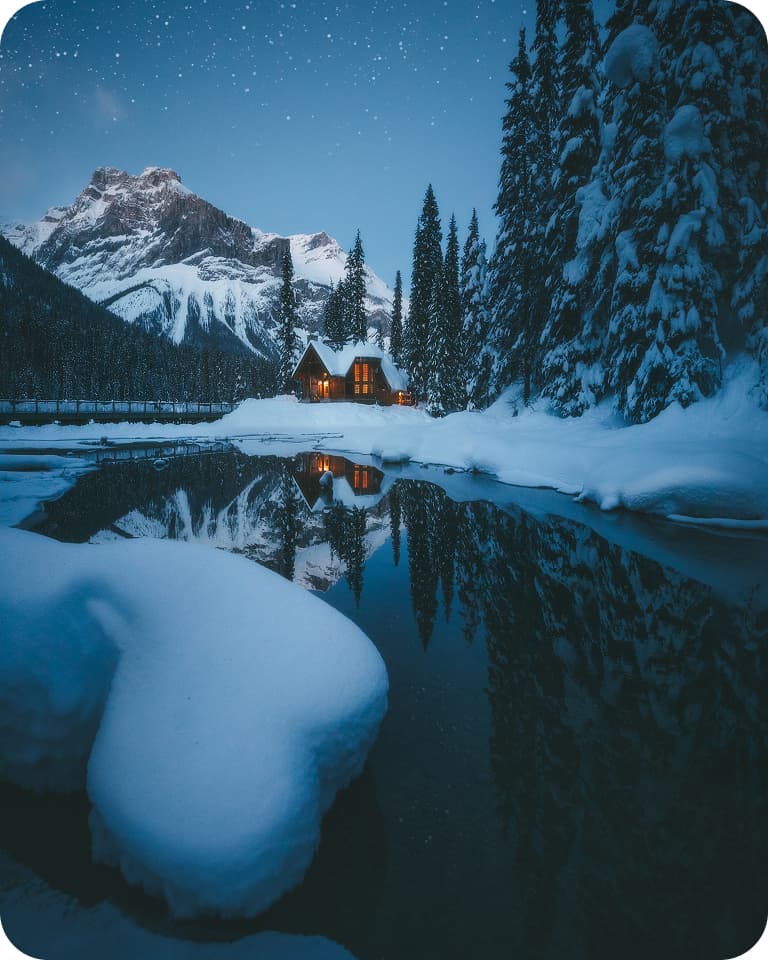
Most photographers start heading back to the car just as the real magic starts. Blue hour – the 20 or 30 minutes just after sunset – is one of the best windows for reflection photography. The light turns soft and even, the wind often drops and the crowds have gone home. Emerald Lake in Yoho National Park in winter taught me this properly: shooting in the cold and snow, with the sky still holding colour and the first stars coming through, the warm glow of the lodge reflected in the one patch of open water surrounded by ice was something I couldn’t have planned for. Dress for the cold and keep a spare battery warm in your pocket – it drains fast out there.

Photo: Jamie Justus Out
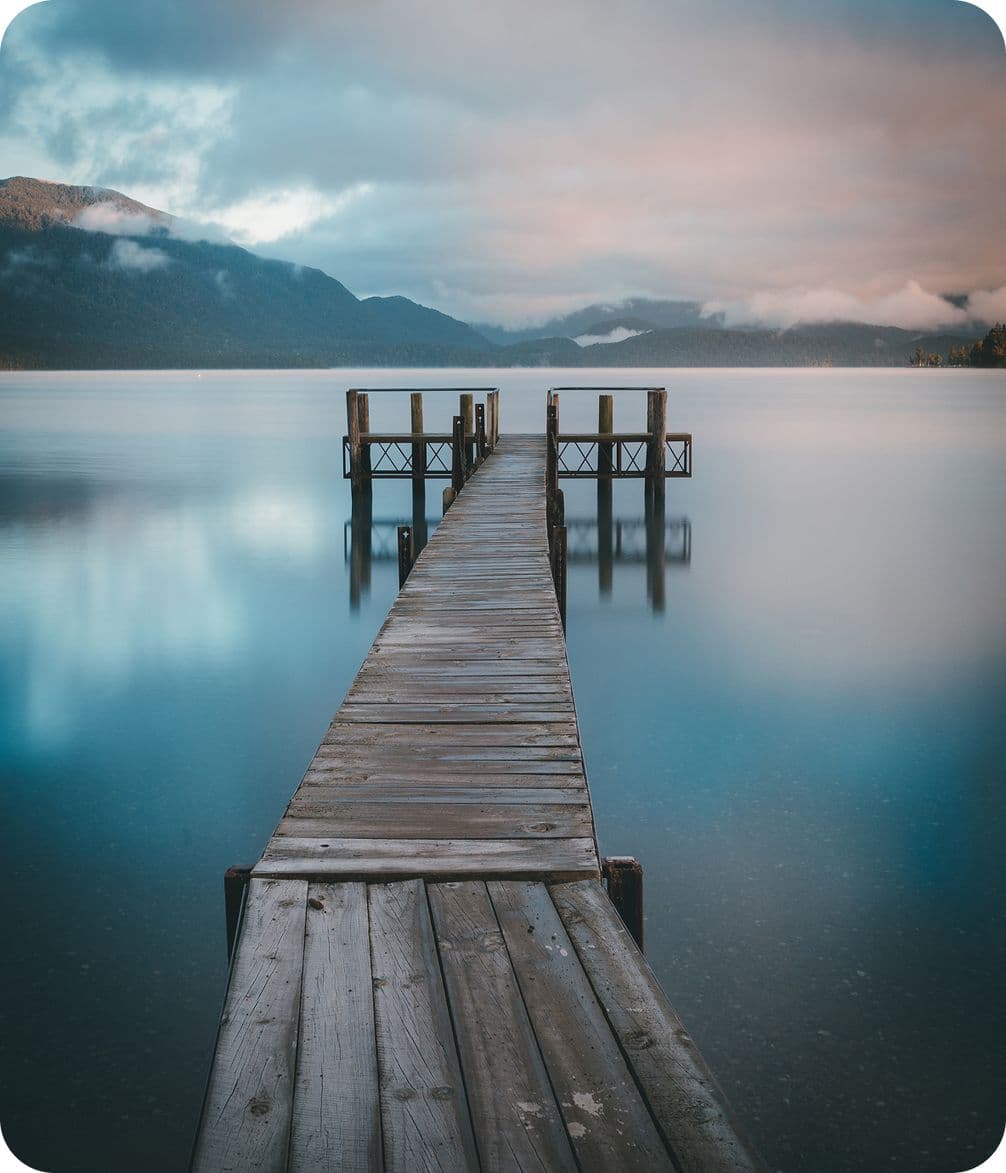
Photo: Jamie Justus Out
A perfect mirror reflection is satisfying but it can also feel static. Introducing a single element that disrupts the symmetry gives the eye somewhere to travel – a boat, a person, a bird landing at the edge of the frame. Moraine Lake is one of the most photographed spots in Canada, and what makes the early morning shots there special are the canoes pulled up along the shore or sitting out on the water. Before the crowds arrive, when the canoes are the only thing moving in an otherwise perfectly doubled world, that contrast between stillness and human presence is exactly what a great reflection shot needs.
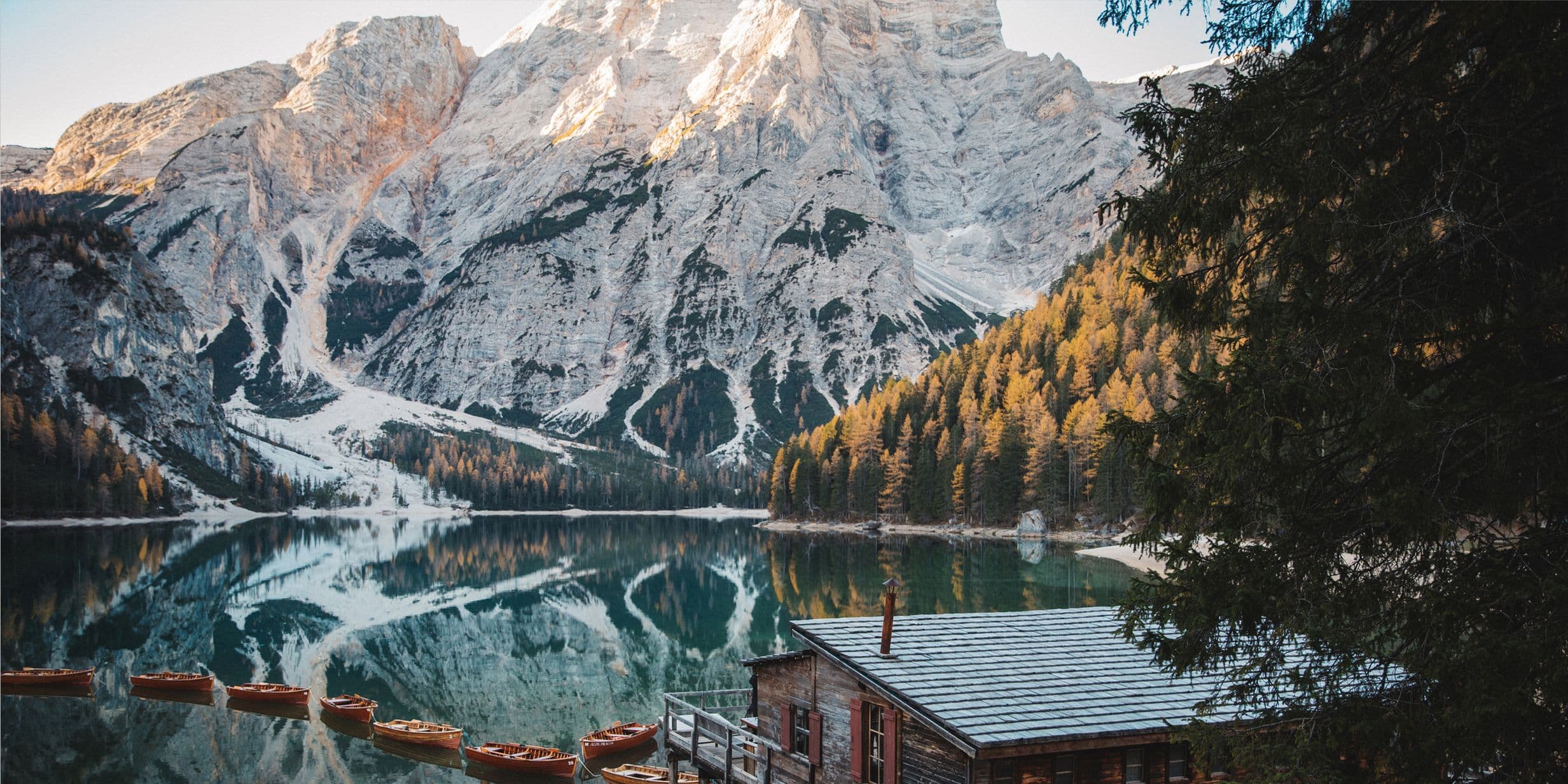
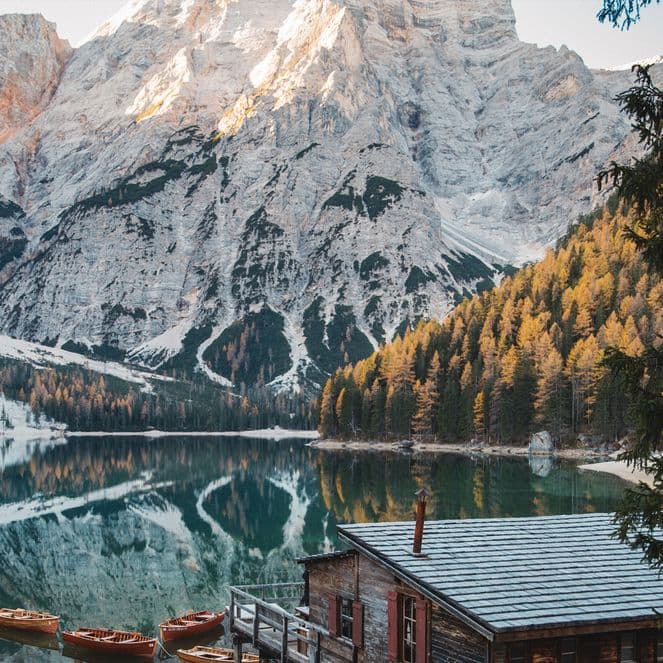
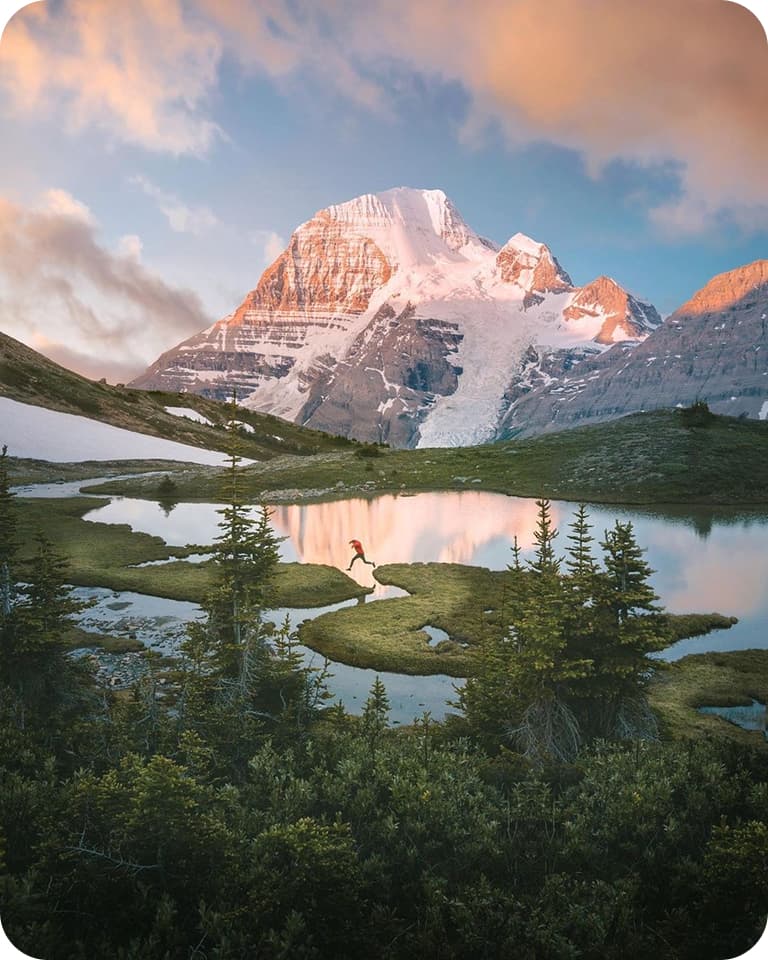
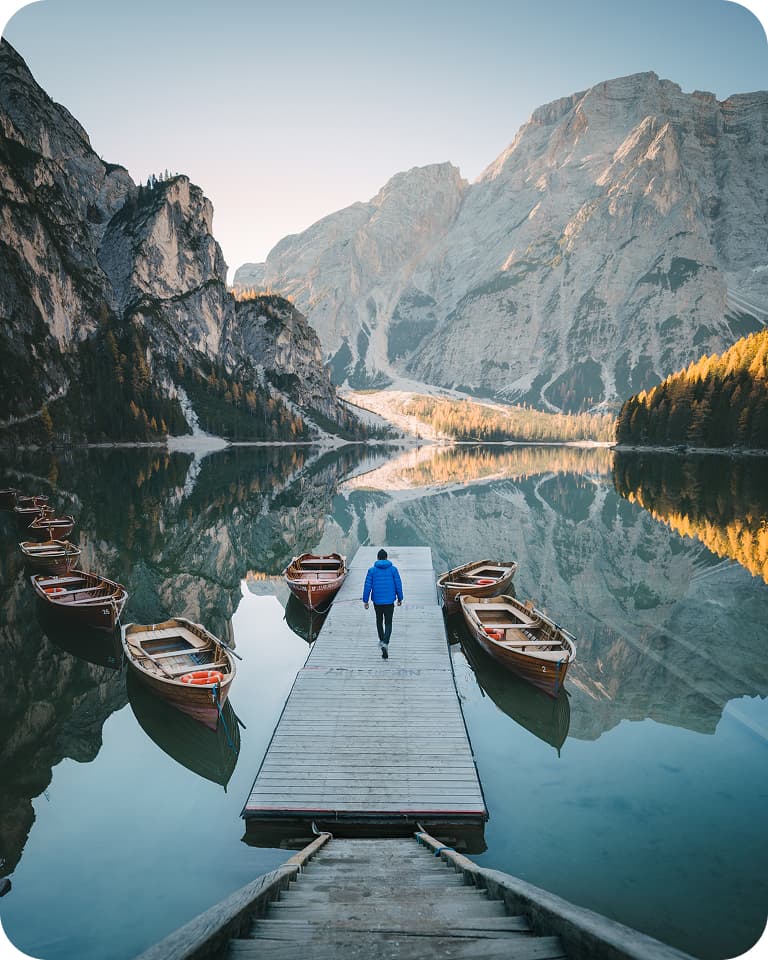
Some of the most powerful reflection shots include a human figure in the landscape, but that’s a challenge when you’re travelling alone. A solid tripod and an interval timer are the two pieces of kit that make solo self-portraiture genuinely viable. At Lago di Braies in the Italian Dolomites, I’ve spent whole mornings setting up a composition along the dock, starting a burst at ten-second intervals and walking into my own frame. Some of the best results are the unplanned ones – mid-stride, looking back over a shoulder, jacket catching the morning breeze. That spontaneity is hard to fake and easy to stumble into when you let the camera run.

Photo: Jamie Justus Out
Photos: Jamie Justus Out
Check the wind before you check anything else. Calm conditions make the mirror – even a light breeze breaks it up. Apps like Windy are worth building into your routine.
Shoot low. Getting your lens closer to the water (or the puddle) does more for a reflection shot than almost any other adjustment.
Plan around sunrise and blue hour. Both offer calmer wind, softer light and fewer crowds than the middle of the day.
Use a strong foreground – a boat, a dock, a person – to anchor the reflection and add depth.
Bring an ND filter for when the water won’t sit still on its own.
Break perfect symmetry deliberately – a single moving element gives the eye somewhere to go.
Don’t rule out shooting alone. A tripod and an interval timer can do the work of a second person.
Ultimately, reflections reward patience, preparation and a willingness to get a little uncomfortable – whether that’s a 4am alarm, a 23km paddle, or lying flat on a wet pavement while strangers step around you. Get low, get early and keep your eyes on the ground.
Löydä muistoja nopeammin kasvojentunnuksen, älykkäiden albumeiden ja muiden ainutlaatuisten ominaisuuksien ansiosta.



&w=96&q=75)
12. touko 2026∙6 min
&w=96&q=75)
20. tammi 2026∙6 min
&w=96&q=75)


 Yhdysvallat