

Lifestyle
Table Talk: identity, tradition and modern entertaining with Helen Graham
On Passover buffets, cooking without faff and her debut cookbook that puts vegetables centre stage

Jun 25, 2026∙6 min
Lifestyle
On Passover buffets, cooking without faff and her debut cookbook that puts vegetables centre stage
Jun 25, 2026∙6 min
Following the success of a string of sold-out pop-ups and stints at some of London’s most influential restaurants – including Bubala, The Palomar and The Barbary – chef Helen Graham recently launched her debut cookbook Centrepiece. It features more than 100 recipes, drawing on Middle Eastern and North African flavours, with nods to her Ashkenazi Jewish heritage woven throughout. The result is a confident expression of her playful, vegetable-led style, defined by generosity, tradition and modern entertaining.
“When you’re a chef in a restaurant, you’re making food that becomes the focus of other people’s special moments – birthdays, dates, anniversaries,” Helen says. “I had so little time to cook at home, let alone entertain.” The tension between professional kitchens and personal tables became the starting point for Centrepiece. “It was about manifesting the life I wanted post-Bubala – reconnecting with myself, my friends and my family in more meaningful ways.”
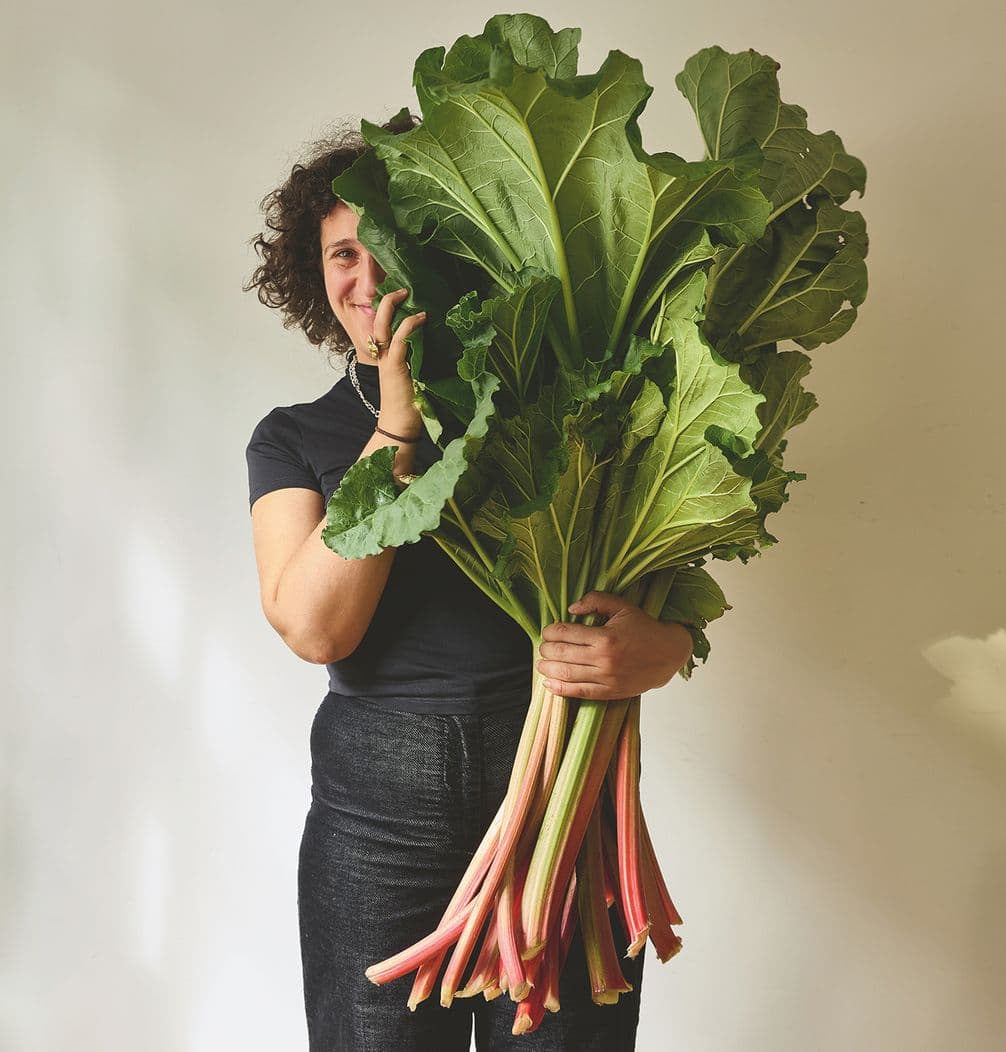
Helen Graham. Photo: Yuki Sugiura
From improvising with fridge leftovers in her youth to elaborate Jewish family feasts, we caught up with Graham to talk about memory, heritage and a standout dish from her cookbook.
I’ve always been passionate about cooking. I started baking early on, before hijacking family meals and enlisting my brother Mark as my sous-chef to make elaborate roasts. It was the era of Pimp My Snack – a website showcasing user-submitted guides to enormous versions of everyday snacks – and we’d make jaw-busting sandwiches with everything in the fridge.
At university food became even more central. I moved in with people who were seriously into cooking – on day one I walked in on my flatmate curing his own sausages. I spent my student loan making French classics like coq au vin and beef bourguignon, and my friends and I even did Come Dine With Me-style dinners, scoring each other’s meals meticulously.
It took me a while to get into professional kitchens, but once I did, the rest was history. I started on the opening team of the buzzy Mediterranean restaurant The Palomar in Soho, where head chef Tomer Amedi shifted how I thought about flavour – he is one of the most creative and wacky chefs I’ve worked with, a total Willy Wonka of flavour. I also had the privilege of working at the Ottolenghi Test Kitchen, where I learned how to write recipes that were innovative but precise, and most importantly, worked.
I have quite a small family – just me, my brother and my parents – but food was central to my Jewish identity, and most festivals revolved around it. At Rosh Hashanah there were big family meals, which always felt deeply celebratory. At Passover we’d go to my cousin Gloria’s, who would put on the most elaborate buffet spanning several tables – salt beef, brisket, latkes – a Jewish dream. She was so chic, elegantly swanning around as if it was effortless.
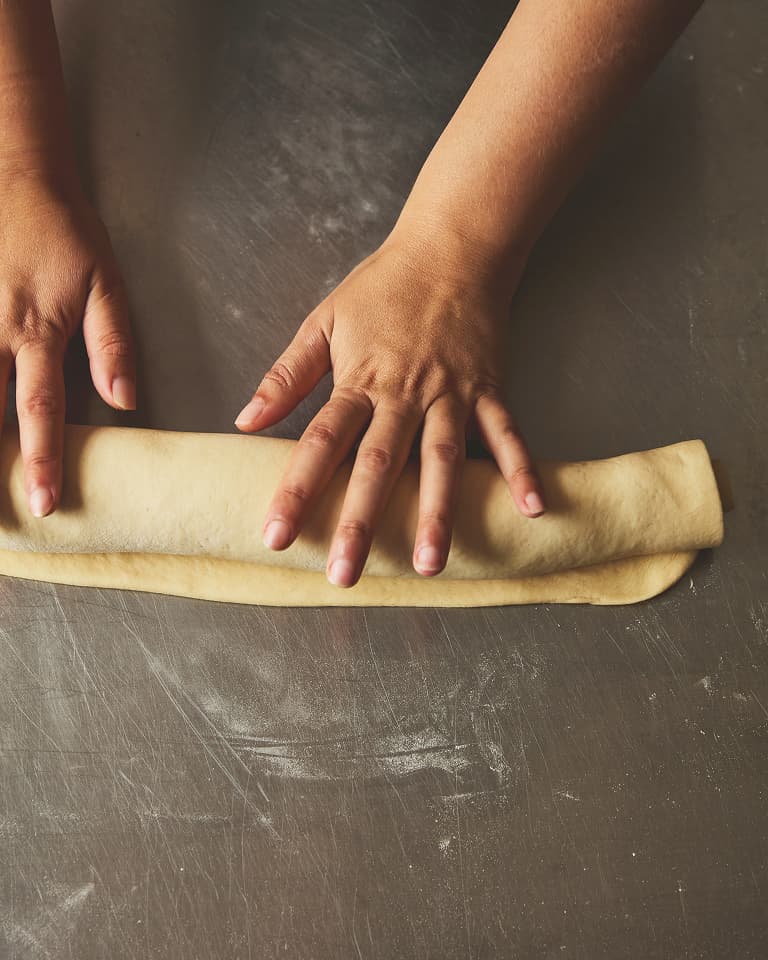
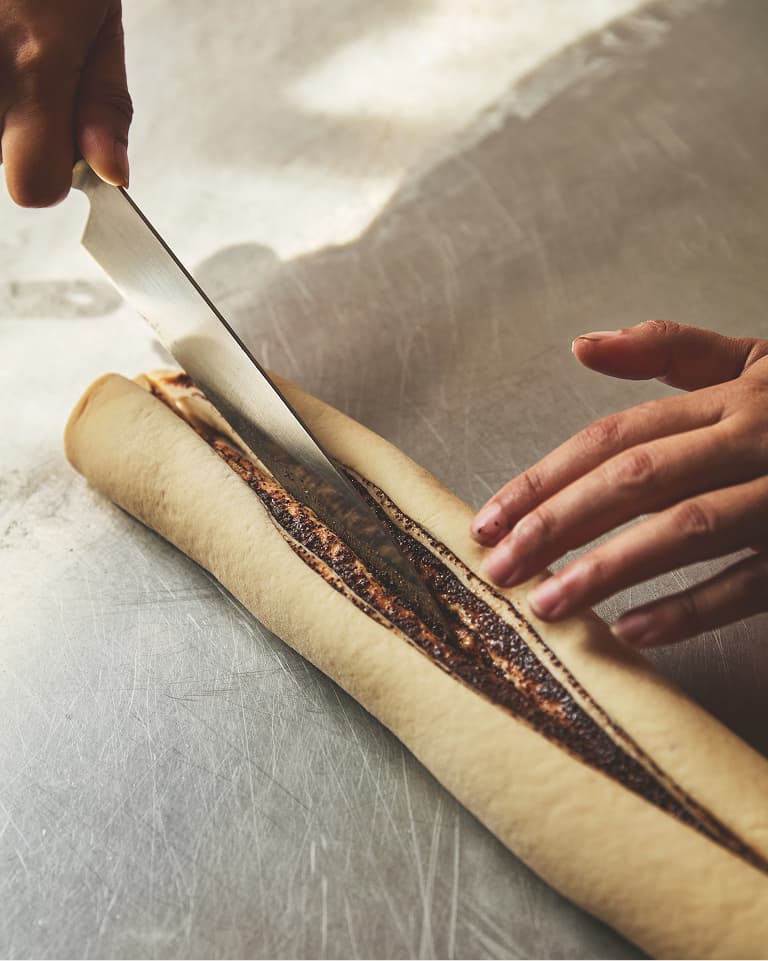
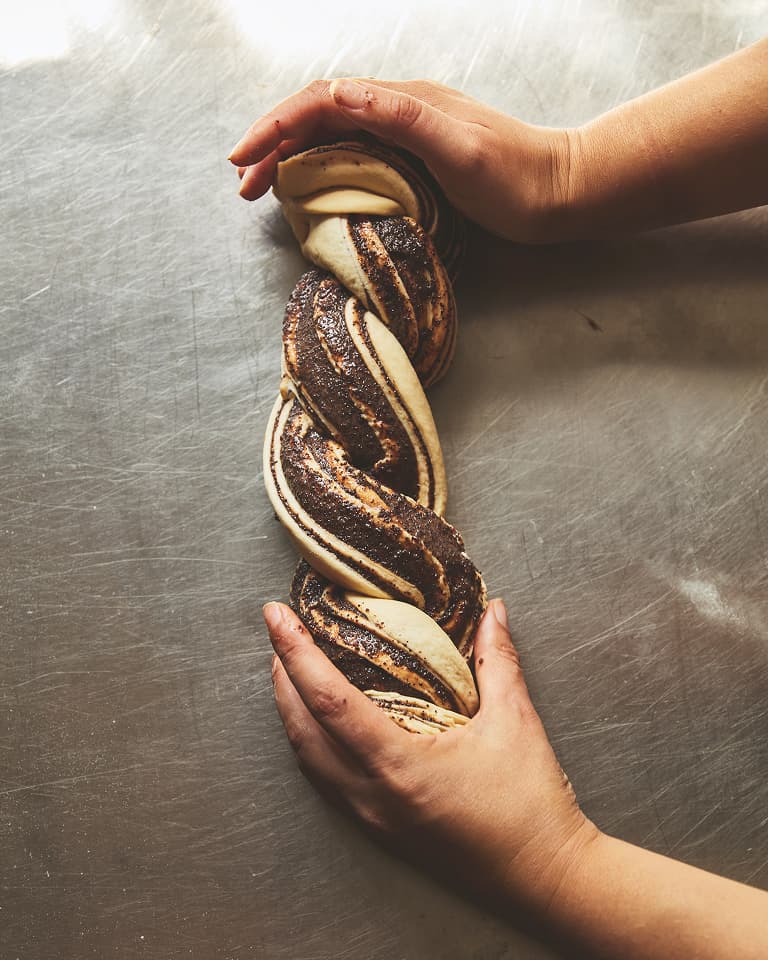
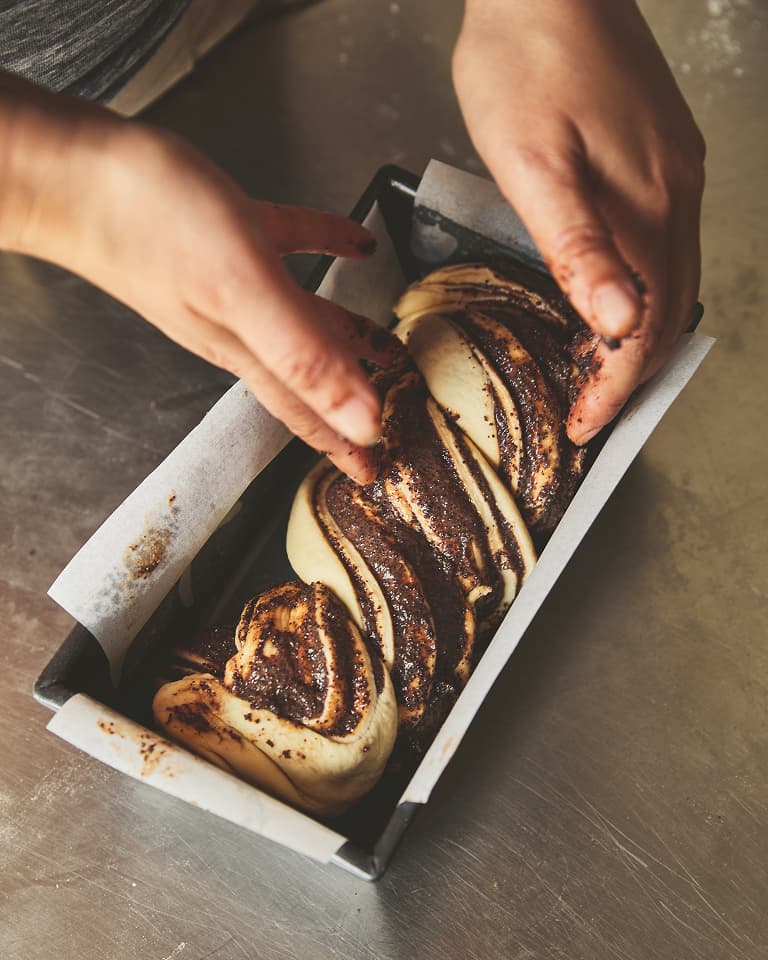
Sweet things were just as important. My mother would always bake mountains of cinnamon-spiked cookies, which were inhaled, as well as rugelach – my favourite – a croissant-like pastry layered with chocolate spread and soaked in sugar syrup, or little Danish pastries filled with sweetened cream cheese.
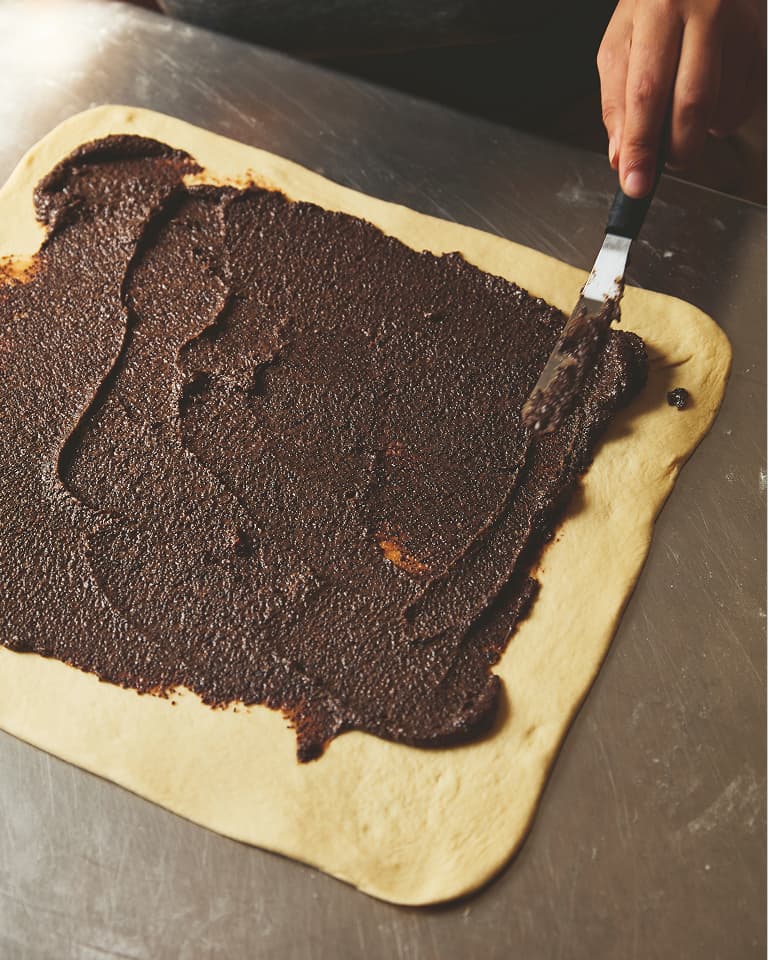
Helen making rugelach. Photo: Yuki Sugiura
My mother’s chicken soup – always with a light, floaty knaidlach (matzah ball). It’s so healing and I still crave it when I’m sick. My mother always offers to drive across London with some whenever I’m feeling under the weather. I could try to make it but I don’t think it would ever be as good as hers.
My biggest inspiration was Nigel Slater and his book Real Fast Food. It was so different to anything I’d seen before – the recipes were accessible, unfussy and immediate, and the photography felt real. It was a huge reference for the photography in my book too, shot by the talented Yuki Sugiura.
I’m from an Ashkenazi Jewish background, so I grew up eating a beige (but delicious) palette of food such as schnitzel, salt beef and gefilte fish (fish balls in a jelly of fish stock – yep, an acquired taste). It’s comfort food to me – it instantly makes me feel grounded and nostalgic. It was only when I discovered food from the Jewish diaspora and Sephardic cuisine that my style really started to take shape.
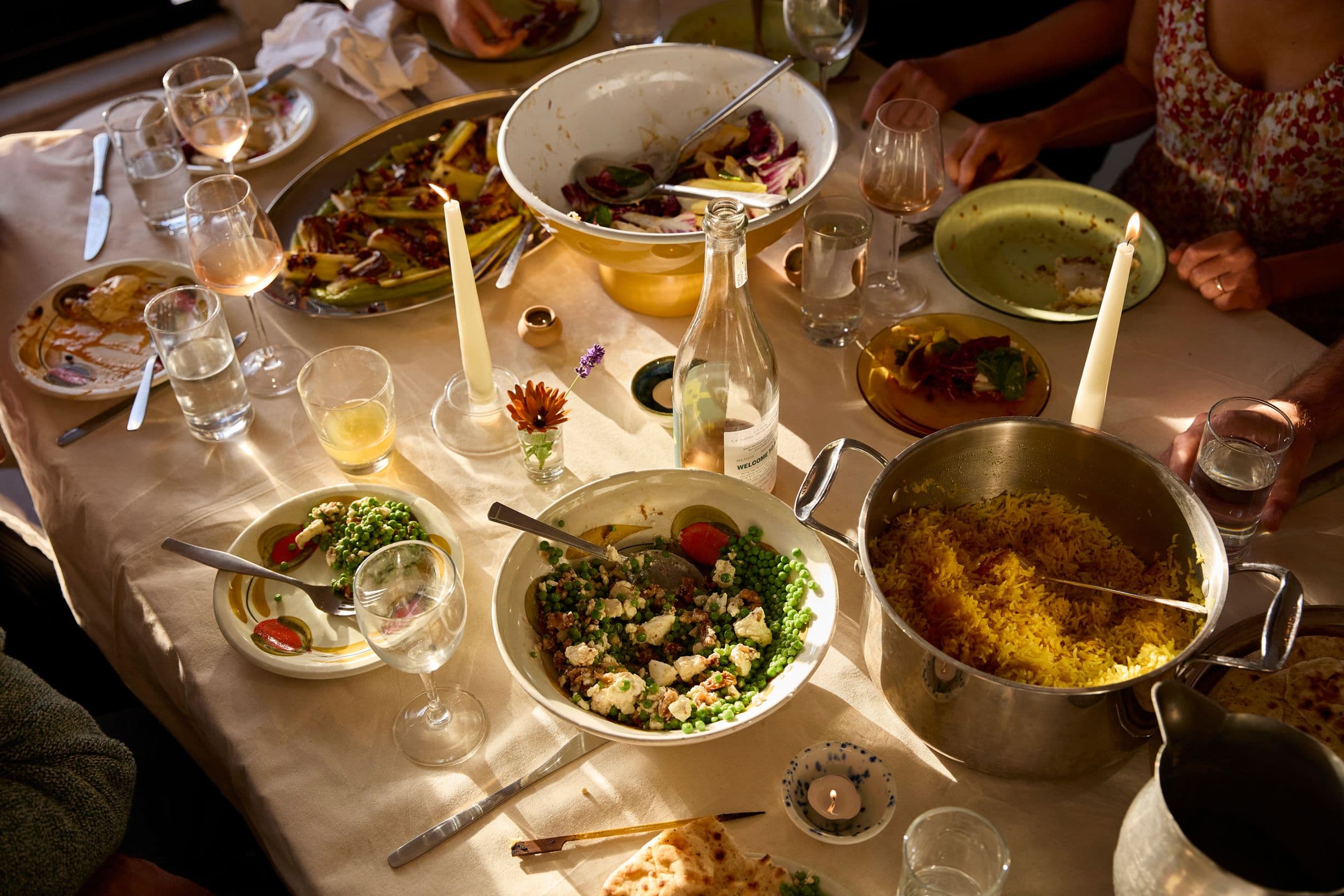
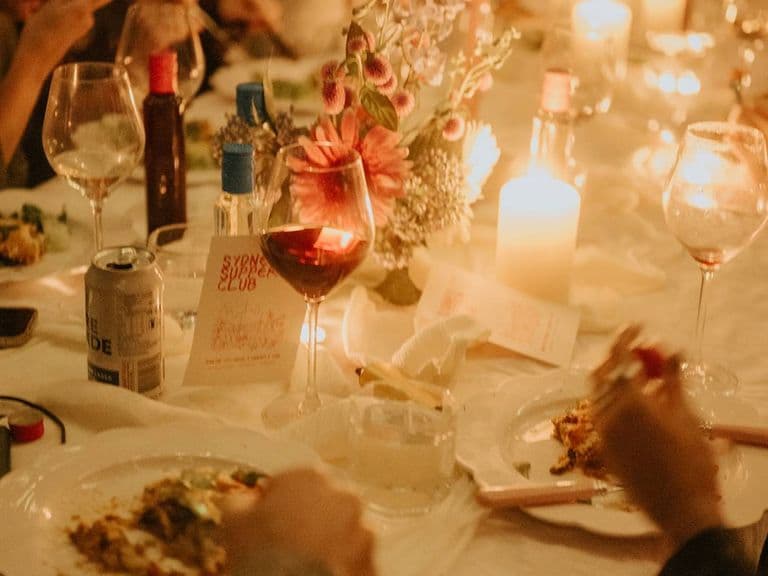
Dinner at Helen’s. Photo: Yuki Sugiura
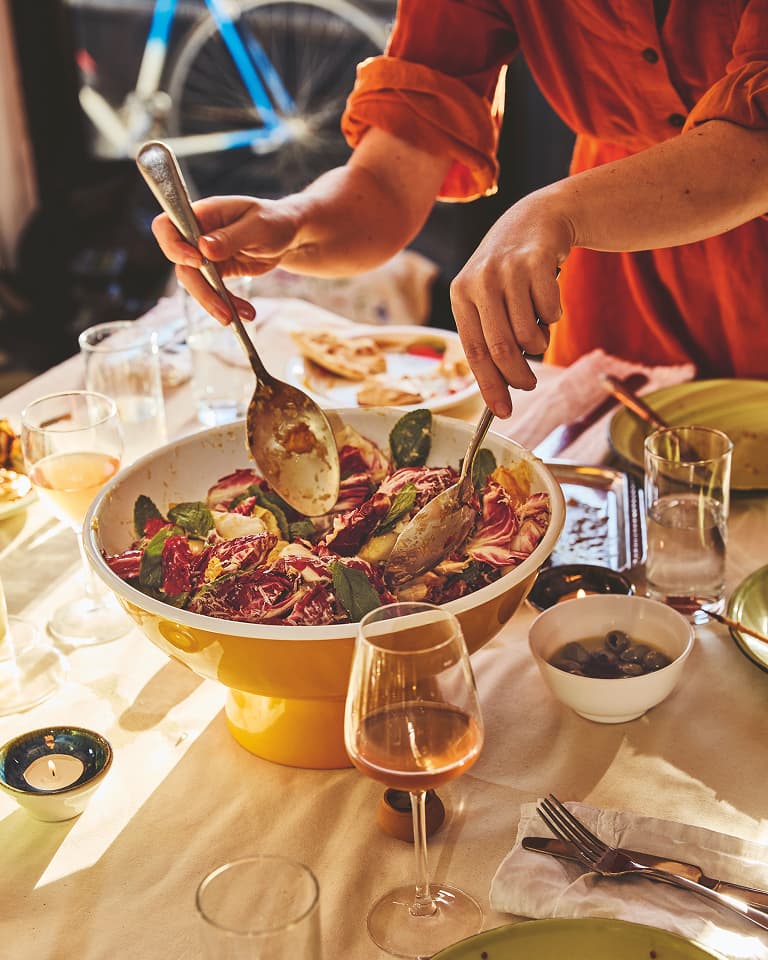
Table settings. Photos: Yuki Sugiura
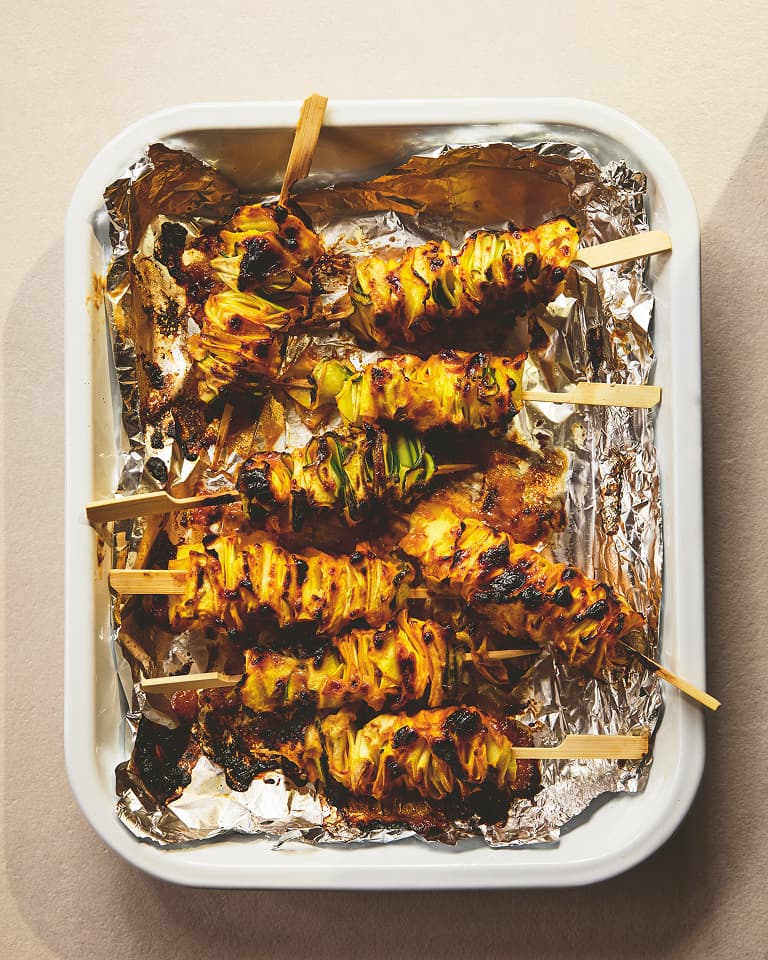
Courgettes with preserved lemon
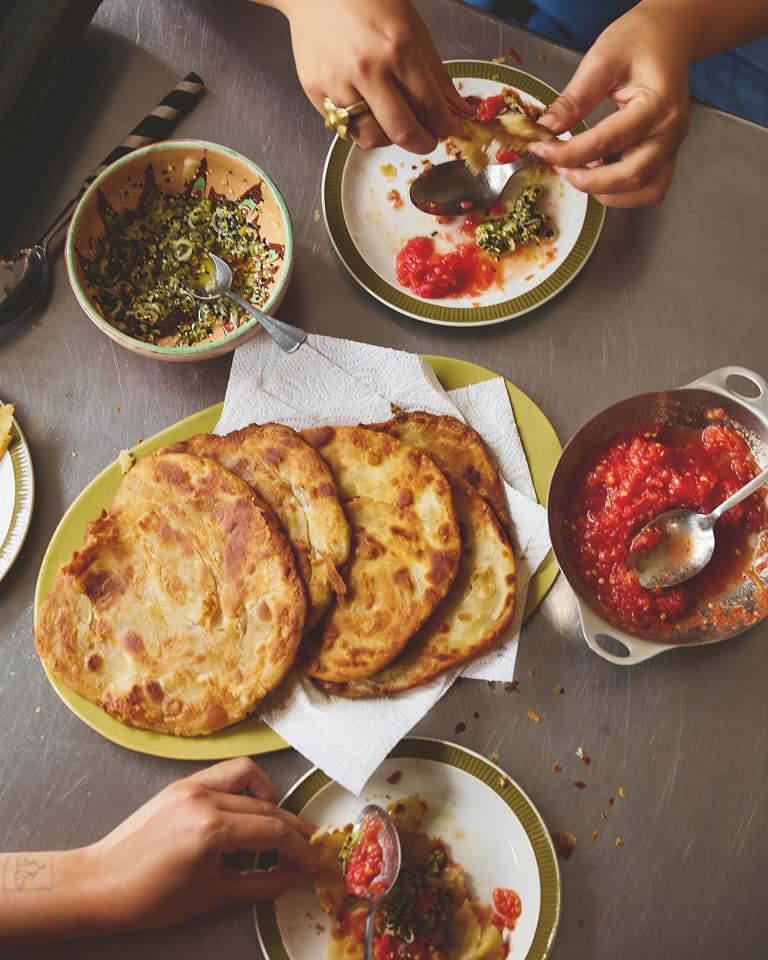
Garlic butter malawach
I would describe my style as playful. I like to incorporate a surprising, fun ingredient into most dishes, something that makes you do a double take when you taste it. London-based cook and food writer Ed Smith recently described my style in his Substack Rocket & Squash as, “Inquisitive and innovative but also quite chill: meals and dressings are made from scratch, but faff is not entertained.” I like that.
My favourite restaurant is 40 Maltby Street in Bermondsey. It’s so special and singular, and it brings me so much joy. I also love Little Duck The Picklery, Towpath and Cafe Cecilia. They all feel timeless and classic. I go to Turkish restaurant Mangal 1 in Dalston more than anywhere else when I need a meat fix. I usually order the sweetbreads or lamb ribs – they are mouthwateringly good. The restaurant is quite raucous and no-frills – which is how I like to eat. You can often spot Gilbert and George quietly sharing a grill in the corner. I think they come almost every night, which is a testament to how delicious the food is.
A lot of my recipes are a collage of memories – food I’ve tasted in restaurants or on holidays – but also an imagined sense of my wider identity. That sounds incredibly pretentious, but it’s true. Sometimes they’re influenced by dishes I’ve seen on Instagram, and I think the lines can blur between what you’ve actually experienced and what you feel like you’ve experienced second-hand online. Centrepiece is really about all of those things coexisting in a way that reflects me, my Jewish identity and my broader experience.
It’s the Ashkenazi egg mayonnaise, which is one of very few Ashkenazi-inspired dishes in the book. It was born out of the egg mayo appetiser we’d have at Shabbat dinners. We’d usually eat it as a simple dish of eggs with a spoonful of mayo over the top. The recipe in the book isn’t my mother’s, but it’s definitely inspired by it, and by egg and spring onion being a classic Jewish bagel filling. I went a bit wild with how I created this version, caramelising onions in loads of oil to make the mayonnaise. I’m certain my ancestors would be big fans of this new iteration of a Jewish classic.
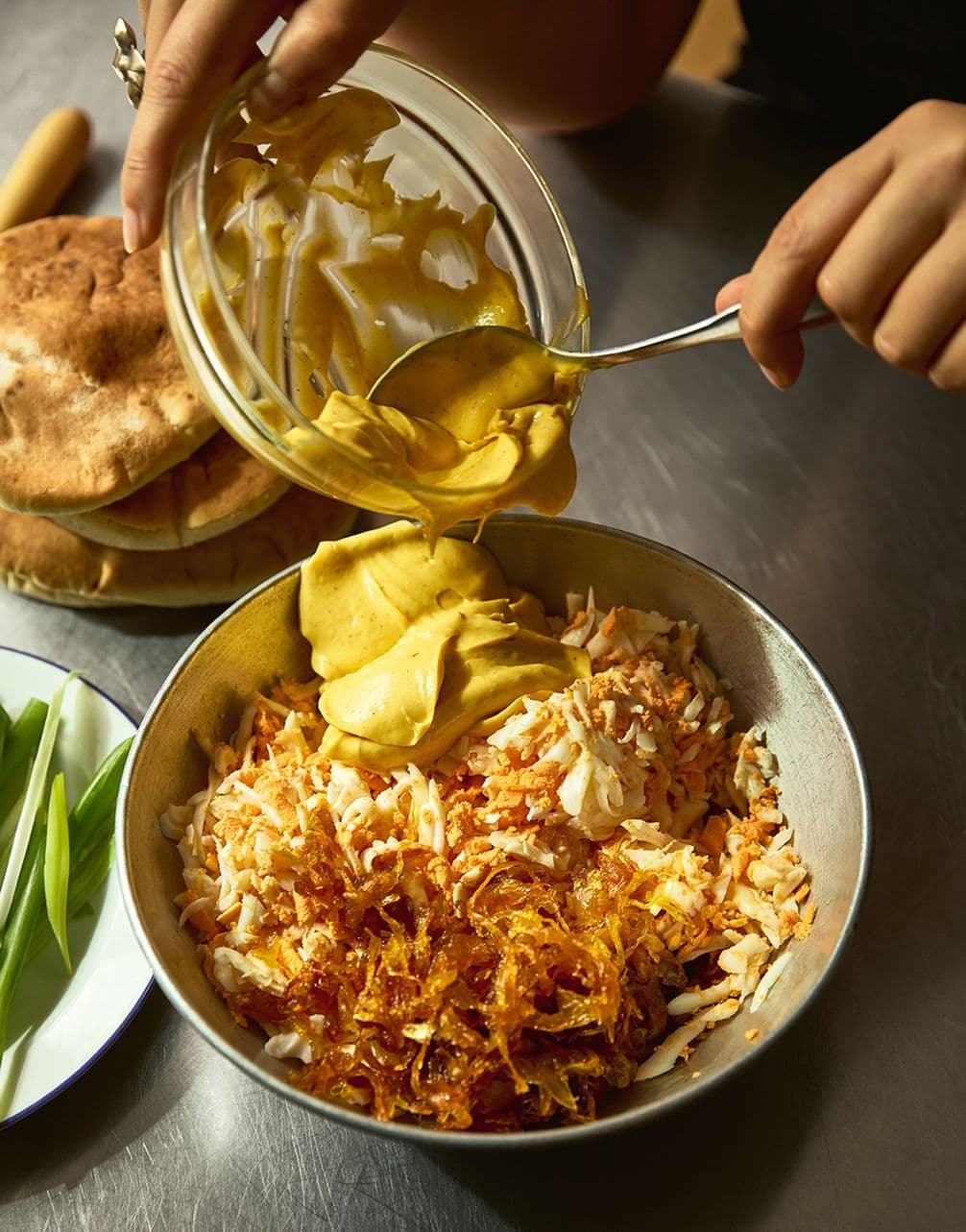
Helen’s Ashkenazi egg mayonnaise. Photo: Yuki Sugiura
Serves 4 as a small plate
Ingredients
For the onions
200ml neutral-flavoured oil
2 onions, halved and finely sliced
½ tsp fine sea salt, plus more to boil the eggs
6 eggs
For the mayonnaise
1 egg yolk
1 tbsp Dijon mustard
1sp white wine vinegar
½ tsp freshly ground white pepper
½ tsp fine sea salt
Method
Set a frying pan over a medium-low heat, add the onions and salt and sauté gently for 30 minutes until golden. Place a sieve over a heatproof bowl and strain them, then transfer the onions to a mixing bowl.
Cover the strained oil and place it in the fridge until completely cold, which will take around two hours. (If you use warm oil to make mayonnaise it will split, so this is very important!) If you’re in a rush, put the oil in a food storage container and place it in the freezer for an hour.
Bring a saucepan of salted water to the boil. Boil the eggs for eight minutes, then drain and plunge into cold water until cool. Shell the eggs and grate them on the coarse side of a grater, then add to the mixing bowl with the onions.
For the mayo, place a damp cloth under a small bowl to ensure it stays still while you whisk. Put the egg yolk in the bowl, add the mustard and vinegar and whisk together. Slowly whisk in the chilled oil in a steady stream until the mixture thickens and reaches a mayonnaise-like consistency. Season with pepper and salt. If your mayonnaise splits, transfer it to a jug, clean and dry the bowl and tip in another egg yolk. Slowly whisk the split mixture into the egg yolk, as you did the oil, and it should come together again.
Add the mayonnaise to the eggs and onions, stir to combine, then either serve immediately, or (ideally) leave in the fridge overnight for the flavours to meld.
How to serve
I like to eat this with challah bread or matzah crackers, or stuffed into very fluffy pitta breads with spears of spring onion for a bit of crunch.
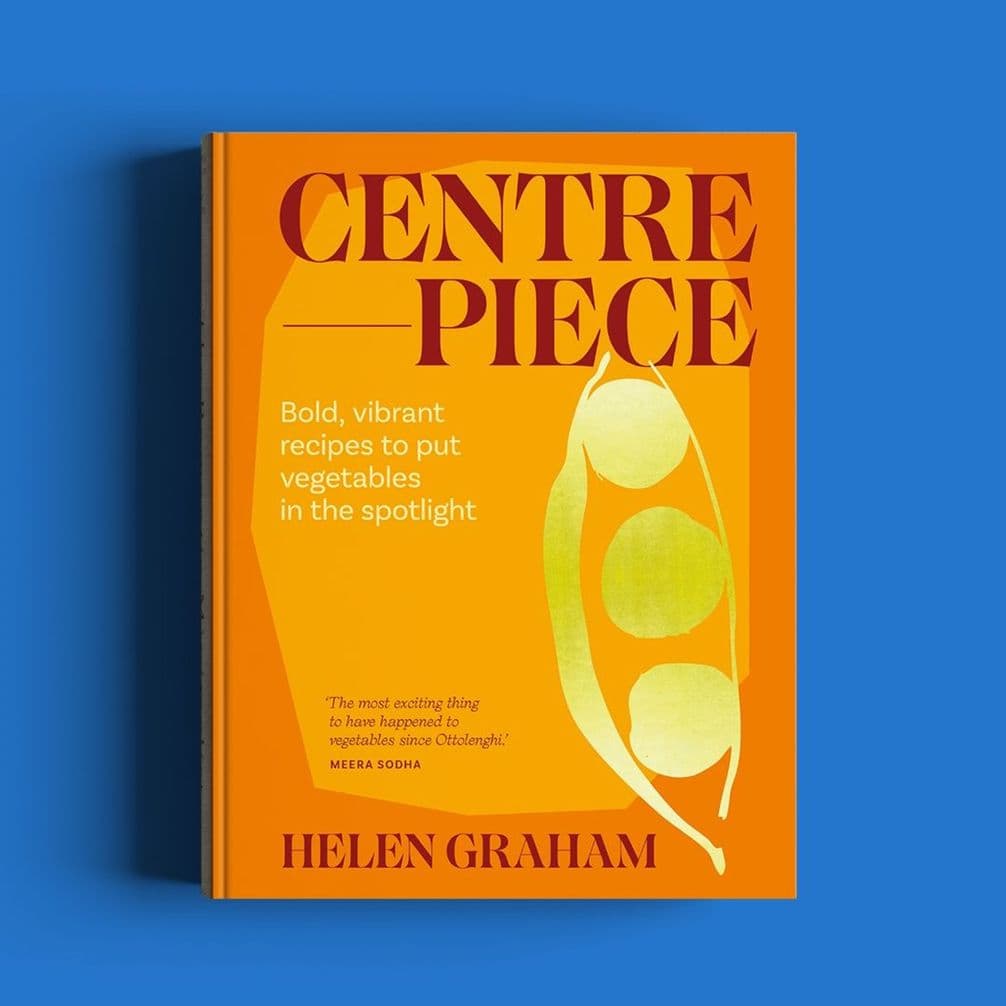
Centrepiece by Helen Graham is published by Octopus Books and is available now.
Discover memories faster with exclusive features like facial recognition and smart albums.




&w=96&q=75)
Jun 17, 2026∙6 min

&w=96&q=75)
Aug 17, 2026∙7 min
&w=96&q=75)


 United States