


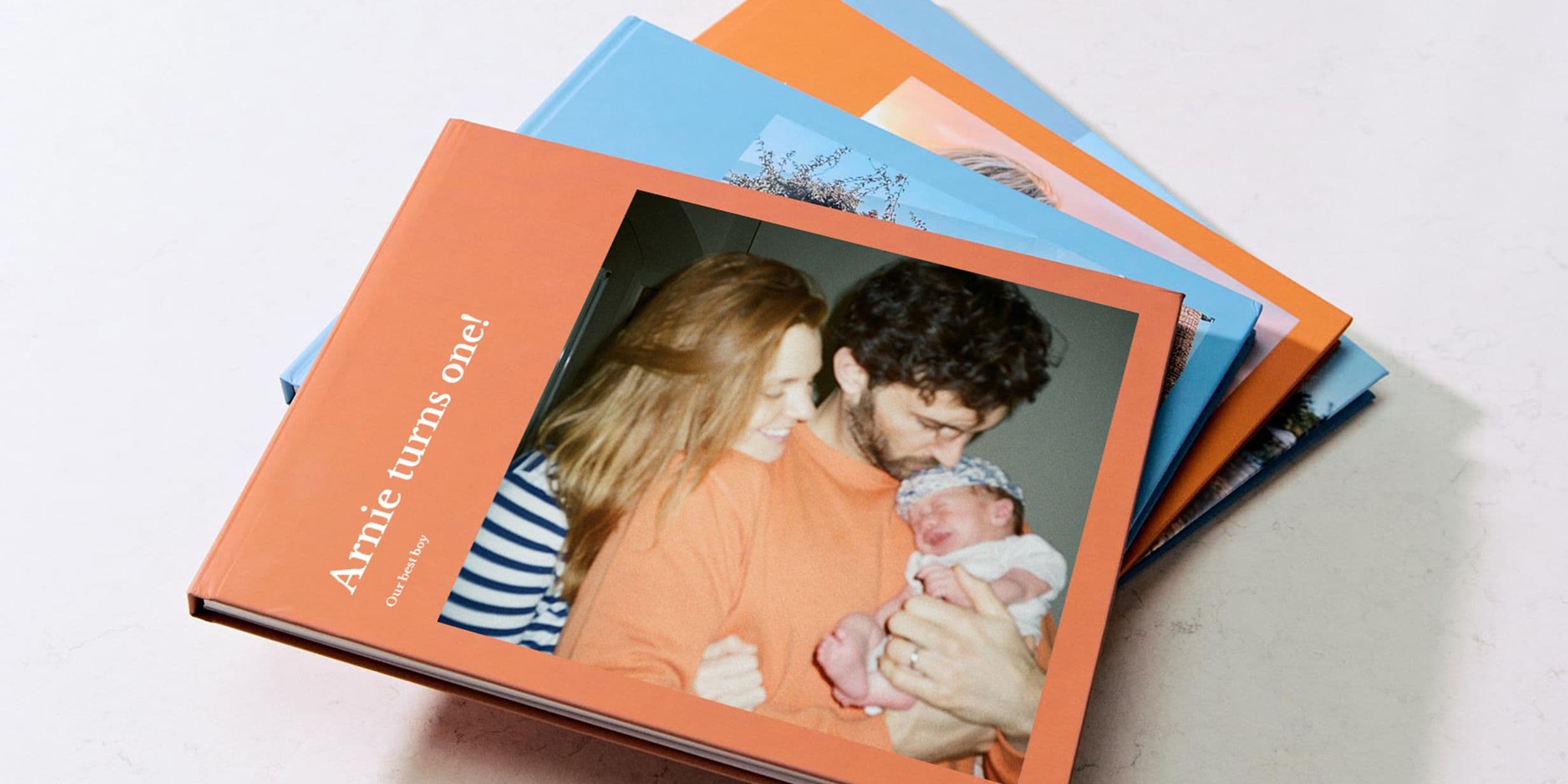
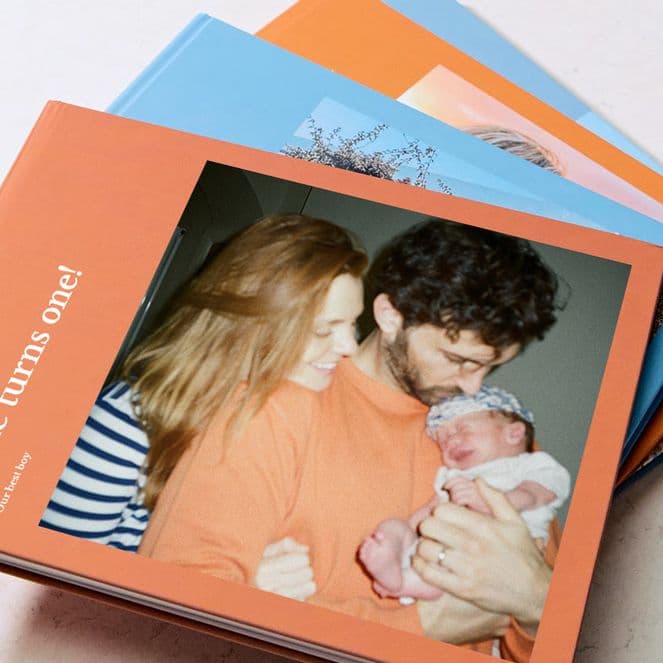
The problem with family photos isn’t that there aren’t enough of them – it’s often that there are too many, spread across too many places, with no obvious shape to them. Before you start the design process, it’s worth spending time on the organization – a well-sorted photo library makes the difference between a book you’re proud of and one you abandon halfway through.
What makes a good family photo book?
The best family photo books have a clear sense of what they’re about. A book of your child’s first year reads very differently to a decade of family holidays, or a gift for a grandparent who wants to see the grandchildren growing up. The focus doesn’t need to be narrow, but it does need to exist. The most touching family books tend to have a point of view centered on a particular time or celebration. That clarity shapes everything that follows including which photos to include and how the pages are structured.
Find the photos you’ve forgotten about
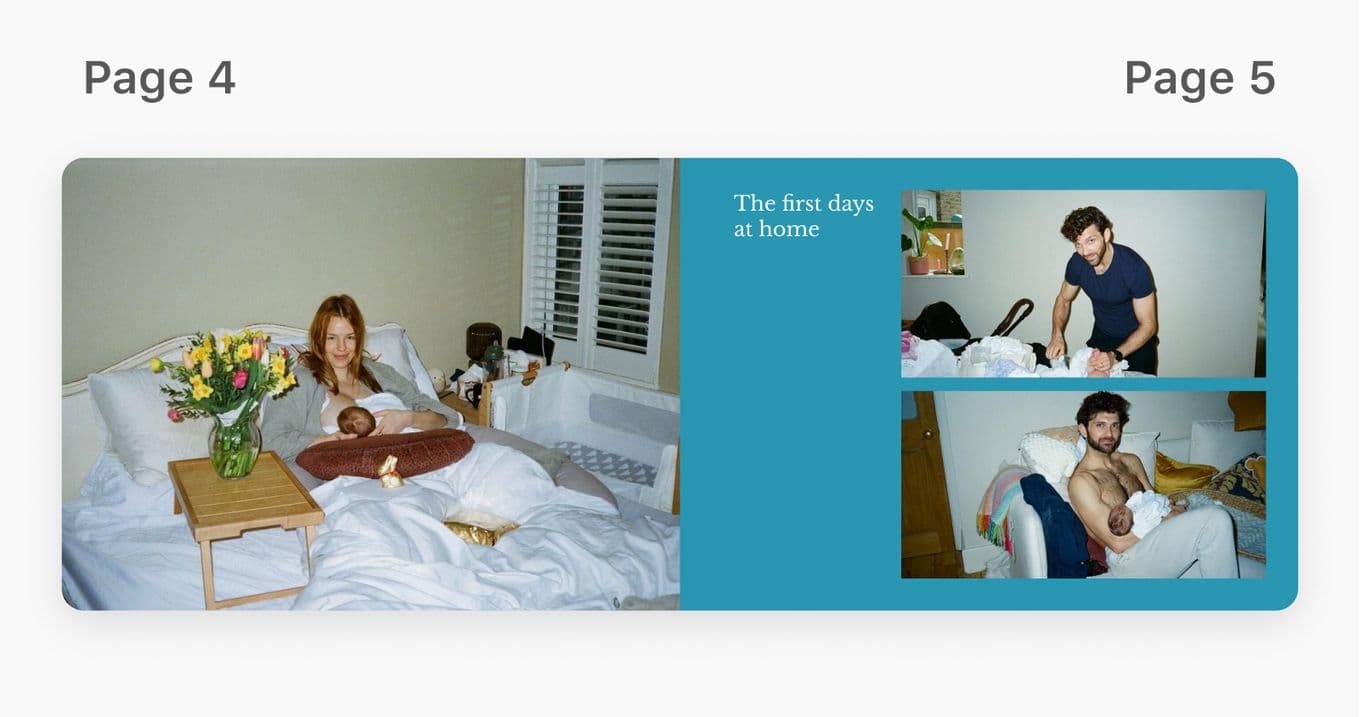
Family photos have a way of scattering. The ones from 2015 are on an old phone; the ones from Christmas are in a WhatsApp group; the ones from your child’s first birthday are on your partner’s camera roll. Before you start selecting, gather everything into one place – a shared album, a folder on your desktop, a cloud library. It takes time, but it’s time well spent. While you’re at it, ask other family members. Grandparents, siblings and aunts and uncles often have photos you’ve never seen, and crucially, ones where you’re in the frame too rather than behind the camera.
Sort before you select
Once everything is in one place, sort chronologically before you do anything else. It’s much easier to edit down a timeline than to try to impose order on a muddled collection. Go through and make a first pass – not selecting the final images yet, just removing the obvious rejects such as duplicates, blurry shots and photos where everyone’s eyes are closed. You’ll likely find you still have far more than you need, which is the right problem to have. A second, stricter pass is where you start choosing the ones that set the narrative.
Structure in sequences, not individual shots
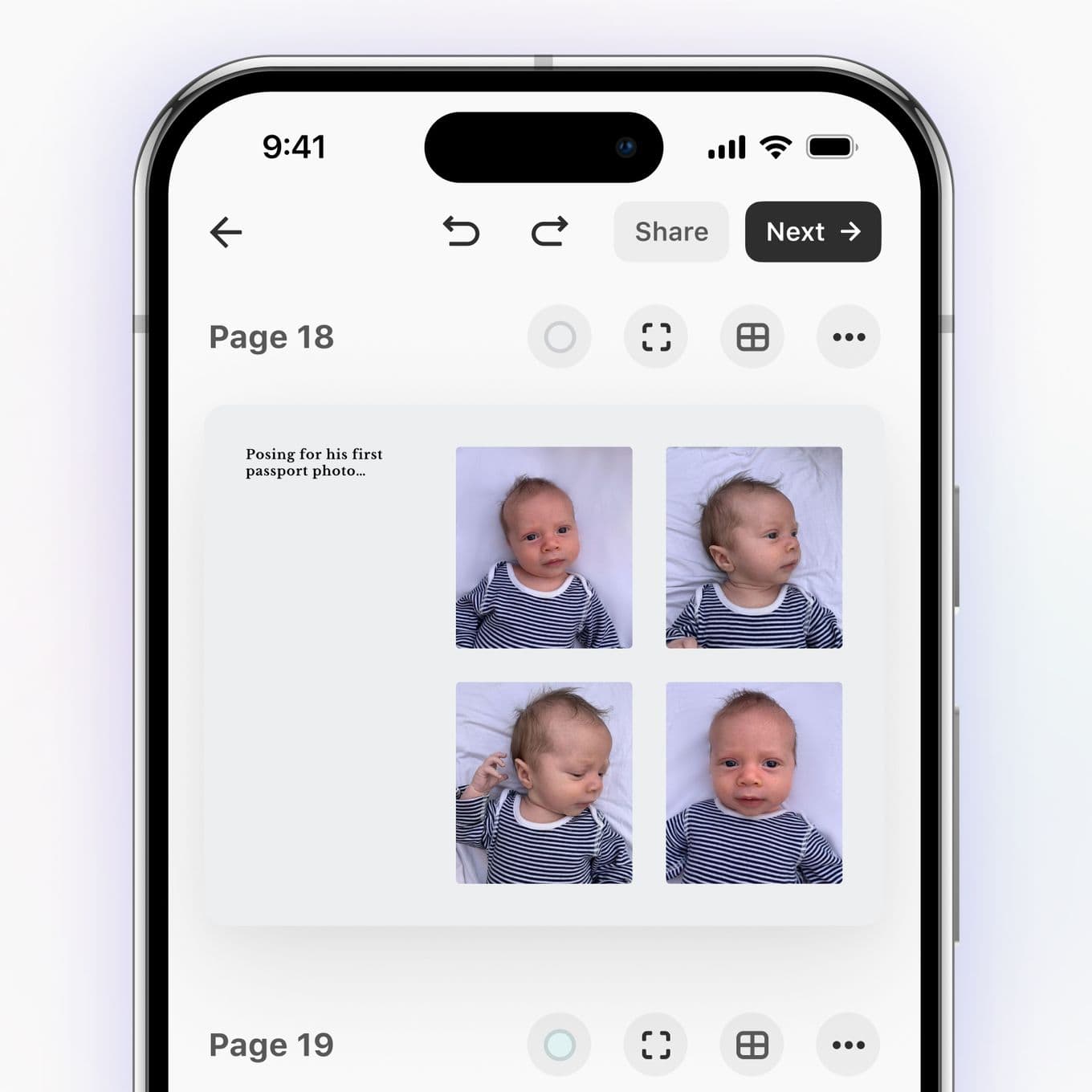
The instinct is to pick the best individual photo from each occasion. But photo books work better when you think in short sequences – two or three images that show the before, during and after of a moment. A birthday, a holiday or the first day of school each have a natural arc. Selecting with that in mind gives the pages a rhythm and makes the book feel like it’s moving rather than just displaying. A single standout image can carry a full page, while a sequence of three earns a spread.
Don’t forget the quiet photos
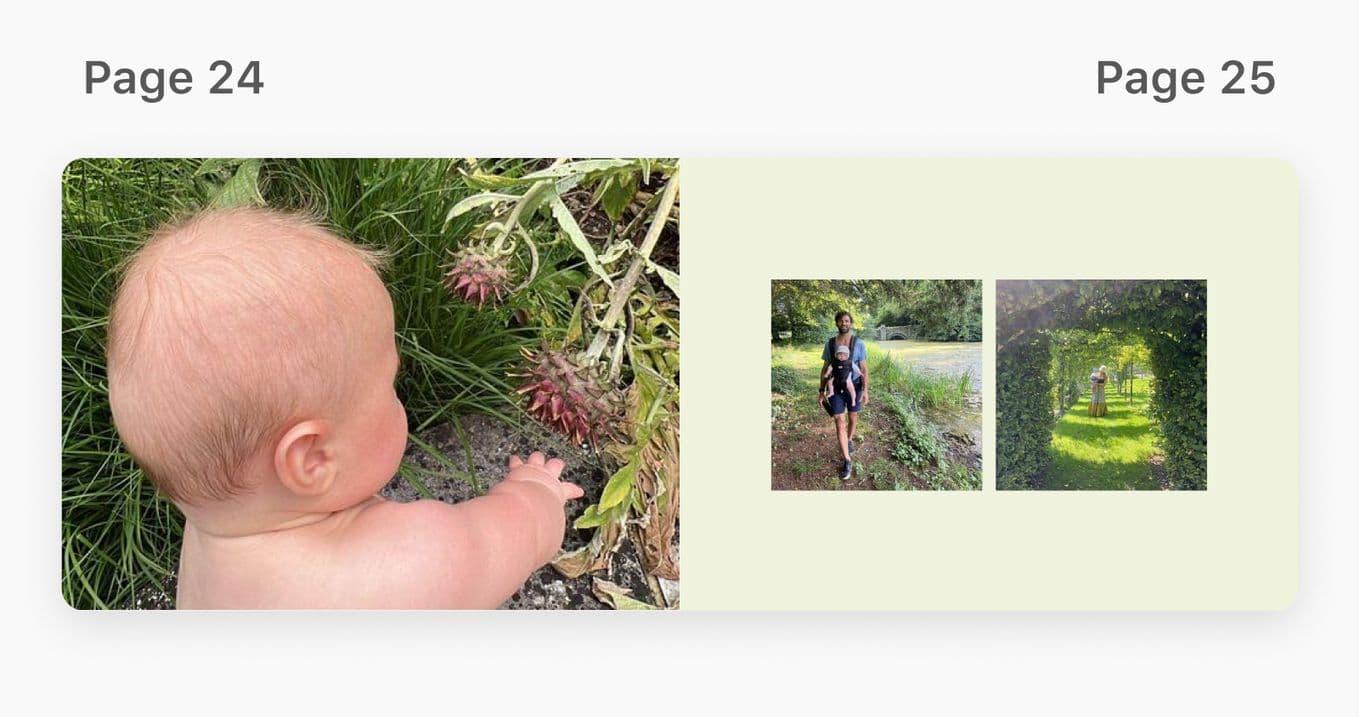
The ones people linger over in family photo books are rarely the posed ones. They’re the in-between moments – someone asleep on the sofa, a child concentrating hard on something, a meal half-eaten, a garden in a particular season. These photos give a book texture and intimacy. Make a point of including a few from each period you’re covering, even if they don’t seem significant at first glance. They often turn out to be the ones everyone talks about.
Designing your family photo book
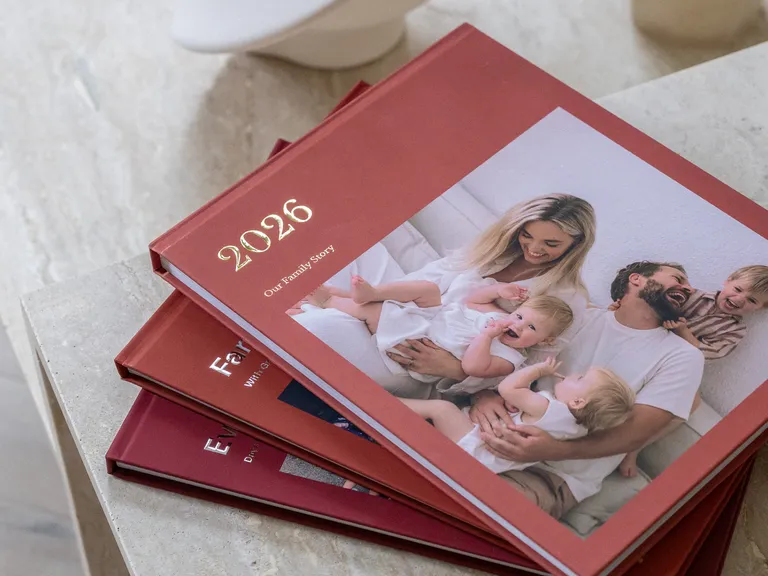
A well-organized library makes the design process much more straightforward. When your photos are sorted chronologically, grouped into sequences and edited down to the ones that matter, the structure of the book tends to reveal itself. For guidance on choosing the right size, format and layout for a family photo book, take a look at our family collection for everything you need to know.
Download the app
Discover memories faster with exclusive features like facial recognition and smart albums.



&w=96&q=75)
&w=96&q=75)



 United States