Documenting the everyday across two countries, two cultures and two homes

Living between London and a tiny Italian coastal town raises questions about identity and belonging. For Emma J Page, the camera became a way to reconcile vastly different worlds.

Emma J Page

16 Mar, 20262 min

Documenting the everyday across two countries, two cultures and two homes

It’s probably one of the least perfect pictures I’ve taken: a cup and saucer balanced precariously on the edge of an unmade bed, the context almost bleached out by the sunlight straining through barely opened window shutters. There’s an unintentional emphasis on the ceramic bedroom floor and no real focal point to speak of.

Fortunately, it won’t be leaving the confines of my camera roll any time soon. It’s a snap, rather than a carefully composed portrait. But it was taken to capture a moment, and in that it succeeded. When I look at it, four years later, I know exactly how I felt that January morning. I can conjure the chill of the tiles on the soles of my feet as I padded across the room, the thrill of unfamiliar surroundings still lingering after my first night in a tiny Italian coastal town. I remember the warmth of that first sip of tea in a cup sequestered from my London kitchen. I had just left behind the depths of a city winter, trading it for unexpected sunshine and the sound of waves crashing against the rocks. But most of all, I recall the promise of a chapter yet to unfold.

Since then, picture taking has gradually become my way of reconciling two worlds. What started as a temporary interlude at the tail end of the pandemic, having transplanted myself to Italy to work on an interiors book, has evolved into a life split equally between London and the Amalfi coast. A few weeks after that photo was taken, in postage-stamp sized Minori, I met my boyfriend. And though dividing my time between two worlds is an adventure that’s thrilling in many ways, it’s not one that’s without its challenges.

Navigating unfamiliar dialects, cultures and customs is part of daily life in Italy; meanwhile returning to London every 12 weeks is bound up with the urgent need to renew cherished friendships and get to grips with a constantly changing work and cityscape. Life is neatly packaged into three-month parcels of time in each country, but the reality can often feel less than orderly – straddling two cultures gives rise to an inevitable tangle of complex questions: how much is identity bound up in our surroundings? Do we belong to a place or does it belong to us? Can we really be known outside of our previously uninterrupted context? And what is home?

Navigating unfamiliar dialects, cultures and customs is part of daily life in Italy; meanwhile returning to London every 12 weeks is bound up with the urgent need to renew cherished friendships

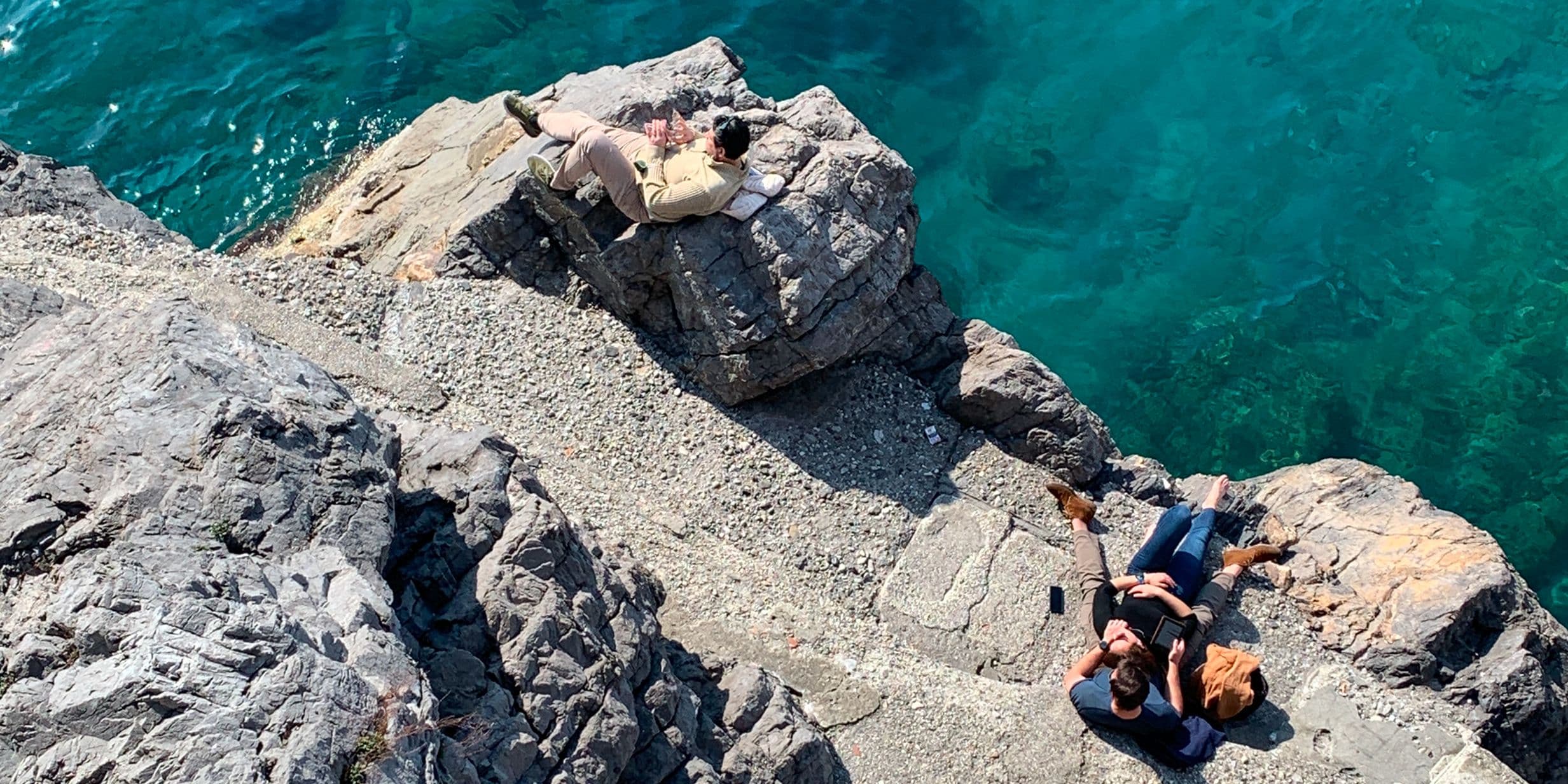
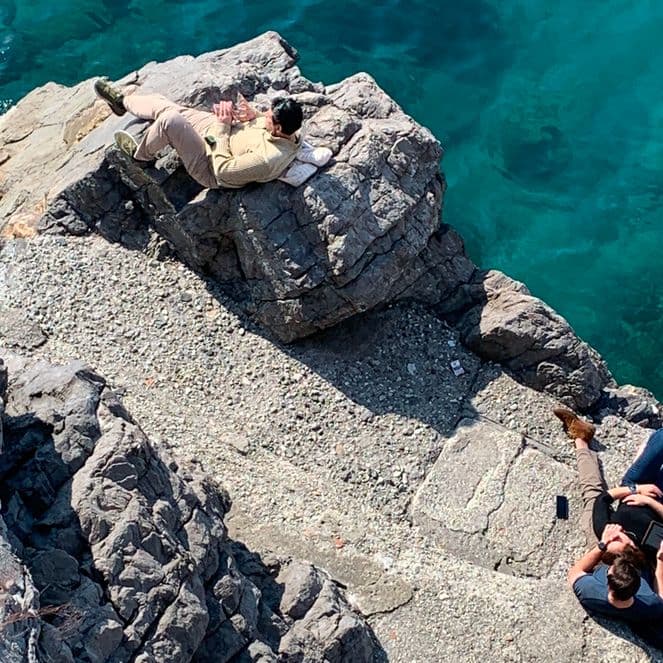
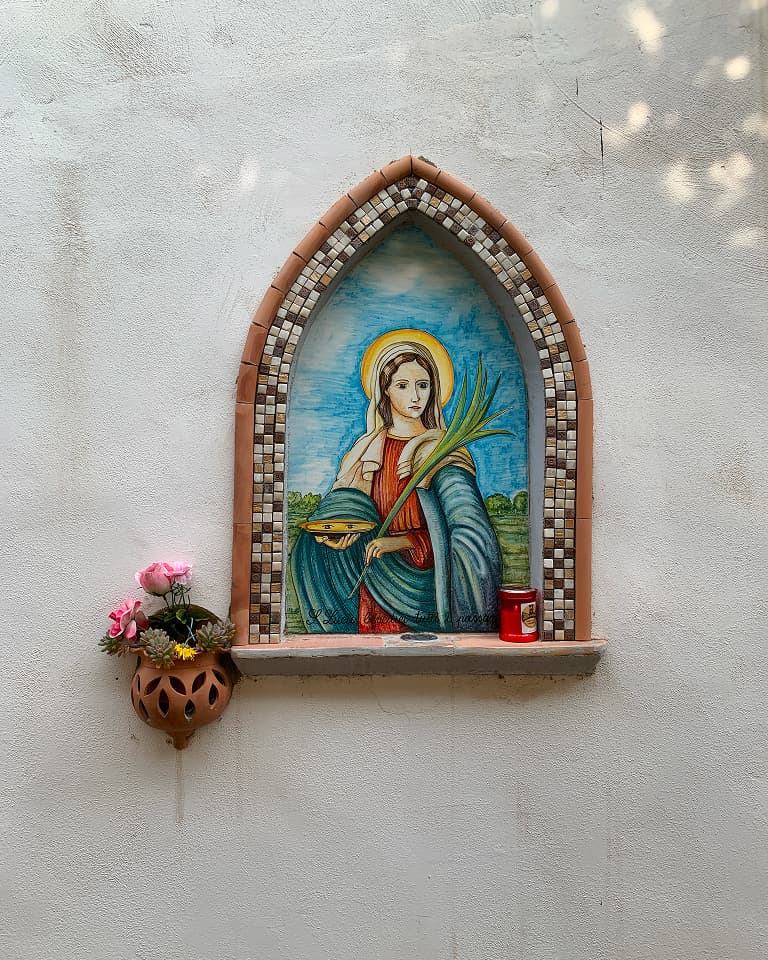
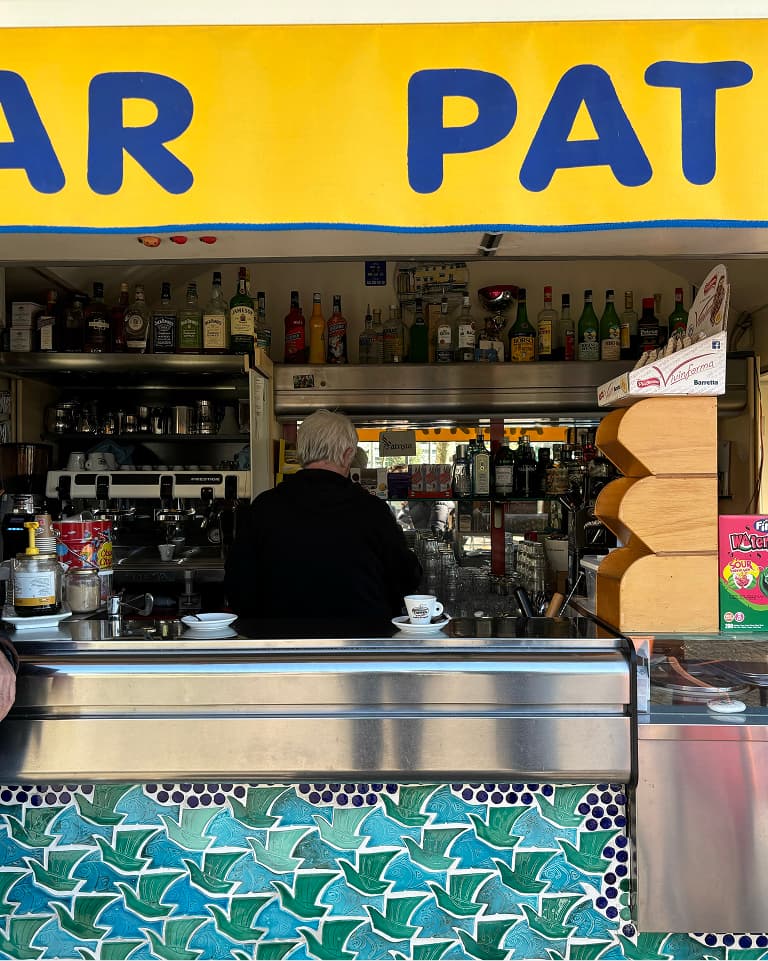
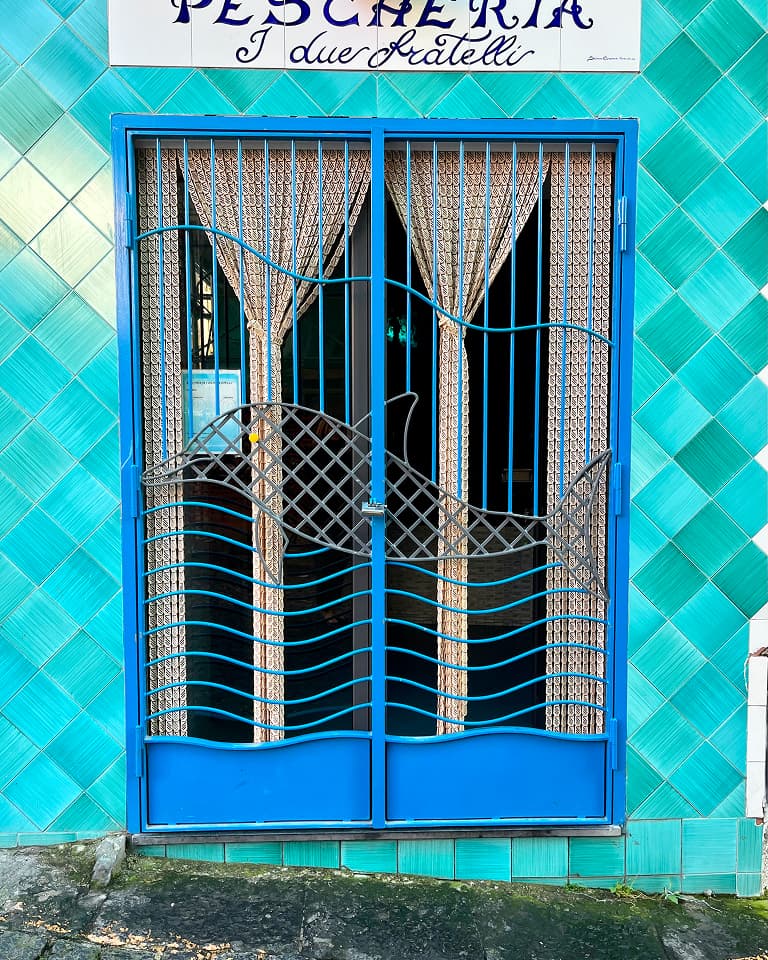
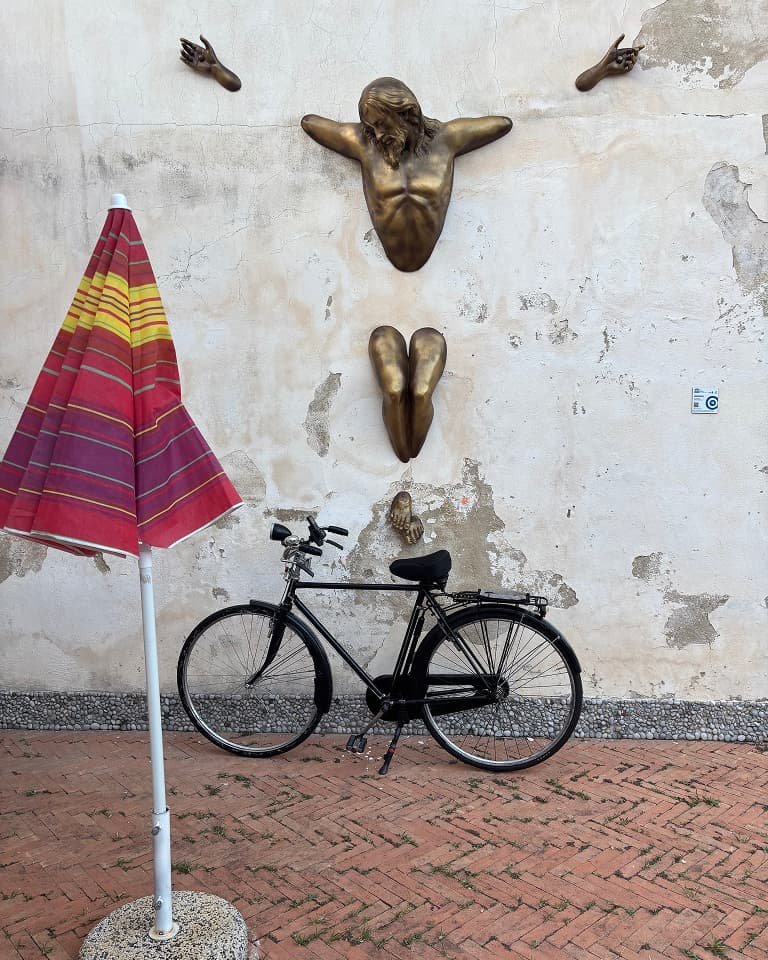
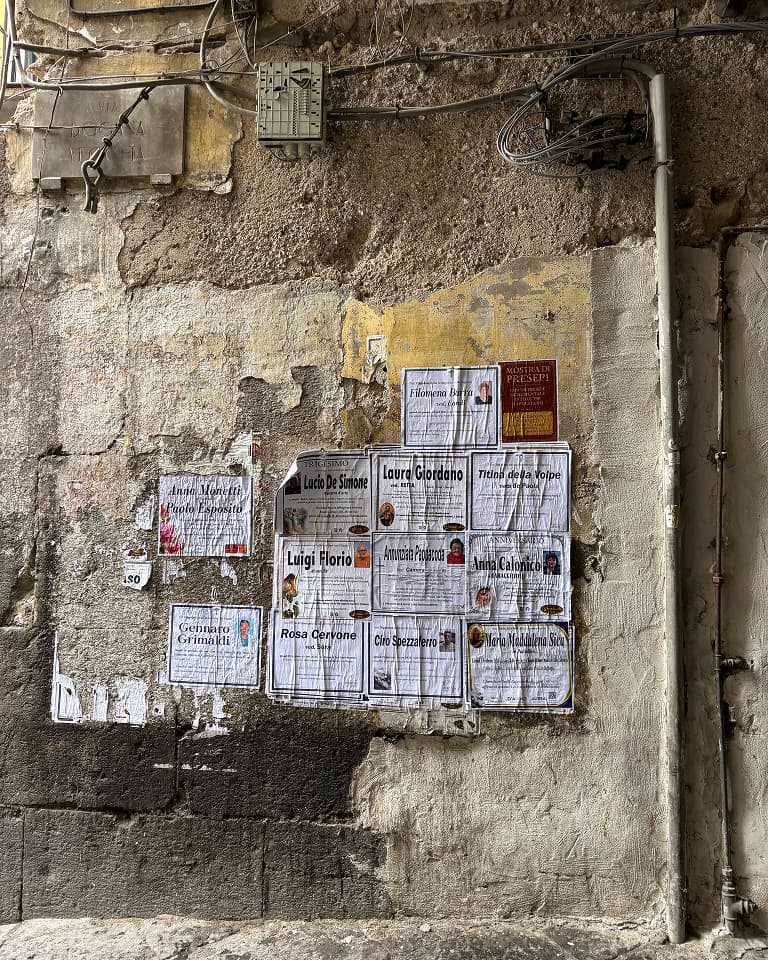
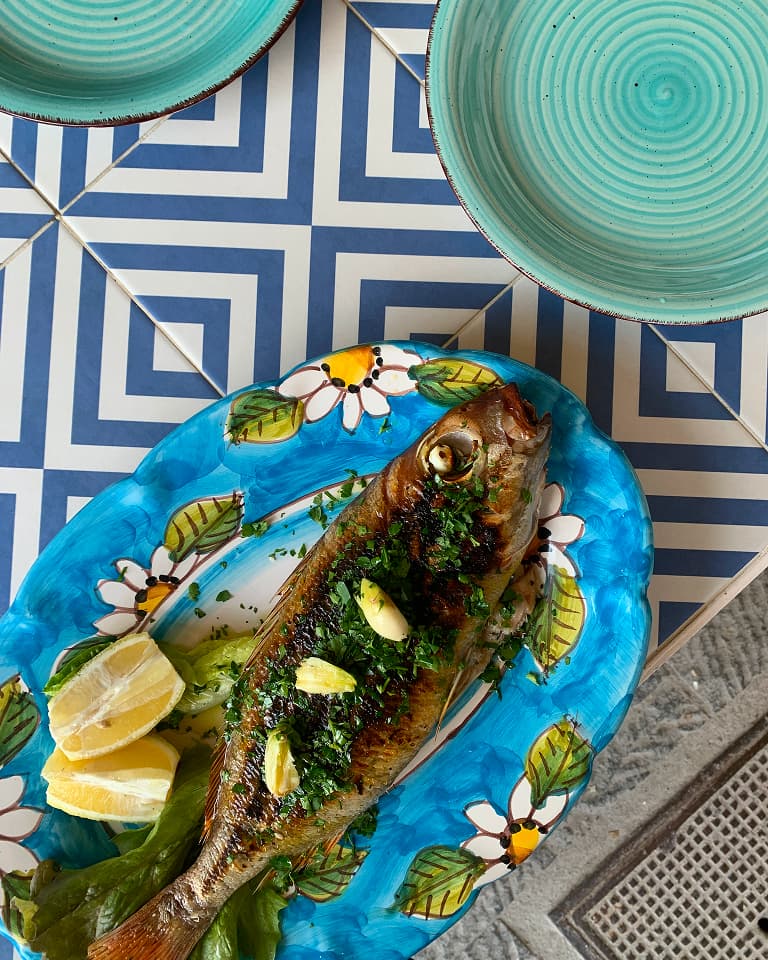
The answers do not come easily, but rather, they unfold over time. Reconciling disparate lives becomes harder the more incongruent those two existences are - and I have not made the straight swap of a city for a city, but a capital for a fading world in microcosm. Minori is a village where shrines of the Madonna are chiselled into mountain ledges; where locals gather at Patrizia’s kiosk on the lungomare to trade gossip over an espresso each morning; where tattooed young men quietly cross themselves as they pass the church and where every shop pulls down its shutters at lunchtime for four hours. The whole of it could fit into Heathrow’s Terminal 5 with room to spare. And yet, there is so much to observe in this colourful tapestry: a bicycle propped against a crumbling wall; a man leaning across a still running scooter to paste the latest death notices on the main street; women gathered outside the hairdresser’s smoking, their heads covered in foils; the way ribbons of plaster pink paint spool themselves down the crumbling walls of my apartment building. The Minoresi walk past all of these without a second glance, but I have the privilege of viewing it all through the eyes of an outsider. Documenting life’s daily moments through my camera lens – both in Italy and in the UK – has been the first step in slowly bridging two identities. It’s my attempt to both stand apart from the milieu and to integrate myself within it.

Capturing the quotidian in this way feels surprisingly analogue. It’s not about creating a perfectly framed shot for social media, though I do find community there. It’s more reminiscent of the allure of the disposable camera, which depicted life as it unfolded, as opposed to life being shaped by the pursuit of content, something that still feels anathema to me. Sometimes I take a deeply imperfect picture to capture a feeling; sometimes the beauty is in the photo itself. The bonus is that digital allows me to retake a photo, but I try not to get hung up on the details. I might straighten a corner but filters are a no-no.

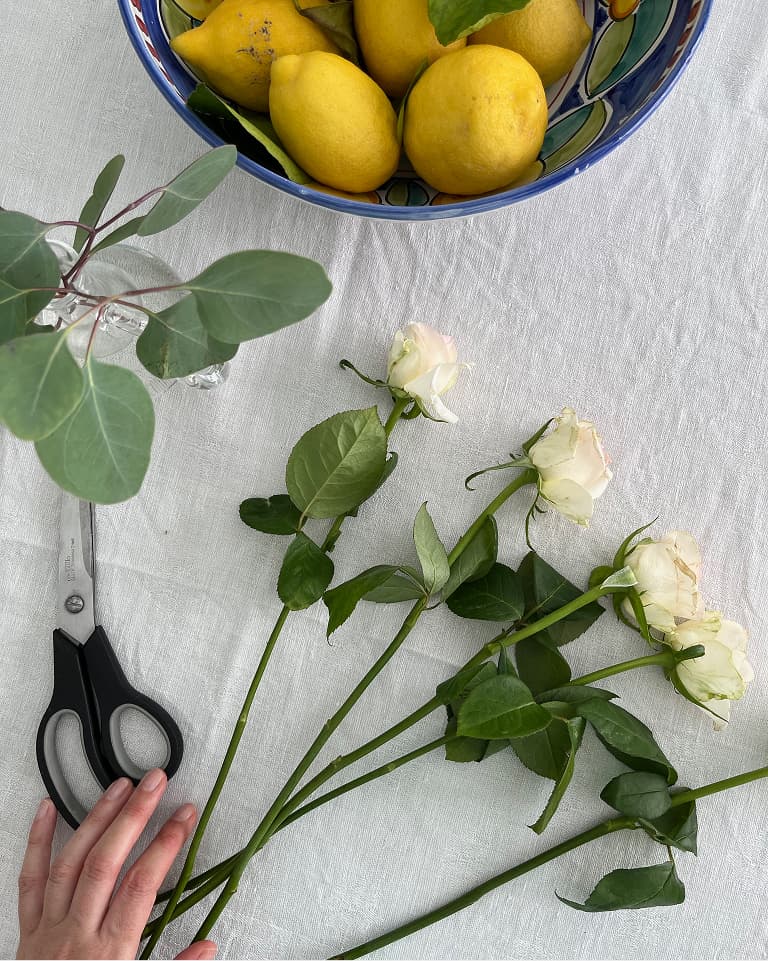
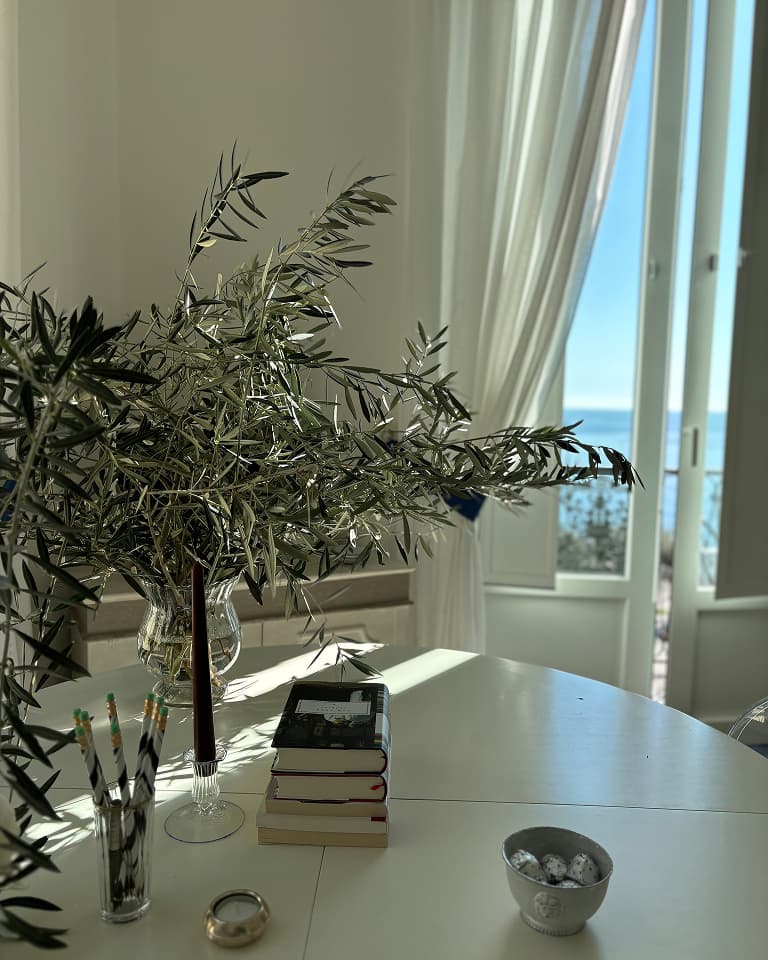
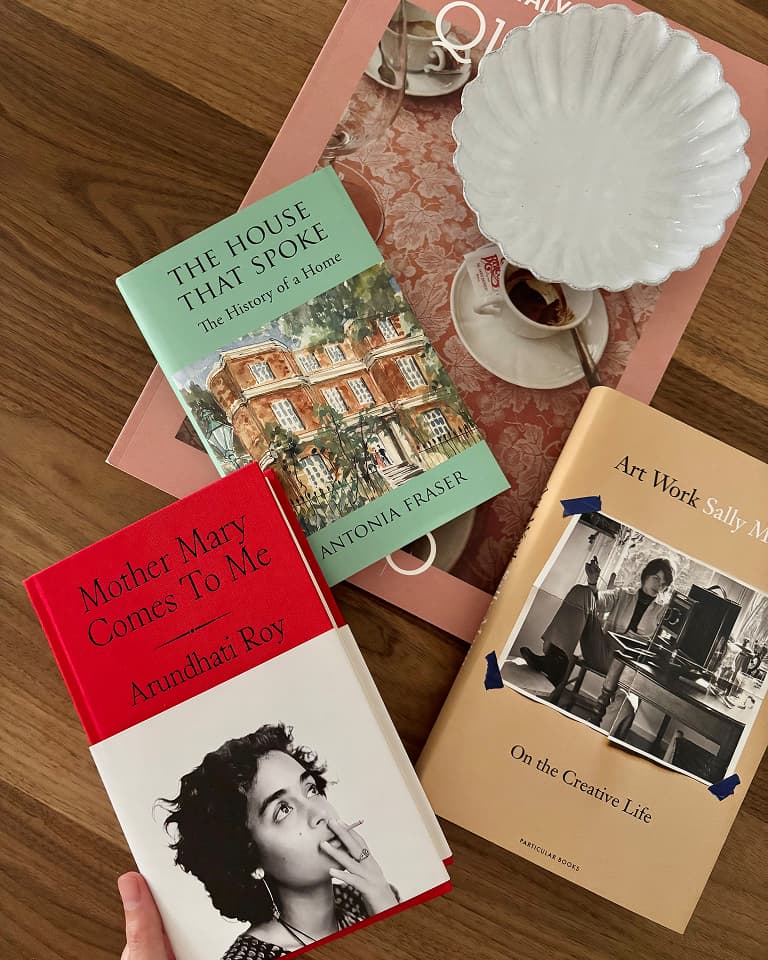
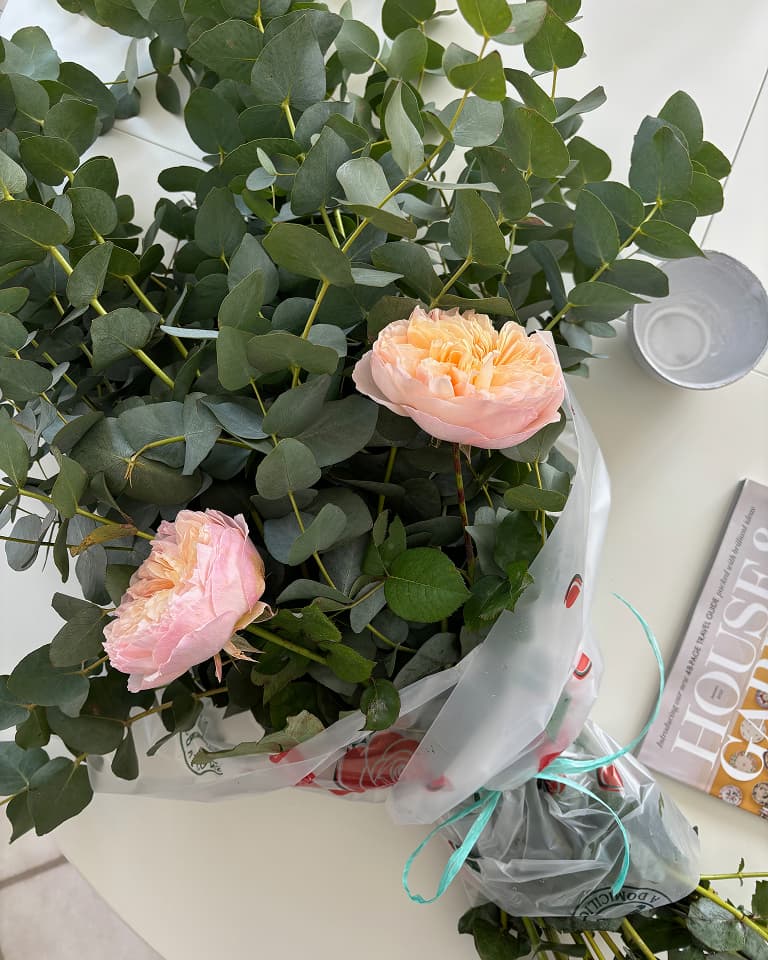
Both in Minori and in London, my camera seeks out the small details and quiet moments: the white glazed terracotta ceramics that travel with me between homes; ditto the silver spoons, books, egg cups, candlesticks and linens. Documenting them in situ is a way of tethering myself; likewise captures of cut flowers and foraged branches – these are life’s simple pleasures, part of my daily rituals wherever I am. These miniature still-lifes provide the vital thread of continuity across cultures, giving me a much-craved sense of rootedness.

Both in Minori and in London, my camera seeks out the small details and quiet moments – documenting them in situ is a way of tethering myself

Travelling for extended periods allows us to ask ourselves one of life’s most fundamental questions, “Who are we really?”. Without the paraphernalia of daily routine around us, without familiar landscapes, without extended family and friends, we are stripped back to our most basic essence. After the destabilising fear that this unveiling induces, comes the reinforcing of self. I am often asked which, out of the two worlds I vacillate between, feels like home? To say that we carry home within us feels trite, but what I have learnt while documenting life’s small details is that within us all lies a resilience that’s just waiting to be honed. Sometimes a return to our most unfiltered selves involves removing the obstacles we’ve unconsciously built up over a lifetime – both physical and metaphorical – the better to see more clearly.

Every three months when I board a plane bound either for a busy metropolis or for a southern Mediterranean enclave that sweeps you up in its embrace, I indulge in two rituals. I take a short video of the land unfurling mid-flight to document the change of borders (perhaps a way to register the transition) and I cast my eye back over twelve weeks of images on my camera roll. Returning to the first and the last helps me make sense of everything that’s unfolded in between, and – much like reviewing a piece of writing some while after its composition – it allows me to see life through fresh, more objective eyes: to notice both the joys and the fault lines. It’s then that I realise that photographs tell their own story as powerfully as scent. They have the ability to root us instantly in time and place; to find cohesiveness in transience and to connect us to who we really are in the midst of messiness. That is, perhaps, what makes the ordinary worth taking note of. It eventually adds up to a deeply valuable whole.

Download the app

Discover memories faster with exclusive features like facial recognition and smart albums.

App StoreApp Store
Download the app