
Binnenkijken bij Popsa
A year’s revenue in 30 minutes: inside Popsa’s compounding growth story
How retention, product refinement and AI transformed Popsa’s growth
&w=96&q=75)
19 Dec, 2025∙9 min
Binnenkijken bij Popsa
How retention, product refinement and AI transformed Popsa’s growth
19 Dec, 2025∙9 min
In Popsa’s first year, we made around $100k in revenue. During the Black Friday to Cyber Monday week this year, we made $100k in just over 30 minutes. It is tempting to present that as hypergrowth or a dramatic breakout moment. The reality is less glamorous but much more interesting.
If you look at the growth chart of almost any successful consumer business, it does not start as a straight line up and to the right. It usually begins with a long, flat stretch where very little seems to be happening. That is the part of the journey that rarely appears in case studies, but it is where almost everything important is decided.
In those early years everything feels fragile. Revenue is lumpy, forecasts are guesses – and the real question is simply whether the idea will work at all. You spend your time improving the product in small ways, fixing rough edges and trying to make sure that every new customer would be willing to come back, even if the numbers on the screen do not seem to care yet.
What finally bends the graph in your favour is the slow build-up of customers who return. You see them in groups: people who first found you around the same time and then keep coming back. Those groups are your cohorts, and when they stay loyal each one adds a little more curve to the chart and makes hitting every future year’s target less about short-term campaigns and more about a compounding base of returning customers.
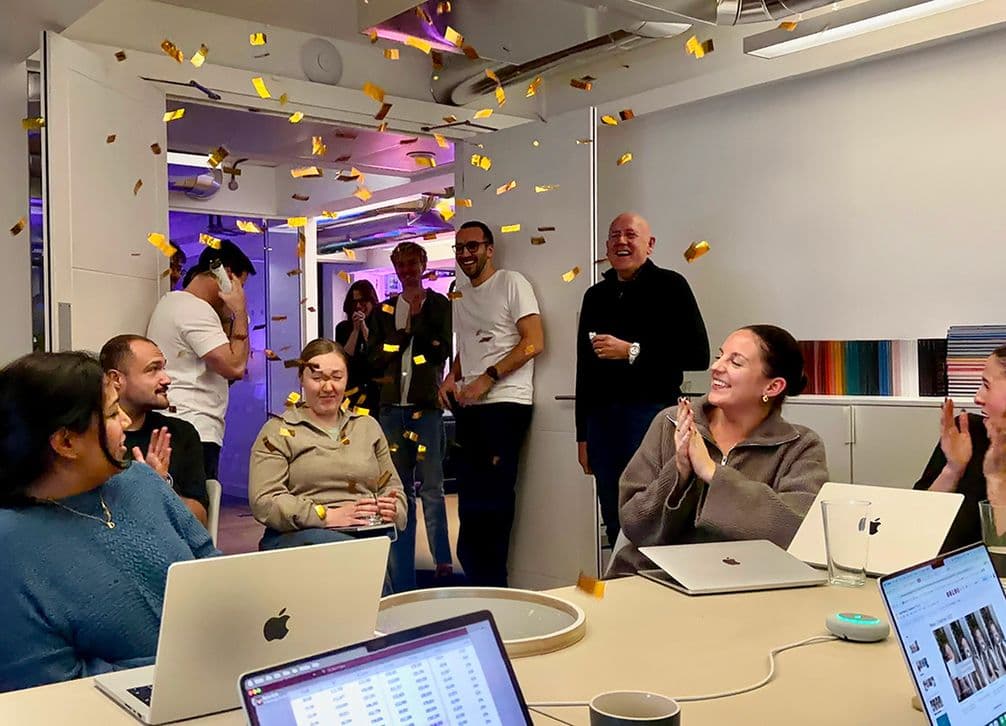
Team celebrations in the Popsa office
November 2025 was Popsa’s best month ever, both in terms of revenue and new customers. During the Black Friday to Cyber Monday (BFCM) period we reached levels of scale that would have seemed almost impossible a few years ago.
For context:
We recorded our first seven-figure revenue days in GBP, USD and EUR.
Black Friday was 40 per cent higher than the biggest day in the company’s history up to that point.
Behind those headline figures sits a quieter story. From the outside, it is easy to attribute a month like this to a single clever marketing campaign or a particularly generous promotion. From the inside, it feels like something quite different: the cumulative effect of years of cohorts that did not churn, of a product that quietly kept improving, and of AI systems that have been trained on billions of photos in order to make people’s lives easier.
The majority of November’s performance came from customers who first tried Popsa long ago, often for a small Photo Book or a simple gift. Having seen the quality of the finished product, they now trust us with larger and more important projects. When a new life event or gifting moment comes along, we are already in their consideration set. BFCM simply happens to be the moment when many of those decisions surface in the numbers at once.

Some of the team members who stayed late on Black Friday to monitor the servers
Founders talk a lot about flywheels. Compounding cohorts are what an actual flywheel looks like in practice.
In the early days, you acquire a small cohort of customers. The following year you add a new cohort, and a fraction of the first group returns. The year after that, you acquire another cohort, and some of the first and second cohorts return as well. If you serve people well, each cohort behaves a little like an annuity. Customers come back whenever there is a new life event, a new relationship or simply a new set of memories they want to preserve.
At first, the effect is almost invisible. You are looking at dashboards that barely move and wondering whether the business will ever truly scale. The temptation is always to chase something that will give you a dramatic spike now, rather than invest in improvements whose impact will only become obvious in two or three years’ time.
Then, one day, you realise that a week like BFCM is not being driven by one-off tactics.
The revenue is arriving because thousands of people who discovered you in different years, for different reasons, are all deciding independently that now is the right moment to come back. That is the point where it becomes possible to do your entire first-year revenue in the time it takes to have lunch.
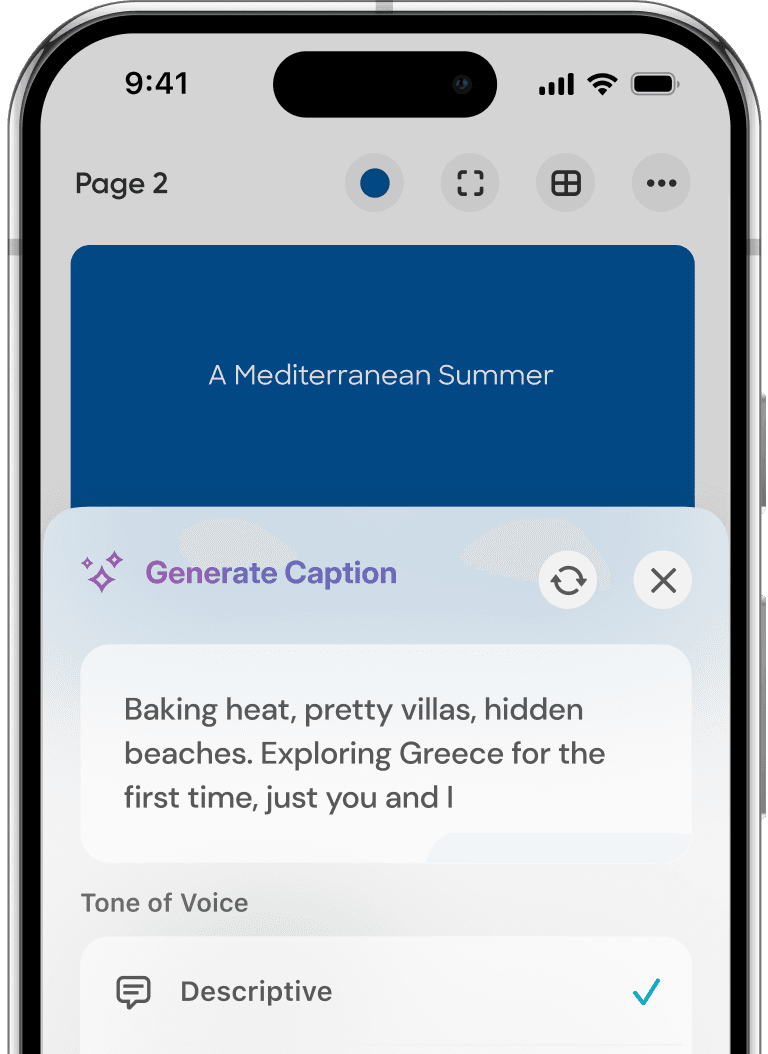
Generative captions

Automatic layouts

Dynamic themes
Black Friday and Cyber Monday are often described as if they are a test of marketing muscle: who can shout the loudest or discount the most. There is certainly some truth in that – urgency and pricing do influence behaviour.
However, for a business like Popsa, events such as BFCM are really just the visible spike that sits on top of a retention curve. A large proportion of that volume is not the result of a single weekend’s efforts. It is the outcome of decisions made years earlier about product quality, brand positioning and the type of customer relationship we want to build.
Popsa has a particularly good vantage point, because customers explicitly grant us permission to analyse their photo libraries. In return, we do the heavy lifting. Our AI selects the most meaningful images, designs layouts, suggests formats and even writes captions. Over time, that creates a very deep, very human understanding of people’s memories, relationships and life patterns. We call this the Popsa Experience Graph.
The more people use Popsa, the better this graph becomes. Our understanding of what “a meaningful moment” looks like continues to evolve. We learn who tends to buy when, which types of projects resonate in which markets, and how families and friendships change over time. In turn, this allows us to prompt customers with more timely and relevant suggestions. Better data leads to better AI, which leads to more relevant products and higher conversion, which in turn leads to larger and healthier cohorts. The loop keeps reinforcing itself.
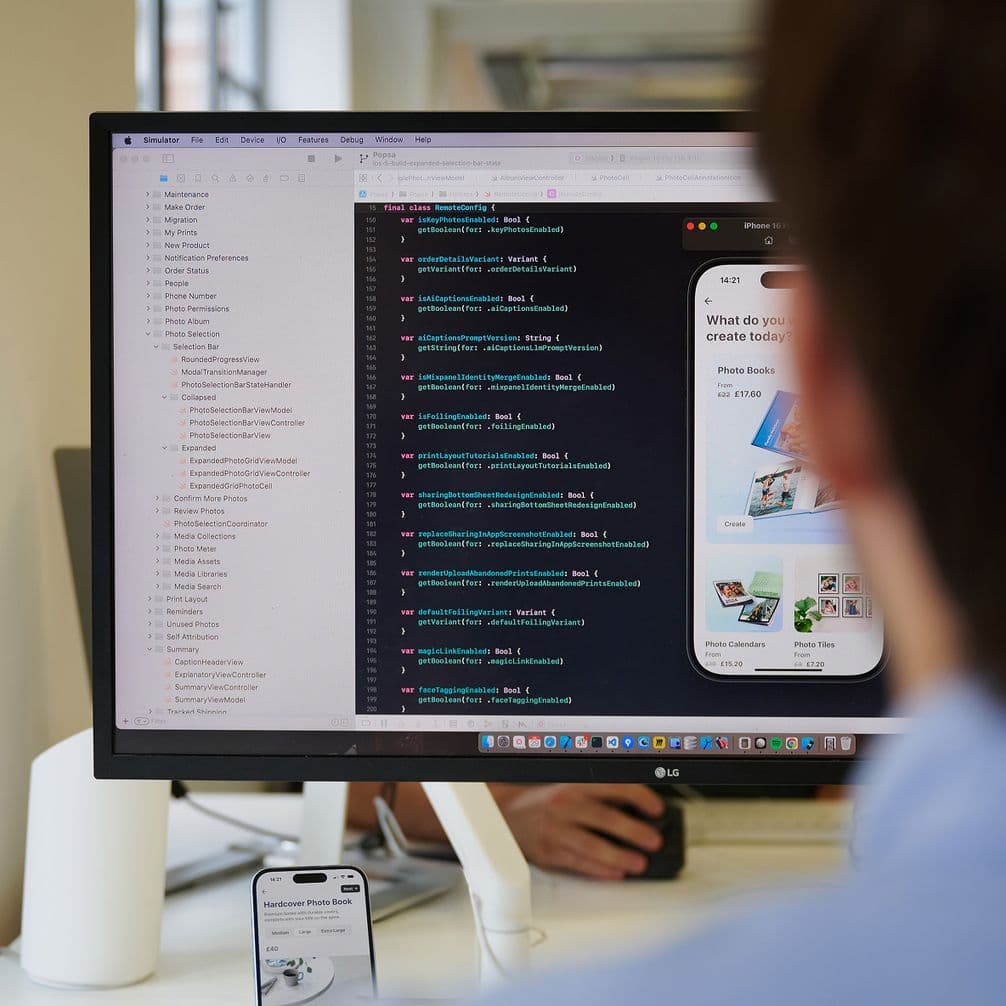
Better data leads to better AI
Another important part of the story behind our recent peaks is the role AI now plays throughout the business. This is not AI as a gimmick – it is AI as a genuine driver of revenue and resilience.
You can see it most clearly in the very first experience. For a new customer, the idea of “sorting out my photos” is usually intimidating. There are thousands of images, all jumbled together. Our AI removes most of that friction. It can identify people, places and events, pick out strong photos, design layouts and assemble something beautiful before the customer has had time to feel overwhelmed. That improvement in the first few minutes has enormous implications for churn and long-term value.
AI also helps us operate at a much higher efficiency level. The systems we have built are woven into our operations, not bolted on as a separate feature. When order volume spikes, we can maintain service quality without scaling our headcount in a straight line. That is how it is possible to have days that resemble an entire early year of the company, without burning out the team or breaking the bank.
When you layer AI-driven product improvements on top of healthy, compounding cohorts, you do not simply add growth. You change the shape of the growth curve.
There is an under-discussed reality about cohort-driven companies. The early years are almost designed to feel discouraging.
You are investing in trust, in quality and in systems that will not fully show up in your numbers for a long time. You find yourself making decisions that favour long-term retention over short-term spikes, and you build processes that can scale long before the volume exists to justify them. If you compare yourself to businesses that are optimised for immediate acquisition at any cost, you can easily convince yourself that you are standing still.
In practice, the opposite is often true. Saying no to the wrong kind of growth, obsessing over the first-time user experience, shipping small improvements consistently and protecting unit economics are exactly the things that allow you to absorb demand when it finally arrives. From the outside it can look like overnight success. From the inside it feels like years of “is this really working?” – followed by a phase where success starts to breed more success.
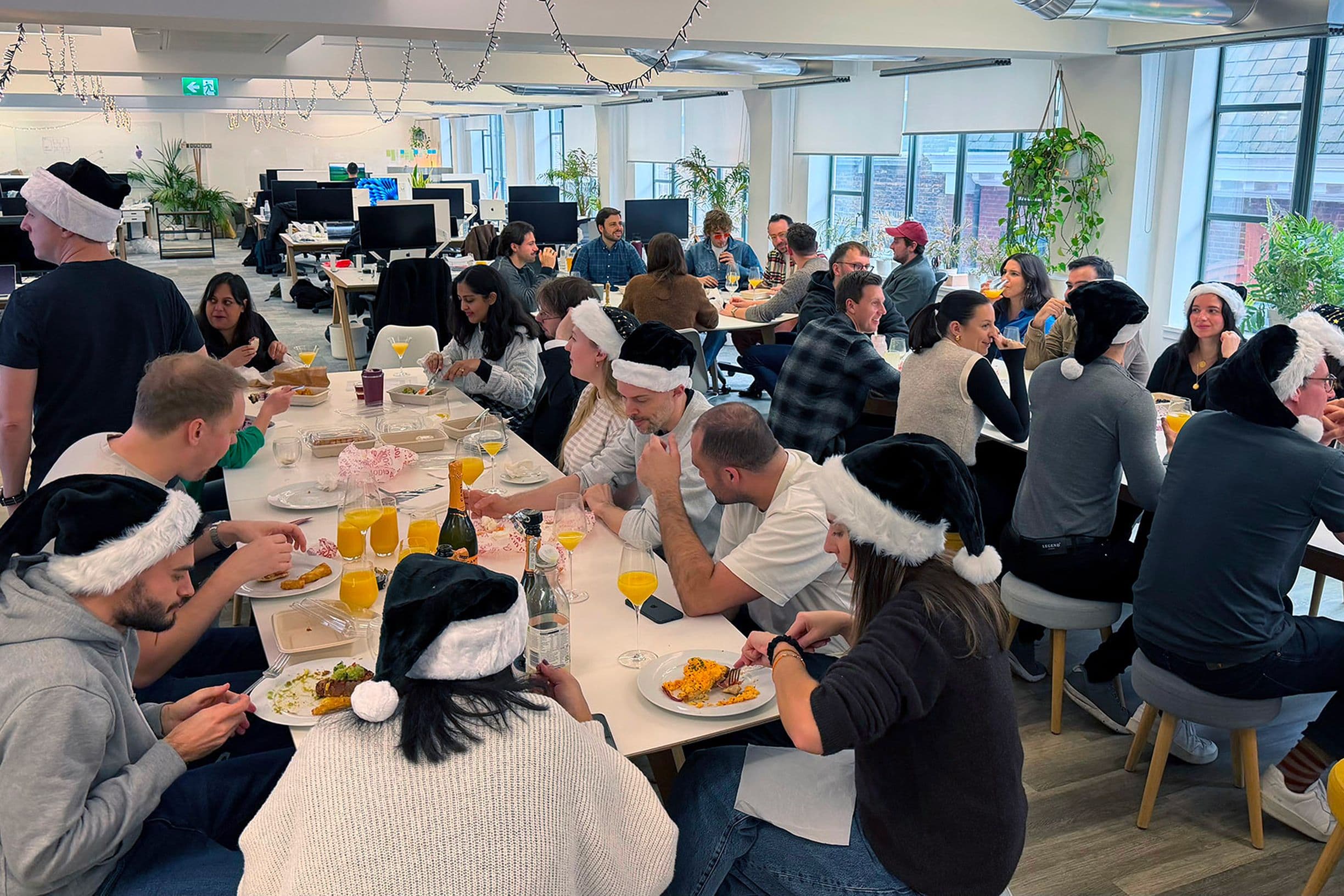
The Popsa team having breakfast together on Black Friday
There are a few practical lessons in all of this for people building or backing consumer businesses:
Cohort health matters more than any single campaign. New customers are valuable, but customers who are still with you years later completely alter the shape of your revenue.
Retention work is growth work. Features that increase the likelihood of a customer returning next year often move the long-term numbers more than almost any acquisition tactic.
AI sits on top of those fundamentals. The most powerful use of AI in a consumer context is often to remove friction rather than to introduce something flashy and new. In our case, the biggest gains have come from helping people get from “I should do something with these photos” to “I have ordered something I love” in a fraction of the time. When you do that reliably, you earn the right to be part of the next chapter of their story as well.
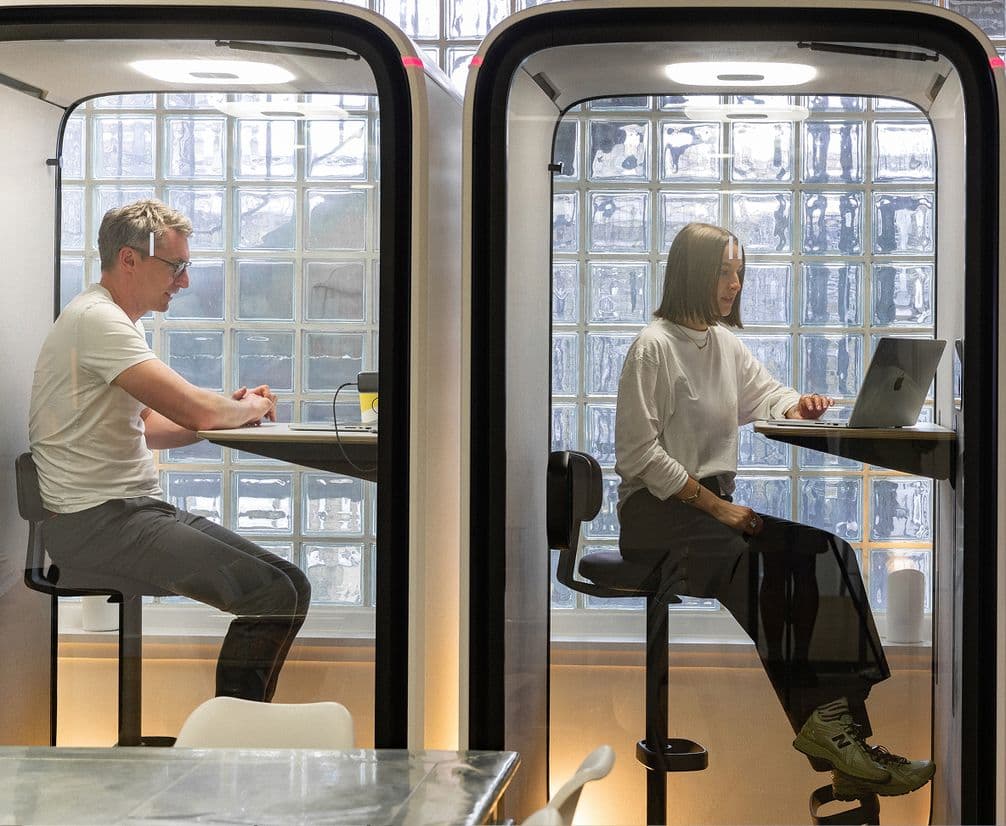
The Popsa CRM team
Hitting seven-figure days and repeating our first-year revenue inside half an hour is a satisfying milestone. For us, however, it is not the destination. It is evidence that the system we have spent years building is functioning as intended.
Every new customer we serve well today does more than add to this week’s figures. Each one becomes the loyal returning customer of tomorrow. As those tomorrows accumulate, the compounding effect becomes impossible to ignore, not only in BFCM graphs but across the entire year.
Over 2026 and 2027 we plan to take that retention engine to an entirely new level. We are building what we believe will be one of the first truly hyper-personalised CRM systems in the world, where every person’s experience of Popsa feels unique because it is being driven by their own memories. Instead of a single generic lifecycle journey, each customer will see a personalised feed of content, stories and suggestions that reflects the people, places and moments that matter most to them. We call this new layer Popsa Memories, and it is coming soon.
The goal is simple: to transform Popsa into a place you come back to not just when you need a specific product, but whenever you want to revisit, understand or share your own history. That is the kind of durable business we are trying to build at Popsa – the pre-eminent curator of human experience, operating at global scale, powered quietly by compounding cohorts, hyper-personalised journeys and the memories people choose to share with us.
Vind herinneringen sneller met exclusieve functies als gezichtsherkenning en slimme albums.



%3Agrayscale()&w=96&q=75)
12 Feb, 2026∙11 min
%3Agrayscale()&w=96&q=75)
20 Feb, 2026∙6 min
&w=3840&q=75)


 Verenigde Staten