Storie

Heritage Heroes: the enduring art of pottery with Skye Corewijn

The ceramicist behind London’s most sought-after restaurant tableware on growing up in her father’s Cape Town workshop, finding pottery late and why handmade objects still matter

Photo of Georgina Groom-Rietschy

29 lug 20266 min

Heritage Heroes: the enduring art of pottery with Skye Corewijn

Heritage Heroes celebrates the artisans preserving centuries-old crafts and traditions. In this series, we seek out the workshops and boutiques worth the detour, the experiences that capture the spirit of a destination and the keepsakes you’ll treasure long after the journey ends.

You’ve likely encountered Skye Corewijn’s pottery without even realising it. The South African-born ceramicist is the maker behind the understated tableware that decorates some of London’s top restaurants – including Planque, Forno, BiBi and Michelin-starred Evelyn’s Table. Her thoughtfully crafted cups, bowls and plates are designed to be lived with, bringing warmth and tactility to everyday moments. 

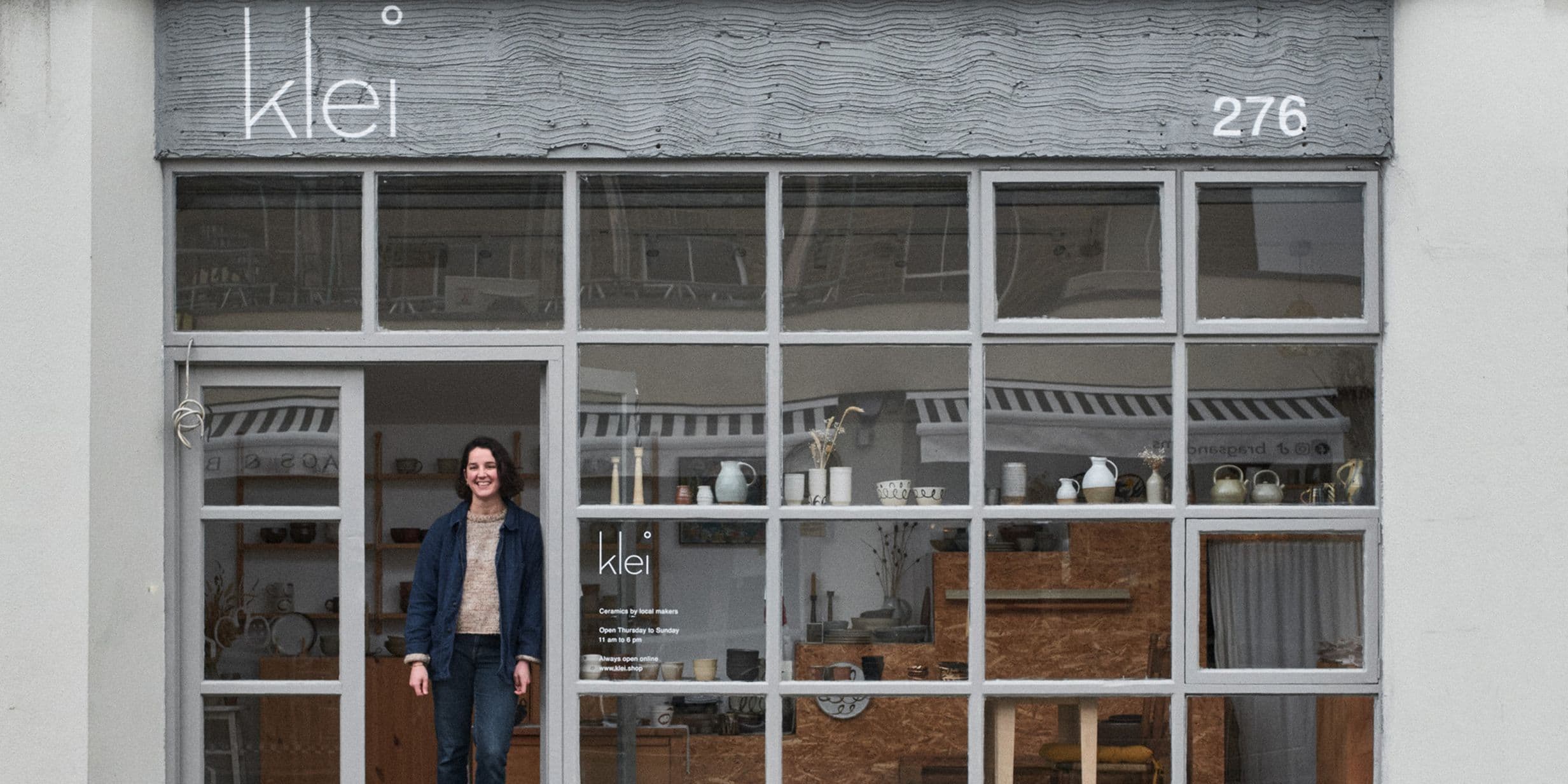
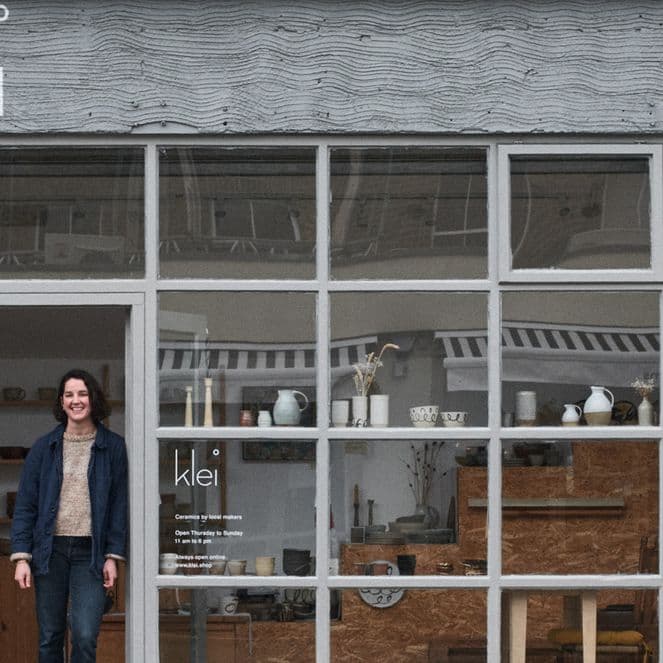
Working from a studio in Bromley-by-Bow, London, every piece passes through Skye’s hands several times before leaving the kiln. Clay is wedged, weighed, thrown on the wheel, trimmed, dried, glazed and fired twice. Alongside her own practice, she cofounded Klei, an east London ceramics shop and gallery dedicated to championing contemporary makers and the enduring craft of pottery.

For Skye, the value of ceramics lies in the moments they quietly shape. “I like to think that everyday rituals can bring joy through something as simple as a cup or a bowl,” she says. “Food on a plate or simply an object that holds a memory.” We caught up with her to discuss growing up in her father’s workshop in Cape Town, discovering pottery later in life, and why handmade objects continue to matter in a fast-moving world.

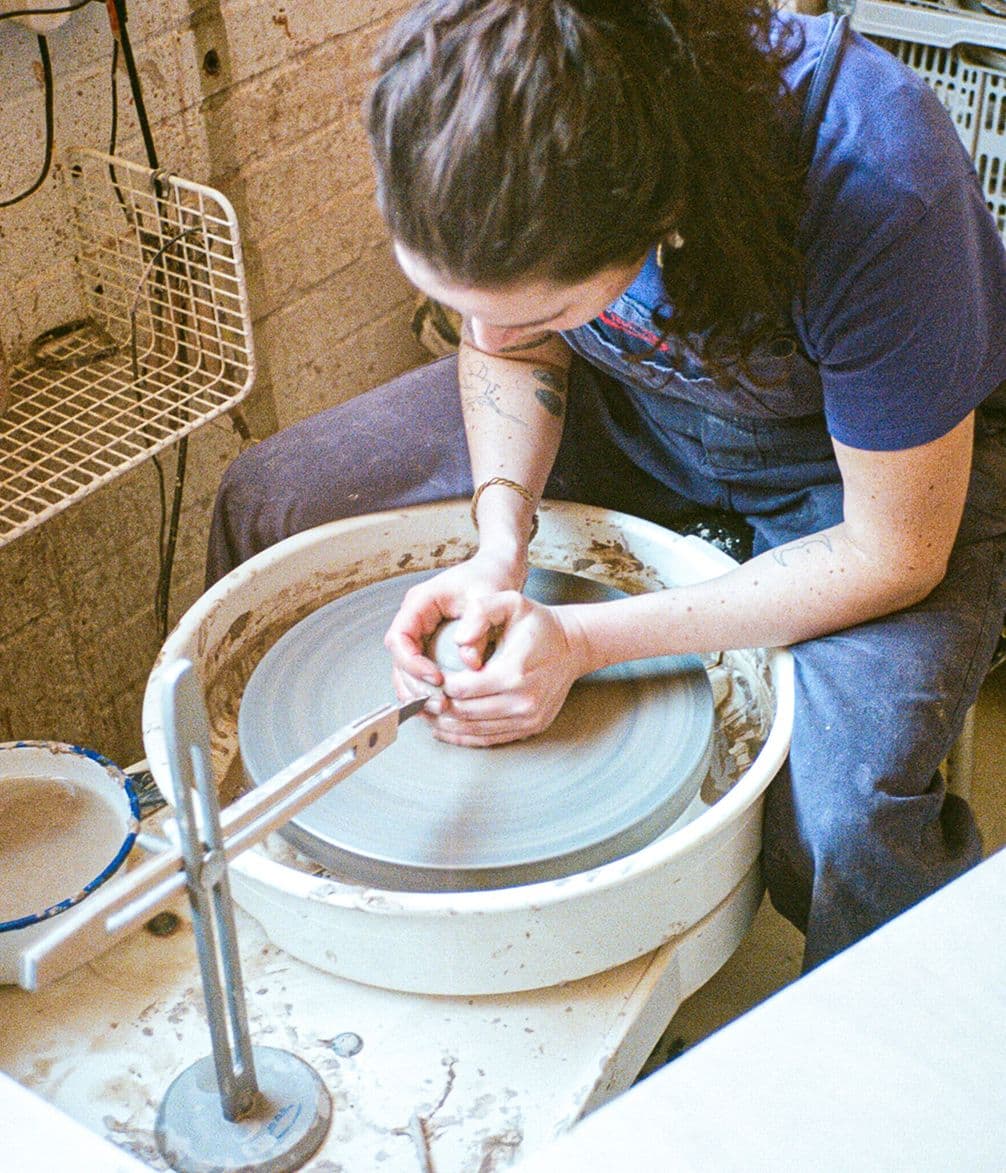
A person with long hair works on shaping clay on a pottery wheel, focusing intently on the clay, in a workshop setting.

Skye at the wheel. Photo: Bianca Riggio

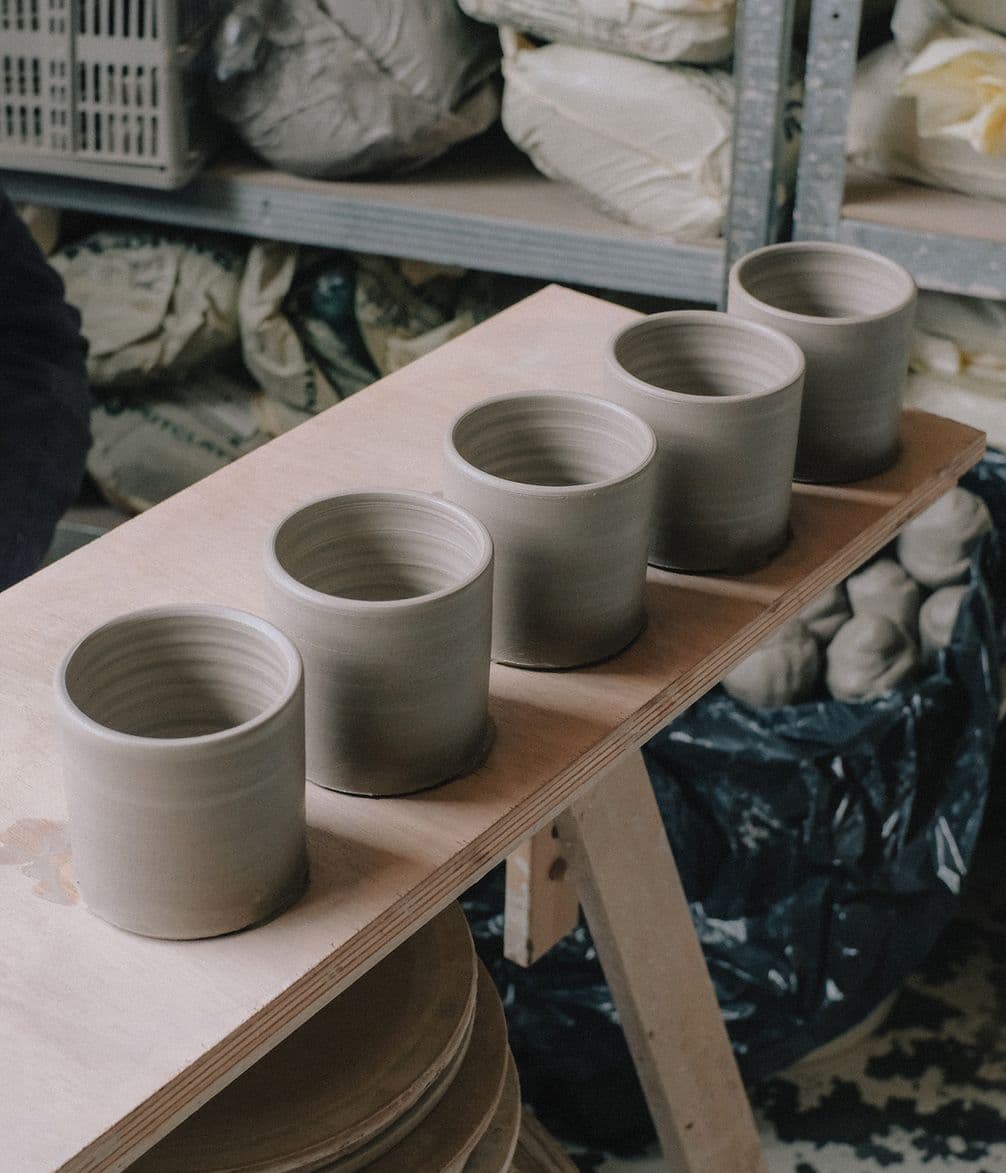
Five unglazed ceramic mugs are lined up on a wooden board in a pottery workshop, with shelves and bags in the background.

A lineup of greenware. Photo: Stephanie Hannington-Suen

What is your earliest memory of ceramics?

Growing up, my dad had his workshop at the end of our driveway, and I think that’s where my first connection with clay began. He was an incredible artisan, working in restoration across old buildings, sculptures, murals and more in Cape Town. There was always a bag of clay lying around and I loved the feeling of it in my hands. He worked with lots of materials – wood, metal and clay – and, perhaps without realising it at the time, being surrounded by them influenced me. Creating with my hands has always felt natural.

Who were your formative influences?

My dad was eccentric and brilliant, and I suppose he was one of my earliest inspirations. I didn’t appreciate it when I was younger but as I got older I started to understand what a skilled craftsman he was. I wasn’t formally trained and found pottery relatively late. After studying English Literature and Art History in Cape Town, and working in music journalism in London, I found my way into pottery in 2013, taking my first class with Stuart Carey at a small studio in Old Street. 

From there, I kept going – joining a shared studio space in east London before moving into my own workshop in Bromley-by-Bow. Early on, I worked for London-based potter Jessica Joslin, where I learnt the foundations of running a studio and the importance of care, professionalism and valuing people. There was a real sense of kindness, generosity and joy in working for her.

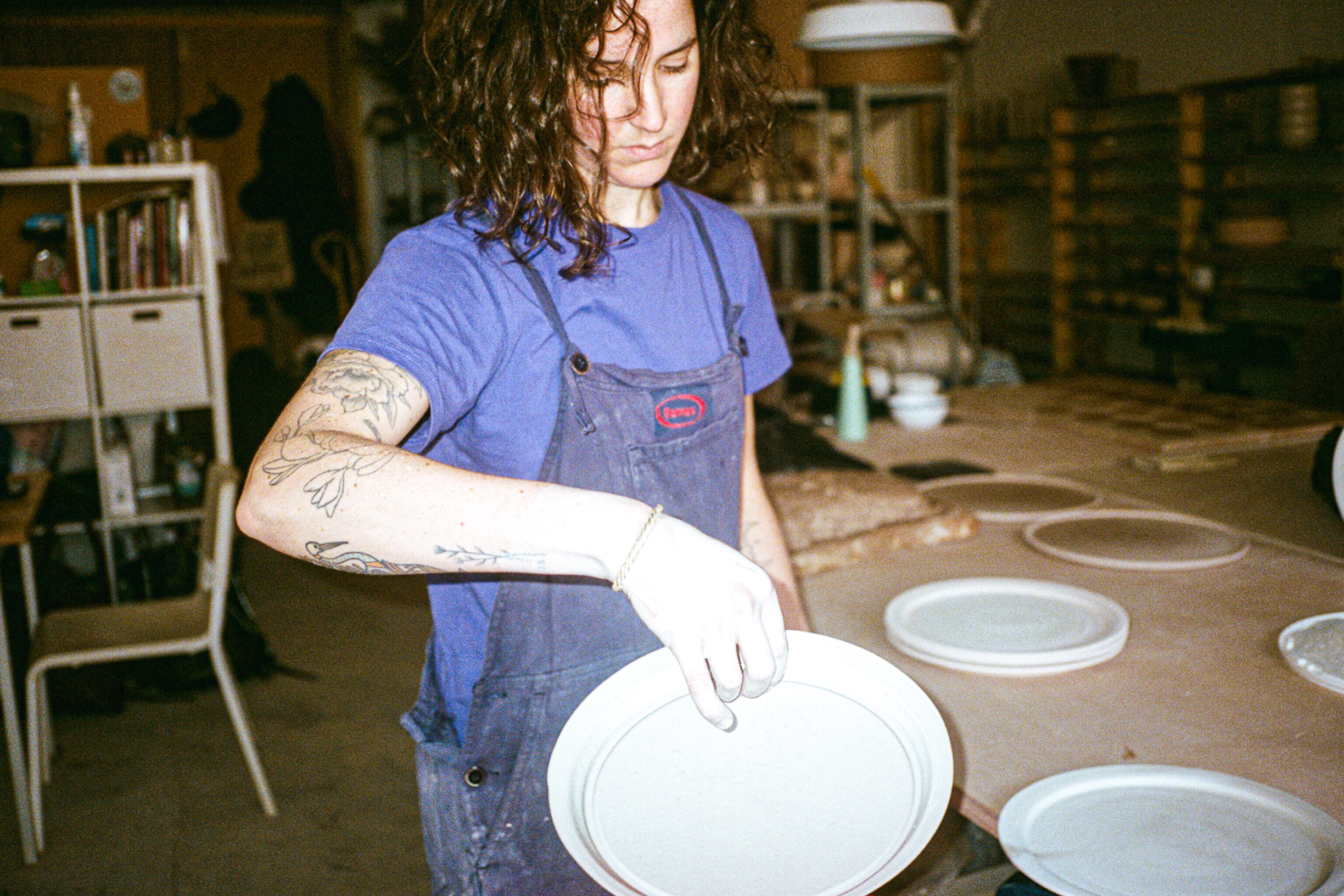
Person with tattoos and curly hair holding a white ceramic plate in a pottery studio, wearing a blue shirt and apron, surrounded by pottery items.

Skye Corewijn. Photo: Bianca Riggio

Plates with abstract swirl designs are arranged on a table with a cup of coffee. A hand holds a paintbrush nearby.

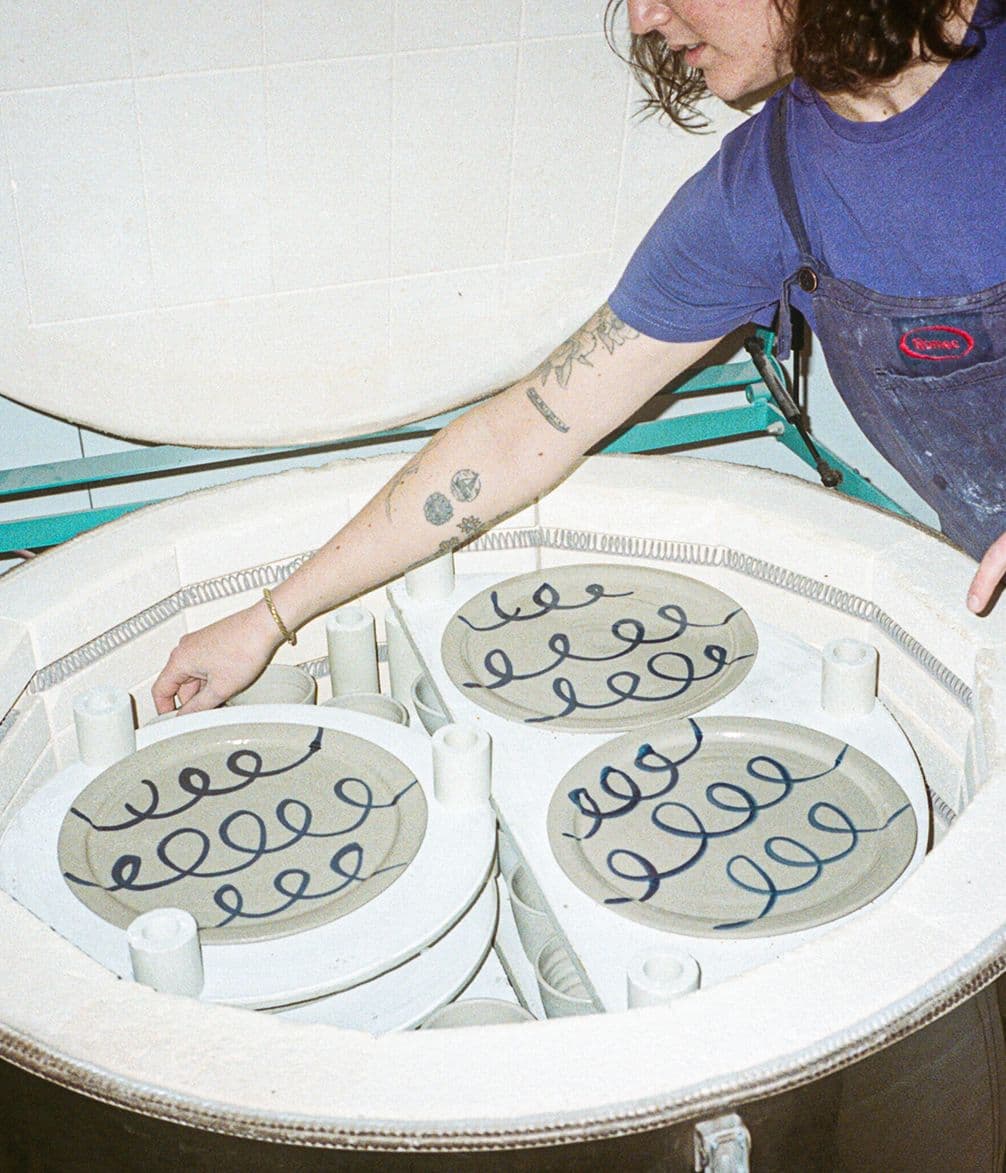
Hand-painted plates, before and after loading into the electric kiln. Photos: Bianca Riggio

Person placing ceramic plates with blue spiral designs into a kiln.

How has your background shaped the values you bring to your work?

Coming from a family where self-employment was the norm helped more than I realised – perhaps it gave me a comfort with uncertainty. My parents both had a deep love and respect for art, craft and theatre. They were passionate about their work and genuinely loved what they did. Our home was filled with bits and bobs, bric-a-brac, books, paintings by my dad and grandfather, and beautiful objects they’d collected over a lifetime. There was always a sense of craft and beauty around me, and that’s something that’s stayed with me.

How would you describe your creative process?

My approach to making is rooted in constant evolution – changing, moving and responding. I collaborate with a lot of restaurants, so often the starting point comes from a chef needing something specific. I work within those parameters to create pieces that are both beautiful and highly functional. Bespoke commissions often push me towards ideas I might not have explored otherwise, and that’s always an exciting challenge. I might make the same piece for years, but it will continue to be refined, adjusted and improved over time. Small ideas filter into new shapes, forms and larger concepts. Every project is different and I love that – it keeps my work progressing and open to possibility.

Skye placing her creations in the kiln

What does it mean to you to keep a craft alive at a time when so much is mass-produced?

I think people gravitate towards the human element of pottery. It’s an age-old practice that has stood the test of time, with examples found throughout ancient Roman and Greek history. I’m not reinventing the wheel but I’m making a small contribution to this historic tradition. In a world that moves so quickly, I think people value connection, story and the feeling of something made by hand. A beautiful pot can offer that, bringing a sense of comfort, presence and humanity into everyday life.

Tell us about a typical day in your studio

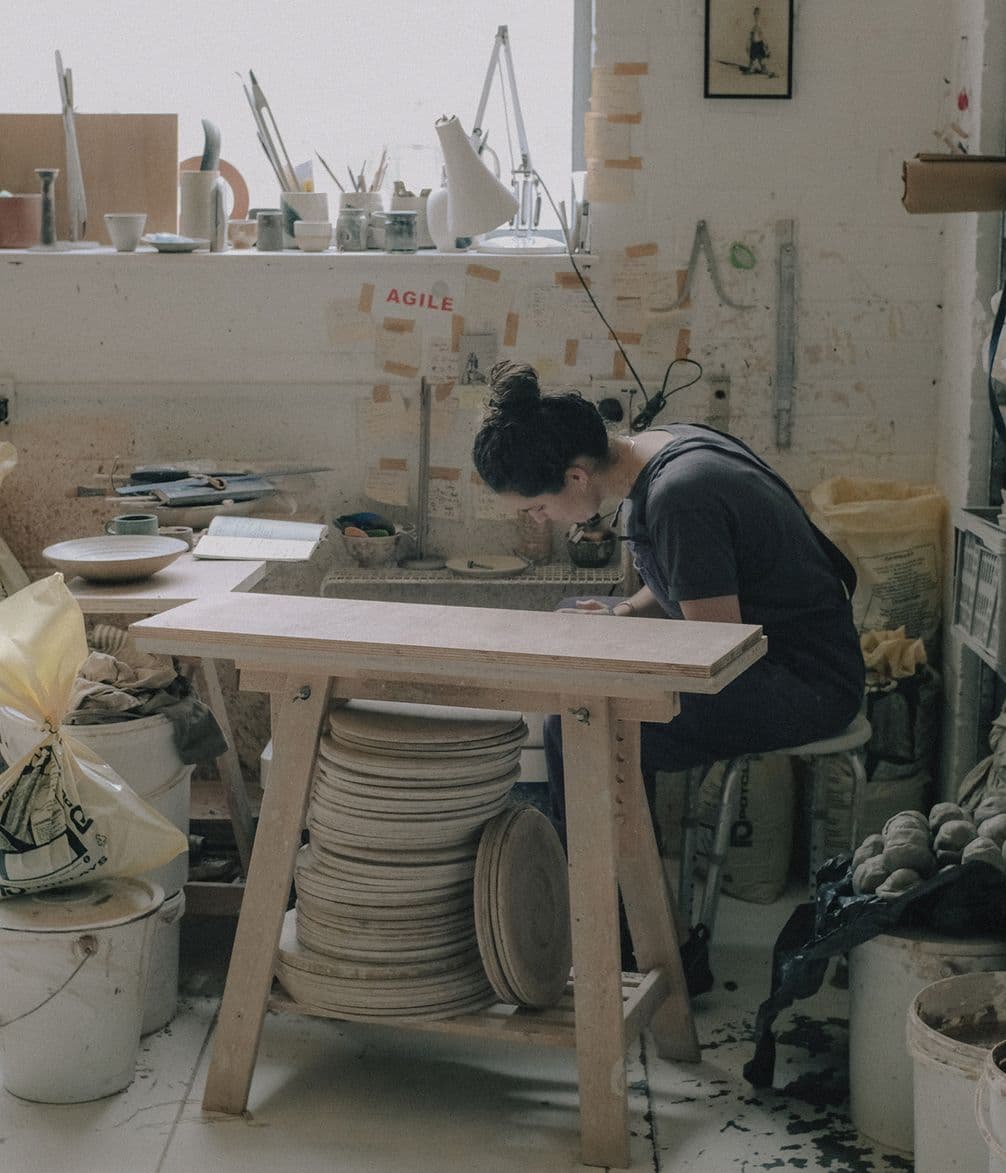
I share my studio with a good friend. Our work is completely separate but we share the kiln and the space. Walking in each morning, there’s a sense of calm and openness. We have high ceilings and one large window where we throw our pots, giving the studio a wonderful feeling of light and space. The camaraderie between us makes what could be an isolating practice feel much more connected. The rhythm of the day depends on what’s on the agenda, but at 1.30pm we stop for lunch and coffee, taking an hour to talk, laugh and enjoy each other’s company. I love that part of the day.

A person working intently at a pottery studio, surrounded by clay products, tools, and a cluttered workbench under natural light.

Skye at the wheel, and studio details. Photos: Stephanie Hannington-Suen

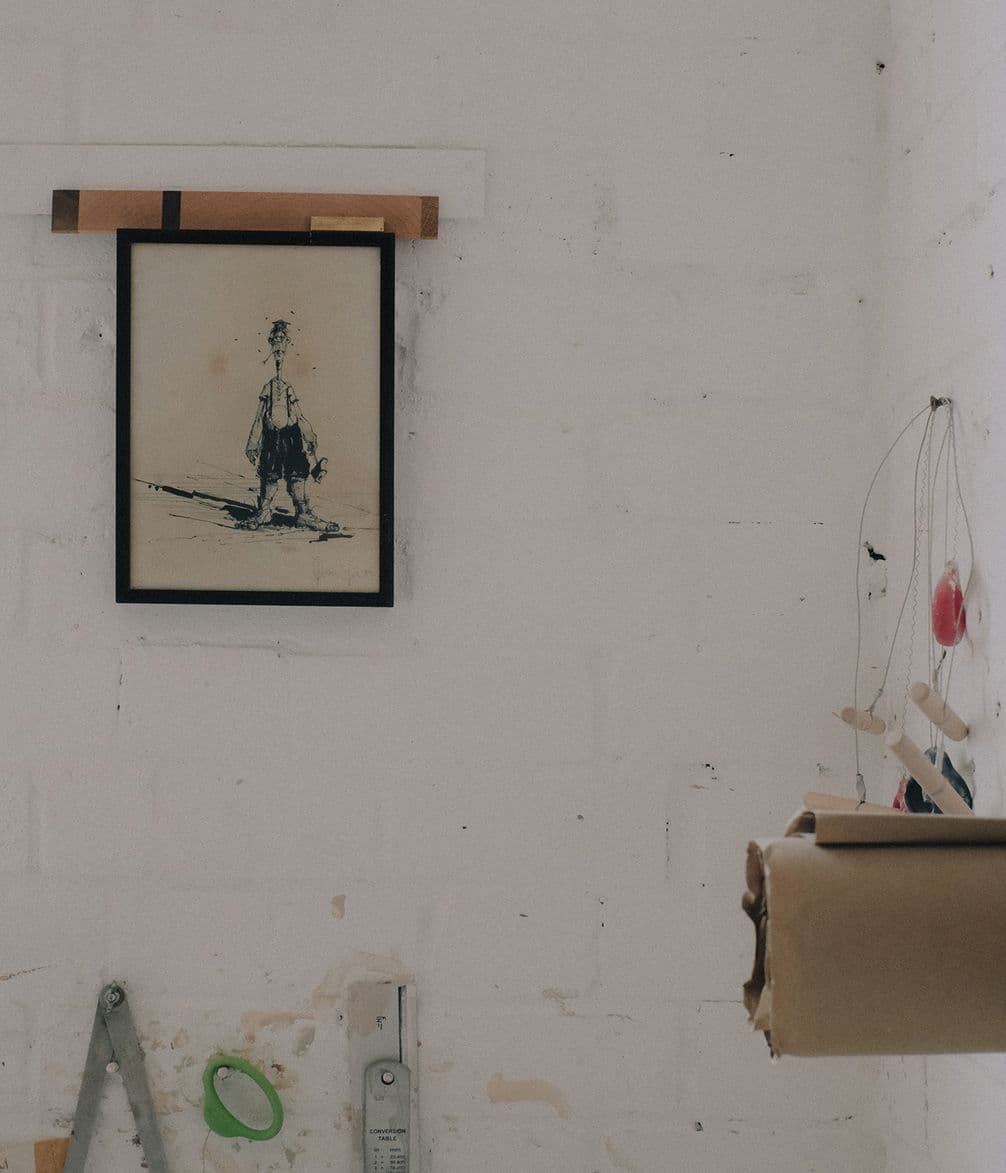
A minimalistic room with a framed sketch of a person on the wall, rolls of paper, and a hanging mobile in view.

What inspires you when you’re developing new work?

I learn from exhibitions and galleries, looking to the past and present for inspiration. Travelling has brought me so much joy too, seeing how pottery can be both different and remarkably similar across cultures, reflecting that shared human need for craft and the character held within handmade objects. I’m inspired by architecture and design, and anything made with care. I have a collection of beautiful books that I love to return to, and conversations with fellow potters can often spark new ideas. Yet nothing inspires creativity quite like necessity. That’s the challenge I enjoy most – figuring out how to make something I love, while ensuring it works beautifully and functions well for someone else.

What’s the story behind your ceramic shop Klei?

Klei began as a project with a friend, a way for us to sell our work without travelling across London constantly to pottery fairs. But it has grown into something much more meaningful: a space that celebrates pottery and makers. It sits somewhere between a shop and a gallery, elevating craftspeople while creating conversations around the different techniques, processes and firing methods that shape ceramics. Klei now has an incredibly engaged customer base, and the work we show is both inclusive and approachable. We aim to appeal to everyone from first-time buyers of handmade ceramics to dedicated pottery enthusiasts and collectors.

Multiple brown ceramic plates arranged closely on a white surface with black splatters.

A collection of Skye’s handcrafted ceramics

Two beige ceramic bowls with spouts sit on a metal pottery wheel. Below, purple pants and black shoes are visible on a dusty floor.
Twelve brown ceramic cups with dark abstract patterns are scattered on a white wooden surface.
Beige ceramic plates with looped swirl patterns on the rims arranged on a textured, paint-splattered surface.
A hand holds a round white ceramic tile with swirling brown line designs, set against a textured grey floor.

Tell us about a memorable project

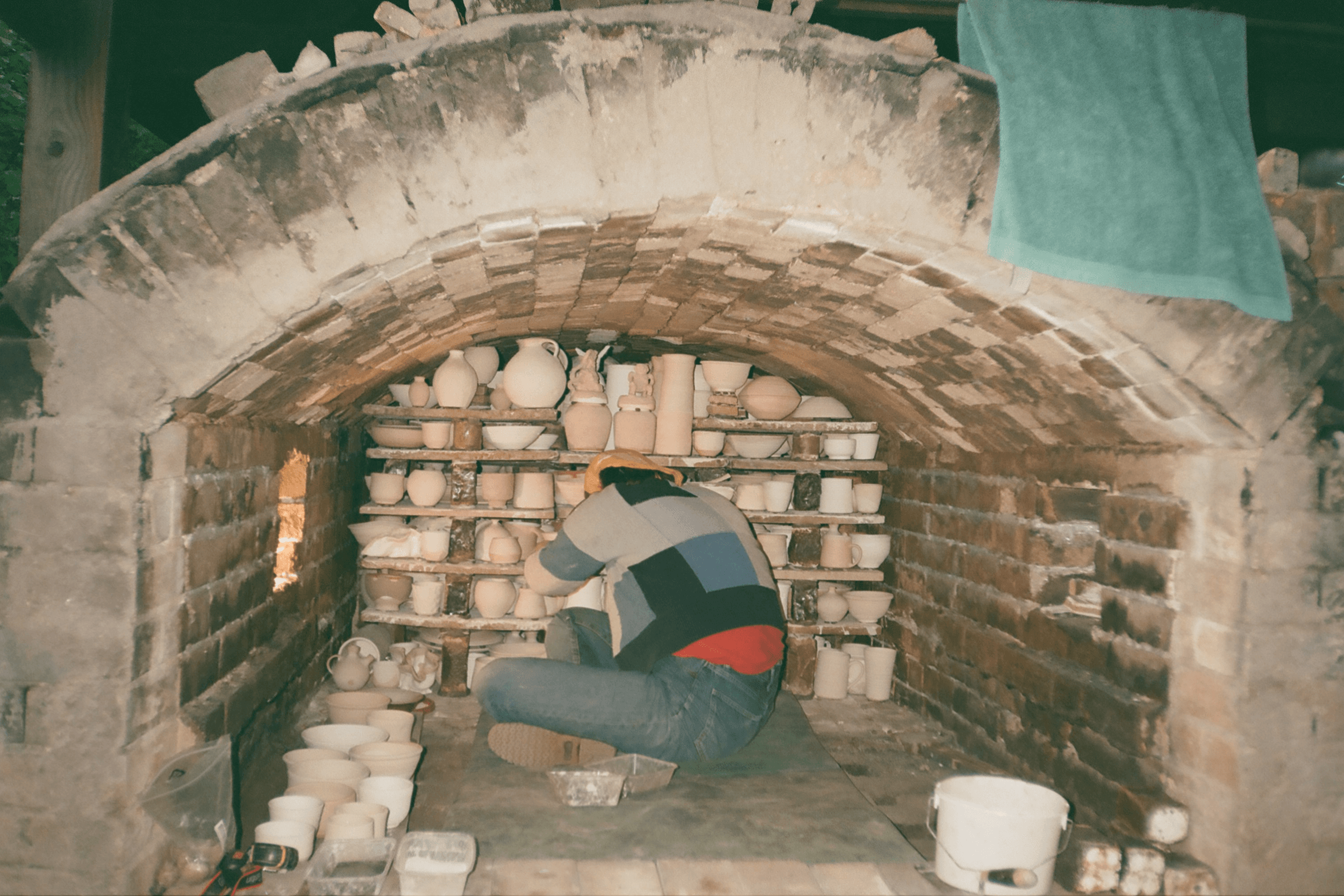
The work that has stayed with me most is my wood-fired pottery. I’ve taken part in firings in Devon and Oxford for the past nine years, and it remains one of the most rewarding parts of my practice. What makes it special is that the pots aren’t made for anyone else – they’re made purely for the joy of making. There’s no brief, no expectation, just the freedom to explore. Wood firing is a wonderfully unpredictable process. You have limited control over the outcome, and that element of chance makes every piece completely unique. 

It’s a communal experience too. A group of six to eight potters work together to pack and fire the kiln over four days, sharing the triumphs and disappointments. My favourite moments are the night shifts, sitting quietly in front of the kiln with a friend, feeding the fire and listening as the birds begin to welcome the morning. Wood firing reminds me of the simple joy of making – exploring without worrying about the final result.

Scarica l'app

Trova più velocemente le foto che stai cercando con funzionalità esclusive come il riconoscimento dei volti e gli album smart.

App StoreApp Store
Scarica l'app