
Histoires
The power of everyday photographs
Why the unplanned photos in your camera roll often hold more meaning than the ones you carefully compose

Siobhan Ferguson
Photographe
8 Apr, 2026∙6 min
Histoires
Why the unplanned photos in your camera roll often hold more meaning than the ones you carefully compose
Siobhan Ferguson
Photographe
8 Apr, 2026∙6 min
There are photographs we take without thinking. They are not composed or planned, not carefully framed with a particular outcome in mind; they are not destined for a frame or a feed, nor taken with the expectation that they will be shown to anyone else. Most remain quietly in a camera roll, sitting among hundreds of others – unremarkable until time has passed and we return to them with different eyes.
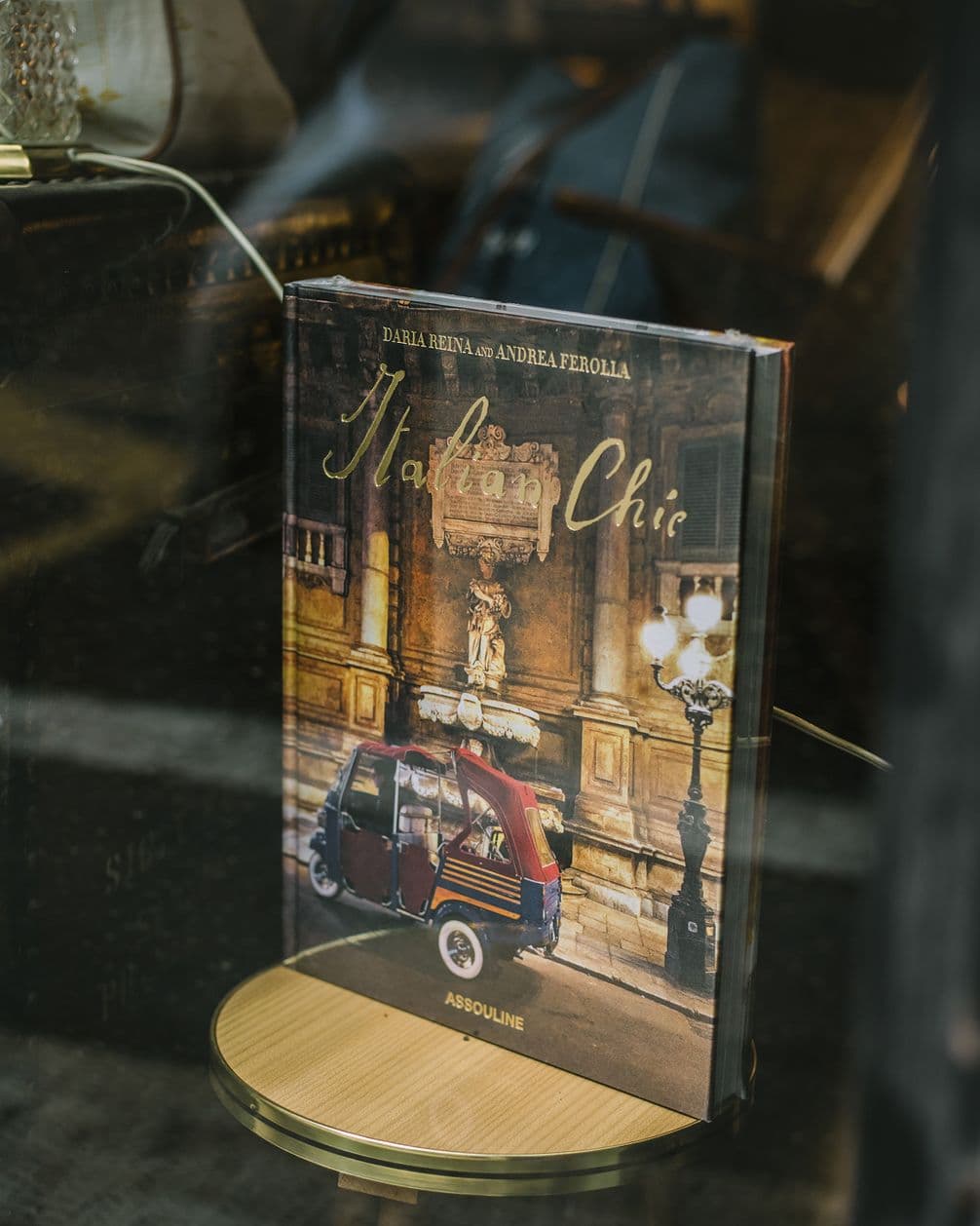
Photo: Siobhan Ferguson
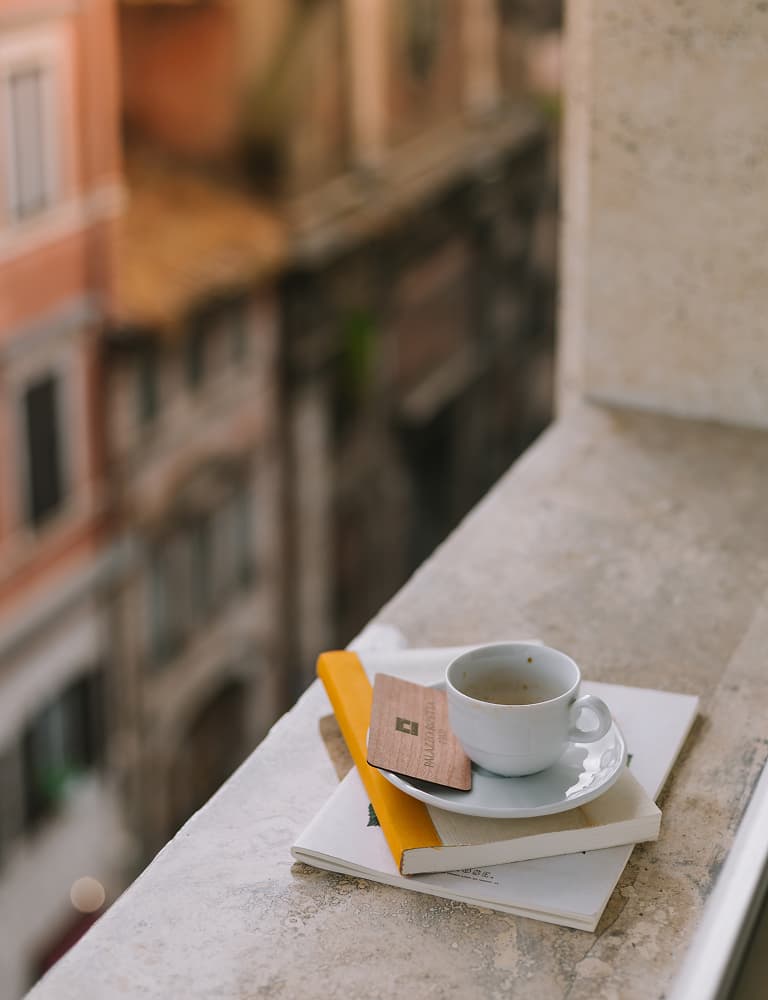
A coffee left cooling on a balcony table. At the time, it was just that – a cup, a pause before heading out. I took the photograph almost absentmindedly. Now it brings back the view down onto Via di Ripetta, the early light before the street filled, the stillness that existed for a short while before the day properly began. An isolated photograph of a book in a shop window seemed unnecessary when I took it – something I could easily have left behind. Later, it reminds me of Via di Monserrato and how composed that stretch felt, even in passing, as though the street arranged itself without effort.
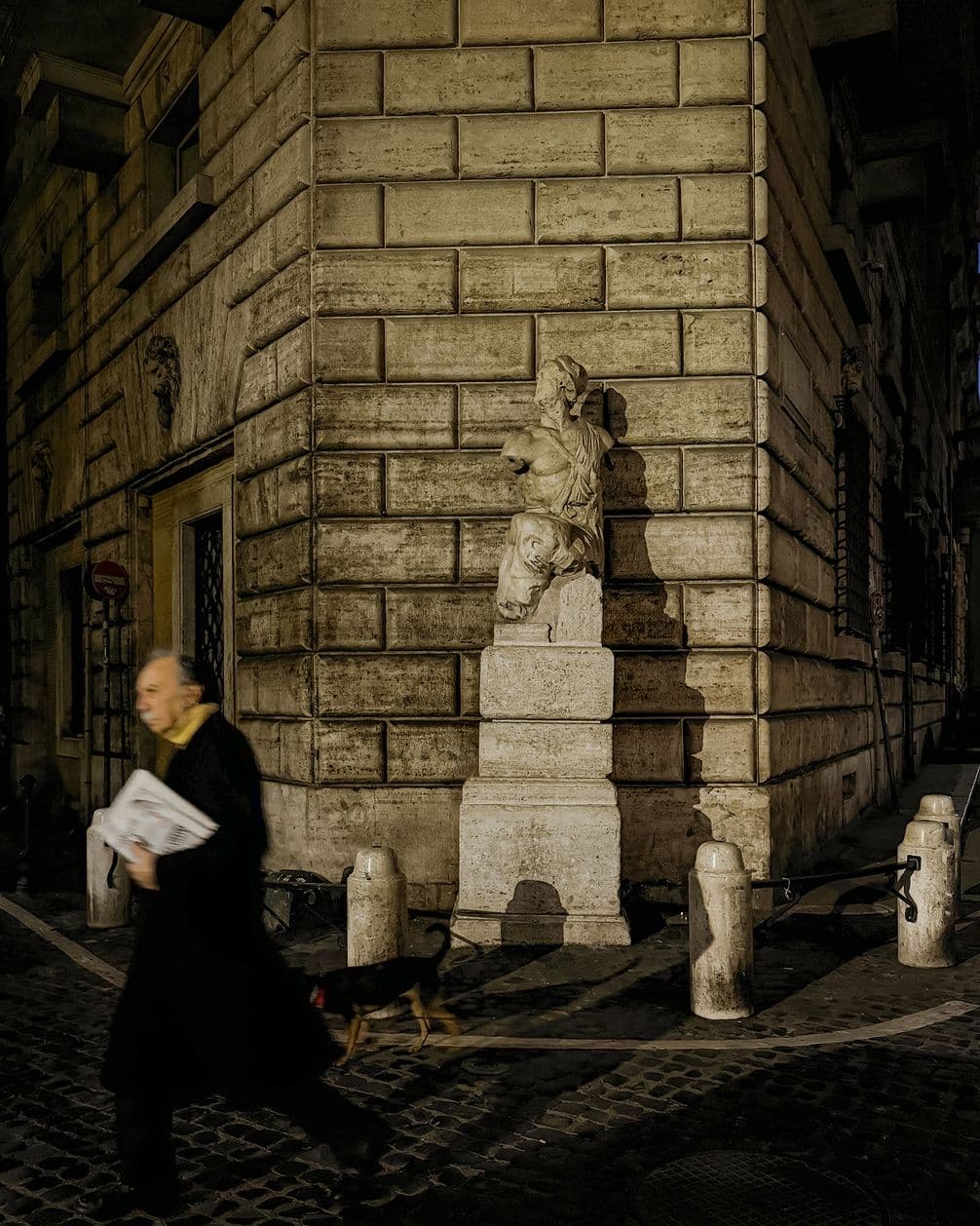
Photo: Siobhan Ferguson
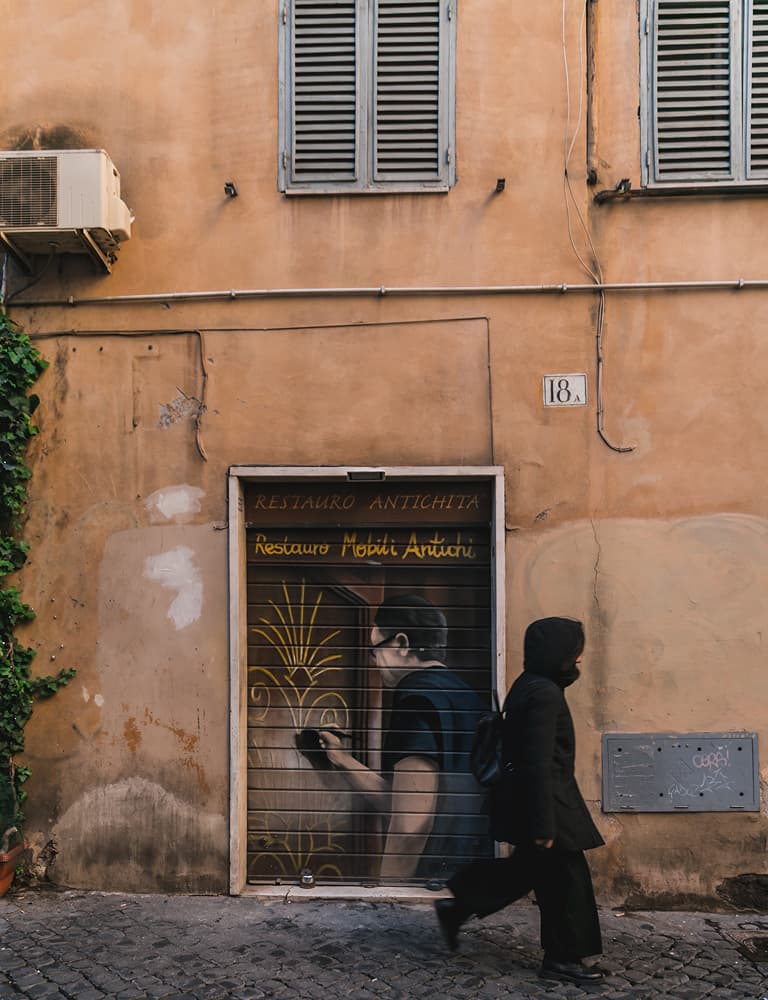
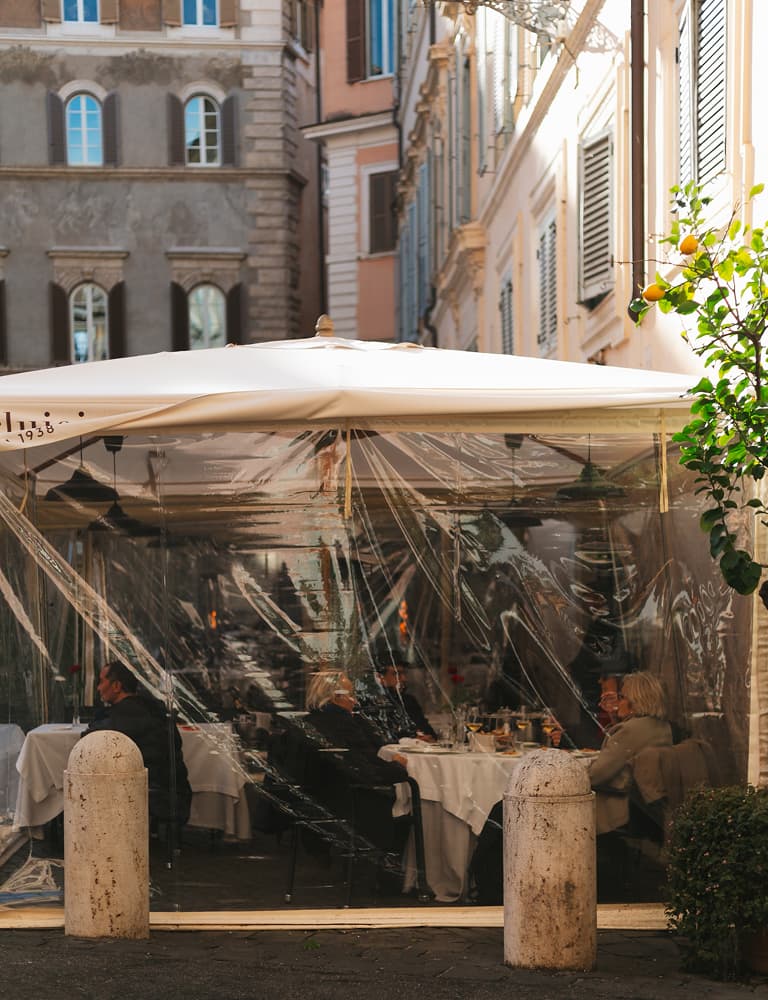
A man with a newspaper walking past before the city properly woke up. I did not plan the shot and barely paused to take it. Looking at it now, I see the local rhythm beneath Rome that arrives earlier than it does for everyone else –the quiet continuity that exists before the crowds. Two espresso cups on a small table, not mine, suggest a gathering that had already happened before I arrived – a conversation finished just out of sight. A table under an awning on a damp evening holds more atmosphere than the facade behind it ever could. I almost didn’t photograph it, but I am glad I did. It brings back the mood of Pierluigi, even on a night when alfresco dining made little practical sense and the air felt heavy with rain.
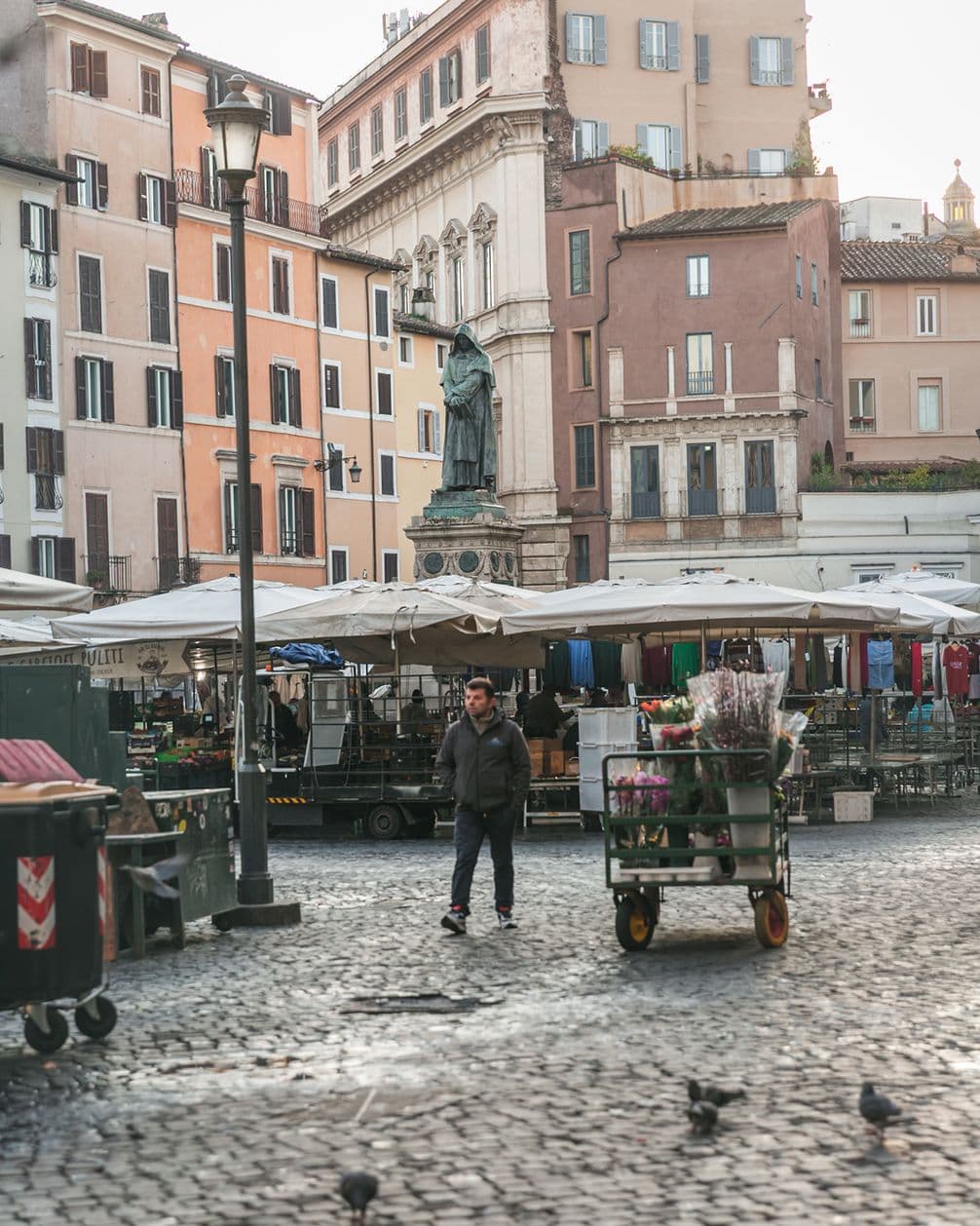
Photo: Siobhan Ferguson
In Campo de’ Fiori, I once photographed the square as traders prepared their stalls. Nothing dramatic – just early movement, half-built displays, the day assembling itself piece by piece. It remains one of my favourite images, though it never felt important at the time. When I work on a book, I carry a camera with intention. I think about structure, about light, about what might anchor a chapter or provide a sense of progression. Those images are deliberate; they describe a place clearly and with purpose.
Photos: Siobhan Ferguson
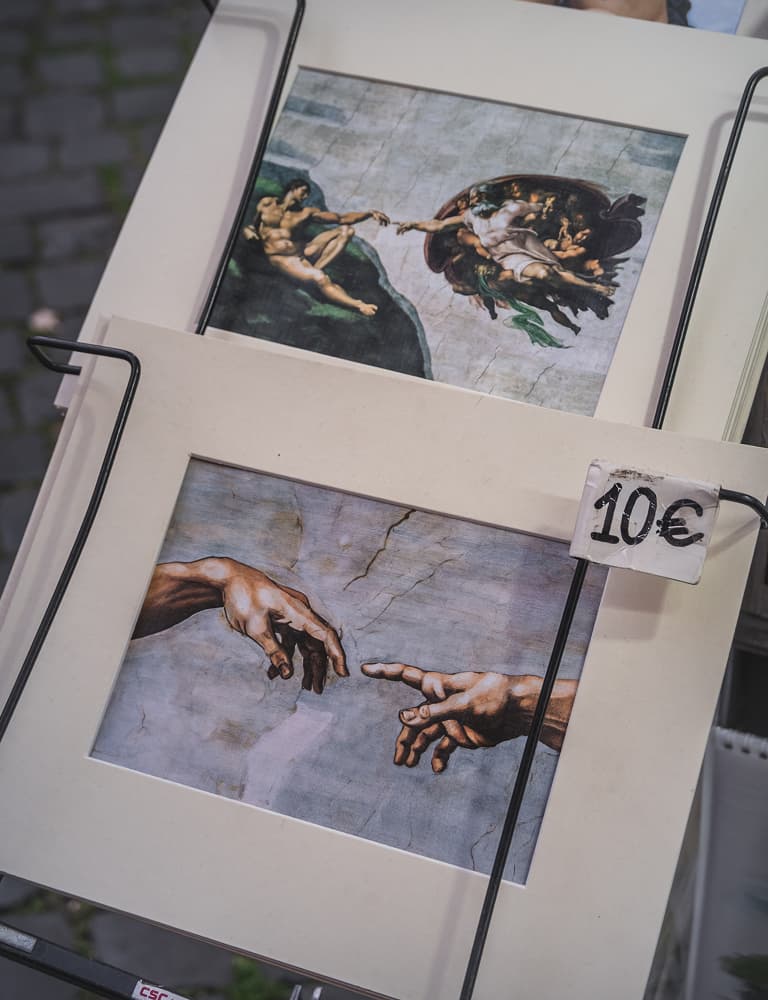

The phone photographs happen in between. They are often slightly crooked, sometimes blurred, taken quickly without considering whether they will ever be seen again or whether they are good enough to keep. And yet they often stay. The polished image shows what a place looked like, while the overlooked one recalls how it felt to move through it – the quiet before crowds gather, the view before stepping outside, the atmosphere of a table already cleared but not yet reset.
Time alters their weight. What once seemed disposable becomes difficult to delete, not because it is technically strong, but because it carries context that the more deliberate images sometimes cannot. A small fragment holds the larger memory intact. These photographs record the minutes around the moment – the waiting, the walking, the early start before the day fills and the noise rises.
Anyone who has scrolled back through an old camera roll will recognise the hesitation. The obvious images are easy to identify and, if necessary, remove. The in-between ones are harder to dismiss because they preserve how a place unfolded around us, often before we realised we were paying attention. Looking back now, the more polished photographs remain steady. They belong to a project and sit comfortably within it.
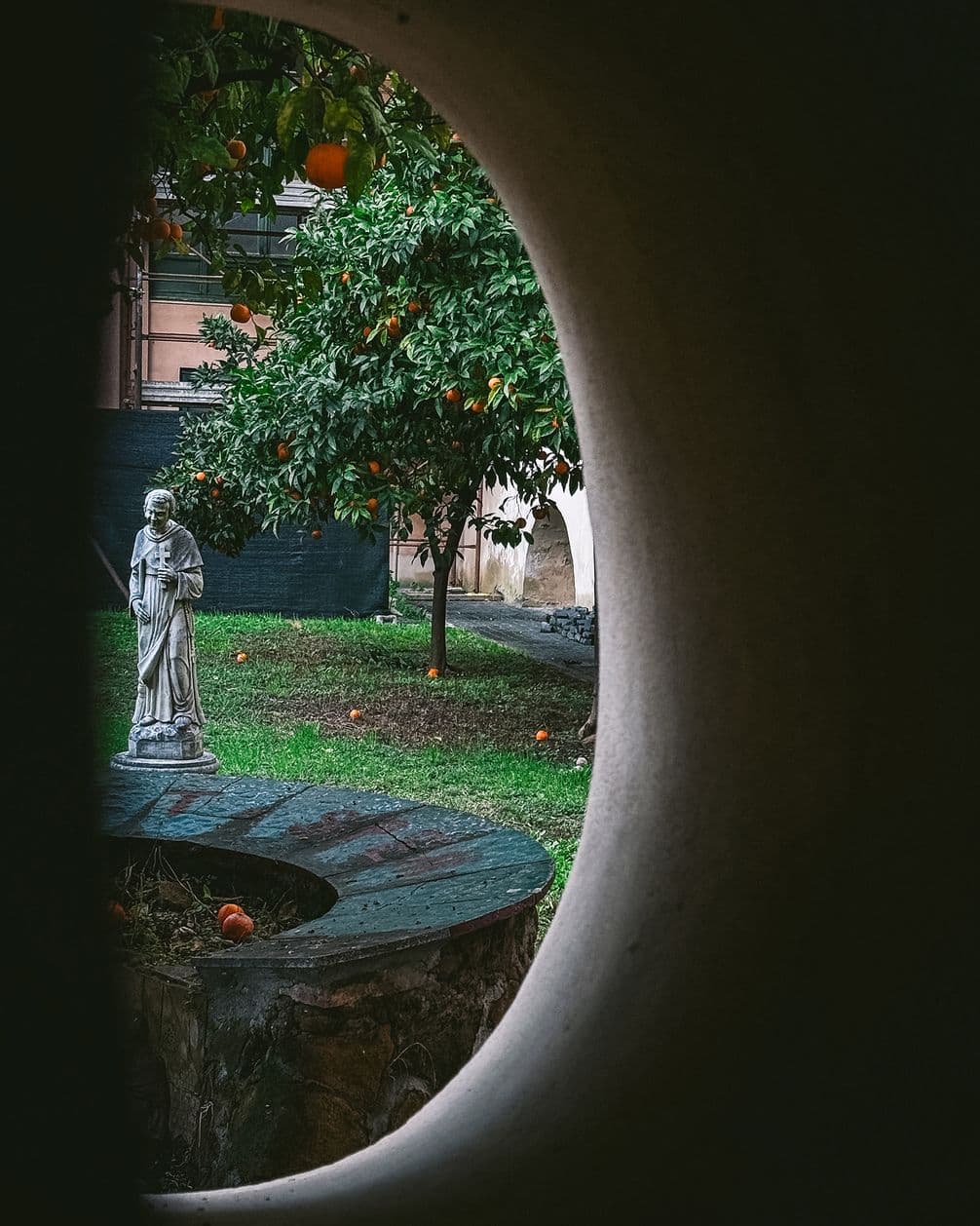
Photo: Siobhan Ferguson
The quieter images feel closer. They return me not only to Rome, but to the pace of being there – the hour before it became busy, the atmosphere that would otherwise have gone unnoticed. And when photographs are gathered together, it is often these fragments that carry the strongest pull. Not the landmark, but the early light; not the monument, but the table before the meal. Memory rarely settles on spectacle – more often, it lingers in what was lived quietly, which is why we hesitate before pressing delete. The image may not be beautiful, but it holds the part of the day that would otherwise disappear.
Découvrez des souvenirs plus rapidement grâce à des fonctionnalités exclusives telles que la reconnaissance faciale et les albums intelligents.




&w=96&q=75)
Yulia Aleksandrova
Écrivain Popsa
30 May, 2025∙3 min

&w=96&q=75)
Rebecca Cope
Journaliste
22 Oct, 2025∙6 min

&w=96&q=75)
Lucy Halfhead
Responsable éditoriale Popsa
22 Oct, 2025∙7 min


 Etats-Unis