
Voyages

Scott Little
Photographe
17 Sep, 2025∙9 min
Voyages
Scott Little
Photographe
17 Sep, 2025∙9 min
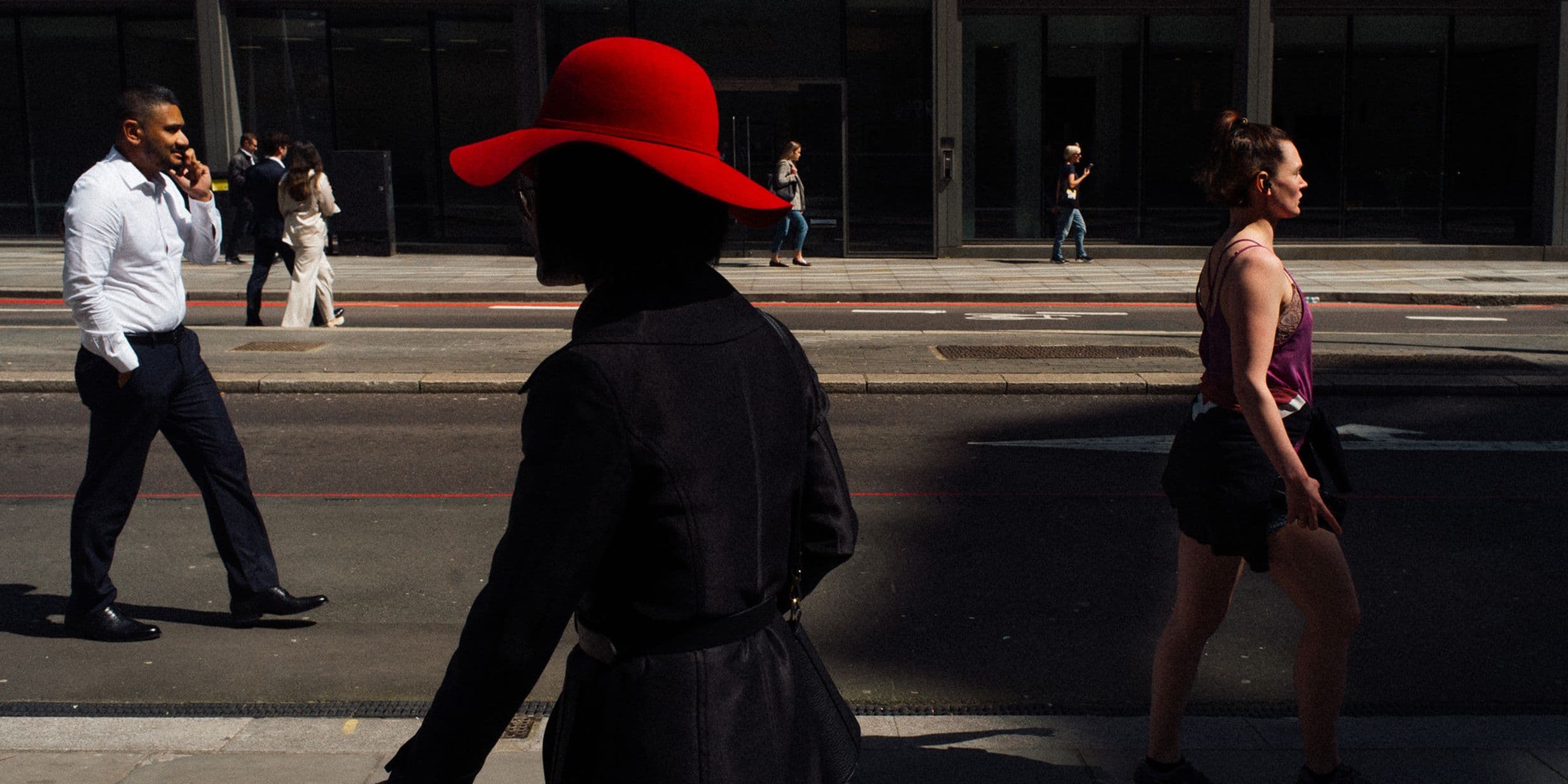
Pratiquer la photographie de rue, c’est l’occasion de découvrir le monde avec un regard neuf et de remarquer des choses que vous ne verriez pas autrement : les interactions discrètes, les gestes fugaces, la poésie cachée dans le chaos quotidien. Ces foules « agaçantes » ne gâchent pas vos photos, elles révèlent le véritable pouls d’un lieu. Un monument sans personne autour relève de la simple architecture. Dès que des personnes entrent dans votre champ de vision, votre cliché devient tout à coup vivant. Dans cet article, le photographe de rue Scott Little partage ses conseils pour composer avec les foules animées plutôt que de souhaiter qu’elles ne soient pas là.
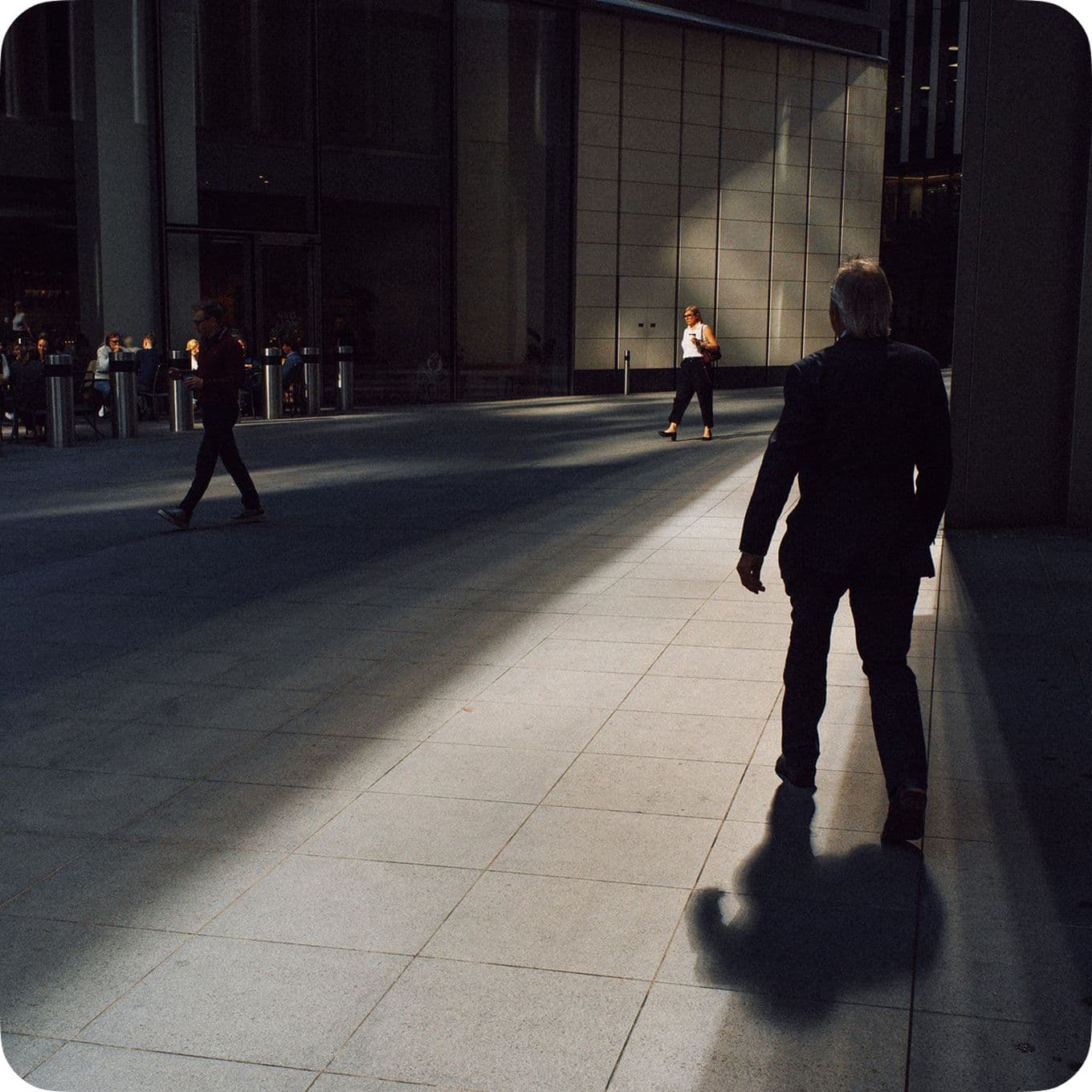
Photo : Scott Little
After years of photographing bustling cities all around the world, I’ve learned that the challenge isn’t avoiding crowds – it’s learning to dance with them. It can be very difficult to get it right but the rewards are extraordinary when you do – photographs that don’t just show what a place looks like, but reveal what it feels like to be there. Here are my tips for capturing busy scenes at their best.
Photos : Scott Little
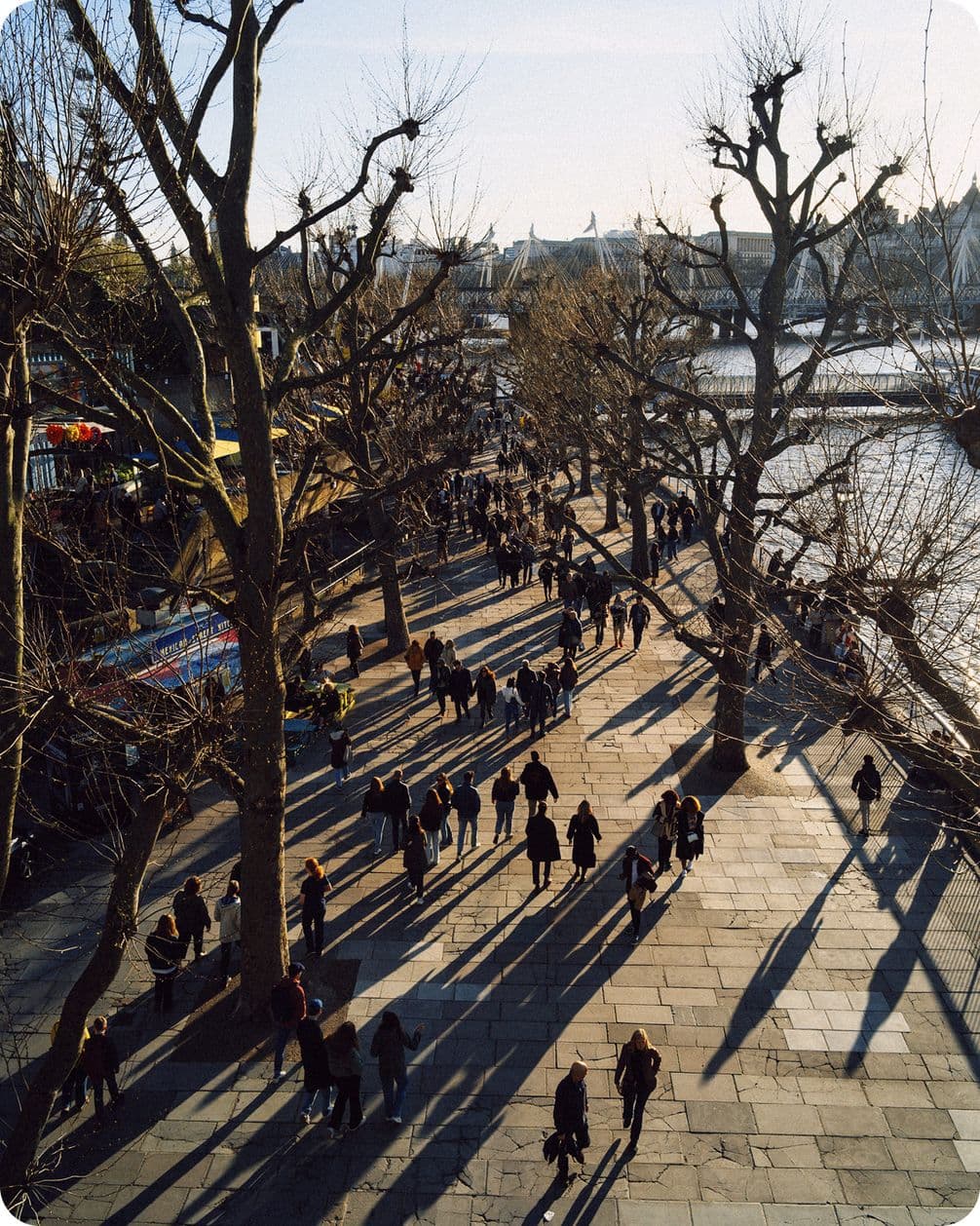
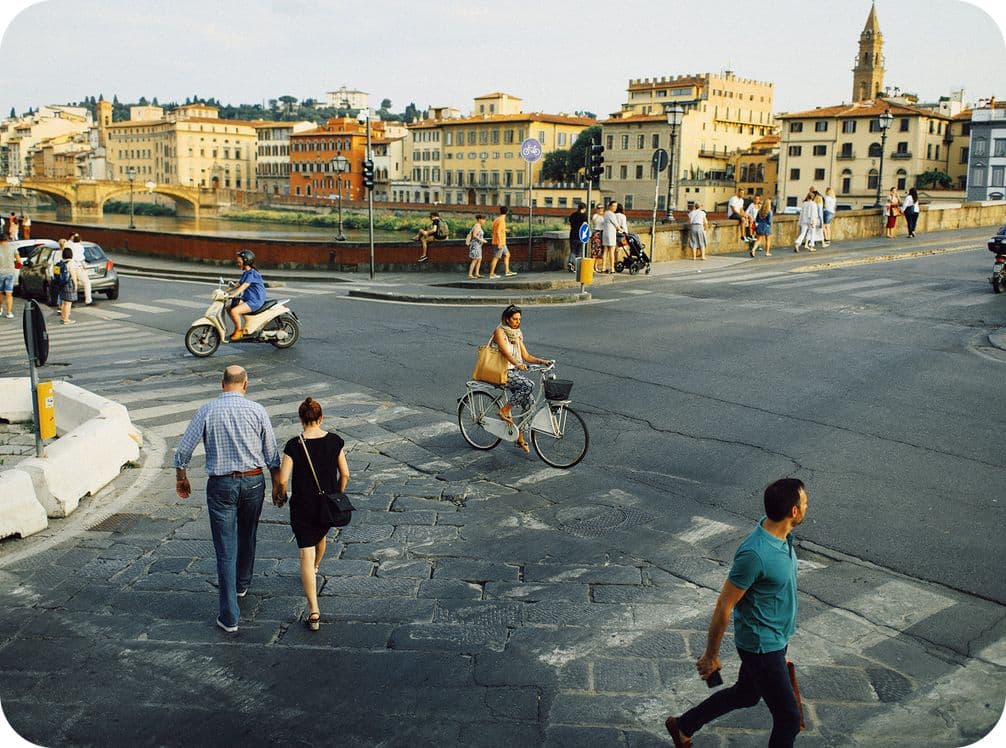
One simple trick can transform your street photography: change your viewpoint. At eye level, things can feel quite chaotic. Go high or low, and suddenly you’ll see patterns and stories that were hidden before. Find some height – steps, bridges, balconies. From above, crowds flow like rivers around street obstacles. Or get low and let people tower over you, making ordinary scenes feel cinematic.
Photos : Scott Little
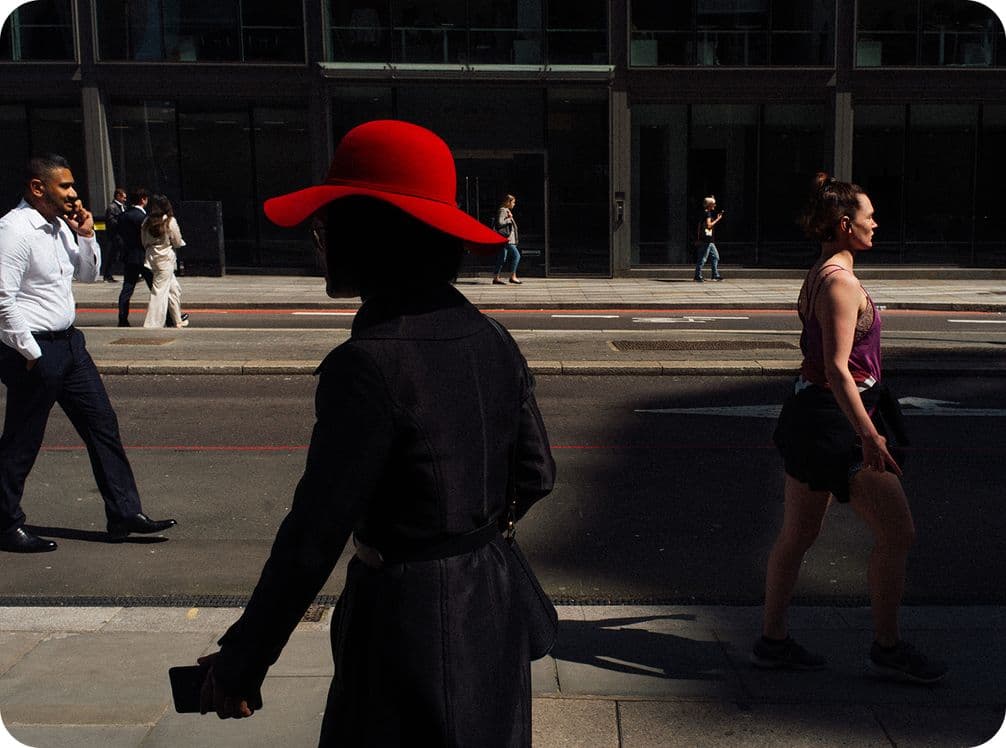
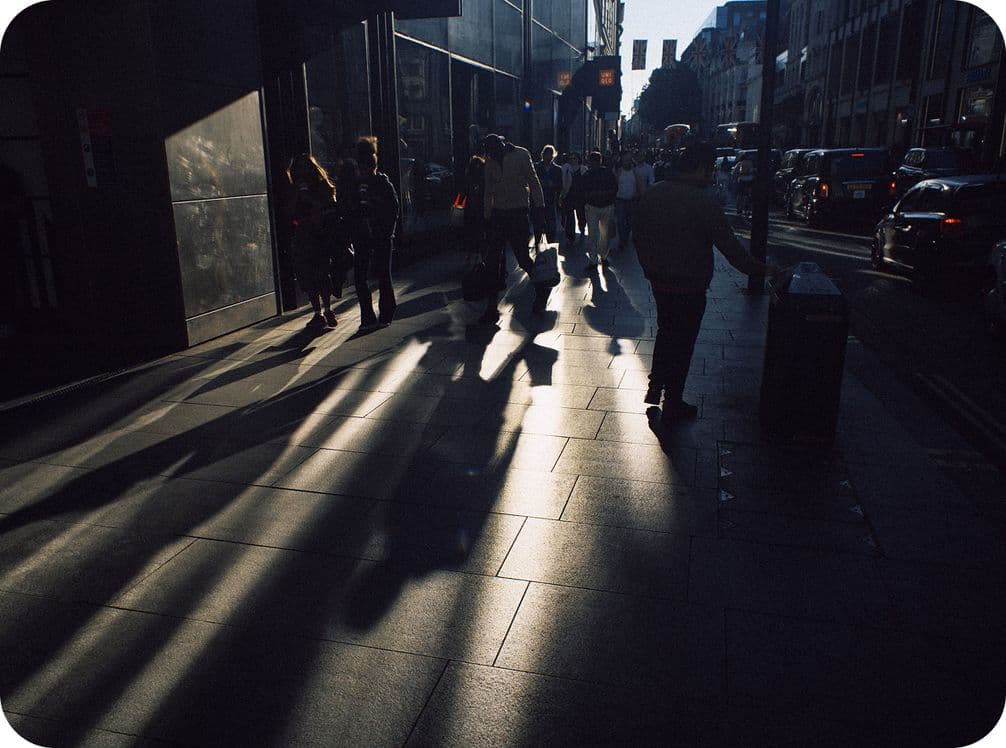
Want instant drama in your street shots? Seek out interesting light. Golden hour before sunset creates gorgeous rim lighting around people, separating them from backgrounds and adding drama to their movements.
It’s not the only time of day worth shooting, however – midday sun may seem harsh but those sharp shadows and bright highlights create tension in your photos that makes viewers stop and look. Early morning and blue hour each bring their own dramatic flair as well – cooler, moodier, perfect for when you want your photos to feel like a film. Learn how the different light types create varied opportunities and lean into the strengths of each.
Photos : Scott Little
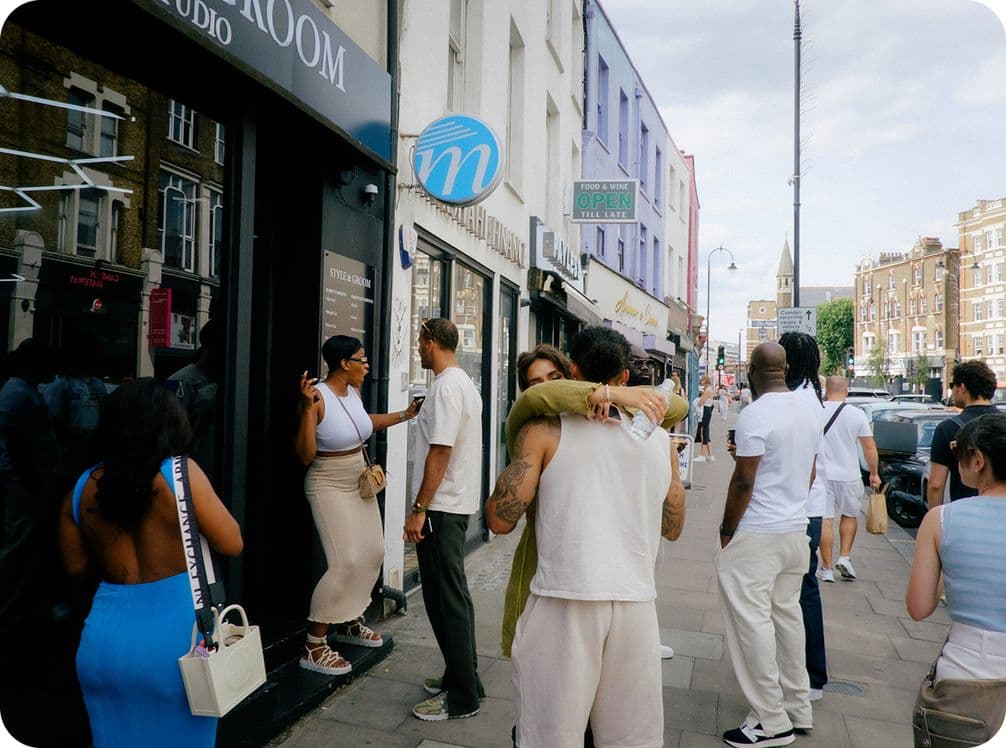
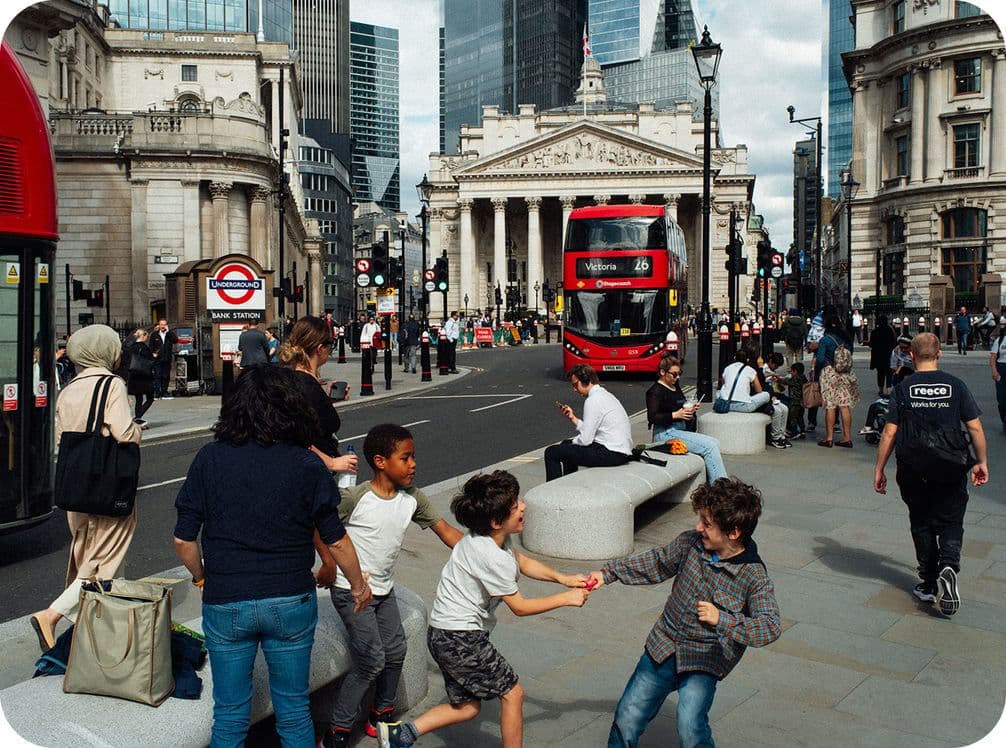
What transforms a crowd from anonymous faces into compelling photography is connection – those fleeting moments when strangers interact, when emotions are shared, when humanity reveals itself through a gesture or expression.
The key is patience and observation – watch for both obvious interactions and subtle ones like unconscious mirroring of movements or momentary eye contact between strangers.
Photos : Scott Little
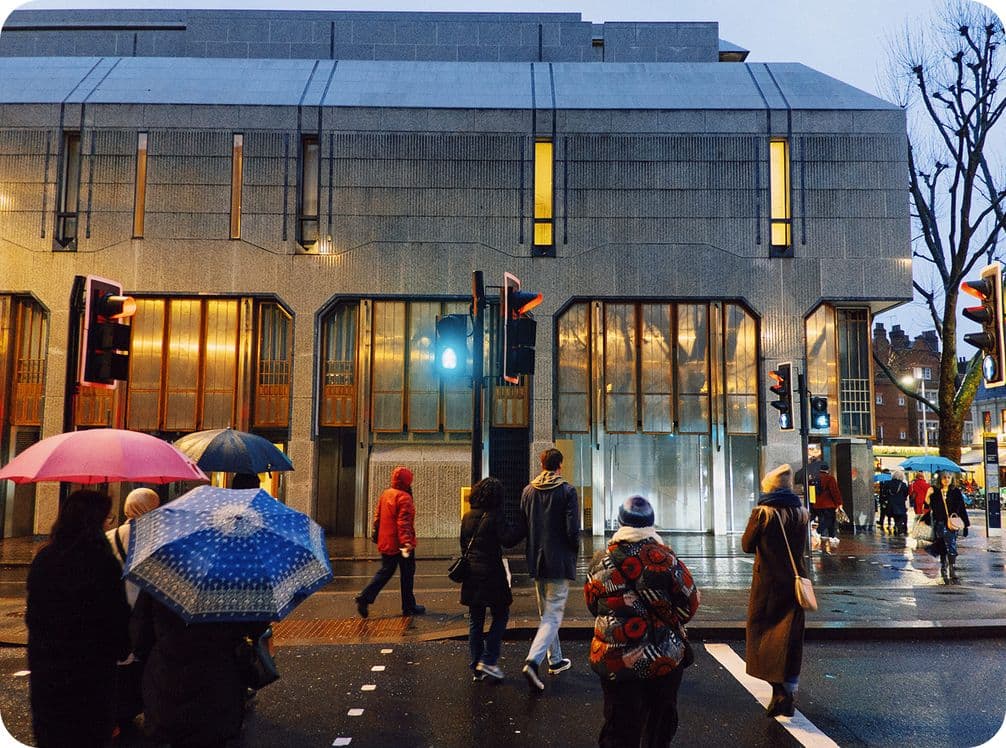
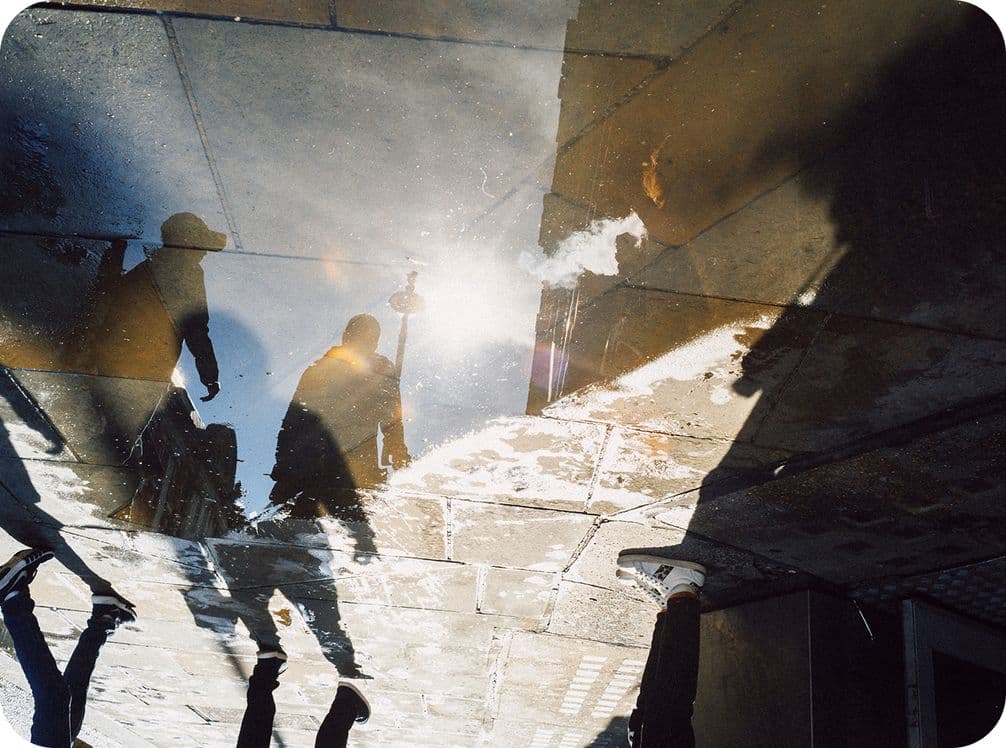
Don’t let unpredictable weather send you running for cover – it’s one of street photography’s greatest opportunities. Weather dramatically changes how people move and interact.
Take rain for example: it creates incredible moments – suddenly everyone’s moving differently – quick, purposeful steps, hunched shoulders, umbrellas creating geometric patterns overhead. Reflections on wet pavement double your composition possibilities, and the way people huddle together under awnings creates natural intimacy. Wind, snow, thunder – they all create unique atmospheres and behaviour.
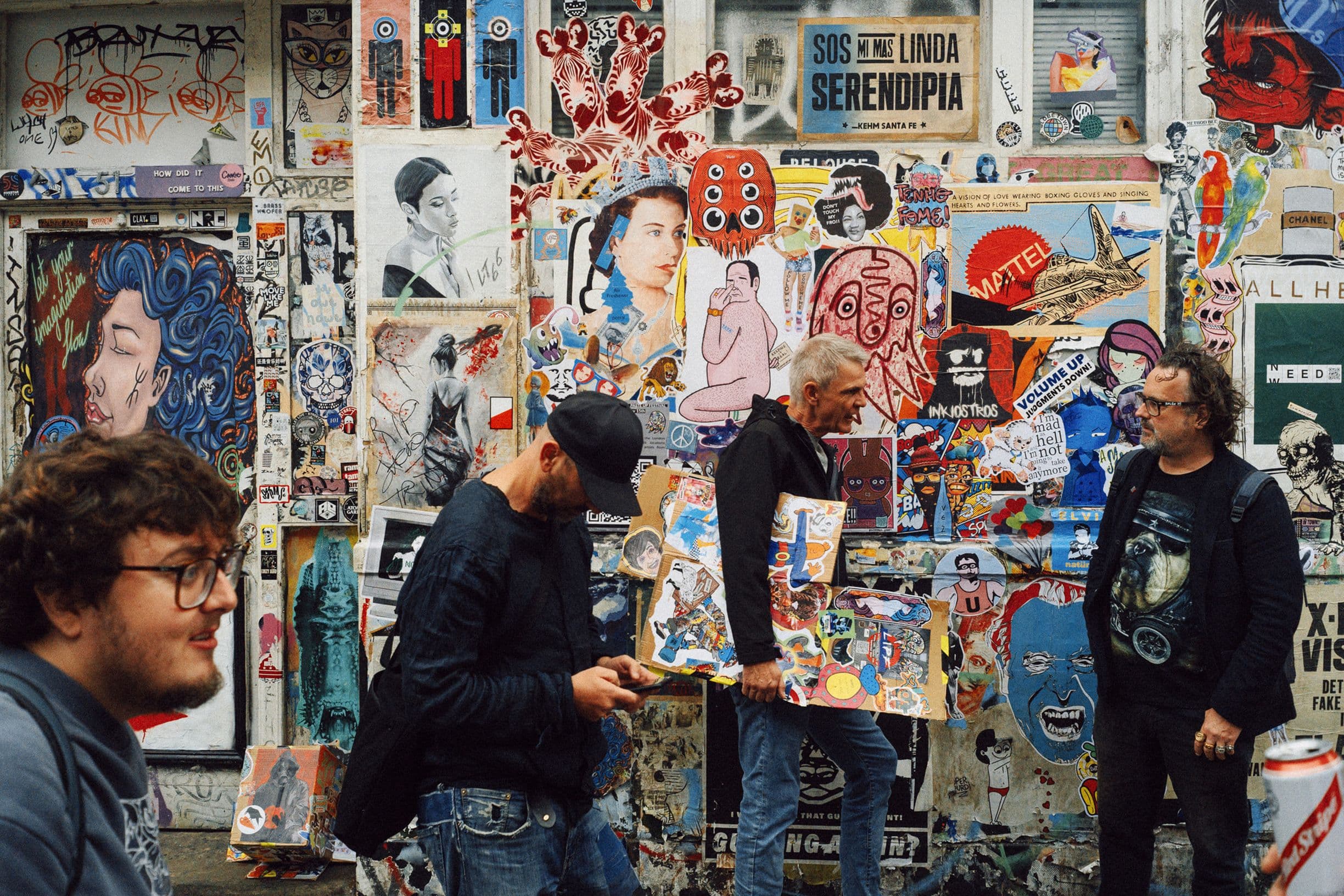
Photo : Scott Little
Street photography shines when you capture irony, contradiction and contrast. These aren’t just observations, they’re the core of compelling visual stories. Look for opposing elements such as old versus new – like someone reading a physical newspaper among a crowd engrossed in smartphones.
Spot contrasting colours, such as a lone, vibrant umbrella in a sea of muted raincoats. Or find stillness amid motion – a solitary figure standing perfectly still in a vibrant splash of light, while the surrounding street blurs with the movement of passing vehicles and crowds. By framing these visual paradoxes, you create powerful narratives that go beyond a simple snapshot, making your photos truly memorable.
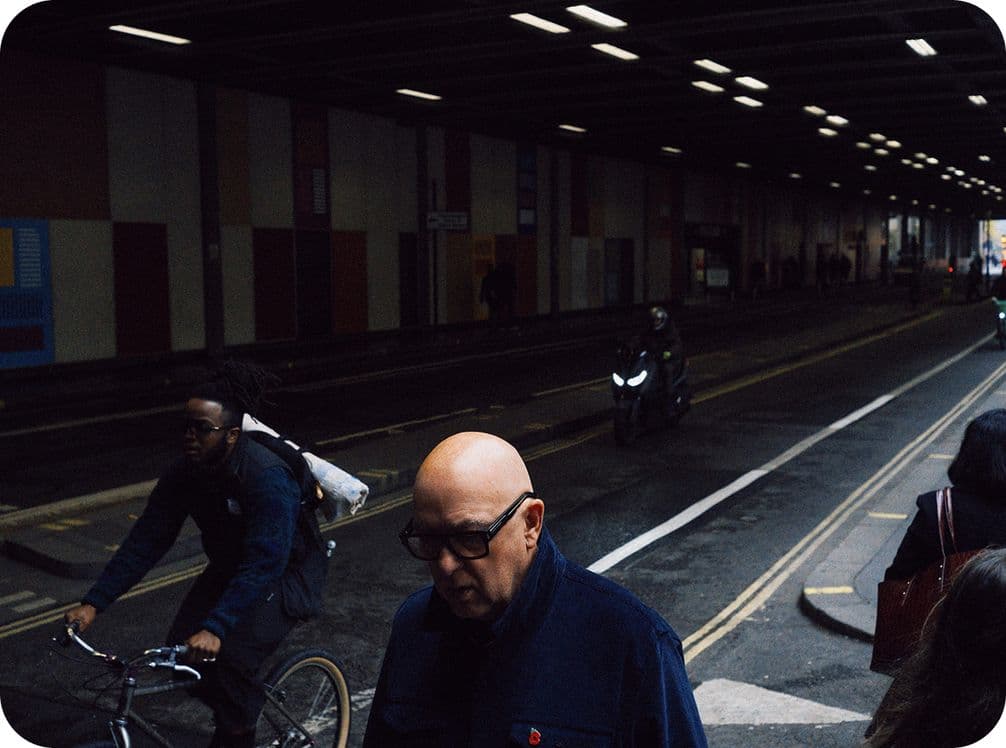
Photos : Scott Little
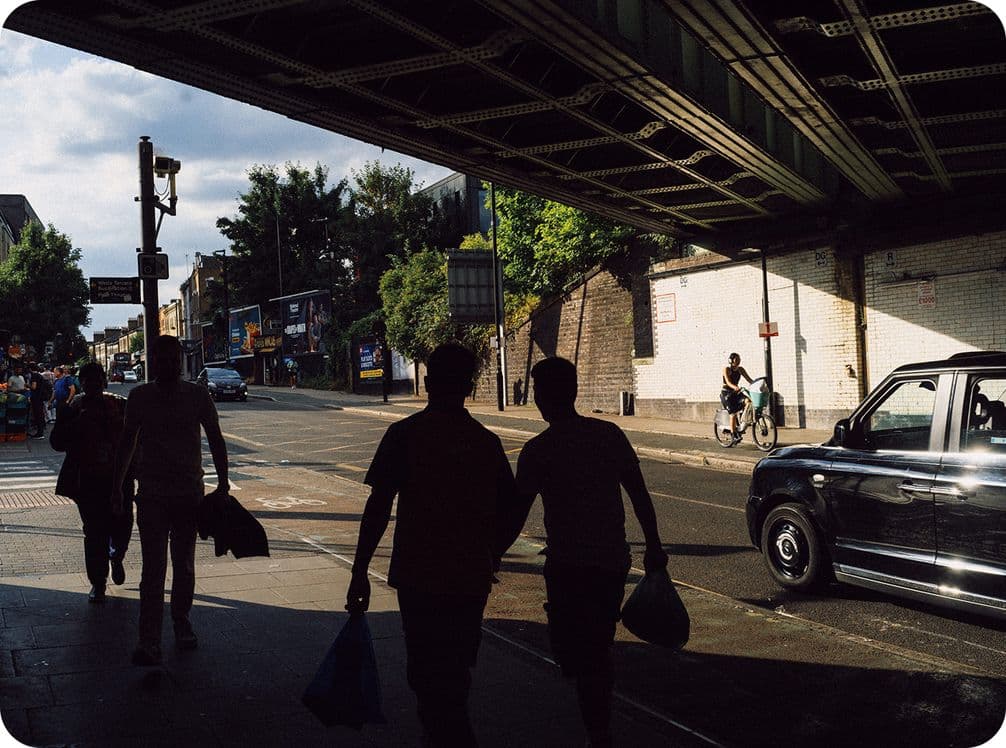
Busy streets are rich with compositional tools. Look for natural leading lines – like the converging edges of buildings, rows of lampposts or even a compelling shadow cast across a wall that effortlessly guides the viewer’s eye through the frame, creating a dynamic sense of depth and movement.
The urban landscape is full of strong geometric shapes from architecture and street patterns that can anchor your composition and guide the eye. By combining these elements, you can craft layered, impactful images that tell deeper stories.
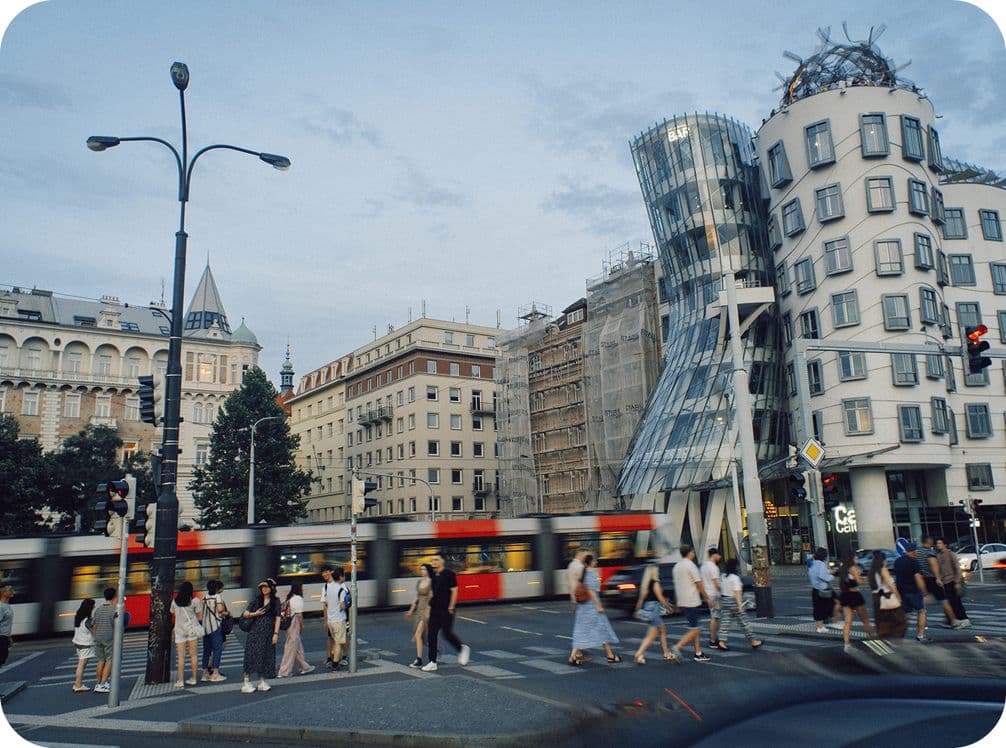
Photos : Scott Little
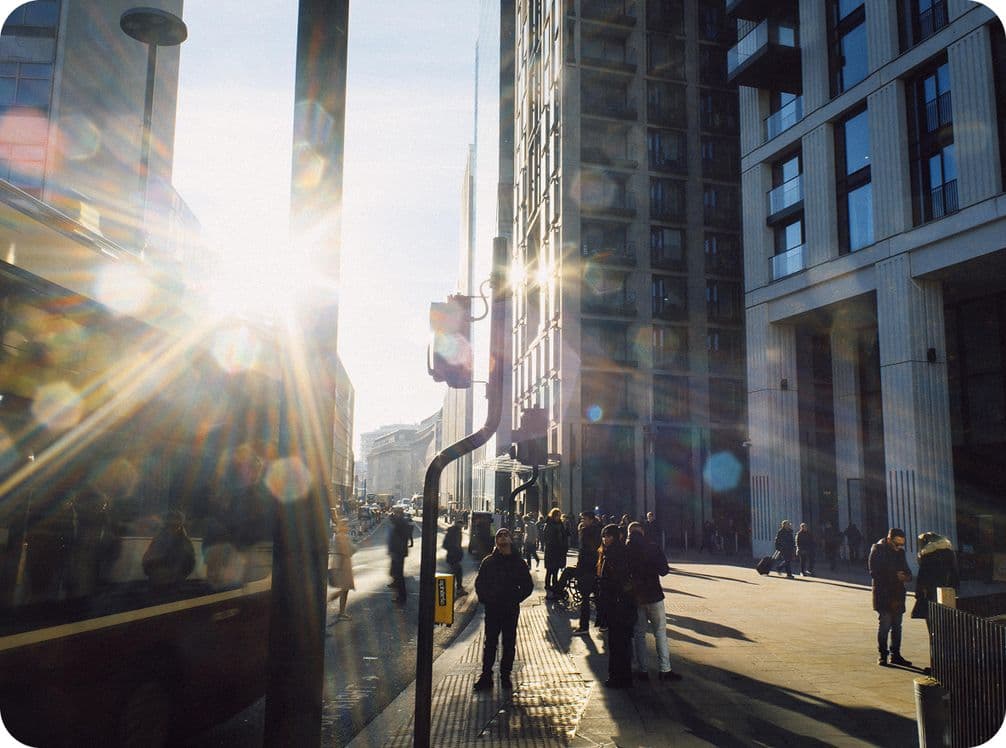
Fast shutter speeds (1/500s or faster) freeze action and capture sharp details of individual people and moments, emphasising their energy and dynamism. Slower shutter speeds (1/30s–1/8s) introduce motion blur to convey a sense of speed and movement while keeping some elements sharp (this requires a steady hand or tripod). It’s an excellent way to show the flow of crowds or vehicles and capture the kinetic energy of a scene.
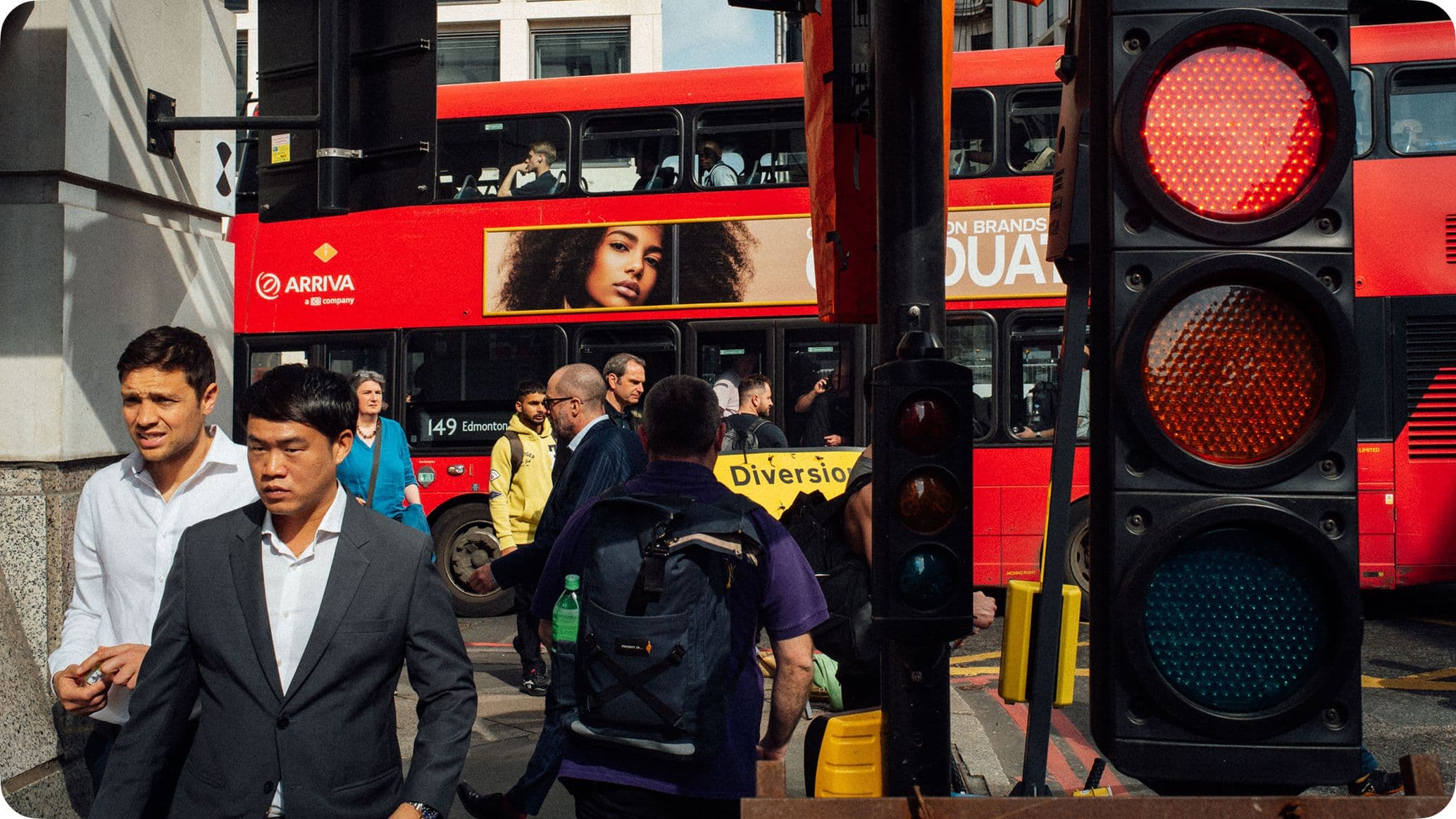
Photo : Scott Little
Transportation hubs offer endless opportunities – try shooting outside busy train stations and bus terminals where people are constantly moving with purpose. High-traffic commercial areas work beautifully, too – busy pedestrian shopping streets, main downtown districts and street corners during rush hour provide natural drama, especially at major intersections where crowds gather and disperse.
Tourist and cultural areas give you diverse subjects and interesting backdrops. Think popular landmarks, museum districts, historic neighbourhoods and waterfront areas where locals and visitors mix. Public events like street festivals, parades and protests create dynamic scenes with natural storytelling elements. Business districts during lunch hour and major public plazas round out the list of spots where human activity creates compelling photographic opportunities.
A note from Popsa: Always remember to check local laws and customs before photographing in public.
Découvrez des souvenirs plus rapidement grâce à des fonctionnalités exclusives telles que la reconnaissance faciale et les albums intelligents.



&w=96&q=75)
Lucy Halfhead
Responsable éditoriale Popsa
19 Sep, 2025∙9 min
&w=96&q=75)
30 May, 2025∙4 min

&w=96&q=75)
Ben Olsen
Rédacteur Popsa
14 Aug, 2025∙5 min


 Etats-Unis
Comment immortaliser l’énergie des rues animées d’une ville
Un photographe de rue partage ses astuces pour ne plus subir l’agitation urbaine dans vos photos de voyage, mais en tirer parti