


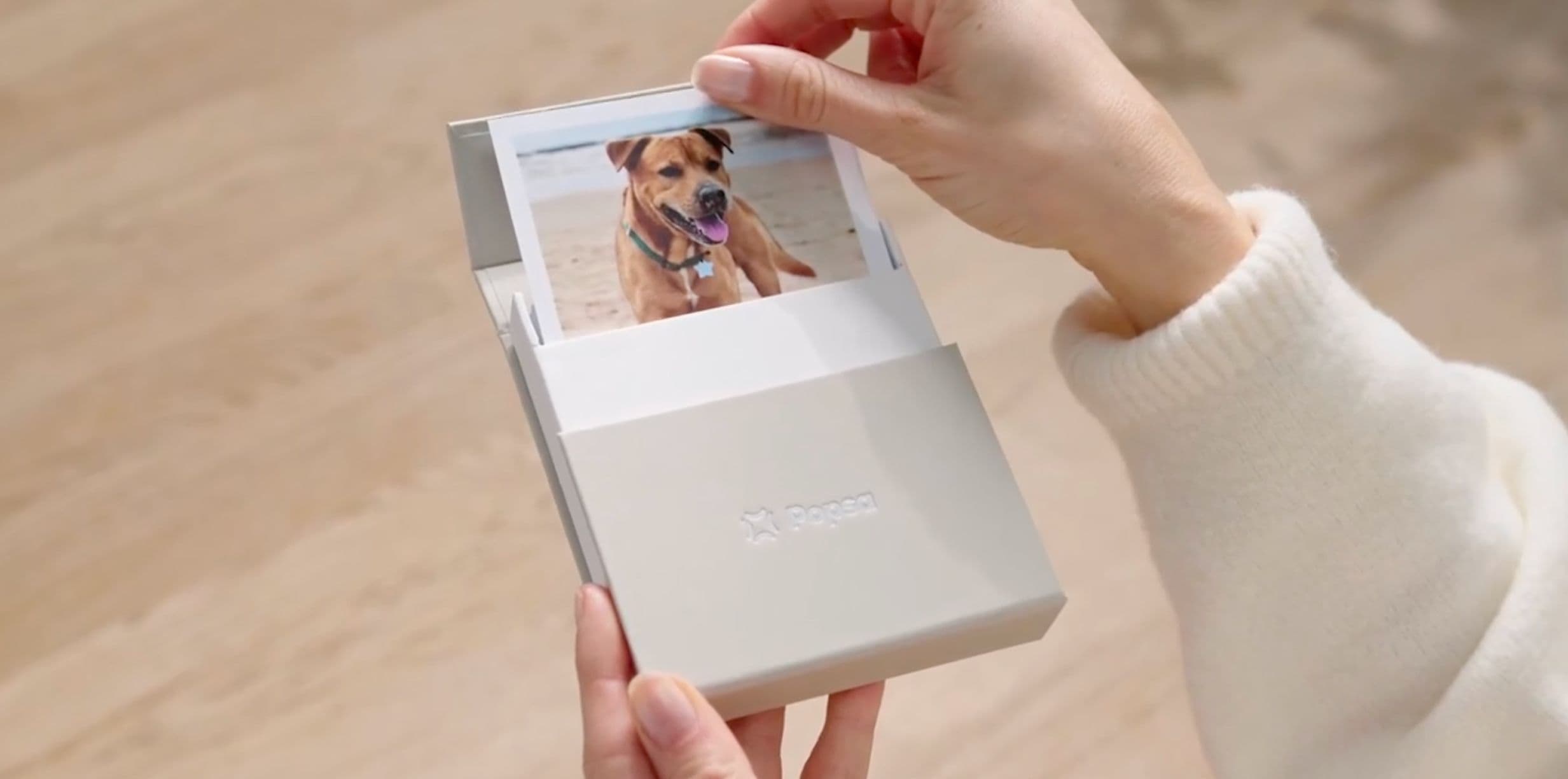
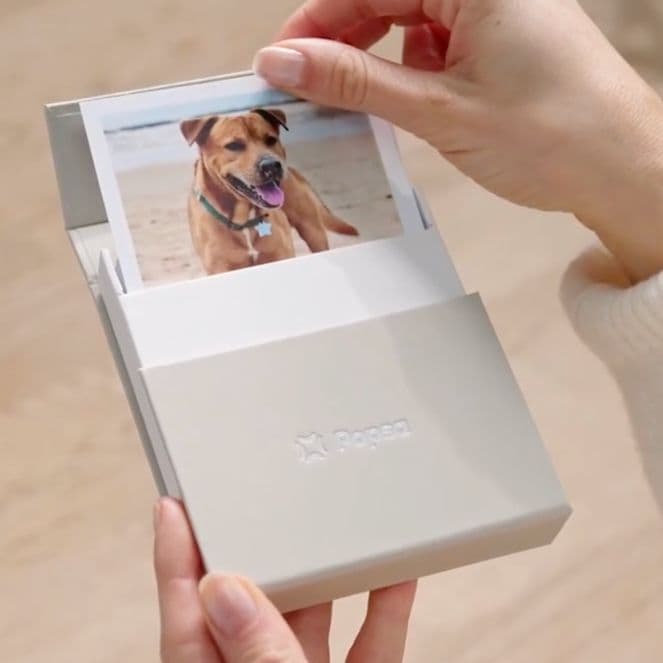
Popsa’s Retro Prints have a particular quality – the small format, the vintage instant camera border, the slightly nostalgic feel. Each one is printed individually on thick paper and tucked inside a magnetic-closure presentation box that holds up to 34 prints. The result is different from a Popsa Photo Book or a frame: a tactile set of memories you can pass around a table. The best Retro Prints feel like they’ve always existed, as if you found them in a drawer rather than ordered them last week. The trick is that this only works with certain photos. Pick the wrong ones and the format flattens them out. Pick the right ones and they take on a quiet weight that a phone screen never quite gives them.
What the format is really good at
Retro Prints work best with photos that have texture, atmosphere and a sense of moment. The small size means detail-heavy images tend to get lost, while photos with a clear subject come through strongly. Think about the shots that already feel a little nostalgic on your phone – a friend lit by late afternoon sun, a meal on holiday, a child caught mid-laugh. It’s also worth thinking about how the prints will be used. Because they live in a box rather than on a wall, the experience is closer to sharing photos at a dinner party than displaying them as art. Images that invite conversation – ones people will pick up, ask about, pass on – do more here than purely beautiful shots.
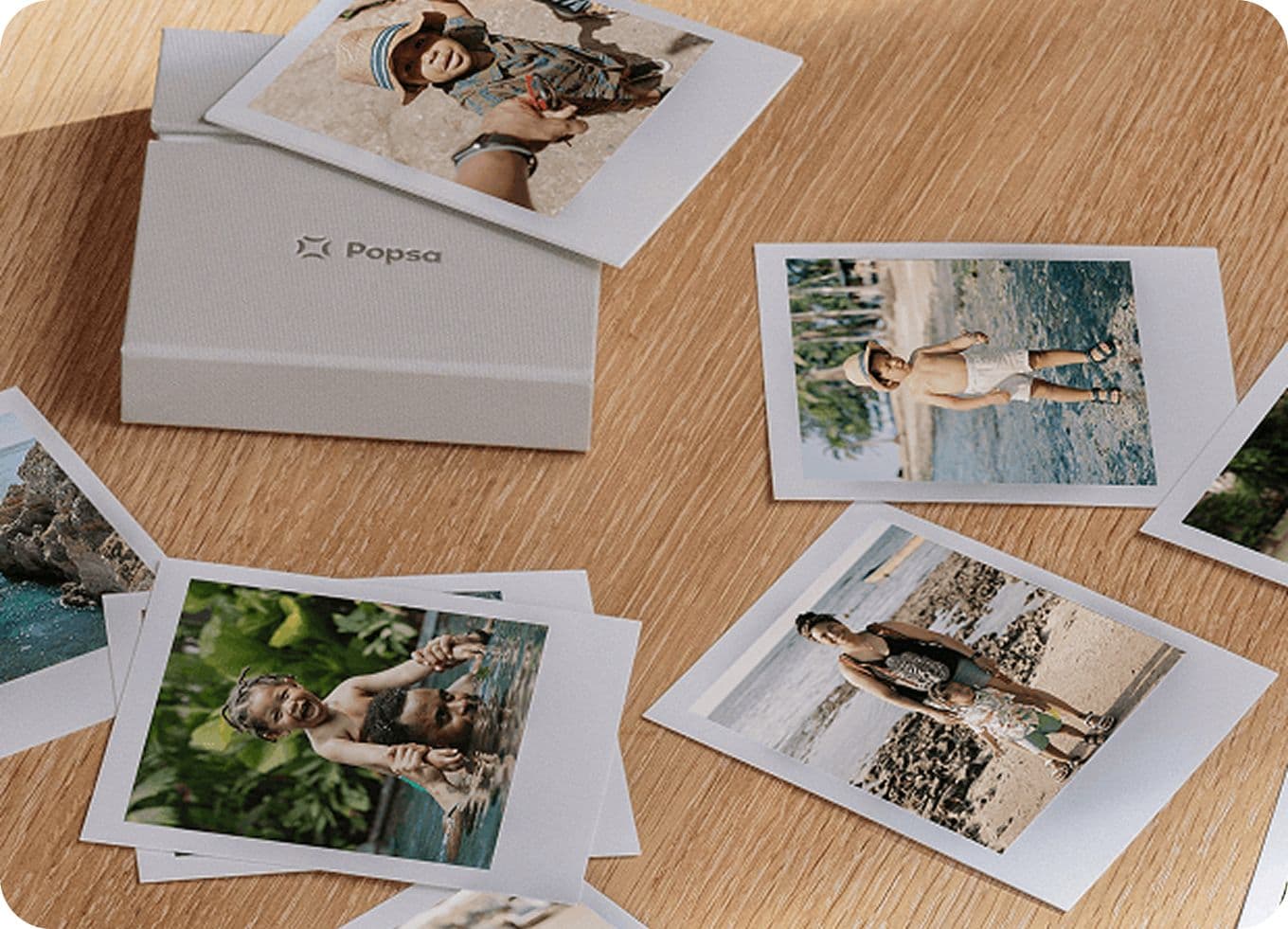
Retro Prints come with a presentation box that holds up to 34 prints
Natural light is important
The single biggest predictor of whether a photo will look good as a Retro Print is the light it was taken in. Natural light – particularly the softer light of early morning, late afternoon and overcast days – prints beautifully. Skin tones look human and the small format holds the mood without losing anything. Harsh midday light, strong artificial light and flash photography are harder to work with. The contrast tends to flatten on a small print, shadows lose their depth and skin can take on a slightly waxy quality. Photos taken in golden hour or under soft indoor light are usually the ones to pick out first.
Candid beats posed
Posed group photos tend to lose something at this scale. The faces become small, the composition is symmetrical and there’s no single point for the eye to land on. A candid shot of the same group – someone laughing, mid-conversation, half-turned – works much better. There’s a moment in the image, and the format gives it room to land. This applies to portraits too. A formal portrait can feel stiff at this size, while a candid shot of the same person reading, cooking or looking out of a window feels intimate. There’s a longer case to be made for why everyday photos matter more than perfect ones – but for this format especially, candid shots are nearly always the right choice. They’re also the ones that get the strongest reaction when you pass the box around a table.
Avoid heavy filters and strong colour grading
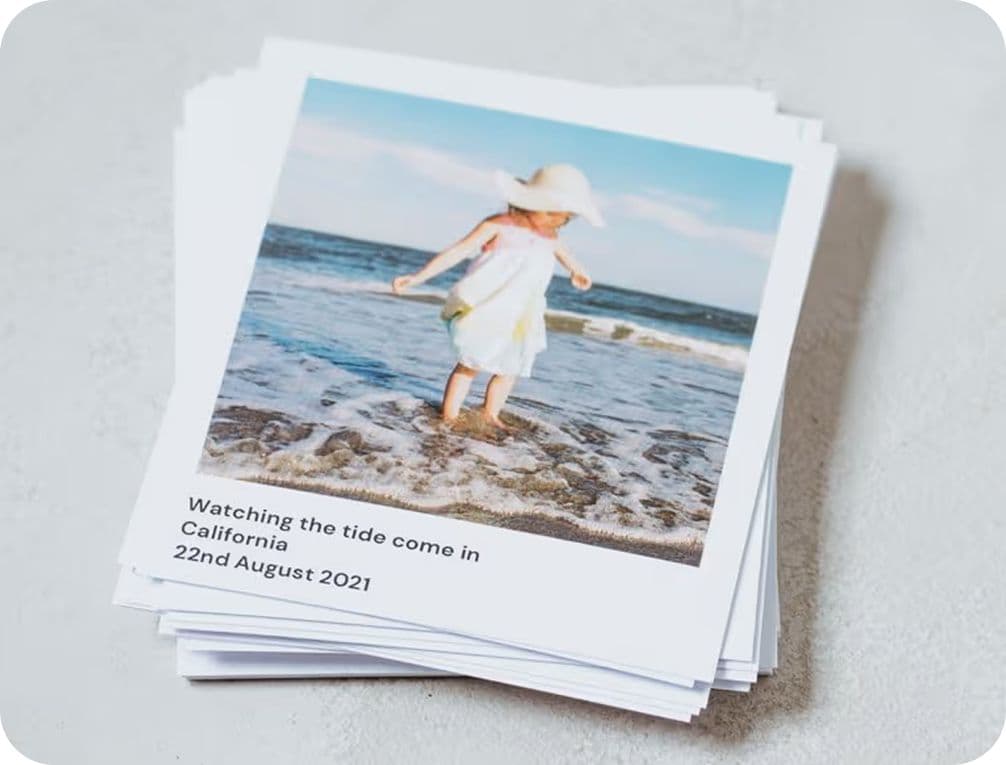
Texture works, minimalism doesn’t
Photos with visible texture – fabric, food, hands, weathered surfaces, water, foliage – tend to work particularly well as Retro Prints. The format brings out the tactile quality of these images in a way that’s hard to predict from a phone. The opposite is also true. Very clean, very minimal photos – the ones that look good as phone wallpapers – often look flat as small prints. They need scale to work. If a photo’s main appeal is its composition and use of empty space, it probably belongs as a larger print.
Editing before you print
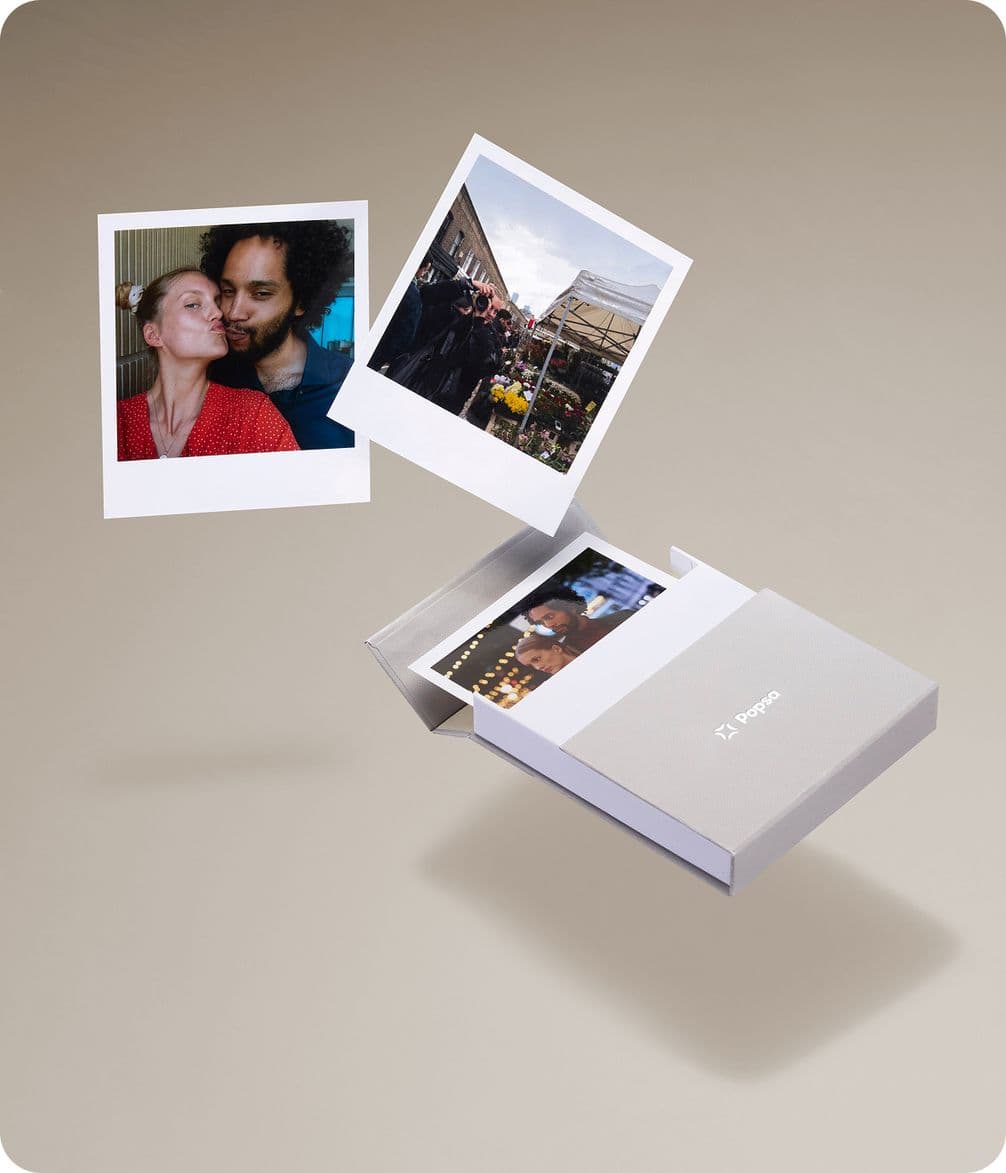
A few light edits make a real difference. Slightly increasing contrast helps the image hold up at a smaller size. Warming the temperature very slightly often suits the retro feel, though it’s easy to overdo and end up with a photo that looks orange. Avoid heavy filters and strong colour grading – the format already has a particular character thanks to the instant camera border – stacking a filter on top usually fights against it. The built-in iPhone and Android photo editing tools are perfectly good for this.
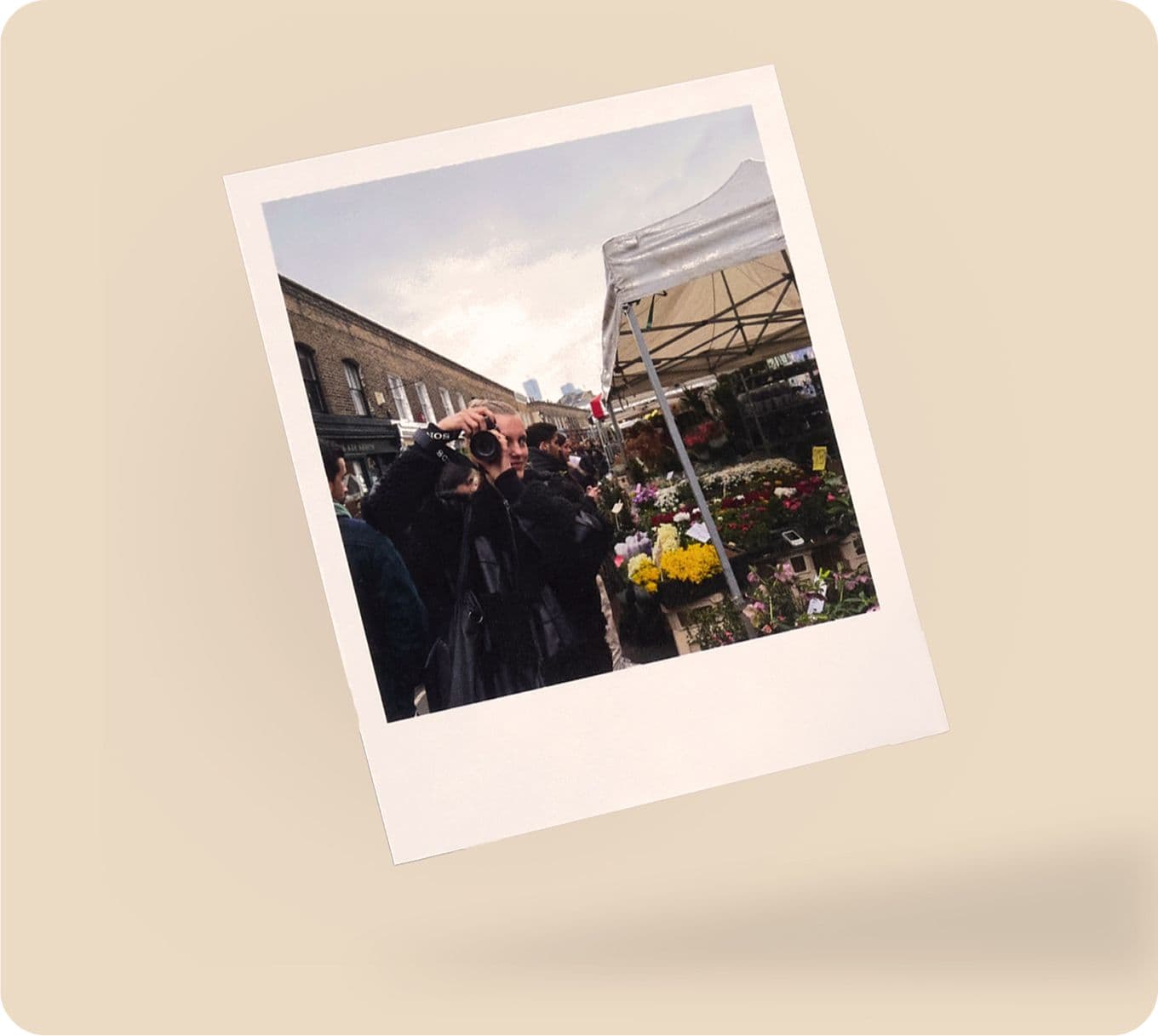
Photos with visible texture work best
Choosing a set that works together
The best collections have variety within a consistent mood – a mix of wide shots and close-ups, of people and places, of moments and details. The unifying thread is usually the atmosphere: a trip, a season, a relationship, a year. Thirty-four nearly identical photos lose their individual impact. A good set has a rhythm – something funny, something quiet, something striking – so each print earns its moment as it comes up.
Téléchargez l'application
Replongez dans vos souvenirs en toute simplicité grâce à des fonctionnalités exclusives comme la reconnaissance faciale et les albums intelligents.


Articles connexes
&w=96&q=75)
&w=96&q=75)
Nathan Cook
Écrivain Popsa
20 janv. 2026∙7 min
&w=96&q=75)
Lucy Halfhead
Responsable éditoriale Popsa
28 oct. 2025∙7 min


 États-Unis