Customer experience is hugely important to the whole team here at Popsa. It's what sets us apart.
The well-known companies in the personalisation market all have something in common. They treat photobooks, prints, postcards and posters as commodities; sold like any other item you might find in the Argos catalogue.
We think this is wrong.
These days your photos are the story of your life. We just help you tell it.
This belief is shaping how we design the next generation of our products.
The problem with personalised products is that there are countless possibilities along the way to a product you can be proud of. Helping you tell your story means reducing unnecessary complexity and guiding you to your desired outcome rather than just offering hundreds of options.
The only way to achieve this is to predict behaviour.
When we generate a photobook layout for you, it is based on hundreds of calculations which have been designed to mimic decisions you might make yourself if you had to do it manually.
We don't always get it right, but we're getting better at it and not just by chance. We program our algorithms by analysing the editorial decisions of our customers.
Popsa works with Mixpanel to securely analyse patterns of behaviour across a population of app users. No one's photos are viewed, but we do analyse the number of adjustments people make to the crop position or how many times the colour scheme is changed, for example.
Other analytic patterns allowed us to spot that customers were accidentally trying to used old credit cards that had expired. Simply adding the expiry date to the graphic representing the card vastly reduced this problem.
It can also help you spot unintentional side effects...
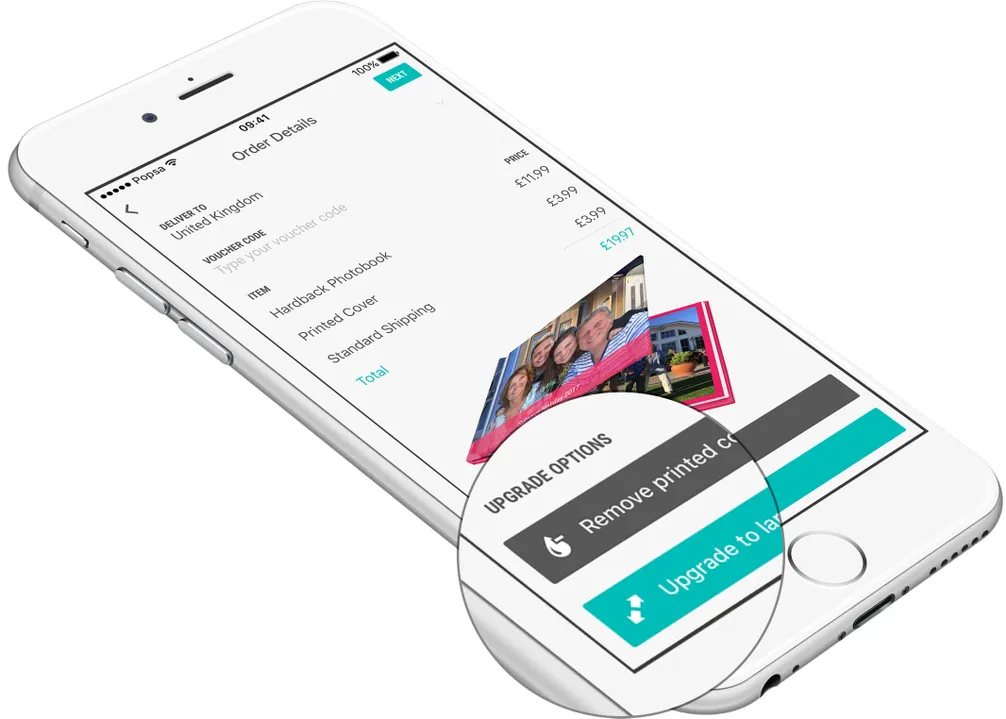
When we first added the ability to upgrade to larger products on the 'Order Details' page people started to use the feature but then it's usage dramatically fell. The reason turned out to be that our customers were getting anxious about tapping the button to upgrade (to see what their book looked like with a hardback cover) specifically because they then could not easily switch back to the original product.












 Vereinigte Staaten