
Travel
21 Photos: Sweden’s folk traditions and natural landscapes
Flower crowns, maypoles and lupins stretching to the horizon – one photographer’s journey through Sweden at Midsommar, when golden hour lasts all night

17 Mar, 2026∙5 min
Travel
Flower crowns, maypoles and lupins stretching to the horizon – one photographer’s journey through Sweden at Midsommar, when golden hour lasts all night
17 Mar, 2026∙5 min
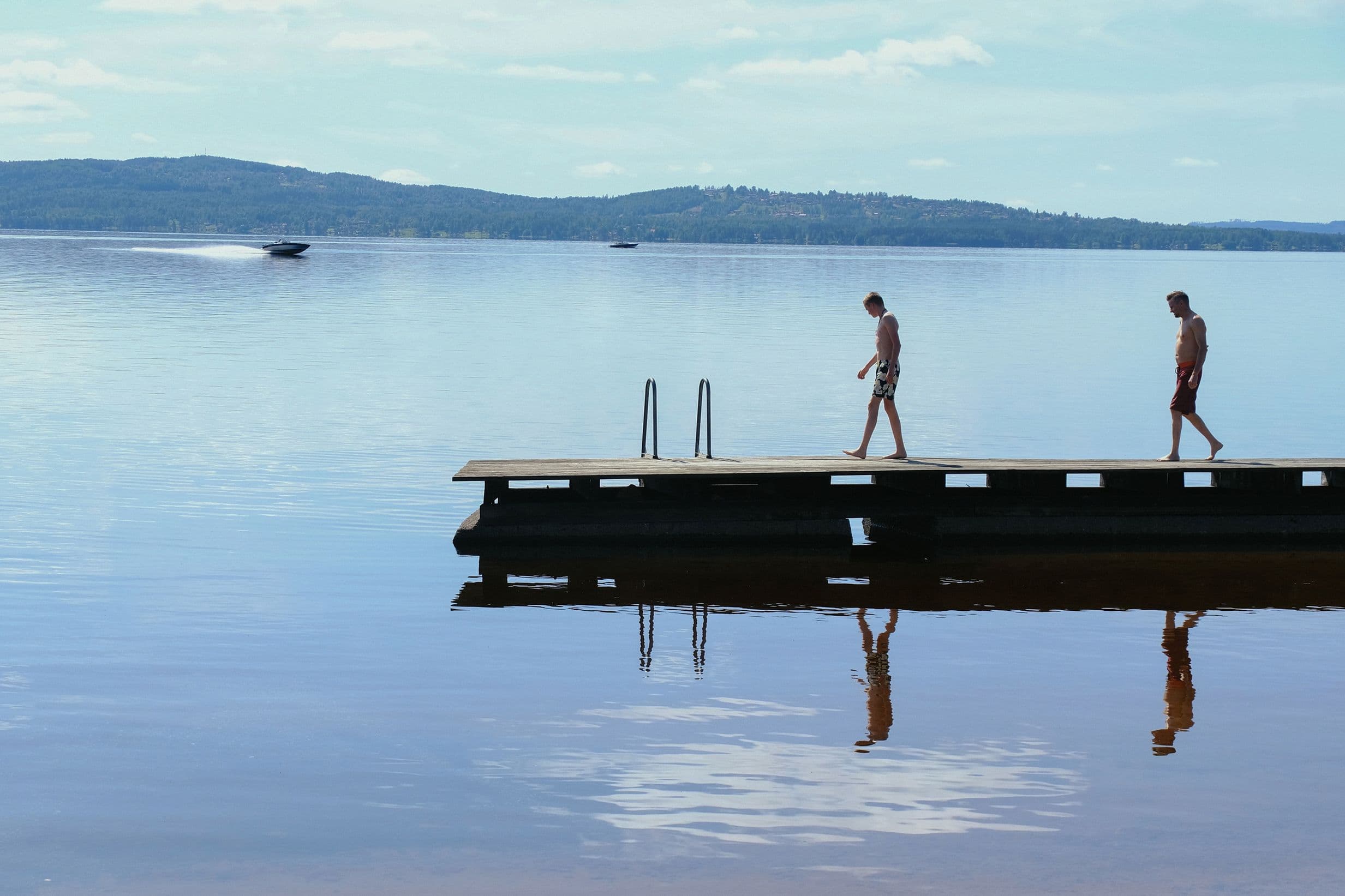
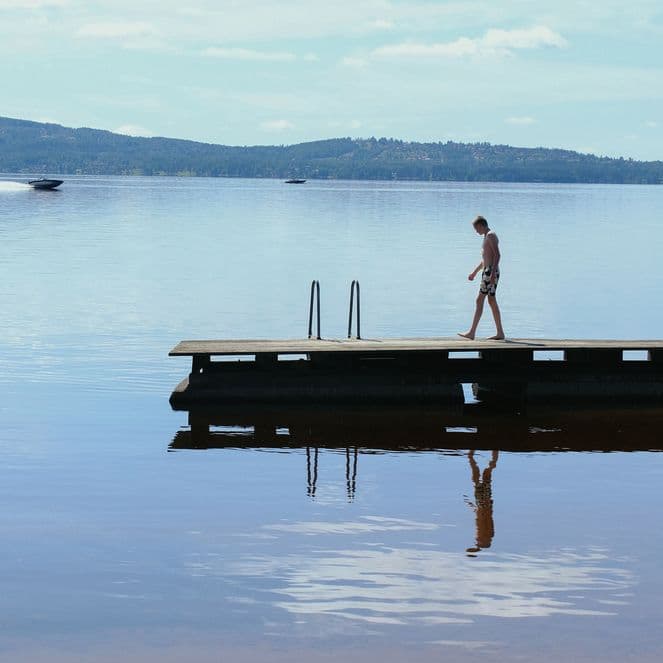
Picture this: falu red timber houses, smoke drifting from wooden saunas perched beside tranquil lakes, endless swathes of lilac lupins, and folk adorned in traditional dress dancing around a maypole, freshly foraged flower crowns upon their heads. Sweden at Midsommar is a pastoral dream, where everyone seems to embrace ancient lore. Folkdräkter (folk costumes) encompassing everything from embroidered dresses and shawls to decorative bonnets, belts and ribbons are unearthed from cupboards, houses are festooned with foliage, childhood favourite folk ditties are bellowed, and never-ending feasts are prepared.

Photo by Emma Lavelle
After years of admiring these celebrations from afar, last June I embarked on a two-week trip to experience Swedish Midsommar for myself. Flying into Stockholm and out of Gothenburg, my 800km road trip took in the archipelago, a floating cabin in the middle of a lake, and a 19th-century coastal villa, basing myself in Dalarna (‘Sweden in miniature’) for the Midsommar festivities themselves. I was in my element, capturing everything from crafts handed down through generations to the serene natural landscapes, soaking up never-ending golden hours in a land where the sun barely sets at this time of year. My camera barely left my hands.
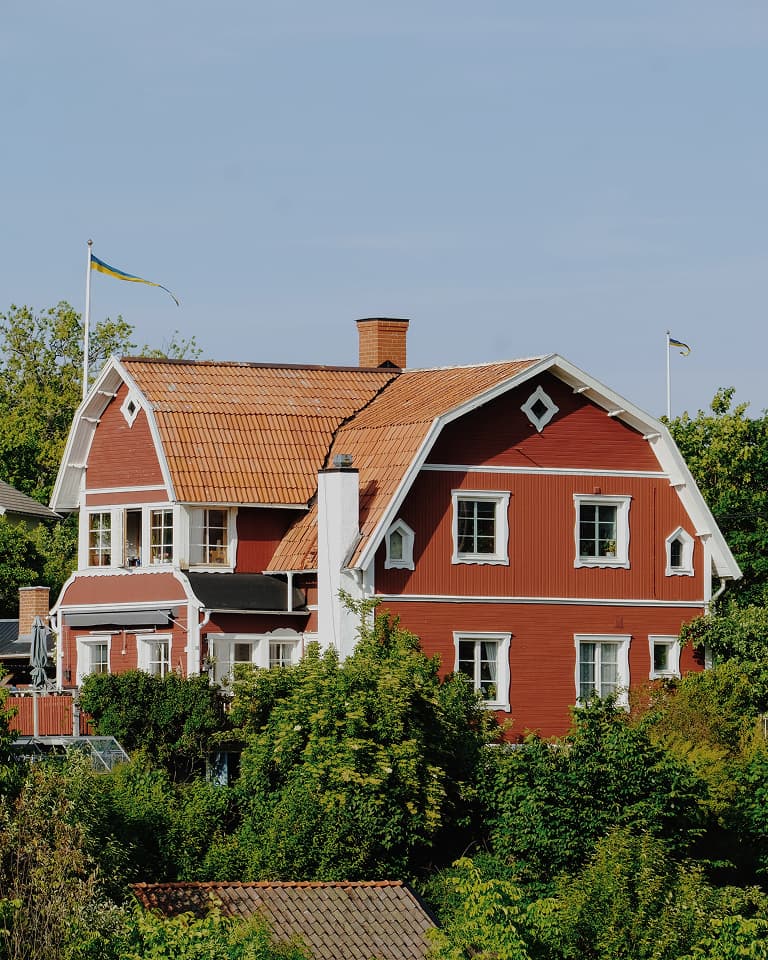
Photo by Emma Emma Lavelle
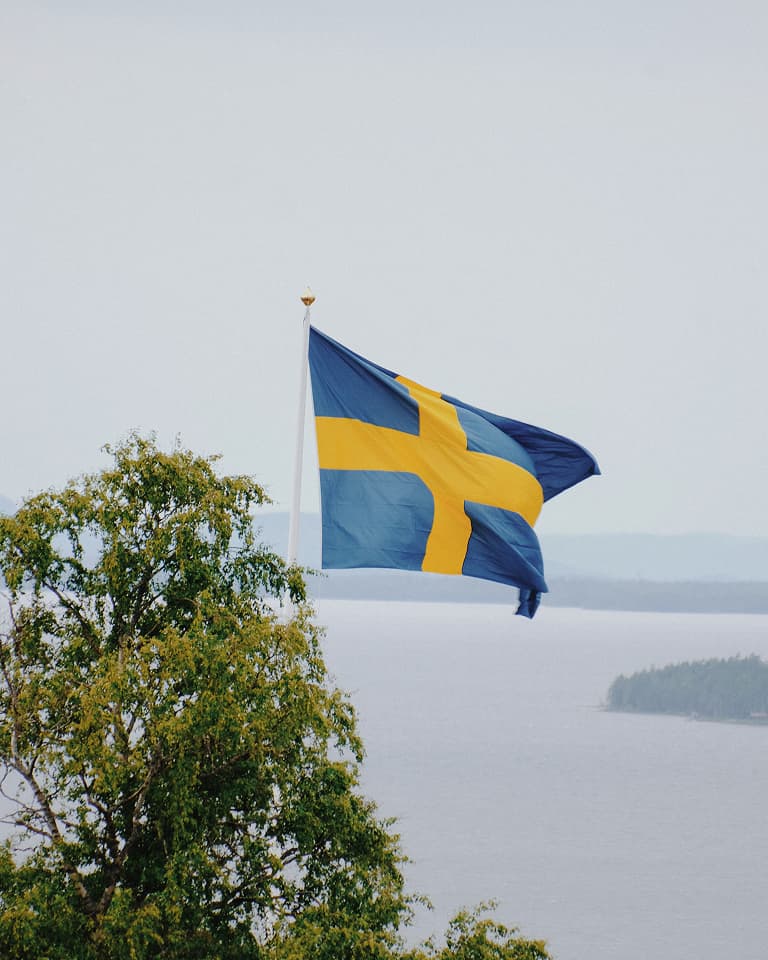
Photo by Emma Emma Lavelle
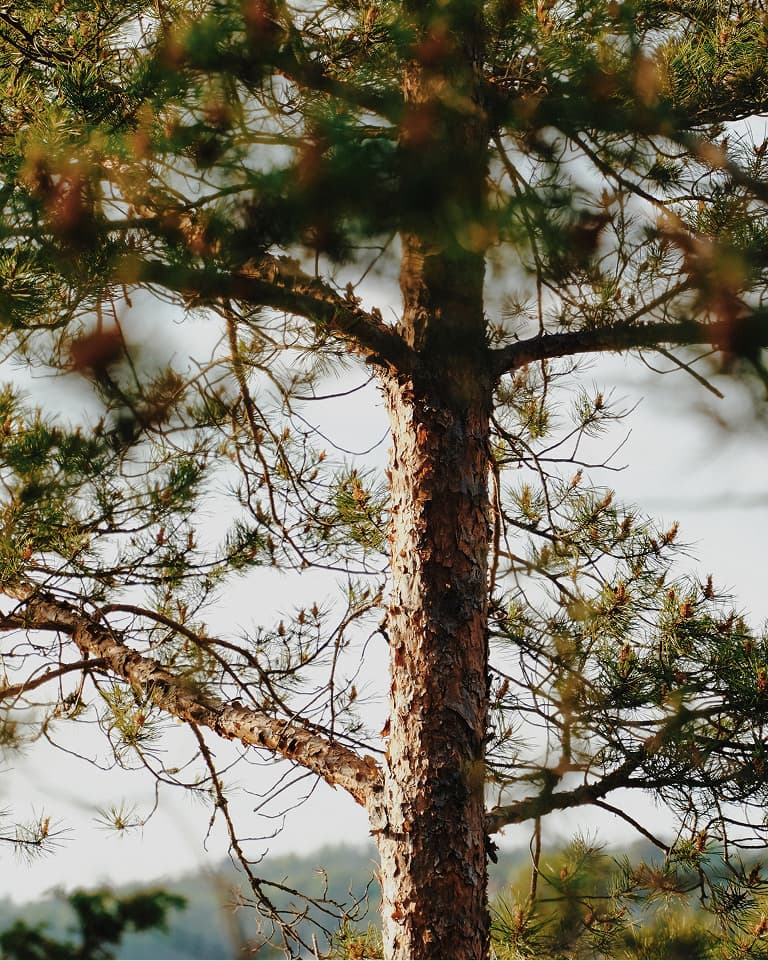
Photo by Emma Lavelle
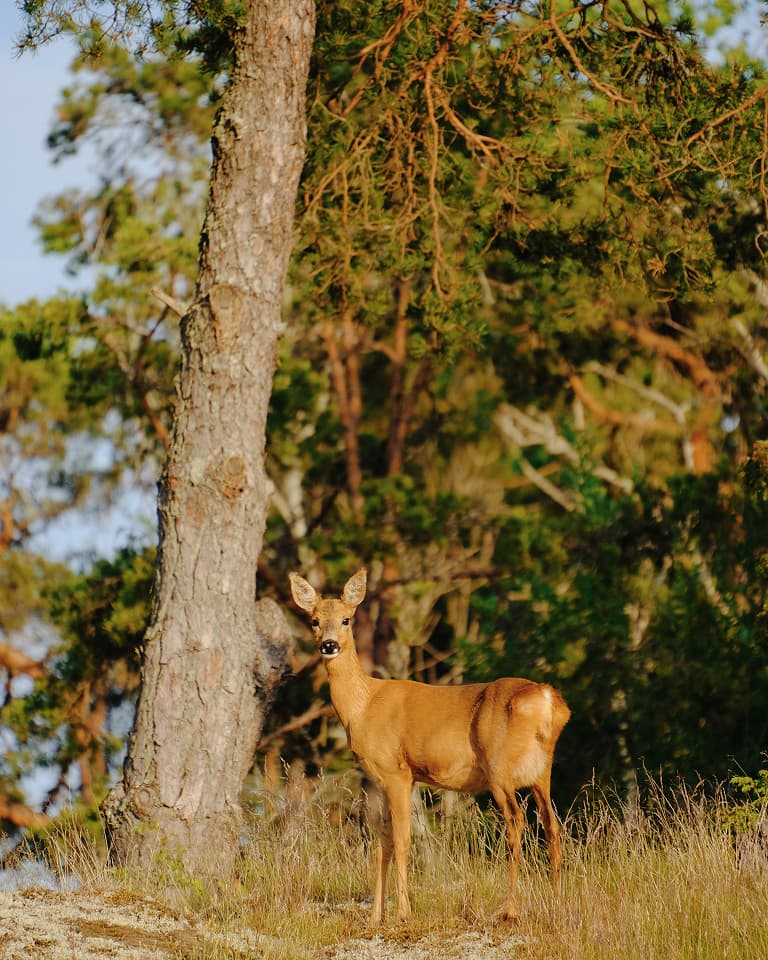
Photo by Emma Lavelle
My journey began on Stockholm’s archipelago of over 30,000 islands and islets. Renting a traditional, slightly decrepit summer house in Boda, on the island of Värmdӧn for a couple of nights, my boyfriend and I quickly settled into a simpler way of life. With no wifi and very basic facilities (including an outdoor cold shower), our days were spent exploring the neighbouring isles by ferry, braving icy dips in the Baltic Sea, and reading our books lazing in the afternoon sunshine. At golden hour I wandered around the island with my camera and telephoto lens, capturing picturesque cottages and the local deer – which required staying completely still, awaiting them walking into my shot.

Photo by Emma Lavelle

Photo by Emma Lavelle

Photo by Emma Lavelle
From Boda, we hopped in a hire car to embark on the four-hour drive north to Dalarna, the home of Sweden’s Midsommar celebrations and where the traditions originated from. Centred around Lake Siljan, Sweden’s seventh largest lake, this serene bucolic region is home to Sweden’s most elusive wildlife (no bears, moose, wolves or lynx were sadly spotted) and a scattering of charming towns and villages. We based ourselves in the hilltop town of Tällberg, where we were immediately swept up in the Midsommar preparations. Each morning, I strolled through wildflower meadows, through the forest and past never-ending lupins down to the shore of the lake for long swims in the shallows. All around, the local townsfolk were decorating the midsommarstång (Midsommar’s poles), hanging natural decorations in their gardens and gathering lupins to fill vases. In the sun-kissed evenings, I captured lupins swaying in the breeze and picturesque wood-framed cottages, enveloped in a golden glow. Midsummer really is the best time to photograph Sweden; the long days culminate in lingering golden hours that are ideal for shooting the luscious flora and fauna and beautifully decorated homes.
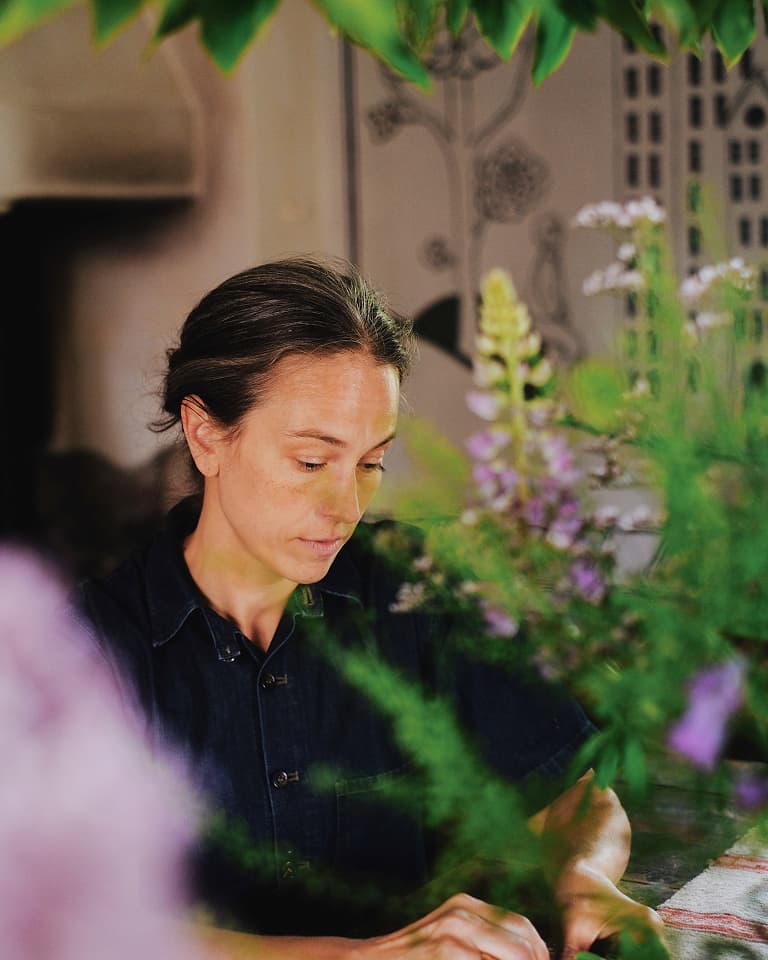
Photo by Emma Lavelle
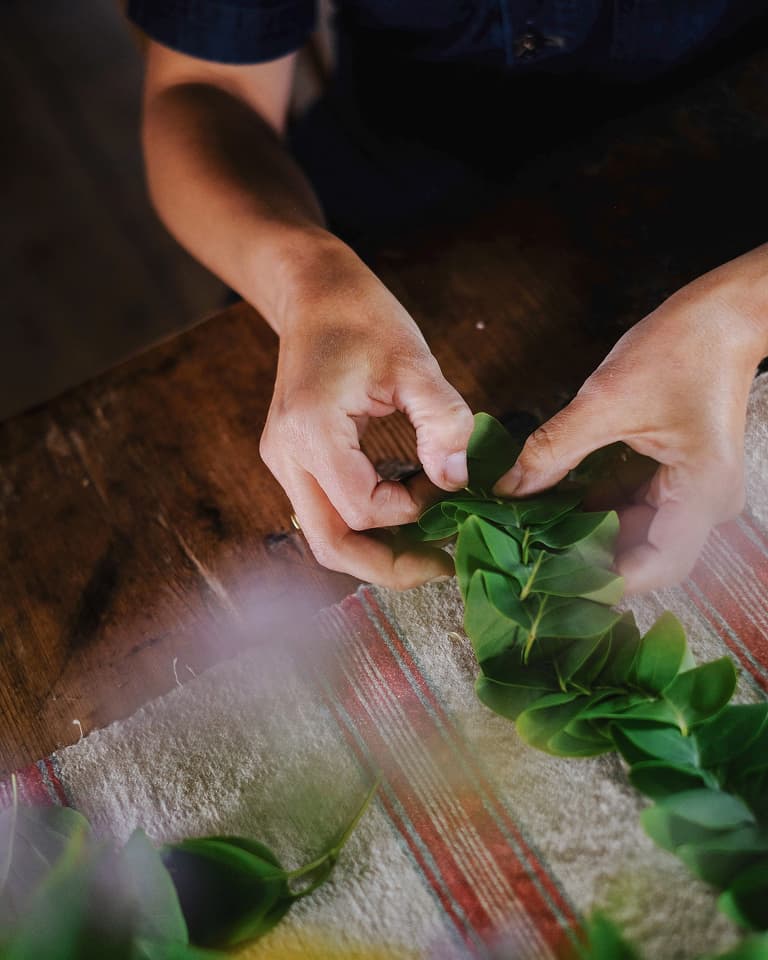
Photo by Emma Lavelle
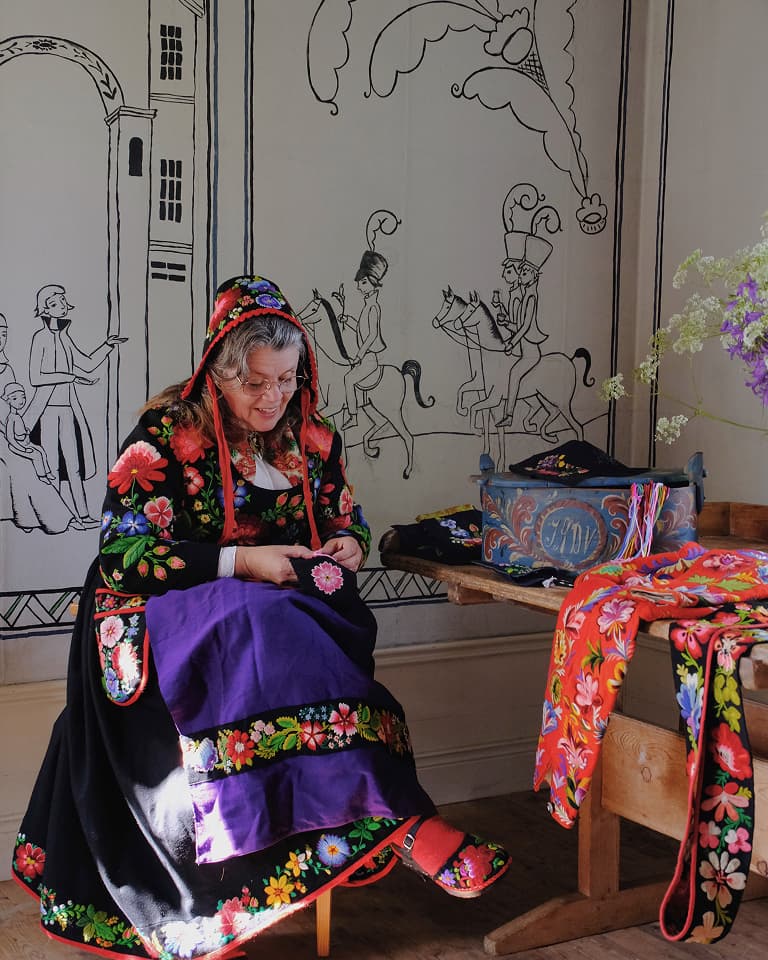
Photo by Emma Lavelle
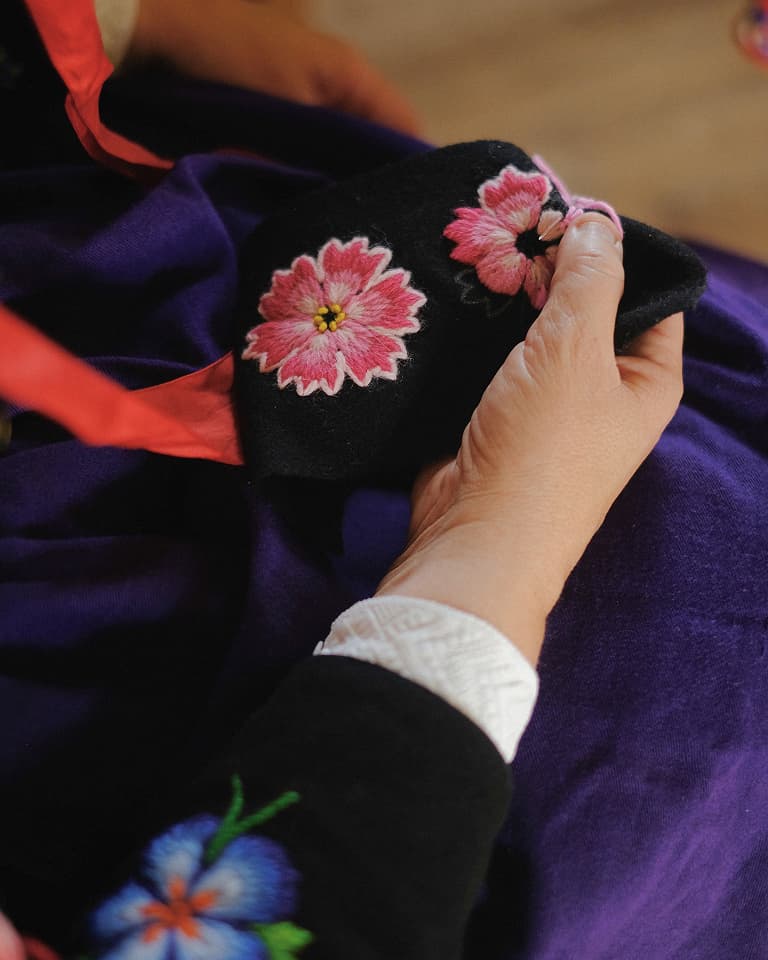
Photo by Emma Lavelle
One afternoon, I drove down a seemingly never-ending gravel track to the tiny village of Dala-Floda, where I joined architect and author of The Forest & Craft, Pernilla Wåhlin Norén and antiquarian, Anna-Karin Jobs Arnberg in Pernilla’s summer house. The duo demonstrated their specialist traditional crafts – Pernilla weaving leaves to create botanical chandeliers and leaf garlands, incorporating fragile paper flowers into her organic designs while Anna-Karin displayed her collection of local Påsöm embroidery on colourful folk costumes, including both her own work and antique pieces. Working with my portrait lens and a wide aperture, I focused on their hands and the minute details of their crafts, relishing this opportunity to capture expert craftspeople at work.

Photo by Emma Lavelle

Photo by Emma Lavelle
On Midsommar’s morning, I joined a local family to gather wild flowers in the meadow. We were joined by their peers as we snipped geraniums, daisies and frothy cow parsley (hundkäx in Swedish, translating directly as ‘dog biscuit’), retreating to a beautifully fragrant garden with heaving baskets to create our own flower crowns for the upcoming festivities. The midsommarkransar are created by attaching your foraged finds to a wire base using floristry wire, tying patterned ribbon to fasten the crown with a bow at the base of your crown. I wore my crown with pride throughout the day, and used my telephoto lens to zoom in and capture my favourite designs from a distance; I was drawn to extravagant creations dripping in plumes of lupin, clouds of cow parsley and sunburst daisies.
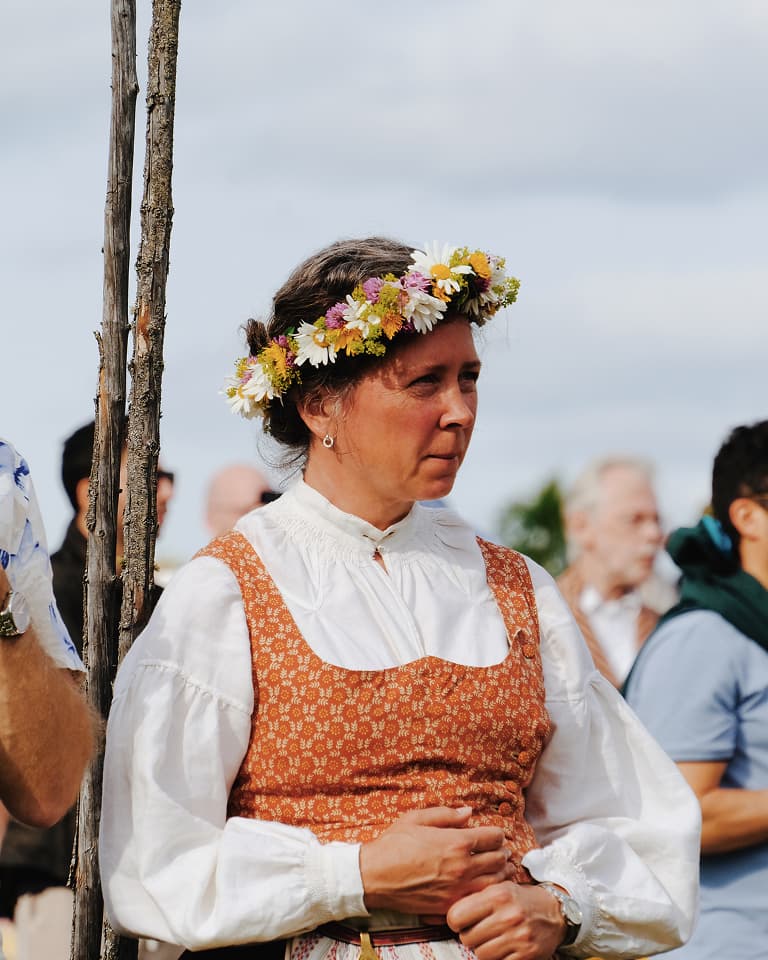
Photo by Emma Lavelle
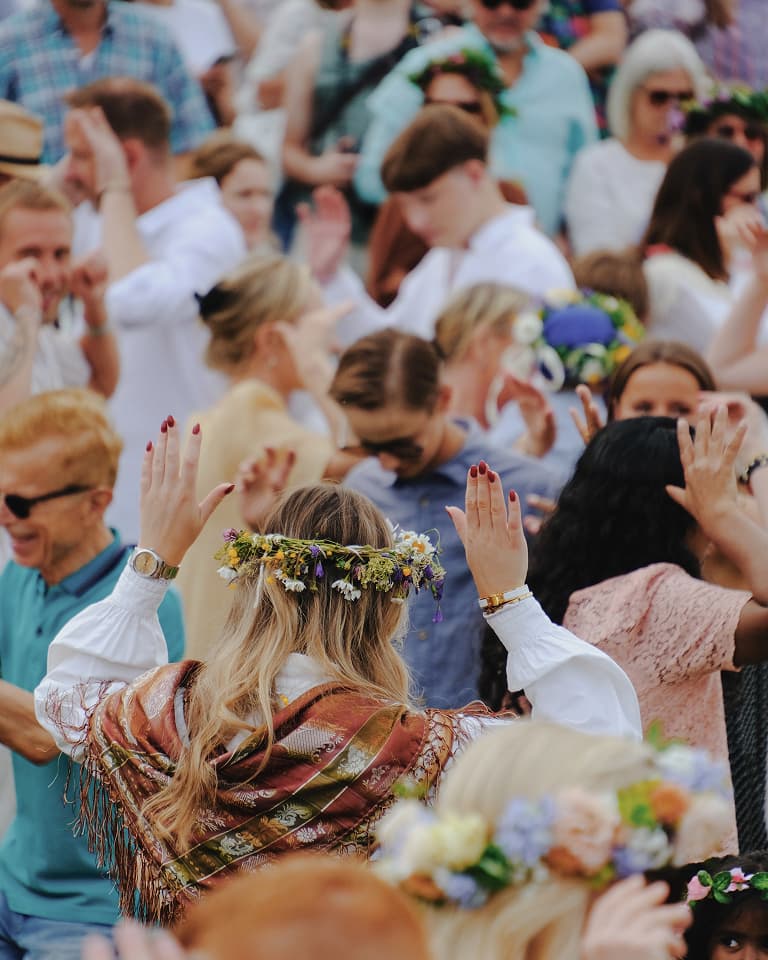
Photo by Emma Lavelle
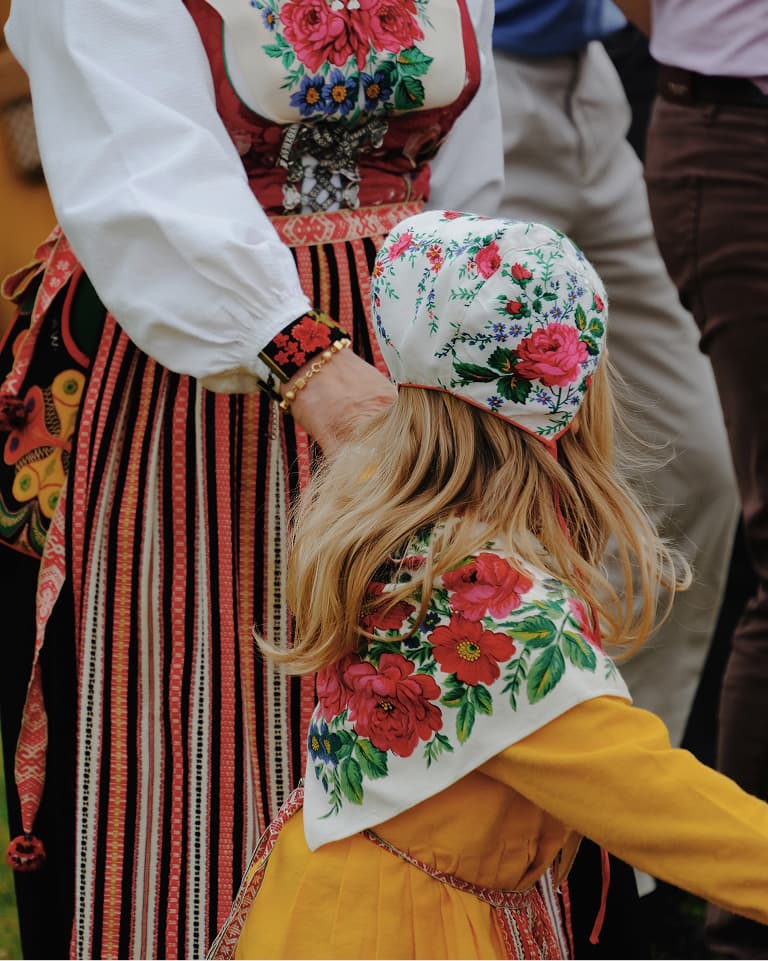
Photo by Emma Lavelle
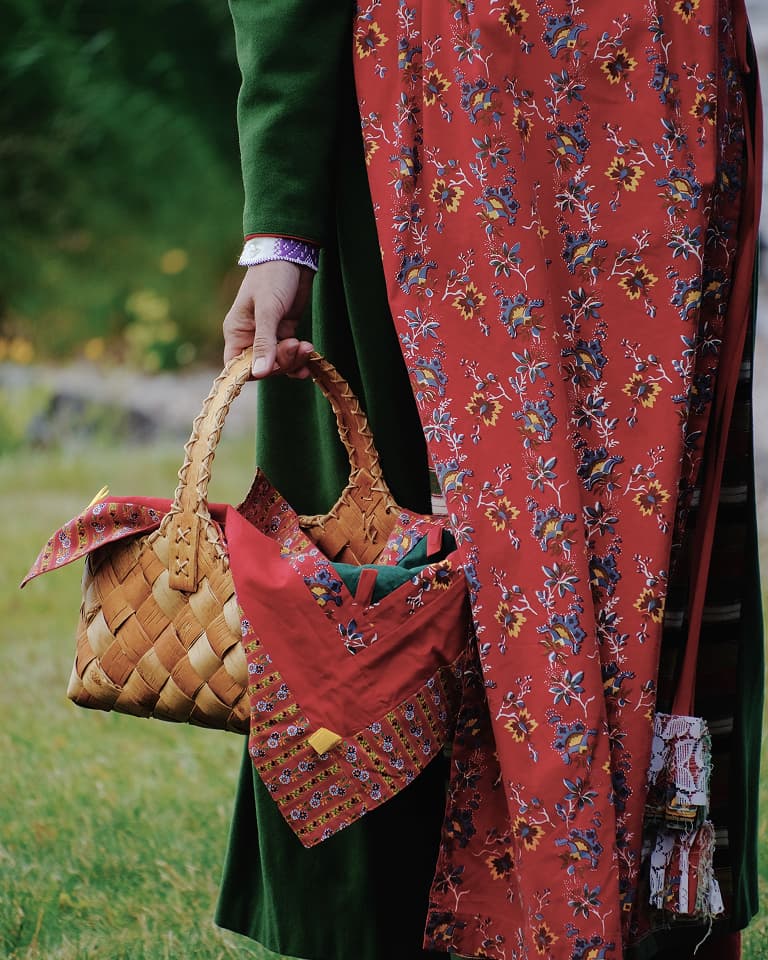
Photo by Emma Lavelle
Each midsommarstång is unique, hung with symbolic decorations and bundles of flowers. Even the smallest hamlets will raise a Midsommar’s pole and larger settlements such as Tällberg boast several. The ritual of raising the pole is followed by the crowd gathering in concentric circles around it as the band begins to play. Dances similar to a ceilidh are performed to songs such as Små Grodorna (‘The Little Frogs’), the merriment lasting for several hours as participants slowly drift away to the privacy of their own gardens for lavish feasts. I hung back slightly from the celebrations to observe, finding a vantage point where I could zoom in with my lens and capture the action, utilising a fast shutter speed to capture every motion of the dances. Throughout the next couple of days, we darted across the region, admiring the variations in costume, dances and midsommarstång from town to town. I was lucky to be hosted by the local tourist board on assignment for a couple of magazine features, but if you’re staying in any hotel in the area, they will be able to point you in the direction of numerous celebrations to join in or observe.

Photo by Emma Lavelle
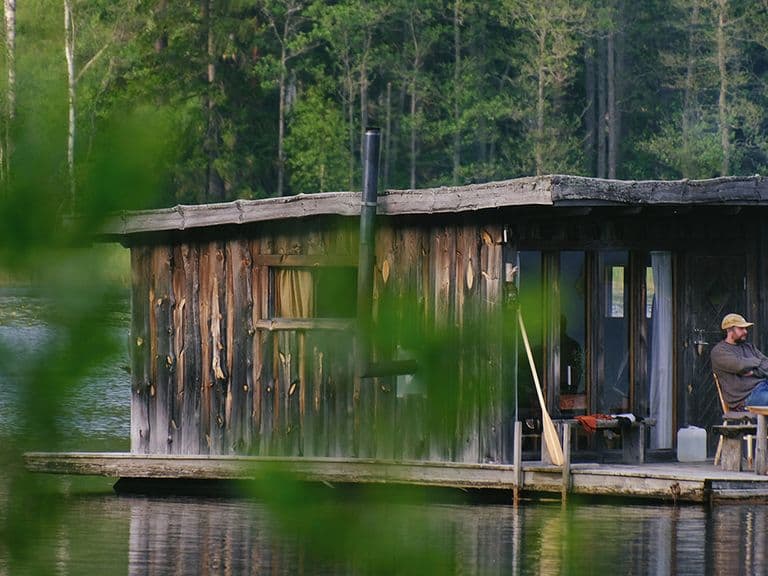
As the festivities drew to a close, we drove south towards Gothenburg, stopping for a couple of days in Värmland. We were returning to a cherished destination from a previous Swedish adventure: Naturbyn, an off-grid ‘nature village’ consisting of treehouses, rustic cabins and two floating cabins, reached only by canoe. Here, we spent two blissful days exploring the lake, cooking over fire and swimming between our cabin and the sauna back on the shore. It’s truly basic (water is gathered from a spring in the woods, the cabins are lit by candle light, and the lake is your bath) but your reward is complete and utter silence and magnificent night skies. My biggest challenge capturing the cabins on my camera was navigating the lake in the canoe, ensuring I didn’t topple into the water while securing my shots!

Photo by Emma Lavelle
Finally, our last night in Sweden was spent at a beautifully designed historic guesthouse, Villa Sjötorp, located atop a hill just outside the coastal town of Lyckorna. Once a private home, this fourteen-room hotel has remained in the same family for generations. Its charmingly decorated rooms showcase vintage Swedish furnishings and windowsills filled with potted geraniums, while the covered terrace at the rear of the house was an idyllic location to capture the sun setting on our Swedish sojourn. Sitting there sipping a glass of steadily-topped-up wine, I shot my favourite frames of the entire trip, capturing the layers of the islands as the sun descended, reflecting in the tranquil water.
I’m already dreaming of another Swedish summer with my camera (Gotland is next on my list), capturing craggy beaches, primary-coloured houses, native flora and that lingering golden light. Despite acknowledging the appeal of Nordic winters, it’s Scandinavian summers that will further entice me further north.
Descubra memórias mais rapidamente com funcionalidades exclusivas, como o reconhecimento facial e álbuns inteligentes.



&w=96&q=75)
30 Oct, 2025∙10 min
&w=96&q=75)
12 Nov, 2025∙7 min
&w=96&q=75)
27 Nov, 2025∙8 min


 Estados Unidos