
Ispirazione
Table Talk: from Provence to Buenos Aires with Anthony Ekizian
Gaucho’s culinary director shares the flavours and philosophy behind a life devoted to cooking and connection

3 Dec, 2025∙9 min
Ispirazione
Gaucho’s culinary director shares the flavours and philosophy behind a life devoted to cooking and connection
3 Dec, 2025∙9 min
Welcome to Table Talk, our new series celebrating the chefs who shape how we eat and the memories that made them who they are. Each edition invites a renowned chef to share the story behind their craft, the flavours that defined their journey and a recipe close to their heart. For our first feature we meet Anthony Ekizian, culinary director at Gaucho, whose new book Gaucho: The Spirit of Argentina explores the heart and heritage of Argentinian cuisine. From the sun-drenched markets of Provence to the smoky asados of Buenos Aires, Anthony’s journey is one of passion, place and the simple joy of cooking for others.
I grew up in Sainte-Maxime, in the South of France. In Provence, food isn’t separate from life – it is life. The seasons decide what’s on your plate; the market tells you what to cook. You wait for the first tomatoes and peaches that taste of summer, for game and wild mushrooms in autumn, for fishermen to bring in whatever the sea gives that day. That rhythm becomes part of who you are.
I still remember the smells and colours of those markets: olives marinated with herbs, the cheeses, the scent of baguettes from the bakery, the butcher next door, the ice cream shop opening its shutters. Food was at the centre of everything, that’s what shaped me. I realised early that food isn’t just something you eat – it’s people, care and connection. That’s where the passion started.
At 16, I started at Club 55 in St Tropez, working for Laurent Bertolotto and Patrice de Colmont. They were true Provençals: simple, direct and obsessed with quality. They taught me that the product is the star. Without great ingredients, you can cook good food, but never great food. They also taught me simplicity. A perfect tomato with local olive oil can be enough if you treat it right.
Later, at L’Arbousier with Philippe Troncy, I learned everything else, from how to prepare game and butchery to baking bread and understanding ingredients. Those kitchens gave me my foundation. Provence shaped me completely. My mother and grandmother cooked the same way, nothing fancy, just honest food – Niçoise-style stuffed vegetables, roasted garlic and thyme, marinated peppers from my stepdad Mano, fried courgette flowers, tomato jam, olive oil cakes. Those flavours never left me. For me, cooking was never about showing off, it was about making something good and sharing it. If you can make people happy with what you cook, that’s enough.
Photo: Sam A Harris
Photo: Sam A Harris
Years later, while visiting my sisters in New York, I met Cosme Aguilar – a young Mexican chef who would go on to earn a Michelin star. He was passionate and curious, and our conversations always came back to food. He introduced me to real Mexican cooking – the layers of flavour, the heat, the depth – and it completely changed how I saw the cuisine.
That discovery opened the door to Latin America. I wanted to understand its flavours, its people and how every region tells its own story through food. And then I found Argentina. It felt strangely familiar with its Italian and Spanish influences, the rhythm of eating together, the pride and generosity, the love for good ingredients. Just like home, but different.
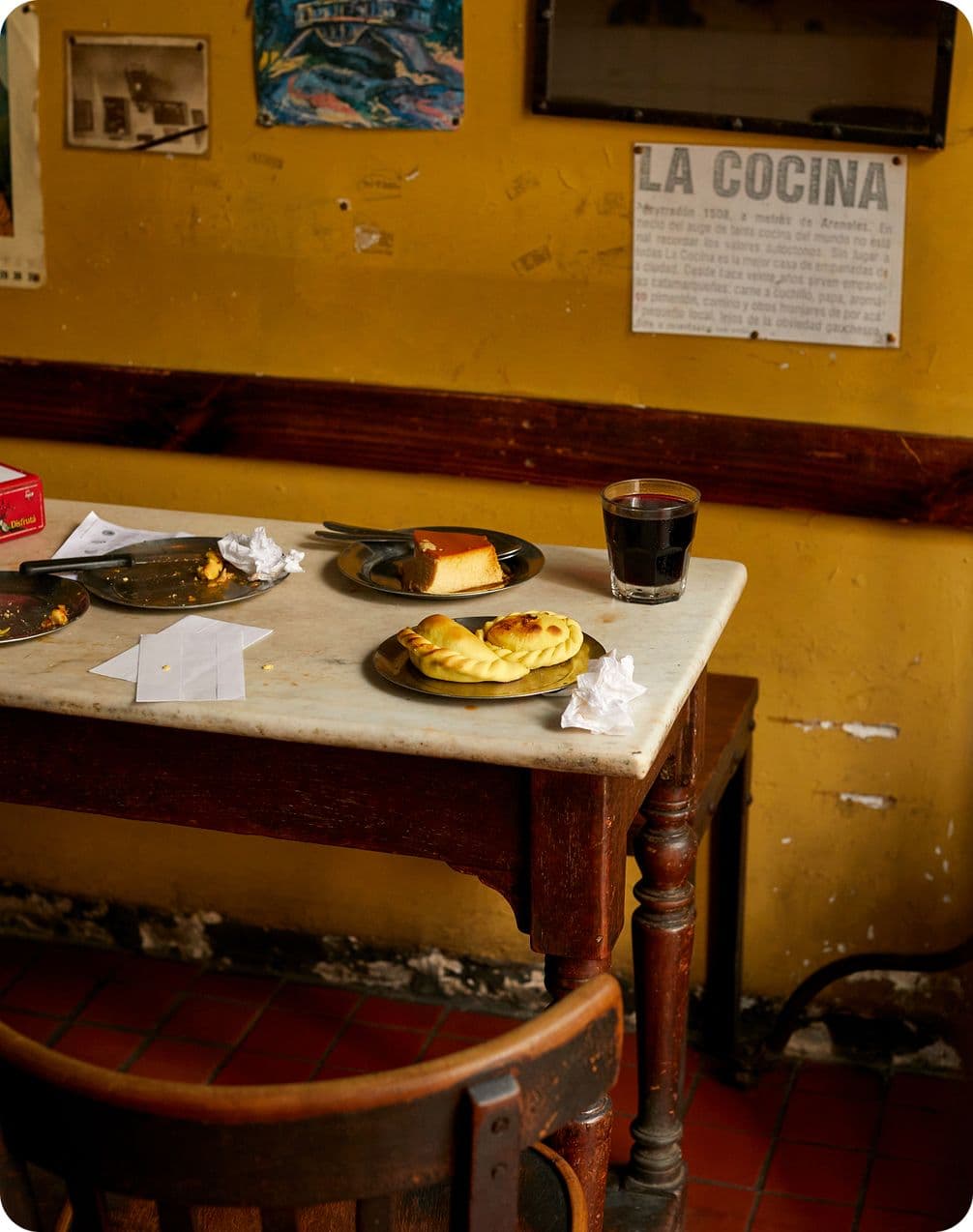
Photo: Sam A Harris
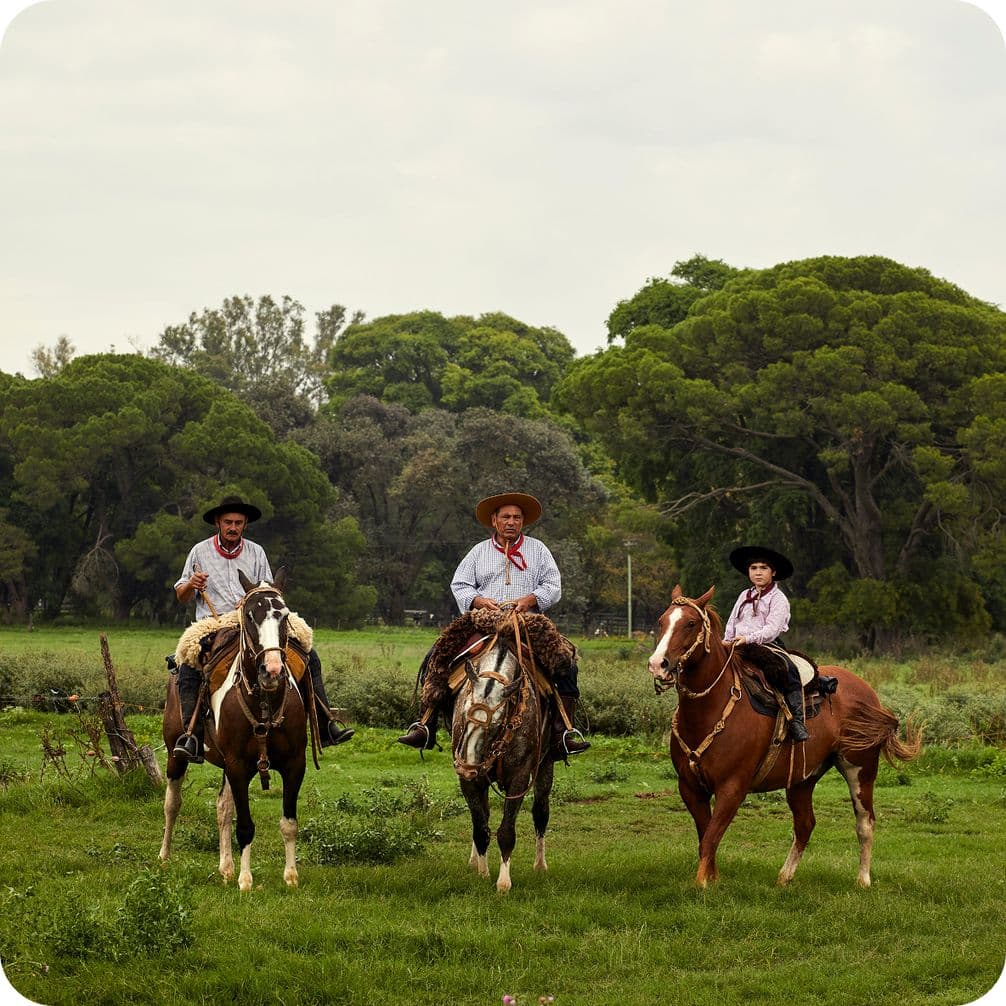
Photo: Sam A Harris
When I joined Gaucho as culinary director, I wanted to understand where it all began. I looked through old menus, recipes and archives from the early days, some of which were incredible. I began imagining how to bring those dishes back with a modern touch, reconnecting with the brand’s original spirit. But the deeper I went, the more inspired I became by the story of Argentina itself. That’s when the idea for Gaucho: The Spirit of Argentina was born – a book not just about restaurants, but about people, place and heritage.
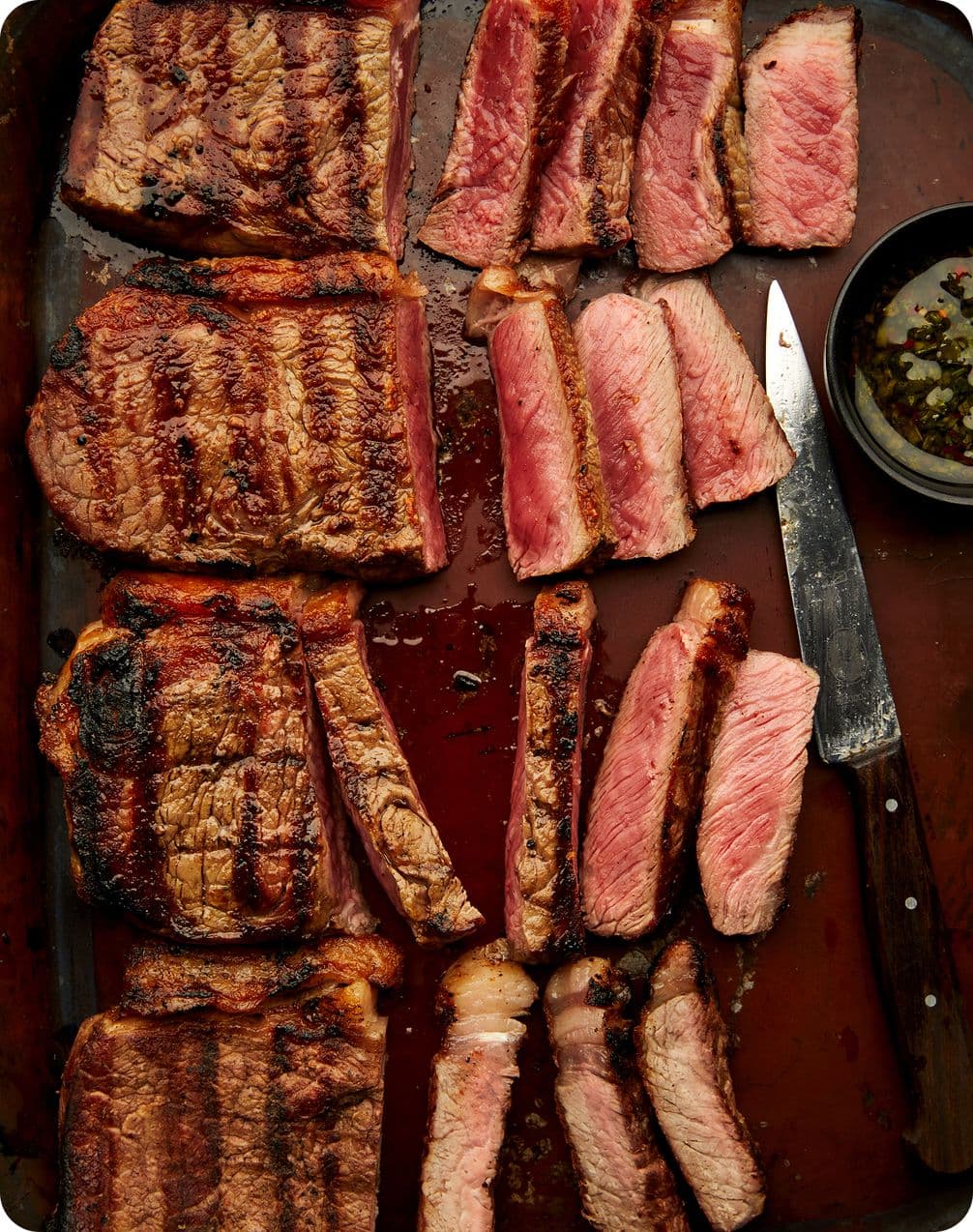
Photo: Sam A Harris
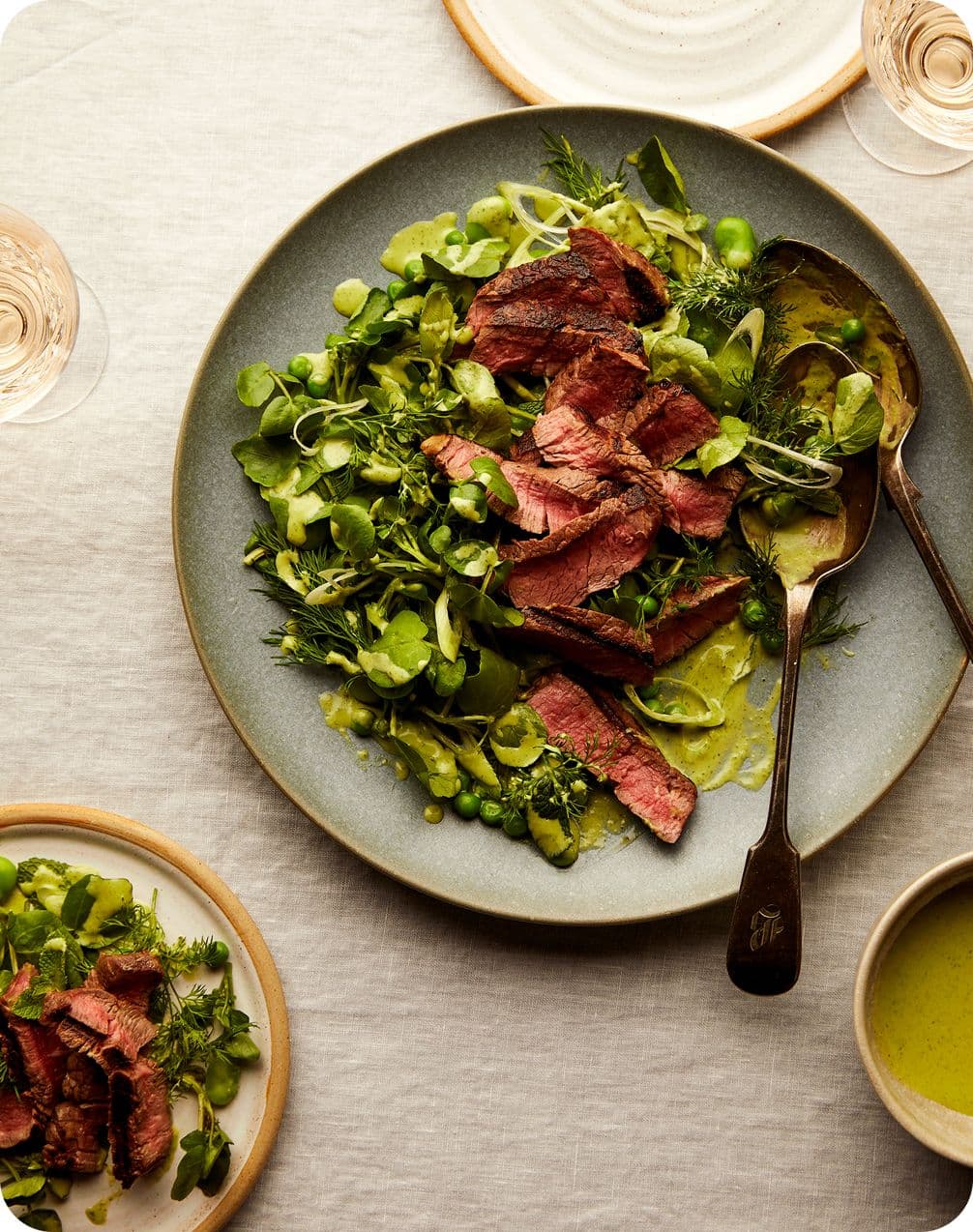
Photo: Sam A Harris
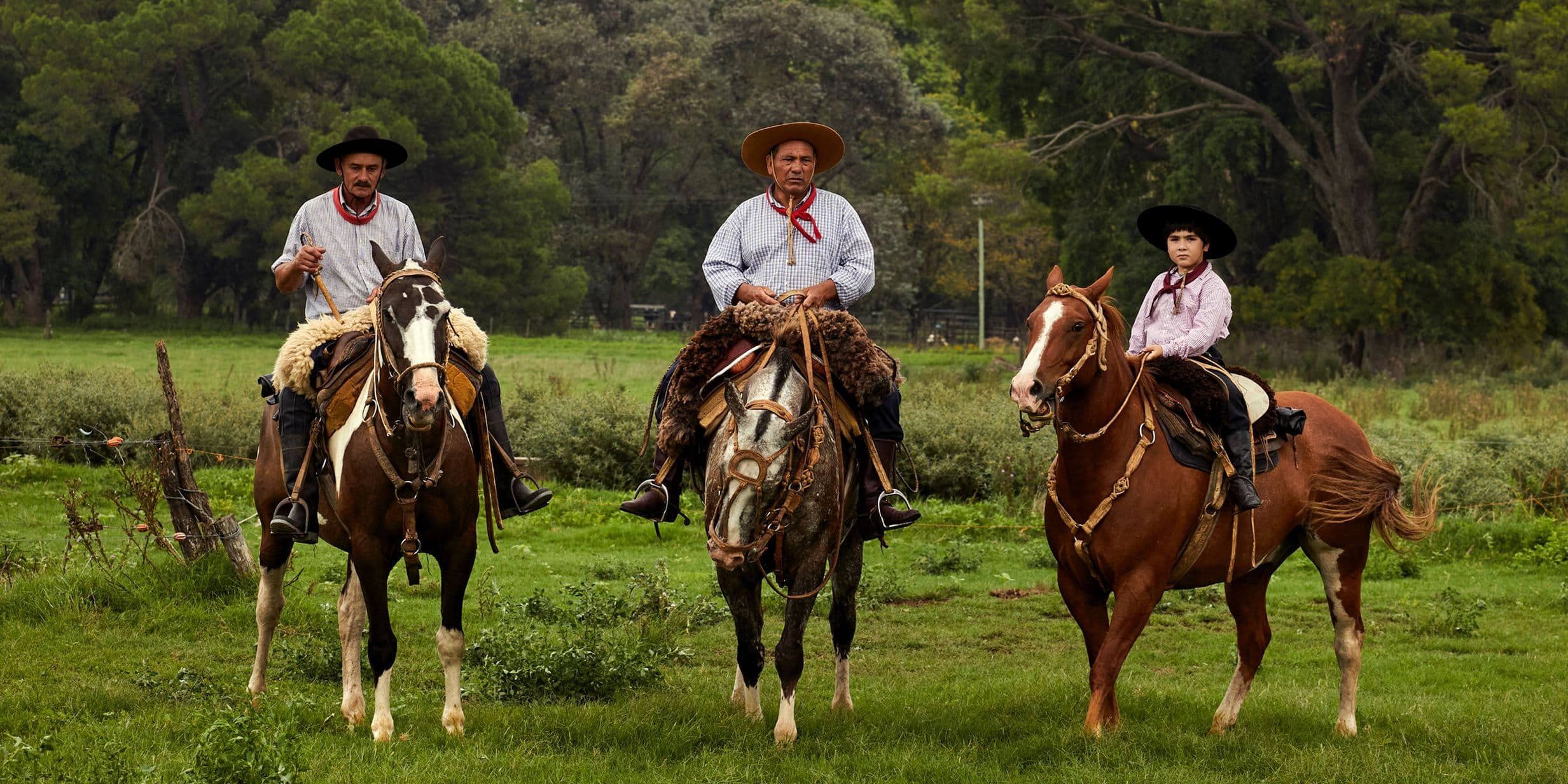
When we started work on the book, I wanted to capture the country’s heart – its incredibly generous people, the food and the emotion behind it. We travelled from Buenos Aires to Mendoza, meeting asadores, winemakers, bartenders, restaurant owners, musicians and dancers, all living through their craft.
In Mendoza, surrounded by vineyards, the asador was grilling tira de ancho (spiral rib-eye) over open flames. The aroma of the meat, the Malbec, the laughter around the table – it all felt familiar. It was like replaying my childhood memories of long afternoons at my uncle’s house, everyone gathered together, someone always topping up the glasses. Different continents, same feeling. That’s the essence of an asado: it’s not just a barbecue, it’s a ritual of togetherness that perfectly captures the spirit of Argentina.
Photo: Sam A Harris
That tira de ancho with chimichurri sums it all up: simple, bold and full of life. You don’t need to add anything, just cook it well and share it. I’ve kept the recipe true to its roots, maybe adjusted the timing over the years, but never its spirit. Some dishes don’t need reinventing.
Cooking has always been about people for me – the growers, the fishermen, the winemakers, the friends who sit down to eat. Provence taught me to respect ingredients; Argentina reminded me what food means when it’s shared. That’s the thread that runs through everything I cook: connection, generosity and belonging. From Provence to Buenos Aires.
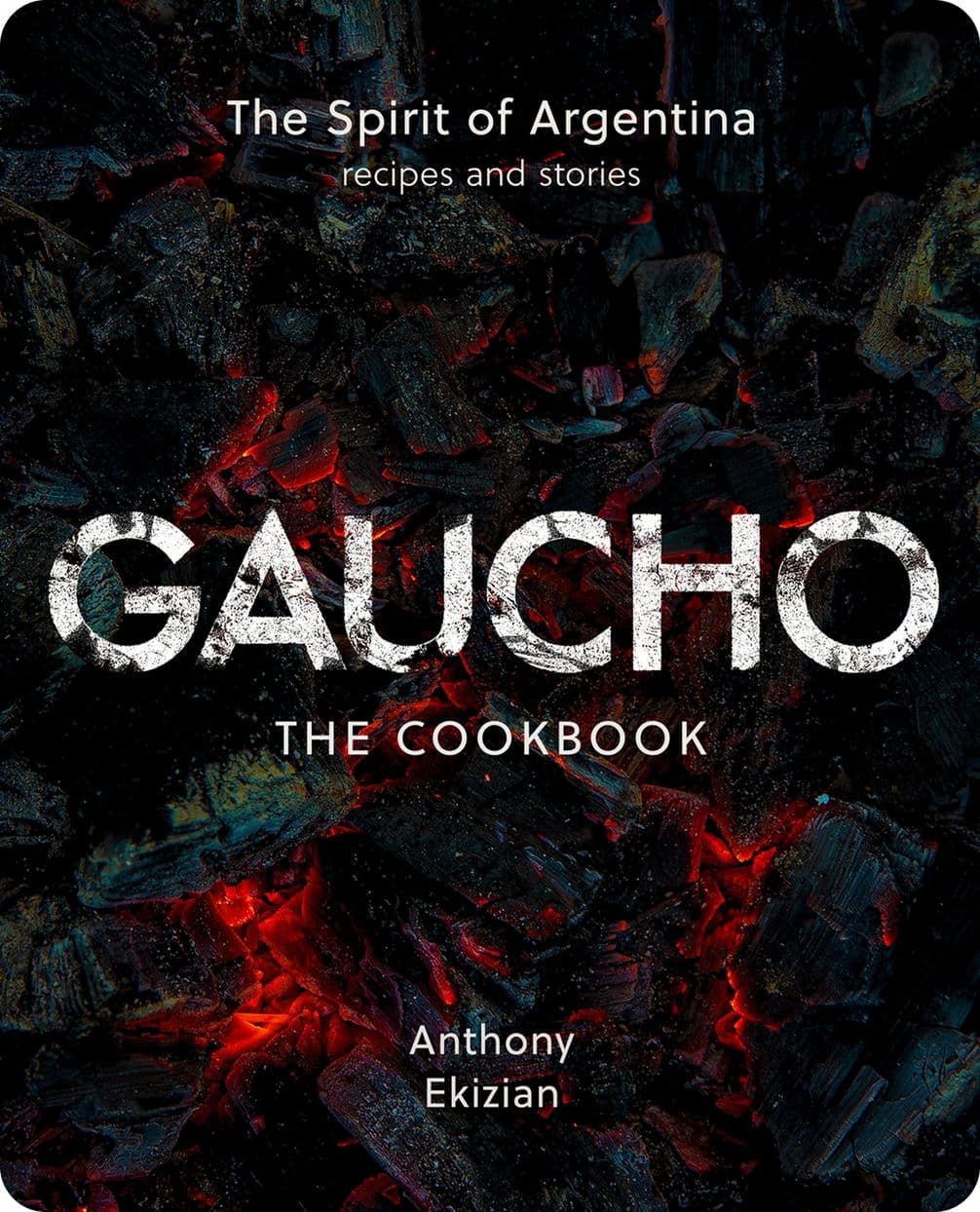
Gaucho: The Spirit of Argentina (Bloomsbury Publishing) is available now.
This vibrant and tangy sauce is a staple in Argentine cuisine and is perfect for drizzling over grilled meats or vegetables. Its freshness comes from flat-leaf parsley, while the aji molido, a type of crushed dried red chilli, adds a subtle heat.
Serves: 12-14
Ingredients:
80g flat-leaf parsley, leaves picked and roughly chopped
1 onion, roughly chopped
1/2 small red pepper, deseeded and roughly chopped
2 garlic cloves, chopped
2 teaspoons aji molido (or more if you like it spicier)
2 tablespoons dried oregano
400ml vegetable oil
1 tablespoon sherry vinegar
2 teaspoons salt
Place the parsley, onion, red pepper and garlic in a food processor and pulse to finely chop.
Tip the contents of the food processor into a bowl and stir through the aji molido, oregano, oil, vinegar and salt until evenly combined.
Use immediately, or transfer the chimichurri to a sterilised jar and store it in the fridge for up to one week.
The sauce may lose some of its vibrant colour in that time, but it will still taste delicious. If you prefer, you can place all the solid ingredients into the food processor and blitz until smooth, then stir through the oil and vinegar and season. The result will be more like a combined pesto, but just as tasty.
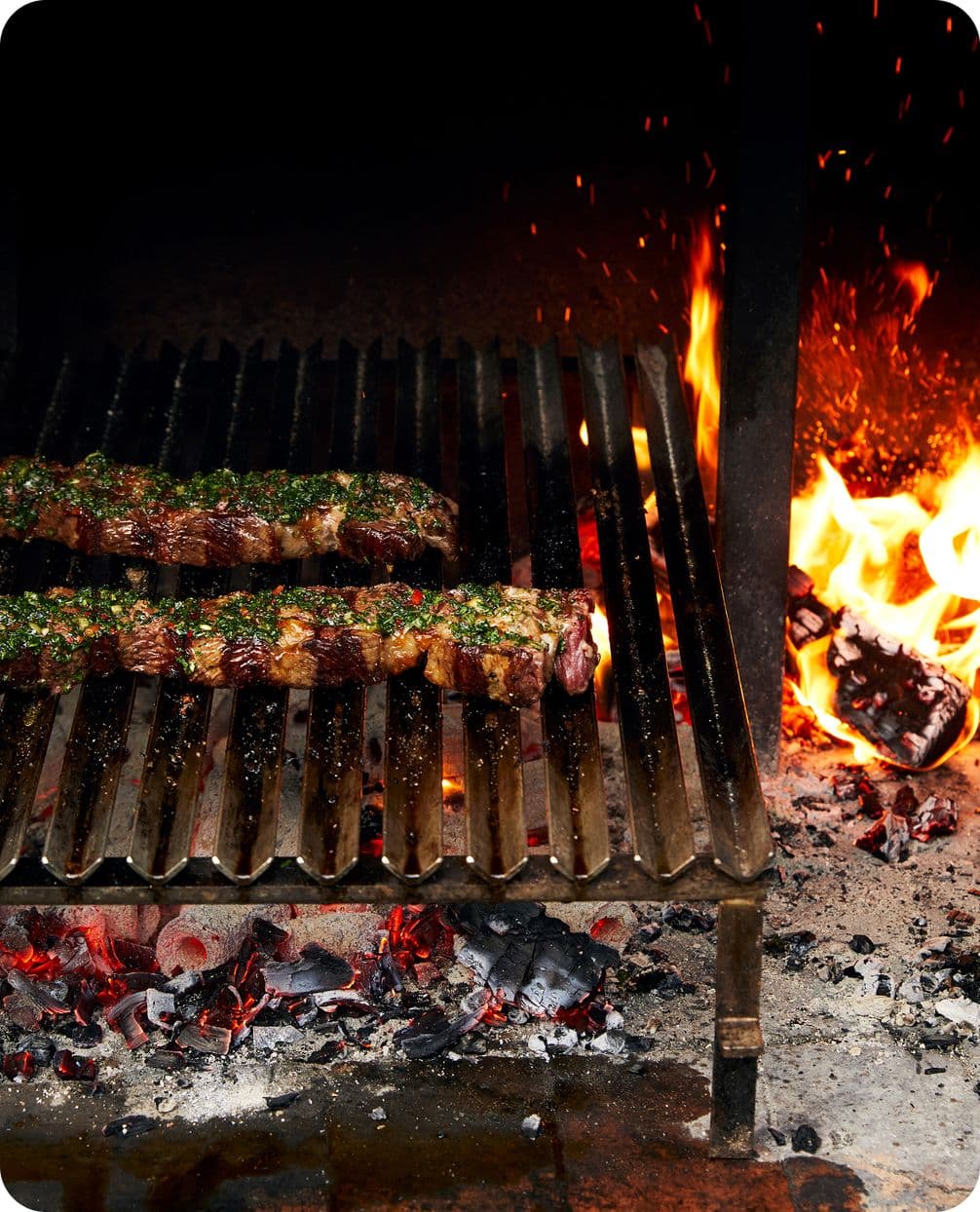
Photo: Sam A Harris
Serves: 2
Ingredients:
500g ribeye (ancho)
olive oil, for brushing
90ml green chimichurri
salt
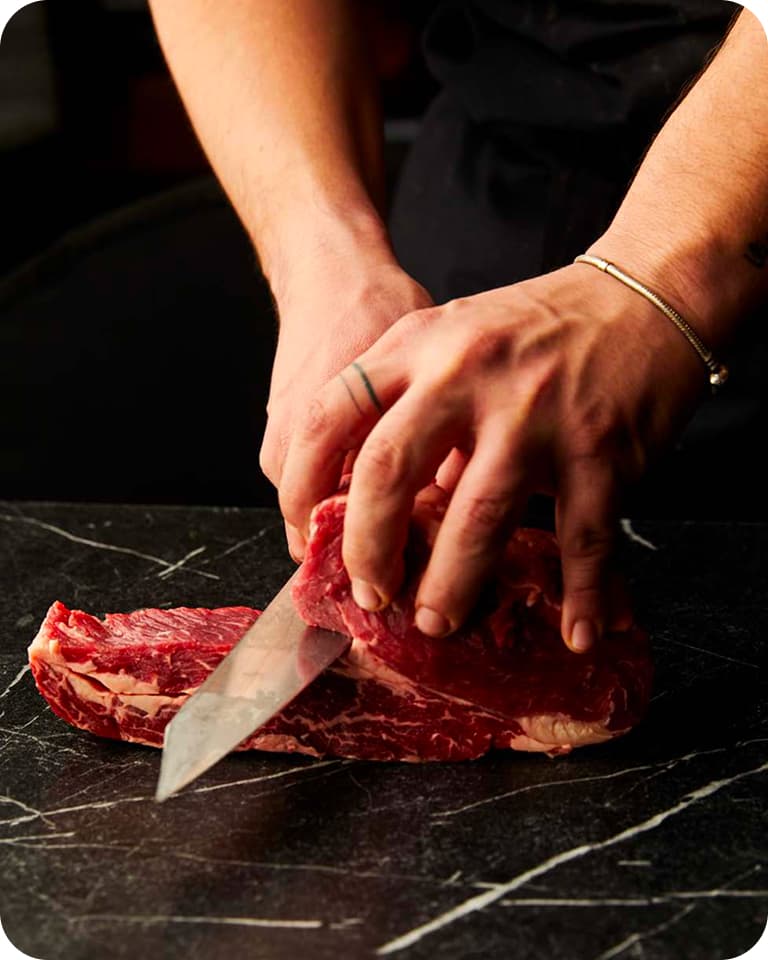
To prepare the ribeye, turn the steak on its side. Position a sharp knife at the eye of the fat and cut straight downwards, stopping at about 5cm from the bottom of the meat.
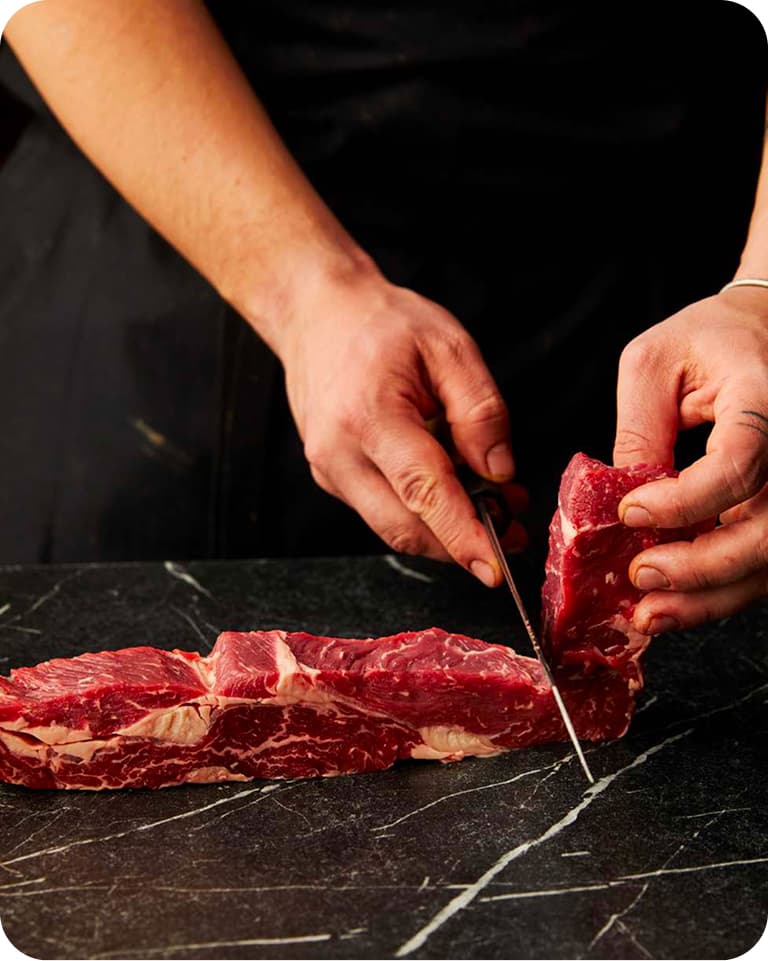
Turn the blade of your knife to begin a horizontal cut along the meat, while opening out the flap of meat behind the knife.
Cut along the meat, stopping again about 5cm from the end. Remove the knife and lift the top piece of meat away from the cut, hinging it open and laying it out flat in a single, long strip about 5cm. This is a spiral (tira) cut.
When you’re ready to cook, get your barbecue to a good heat with a strong, glowing ember. Season the beef with salt and brush it with a little oil.
Place the meat on the barbecue grill away slightly from the hottest part, and cook for about 4-5 minutes on each of its four sides (about 16-20 minutes in total).
During cooking, monitor the temperature of the grill to maintain a medium heat, adding more wood or charcoal as needed to keep the heat steady. If the meat appears to be browning too quickly, move it slightly further away from the hottest part of the embers.
Once the ribeye is on its last side, drizzle two tablespoons of the chimichurri on top. When it’s ready, remove it from the grill, cover it with foil and let it rest for about 10-15 minutes. Serve the meat whole, for everyone to cut off a chunk themselves, or sliced, with the remaining chimichurri for drizzling over. A glass of Malbec is always a good addition, too!
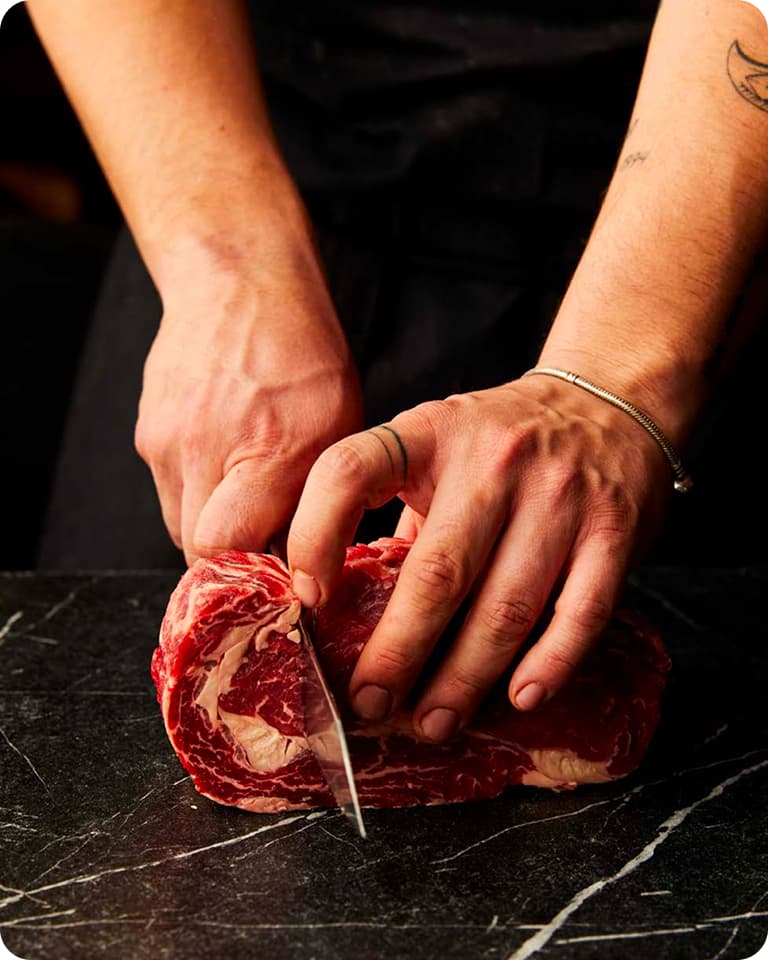
Hold the steak on its side. Make a cut downwards through the eye of the fat, stopping about 5cm from the bottom
Open out the flap behind the blade of your knife and then carefully cut along the length, away from the flap
Stop about 5cm from the end of the piece of meat and lift the top layer away from the bottom
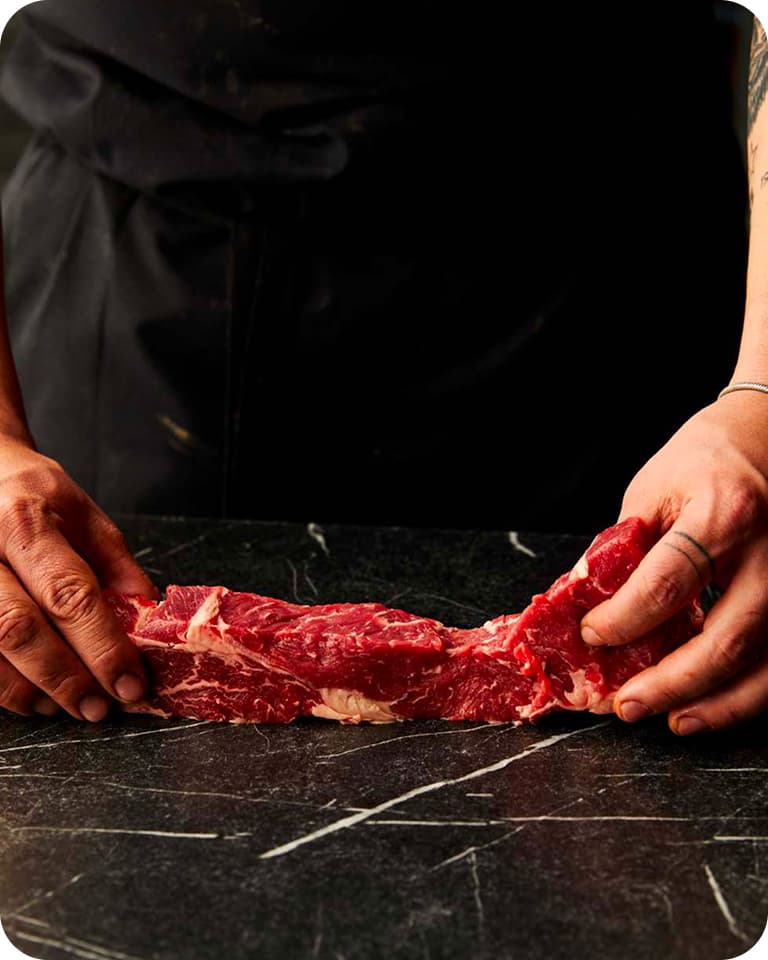
Open out the meat so that it is completely flat, giving you one long, narrow piece of steak
Cutting a tira de ancho is not as complicated as it sounds – in essence, it’s just one cut downwards and then a slice along. Unfolding the steak to its full length, in even thickness, is like unwrapping the tastiest gift – every slice will contain the perfect balance of juice and flavour. Sharpen your knife before you begin.
Trova più velocemente le foto che stai cercando con funzionalità e prodotti esclusivi come il riconoscimento facciale e gli album smart.



&w=96&q=75)
Harry Guinness
Giornalista e fotografo
30 Oct, 2025∙7 min

&w=96&q=75)
Lucy Halfhead
Responsabile editoriale di Popsa
21 Oct, 2025∙6 min

&w=96&q=75)
Emily Austen
Autrice
30 Oct, 2025∙6 min


 Stati Uniti