
Travel
21 Photos: marigolds and candlelight at Mexico’s Day of the Dead
One writer follows the flower trails and quiet cemeteries of Morelia, Pátzcuaro and San Miguel de Allende

Nov 12, 2026∙6 min
Sign Up
Log In

English (Canada)
USD $
Download the Popsa app today


Travel
One writer follows the flower trails and quiet cemeteries of Morelia, Pátzcuaro and San Miguel de Allende
Nov 12, 2026∙6 min
Journalist and travel writer Luke Abrahams has spent years chasing stories across continents, but it’s the quieter corners of the world that continue to pull him back.
Day of the Dead is so much more than a photo fest for tourists. For Mexicans and people across Latin America, this is an important festival honouring the dead. Despite the Hollywood horrors and glorified parades, it is a joyful, vibrant celebration of life, memory and the cycle of human existence, not a sombre or frightening spectacle. The core belief is that the border between the world of the living and the world of the dead temporarily dissolves, allowing the departed to return home and celebrate with their families.
As for the festival’s origins, Day of the Dead can be traced back to ancient Mesoamerica, blending indigenous pre-Columbian rituals with colonial Spanish Catholic traditions. Around 3,000 years ago, many indigenous groups, including the mighty Aztecs, Maya and Toltec tribes, commemorated specific times of the year to remember the dead. The Aztecs in particular devoted days to mastering rituals for the goddess Mictēcacihuātl (the Lady of the Dead), who ruled the underworld (Mictlān). Rather than fearing death, they viewed it as a natural continuation of life as opposed to the end. Today, the festival’s main festivities take place over two days: 1 November (All Saints’ Day), dedicated to remembering children who have died, affectionately referred to as angelitos (“little angels”); and 2 November (All Souls’ Day), a time to remember deceased adults.
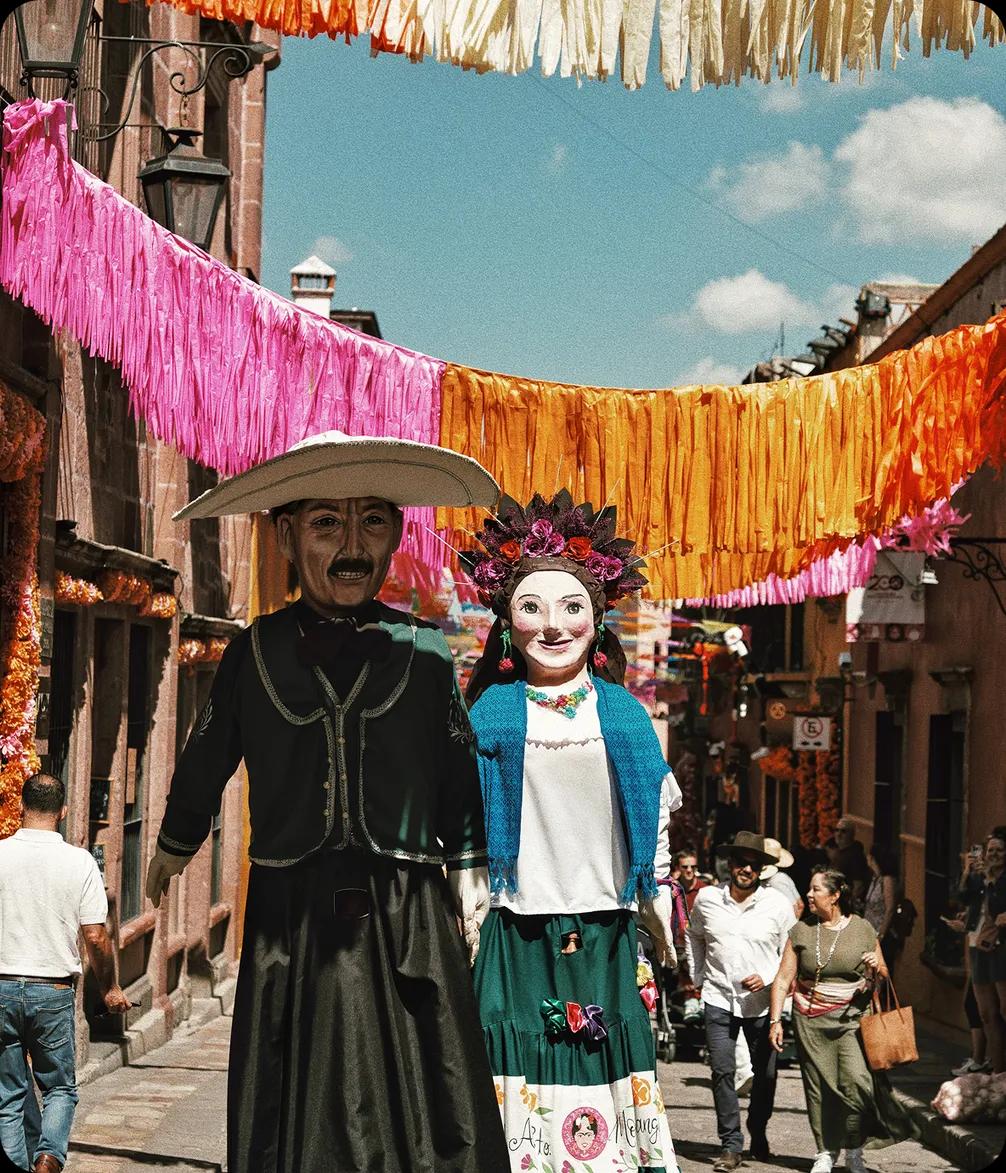
Mexican icons: The celebrations start in San Miguel de Allende
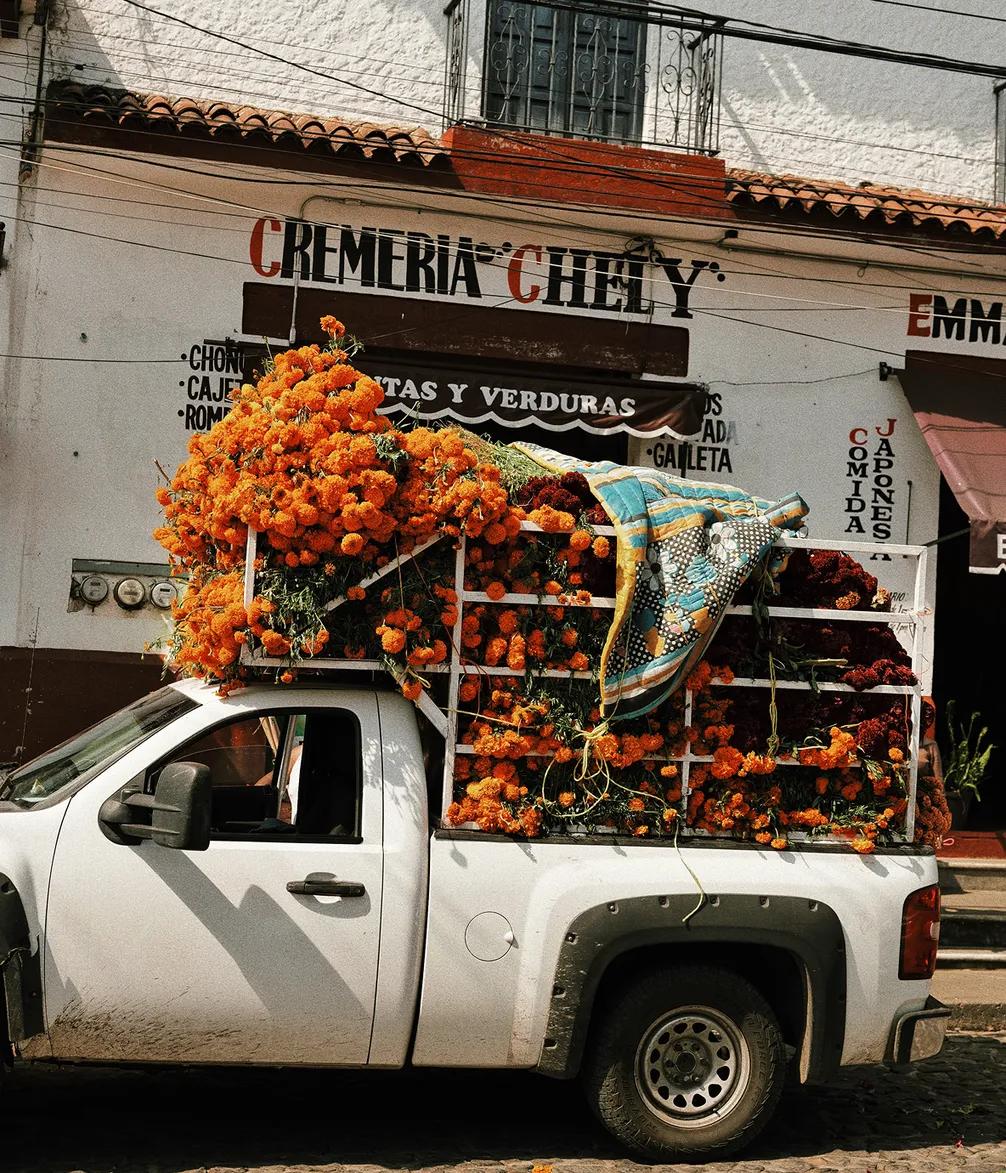
Floral preparations: A van full of marigolds in Pátzcuaro

Angelitos: The Night of the Children in Tzintzuntzan cemetery

Old traditions: Fisherman show off their skills near the island of Janitzio

Colorful festivities: Decorated streets in Morelia

Catrina! The tallest Catrina in the world in Mexico City

In memoriam: Decorated graves in San Miguel de Allende
To show their respects, indigenous families built altars (ofrendas) with food, water and marigolds, a practice deeply rooted in pre-Hispanic culture. Marigolds – known in Nahuatl as cempasúchil or the “flower of twenty petals” – were and still are particularly important for their guiding scent and vivid colour. Their pungent earthy fragrance and vibrant orange and yellow hues are believed to call the spirits. The flower head’s brightness is said to represent the sun’s warmth and life, while the plant’s distinctive aroma is thought to help spirits navigate the obstacles of the perilous physical world. The flower was, and still is, sacred to deities associated with the sun and the afterlife, especially during the time of the Aztecs, and as such, families still continue to scatter marigold petals from the front door (or the cemetery) directly to the family altar to help their loved ones find their way home.
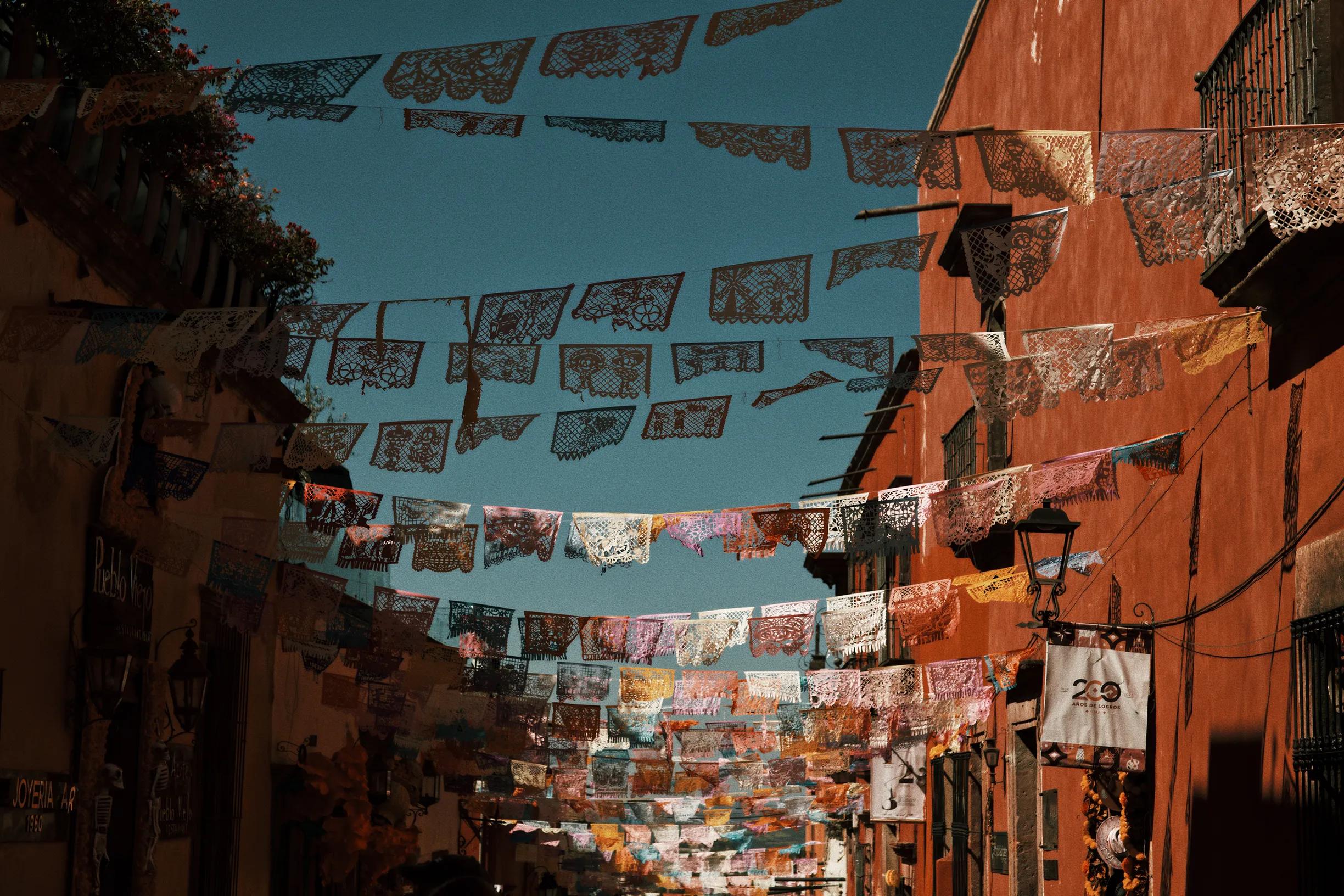
City of flags: Streets are decorated with skull flags in the city of San Miguel de Allende
I first encountered the celebrations in Morelia, a 16th-century Spanish colonial town in Mexico’s Michoacán state. Everywhere I looked there was some kind of altar, parade or exhibition building up to the main event. In the Old Town square, altars were draped in endless strings of cempasúchil, from the centre gazebo to the fountains dressed in wicker figurines. Beside pictures of the deceased, sugar skulls decorated in bright colours (a symbol of the dead) sat among offerings of Pan de Muerto, a traditional sweet bread topped with bone-shaped dough pieces representing the cycle of life and death. In between them, thousands of candles flickered. I spent that first evening simply getting close, filling the frame with petals, candle wax and faded family portraits. The small details told the story better than any wide shot of the square. Under the shadow of the Catedral Metropolitana de Morelia, the city’s stunning colonial-style cathedral, dozens of people dressed up as La Catrina danced in the streets. As for what they mean, I learned that the satirical figure of a dead wealthy woman created by artist José Guadalupe Posada symbolises the idea that no matter how rich we are, everyone is equal even in death.
I spent that first evening simply getting close, filling the frame with petals, candle wax and faded family portraits. The small details told the story better than any wide shot of the square.
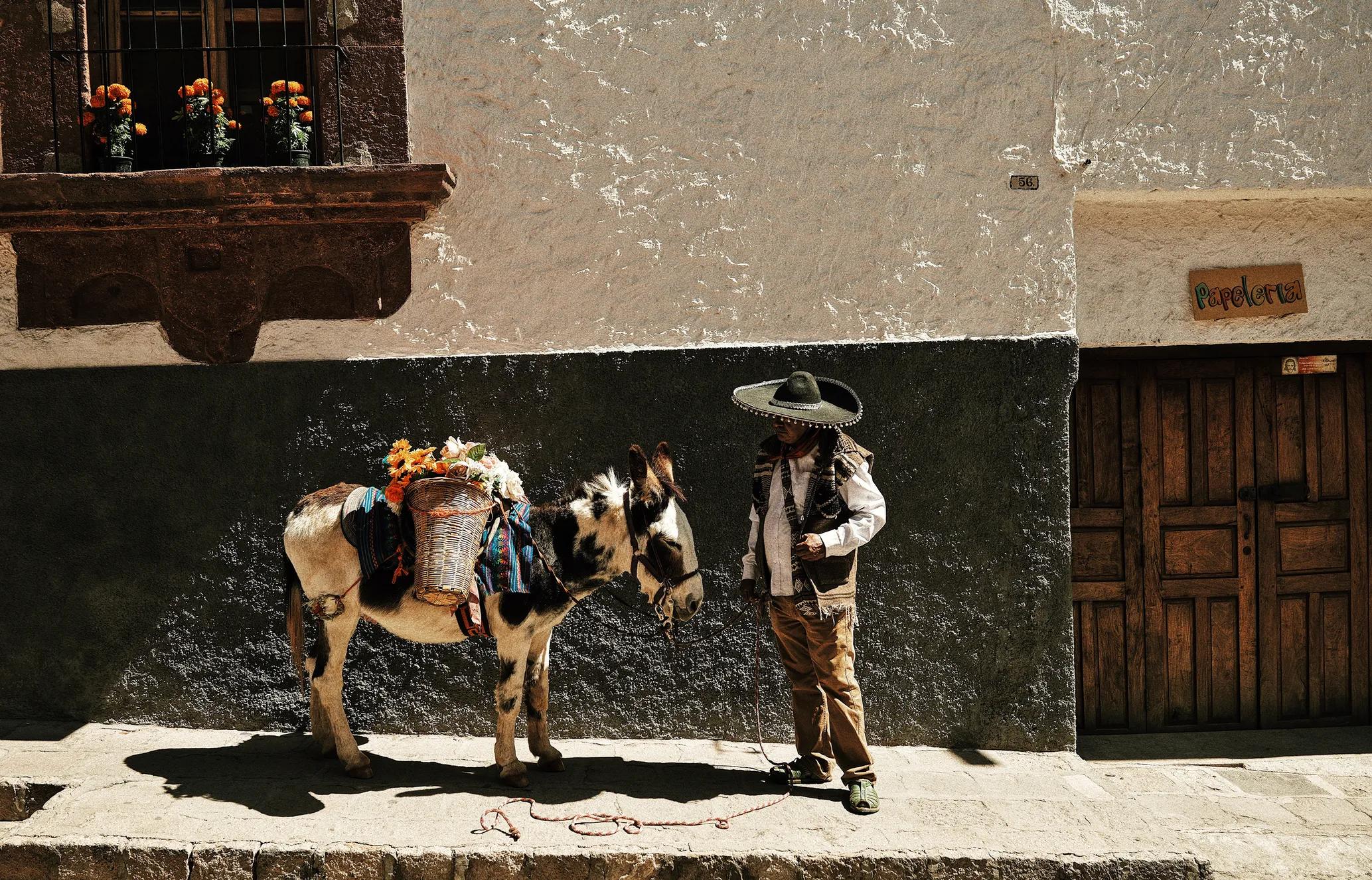
Noble steed: A local poses with his donkey in San Miguel de Allende

Ode to the dead: The streets of Morelia are filled with commemorative altars

In costume: San Miguel de Allende's annual Day of The Dead parade features elaborate Catrinas

Spiritual cleansing: A woman walks with an urn filled with Copal

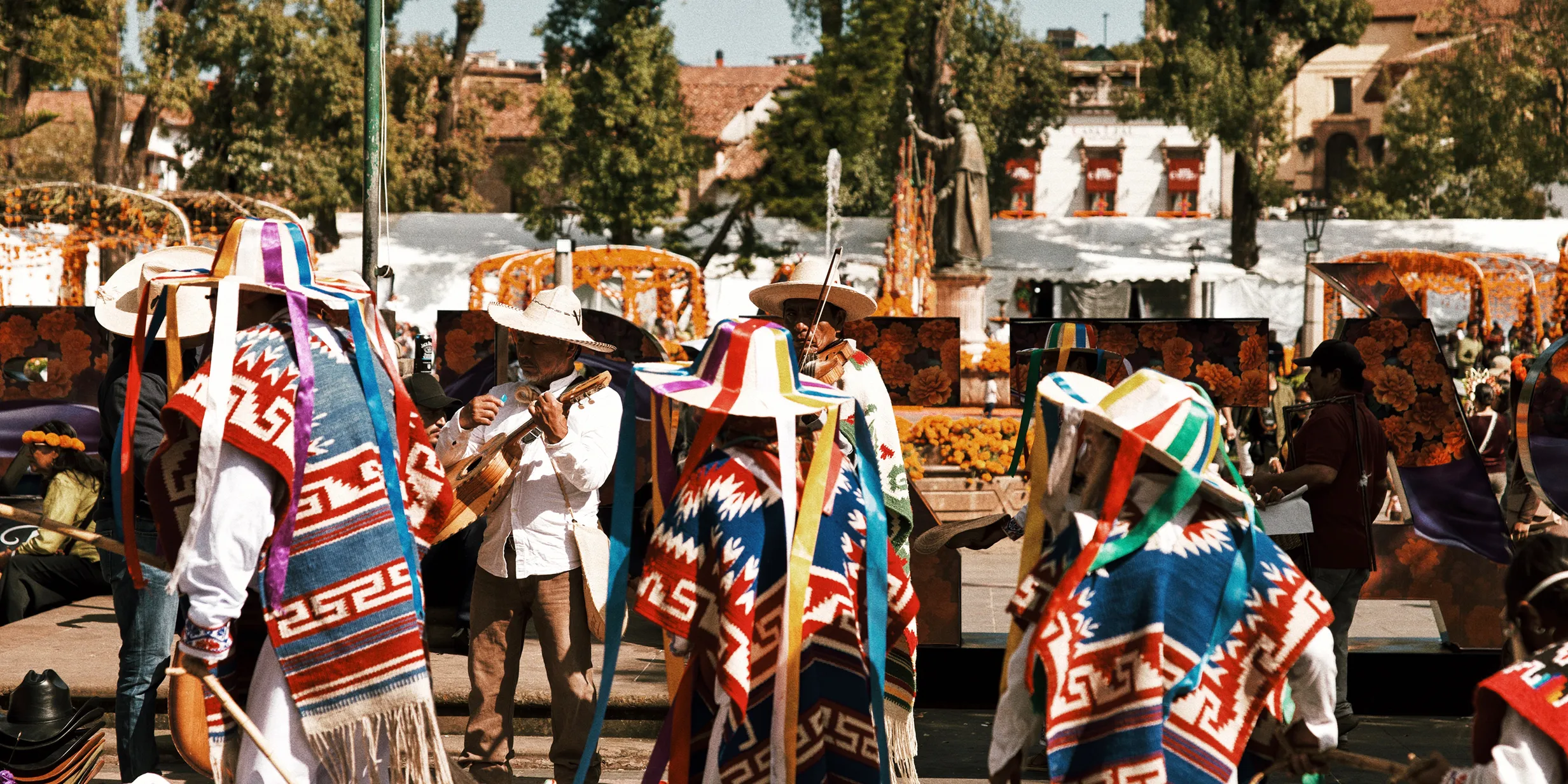
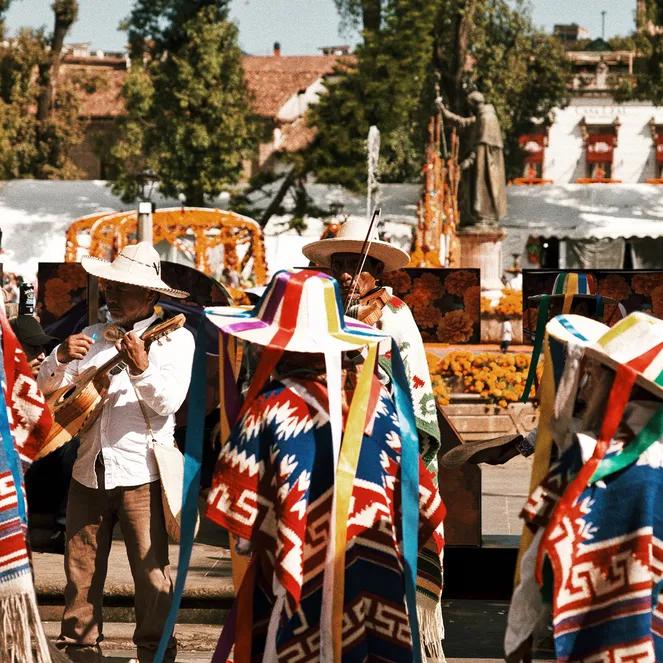
Jovial celebrations: Traditional dance in the town square in Pátzcuaro

Death masks: Performers pose during the Day of The Dead parade in San Miguel de Allende
In the small town of Pátzcuaro I got a glimpse of families laying altars and marigold trails in the town’s cemetery. There were hundreds of flower petals laid on tombs and mausoleums, with some surrounded by happy locals singing and playing music. Plumes of copal, an aromatic incense, filled every corner. My guide, Manuel, told me it is used to cleanse and purify the space, as well as act as “a kind of spiritual nourishment that acts as food and sustenance for returning ancestors.” Here I put the camera down more than I picked it up. These are private moments of remembrance, so I always asked before photographing a family’s ofrenda. Most were happy for me to, and a few invited me to sit with them. The copal smoke proved a gift for photography, softening the flames into a glowing haze no filter could replicate.
Elsewhere, on the small nearby island of Janitzio, famed for its annual spiritual pilgrimage, graveside vigils took place alongside canoe processions illuminated by candles and chanting rituals. Watching them glide across the black water, I learned to stop chasing sharpness and let a little motion blur carry the movement instead. The traditions continued back on the mainland. In the small towns of Ihuatzio and Tzintzuntzan, lost souls were comforted by the singing living who sat around tombstones laughing and conversing in the candlelight. Local and well off the tourist trail, these scenes gave a more intimate picture of the festival, away from prying eyes.
Here I put the camera down more than I picked it up. These are private moments of remembrance, so I always asked before photographing a family’s ofrenda.
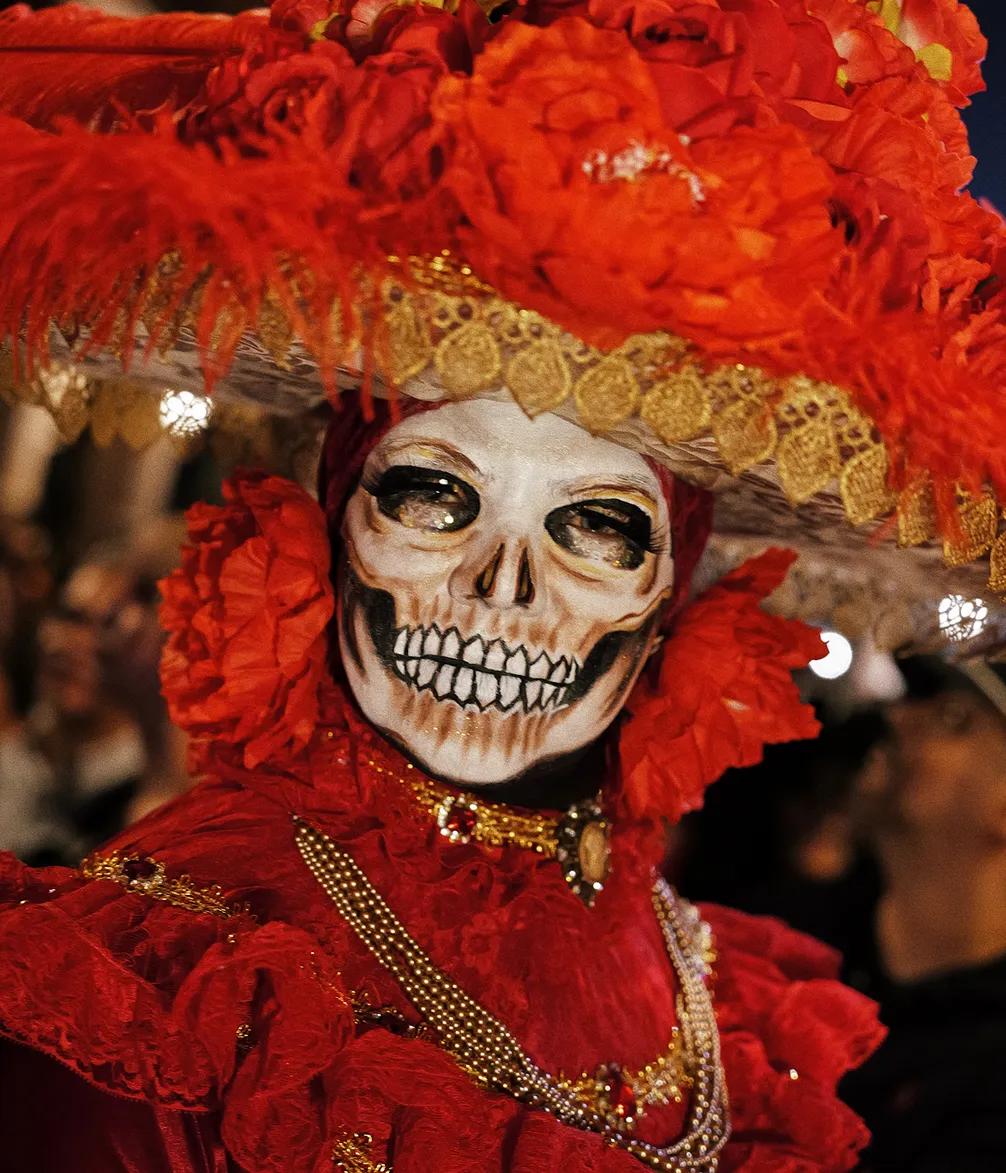
Masked diva: A Catrina in San Miguel de Allende
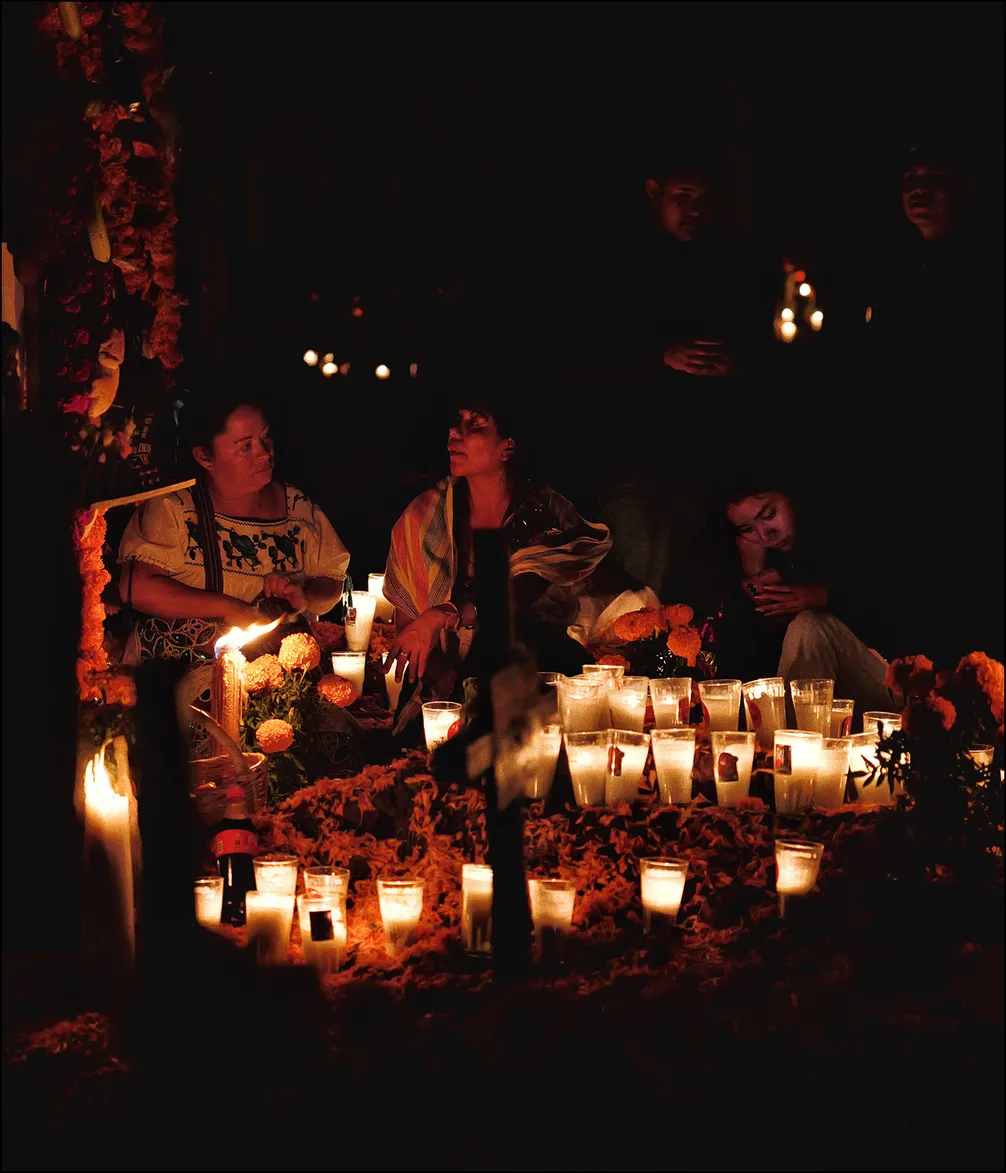
Paying their respects: A family waits for a loved one to return in Tzintzuntzan cemetery

On the island: The cemetery entrance on the island of Janitzio

Symbol of death: A skull float dazzles during the annual street parade in San Miguel de Allende

Go fishing: Children fish on the return trip from Janitzio island to the mainland

Skull face: Performers work their magic in San Miguel de Allende
Further up in San Miguel de Allende the intimacy of graveyard worship morphed into the spectacle of jovial parades. Along the cobbled Technicolor streets of the historic Old Town, elaborate Catrina costumes, traditional dress, music, dance and decorative floats in the form of skull heads and historical figures, flooded every corner. Among all the paraphernalia, the city, bathed in flickering light, was a picture of artistic flair and colour. Costume gatherings in the central Jardín, face painting in the main square, and evening cemetery visits to the Panteón de Nuestra Señora de Guadalupe made death look far from chilling. This, as a local, Maria told me, is “the happiest night on earth for the dead.”
Photographing the festival wasn’t without its challenges, especially after nightfall. I set my camera to manual and opened the aperture as wide as it would go to let in as much light as possible. With so much happening during the parades, I shot handheld and kept the ISO between 1600 and 3200, accepting a little grain as part of the atmosphere. I switched to manual focus too, and used every scrap of light the town offered. Street lamps and candles were my best friends for pulling detail out of the dark. For the stiller scenes among the graves, a two-second timer, or a remote shutter if you have one, made all the difference to a crisp image.
Discover memories faster with exclusive features like facial recognition and smart albums.



Jul 7, 2026∙7 min


Jul 28, 2026∙7 min



 United States