Ispirazione

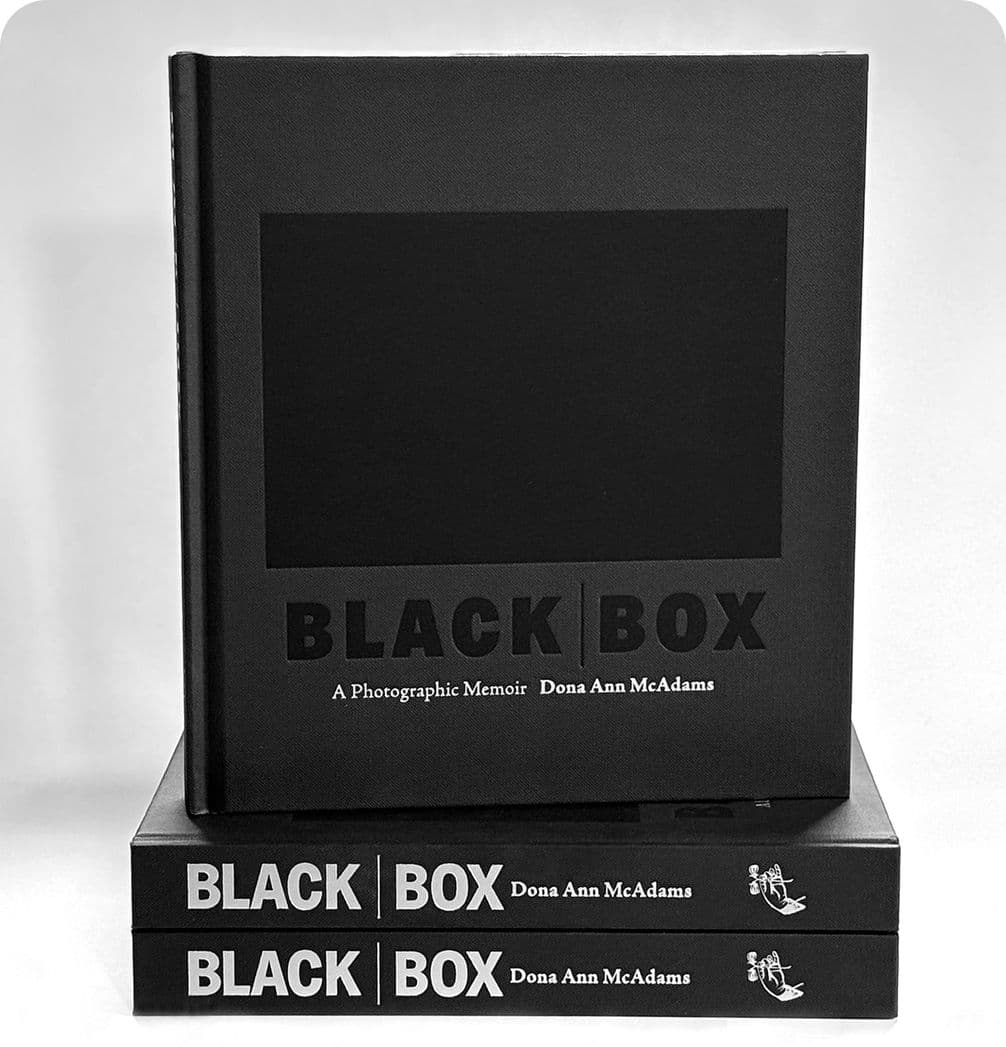
Memoir of the Month: Black Box by Dona Ann McAdams

Across five decades, photographer Dona Ann McAdams has captured the edges of culture and community – her new memoir brings these moments together into one deeply human archive

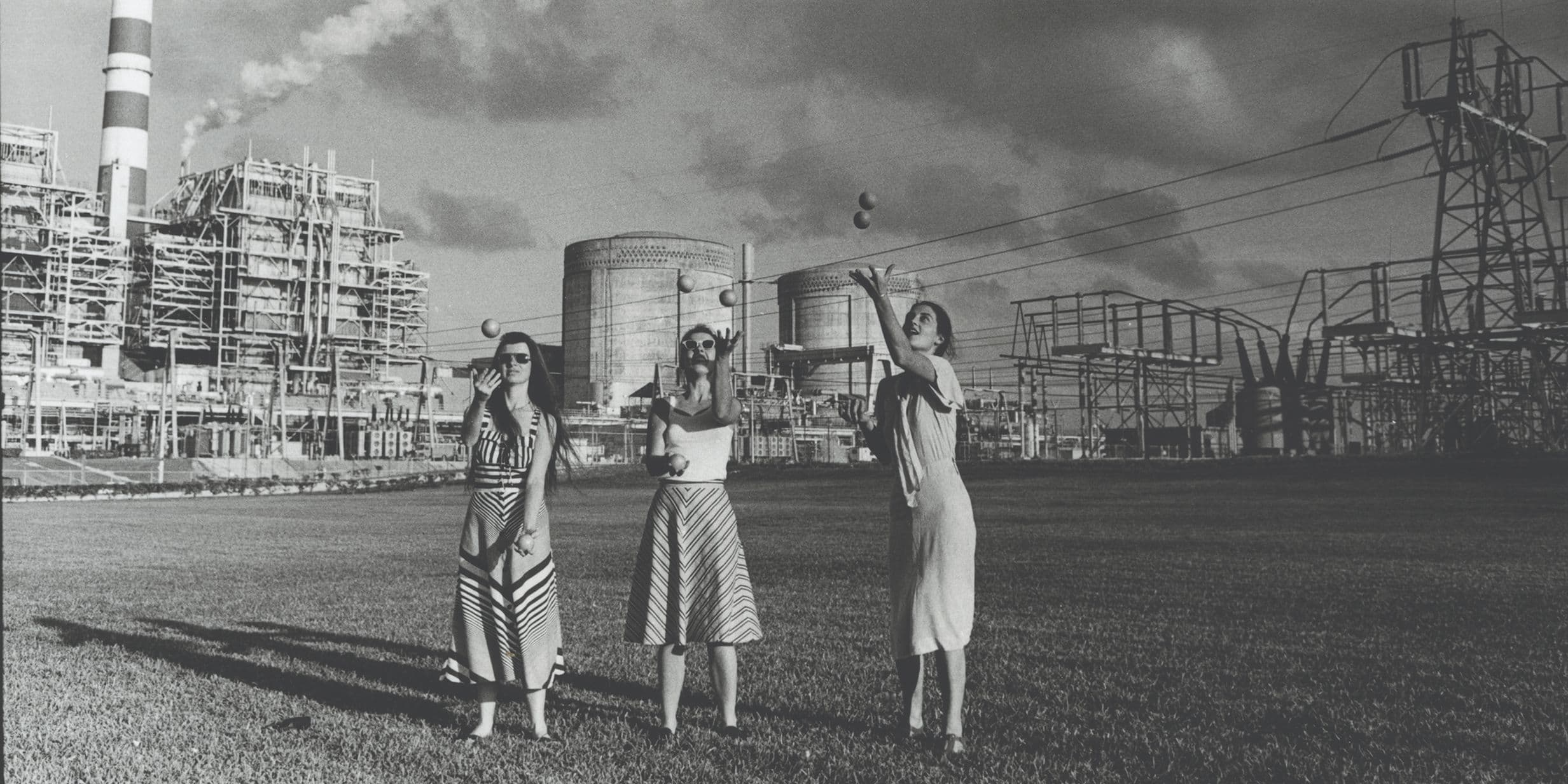
Three women in dresses stand on grass before a large industrial power plant with smokestacks and electrical towers.

For more than five decades, the photographer and activist Dona Ann McAdams has moved fluidly between worlds that rarely sit side by side: underground performance spaces, protest lines, intimate community rituals, and – now, on her goat farm in Vermont – the quiet rhythms of rural life. In Black Box, she gathers these histories into a singular body of work, with unseen negatives, candid portraits, poetic vignettes and rediscovered frames that come together in a powerful photographic memoir. 

Across activism, theatre and the everyday, McAdams photographs bodies in motion and moments in transition, using black-and-white film as a way to distill light and time into something both concrete and abstract. Her memoir pairs images with lyrical “ditties” – short written pieces born in her darkroom as she traced memories of childhood, family and artistic beginnings. Together, the photographs and texts form an archive that resists nostalgia and instead asks what it means to witness – and to be changed by – the world.

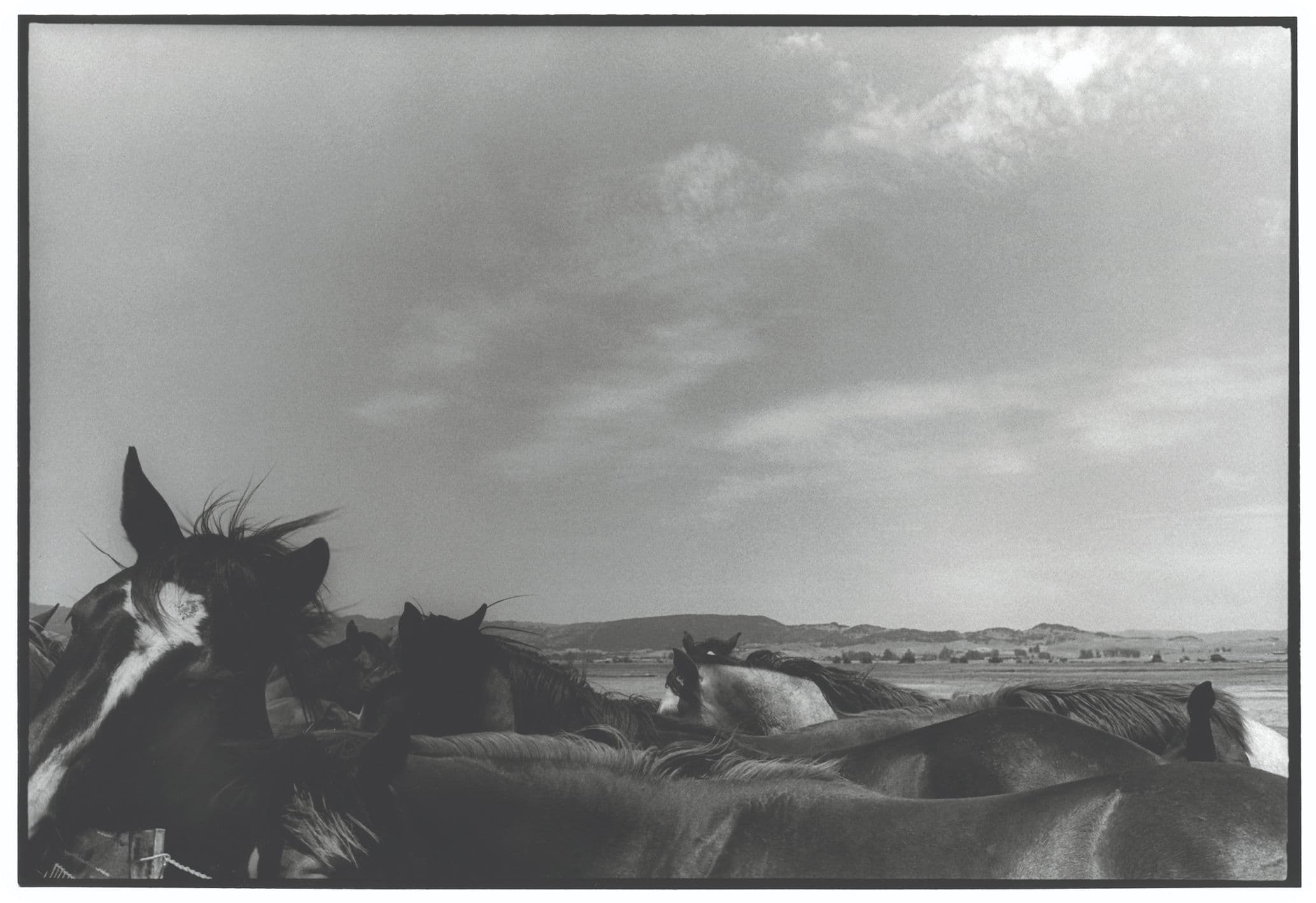
Black-and-white photo of a crowded herd of horses in the foreground beneath a vast cloudy sky and distant rolling hills.

Out West 1975. Photo: Dona Ann McAdams

When did you first pick up a camera and what were some of your earliest photographic influences?

The first time I picked up a serious camera was in 1974. It was an Olympus half frame, but I didn’t like the format and decided quickly to move to a Leica M2 with a 35mm lens. The Leica has been my tool ever since. 

My early influences were not necessarily photographers but illustrators. In particular, Ernie Bushmiller’s Nancy comic strip. It made me interested in how illustration uses the frame – the black line – around an image, and how it plays with the edge; how the edges become as important, if not more, than what’s in the centre of the frame. That’s why I always incorporate a black line in my photographs, and why I always include the edge in my picture-making.

Topless protester with taped nipples debates a priest while reporters and supporters hold KEEP ABORTION LEGAL signs outside a courthouse.

Keep Abortion Legal, City Hall, NYC 1994. Photo: Dona Ann McAdams

You’ve photographed such varied worlds – performance art, activism, marginalised communities, rural life. What do you feel connects these seemingly disparate subjects?

What connects all my projects is a way of seeing the world through a certain lens – in my case, a rectangle. Having started as a street photographer, and then becoming an activist, and then working in the theatre and in community, the continuum was always the ways bodies appeared in a frame and how you can capture light and time in an abstract but concrete form through black-and-white photography.

Black-and-white photo of four men on a motel-style porch—one holding a child—with a horse at left and bicycles along the walkway.

Roger, Tootie holding Kyan, and Leroy Oklahoma Training Track, Saratoga Springs, NY 2010. Photo: Dona Ann McAdams

Over fifty years, how has your relationship to photography changed? Are you photographing differently now than you did in your twenties or thirties?

With age comes patience, and less of a need to look for things to photograph. I have a tendency now to wait for opportunities to work, for projects to find me, for photographs to come to me – I don’t go looking for them.

B/W photo: person reflected in an observation-deck window taking a picture, hazy city skyline visible beyond.

Empire State Building, NYC 1981. Photo: Dona Ann McAdams

You often shoot in black and white, and use a Leica M2. How does your choice of gear, medium and format shape what you are looking to “see”?

When I first picked up a Leica in 1974 it was because of the people I was surrounded by at the San Francisco Art Institute. I got lucky because the camera and I fit together really well. The Leica was small and quiet and intimate, and easy to carry and work with. The medium didn’t dictate where I went or what I shot or how I made photographs. The camera was on me all the time, and it continues to be part of who I am – it’s an accessory like a belt or a pair of comfortable shoes. I may not lift it up to my eyes but it’s always on my person just in case.

Yoshiko Chuma and the School of Hard Knocks 24 Hours, PS122, NYC 1984. Photo: Dona Ann McAdams

Many of your images document activism, transition, performance – what role do you believe photography plays in witnessing or shaping social change?

Photography continues to be an important tool of witness. Photography provides evidence and therefore is a powerful instrument. What’s wonderful now is that people can record their own lives. Everyone can be an activist. Everyone can be an artist. Everyone can record a memory or incident or decisive moment. Everyone has a tool in their hand – it’s called a phone.

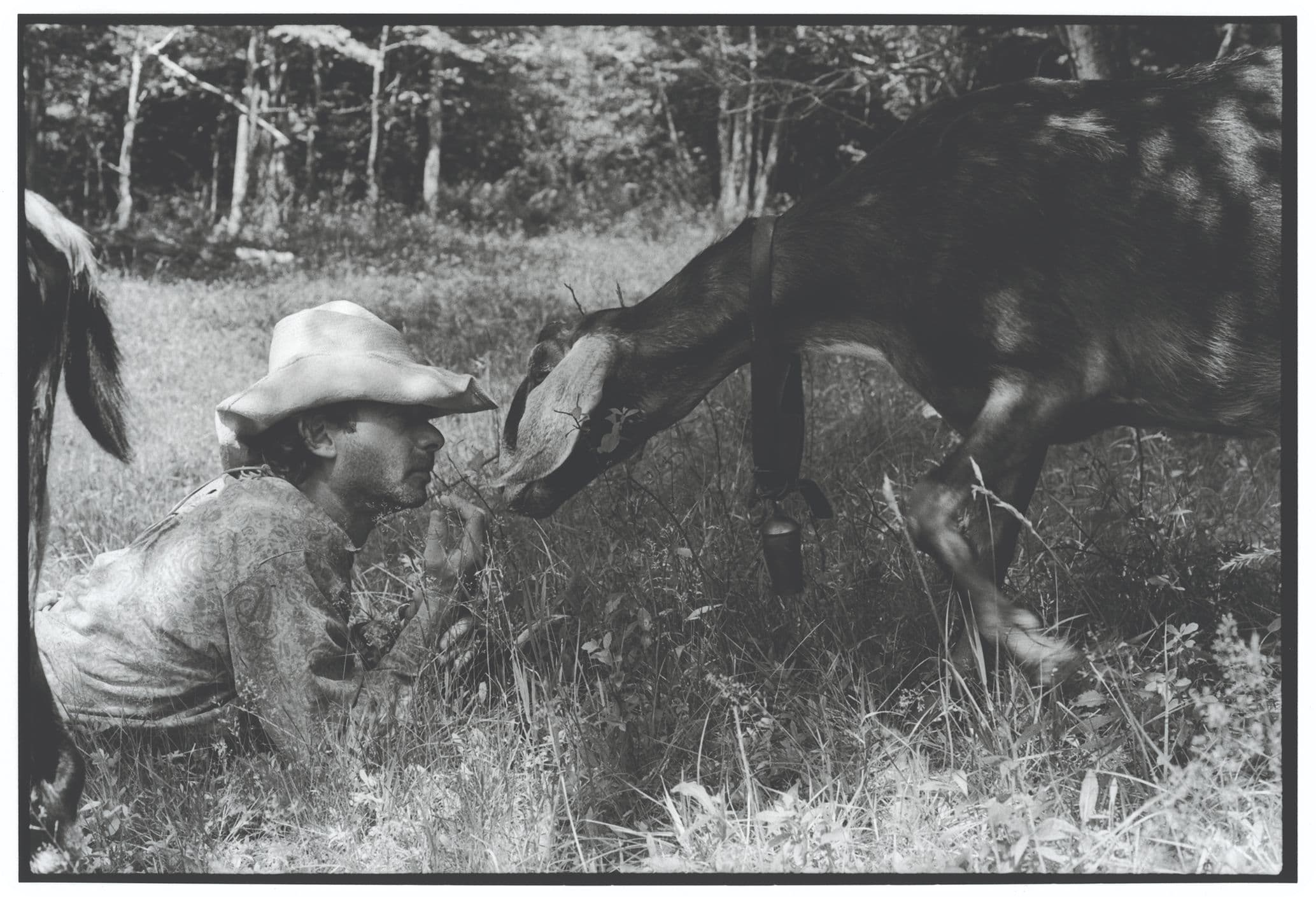
Black-and-white photo of a person in a cowboy hat lying in grass, gently touching noses with a foal in a meadow.

Brad and Lizzie, Sandgate, Vermont 2007. Photo: Dona Ann McAdams

How has living on a goat farm in Vermont shaped your photographic eye or your perspective on life and work?

​Living close to animals who feed me directly, who require time, care and attention has afforded me the opportunity to think and reflect on the work that I made decades ago. There’s a lot of labour involved in keeping animals – it slows you down and keeps you present. Working around goats, horses and cows, using nonverbal communication and being present in the moment, has also influenced how I now work around humans. I’m more of an observer than before. I don’t rush to put the camera to my eye. Sometimes I don’t even take the picture.

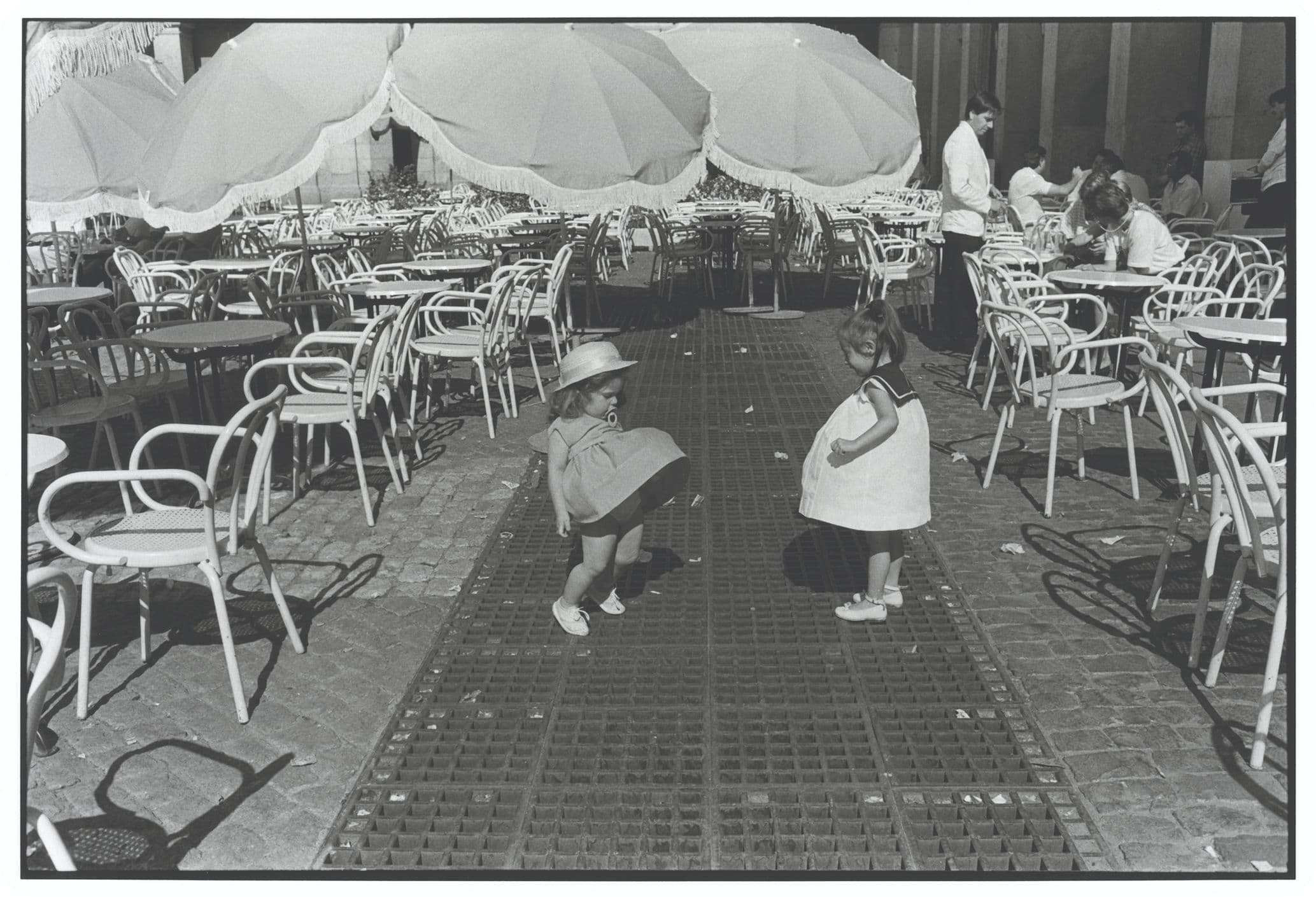
Black-and-white photo of two small children, one in a hat crouching and the other standing, amid empty café tables, chairs and large umbrellas.

Plaza Real, Madrid 1988. Photo: Dona Ann McAdams

The notion of memory, time and what photography “records” is central in Black Box. How do you see the tension between photography as memory-keeping and photography as art?

I don’t find a lot of tension between photography as art and photography as memory-keeping. They’re two separate things. To me, the question always is: can mere “recording” or “memory-keeping” be “art”? Can mere documentation of a person, place, thing or event become, through my lens, art – either in the future or shortly after the moment of taking? It all depends on the photograph that’s made, and how it’s made. If it satisfies one’s definition of  “art”. For me, it’s a very simple formula. Do I want to look at the image again and again and again? Do the words, music, images and songs stay with me and affect me deeply? If they do, then it works for me. Art is subjective… except when it’s not.

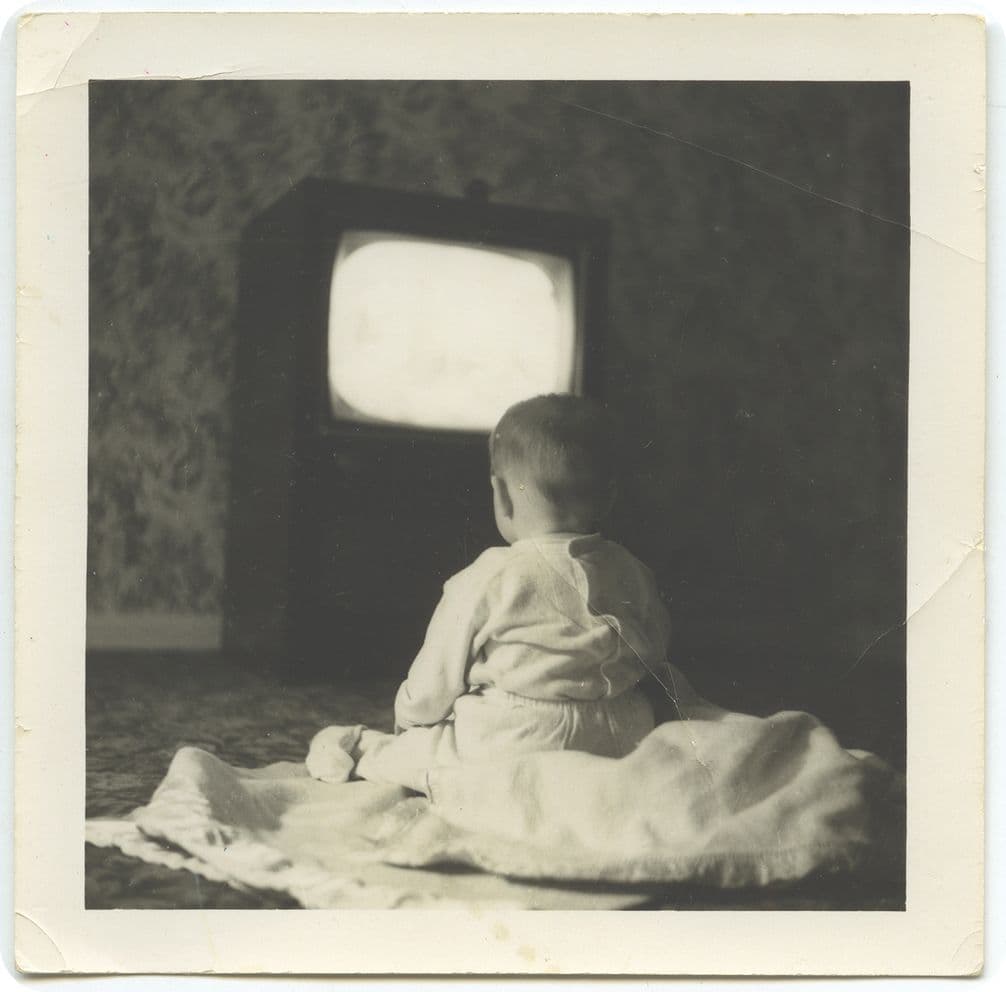
A baby sits on a blanket, watching an old-fashioned TV in a dimly lit room. The TV screen glows brightly in the background.

Dona, Cambria Heights, Queens 1955. Photo: Donald McAdams

Were there any images you felt were essential from the very beginning – ones you knew had to be included in Black Box?

The photograph of me as a baby in front of the TV set taken by my father in 1955. That photo sums up my entire life as an artist, looking at the square, looking into the grayscale of the old black-and-white console TV. The only difference is that I work with a rectangle, not a square.

A group of people in white coats stand in the background of a wide, empty dirt lot surrounded by tall, worn buildings.

Cardinal Cooke’s funeral, NYC 1983. Photo: Dona Ann McAdams

The book pairs photographs with lyrical text. How did the writing process relate to your image-making?

The image-making and the writing were two separate things. The writing was done after, in my studio, when I was trying to recall incidents and memories from childhood. My brother Thomas had just died, and I started writing these small memories down in my darkroom. The stories just came to me while working and I had to use the same soft lead pencil (number 4B) I use for writing on the backs of work prints – and I always wrote them on a white 81/2 x 11 lined pad of paper. I ended up calling the stories “ditties” because they seemed like little songs, and because my family is Irish and we were always storytellers and singers. The ditties should work separately from the photographs. Sometimes they complement the photograph but they’re not meant to work as an explanation or extended caption. The photograph and text have to stand on their own merits. If they make a third thing, all the better.

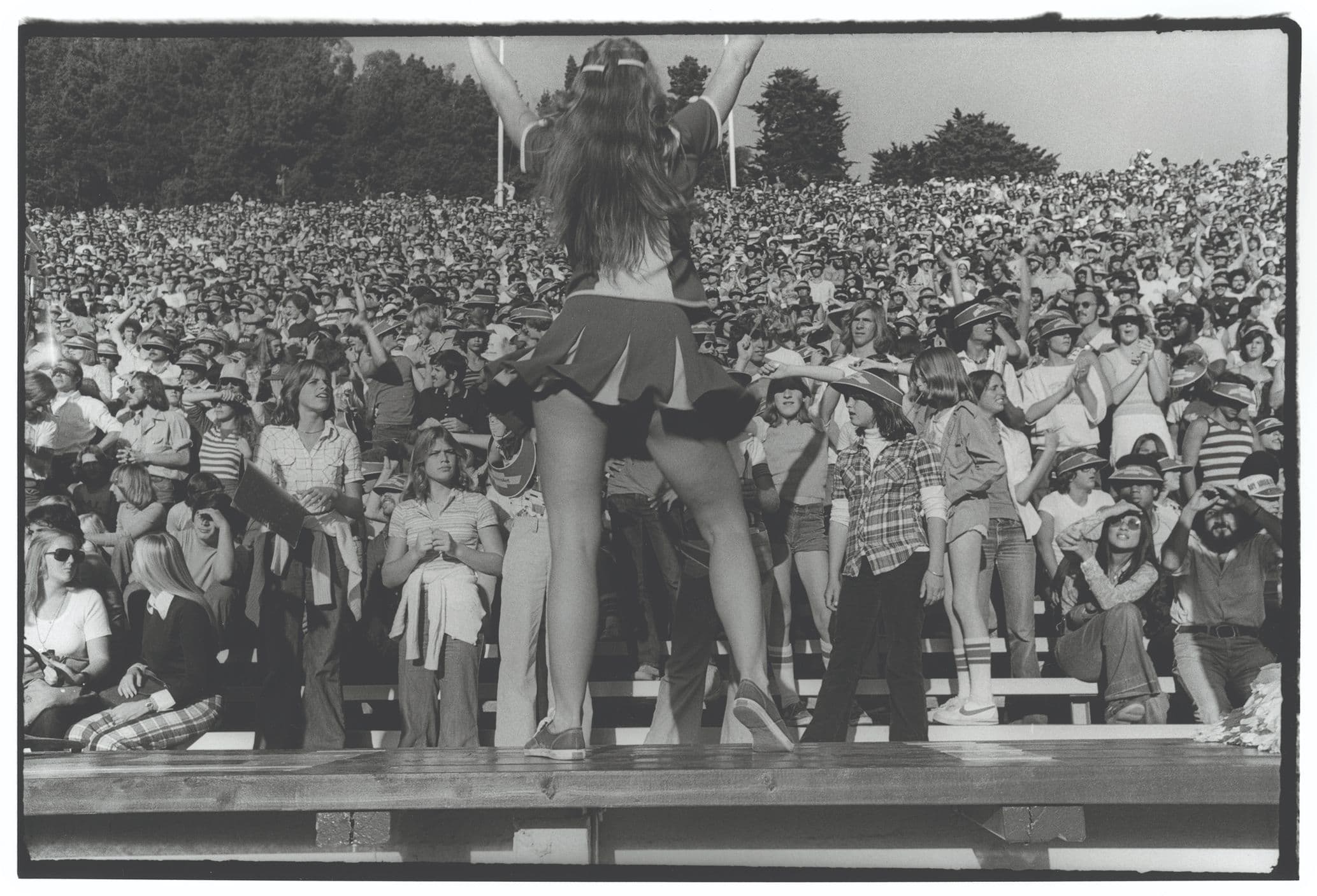
Cheerleader with pom-poms leads a large, cheering crowd in a stadium during a daytime event.

Cheerleaders, UCLA 1975. Photo: Dona Ann McAdams

Looking back, what moment or project in Black Box shaped you most profoundly as a photographer?

The moment I first discovered I wanted to take photographs in San Francisco. When I first met Hilton Braithwaite and the gang at the San Francisco art institute in the mid-1970s; when Garry Winnograd pointed out my photograph in class as one he liked. Then, when I met Harvey Milk at Castro Camera, which set me on my journey as an activist.

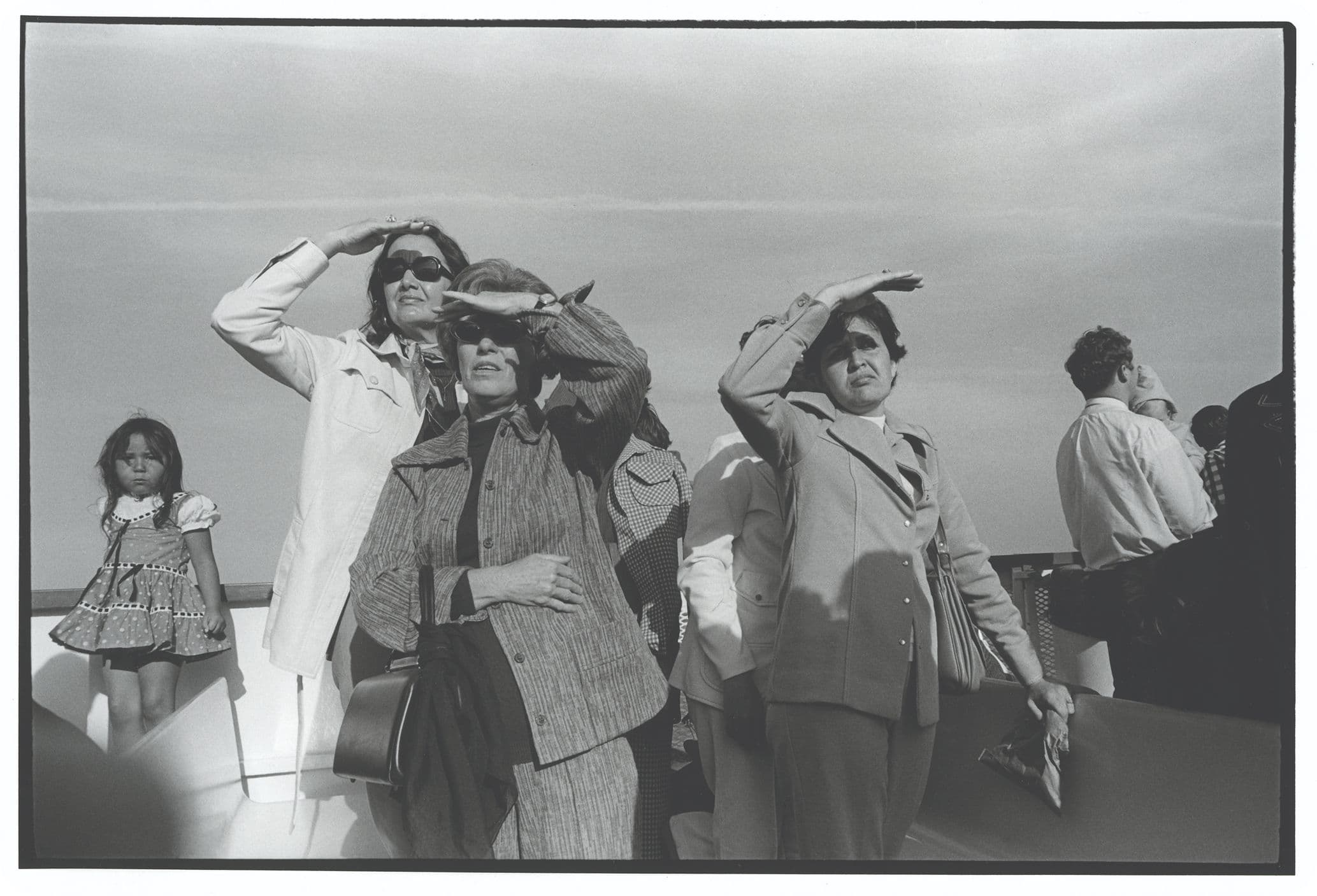
Group of people on a boat, shielding their eyes from the sun, looking into the distance; one child stands nearby. Black and white photo.

Sausalito Ferry, California 1976. Photo: Dona Ann McAdams

​Given your long career and rich archive, how do you see the future of photography – especially as digital, AI and new forms evolve?

I see photography unfolding the same way as traditional oil painting did. Some people will keep doing it, even if it is considered old fashioned or out of date. Others will switch to new technologies. Some will embrace AI. But I don’t think analogue photography is going to be replaced any time soon. I used to worry about that, but not anymore. There’s something to be said about working in a darkroom – about getting your hands wet, about getting the paper wet, about having the emulsion in the paper, about having the light in the paper, about having the light pass through the enlarger onto the paper through the camera onto the negative. It’s a beautiful tactile process, one you can’t erase or fake. Light, paper, emulsion: you’re left with what you make – good or bad.

What do you hope a reader/viewer will walk away with from your book and your body of work?

I hope that a reader or viewer will enjoy what I’ve put together in Black Box. It was wonderful working with a small independent publisher, Mark Alice Durant, and being part of the Saint Lucy Books family. I hope Black Box inspires others to keep journals, to write letters to themselves or others, to remember what they've experienced with words and pictures. I’m very proud of this book. I hope others like it, too.

Black Box: A Photographic Memoir by Dona Ann McAdams

Scarica l'app

Trova più velocemente le foto che stai cercando con funzionalità e prodotti esclusivi come il riconoscimento facciale e gli album smart.

App StoreApp Store
Scarica l'app